1968 Ghibli ![]() |
1967 Maserati Ghibli news, pictures, and information | ||
| Tweet | ||
![]() | ![]() | ![]() | Coupe |
![]() | ![]() | ![]() | Coupe Chassis Num: AM1154732 Engine Num: AM1154732 |
| Sold for $77,000 at 2009 Gooding & Company. | |||
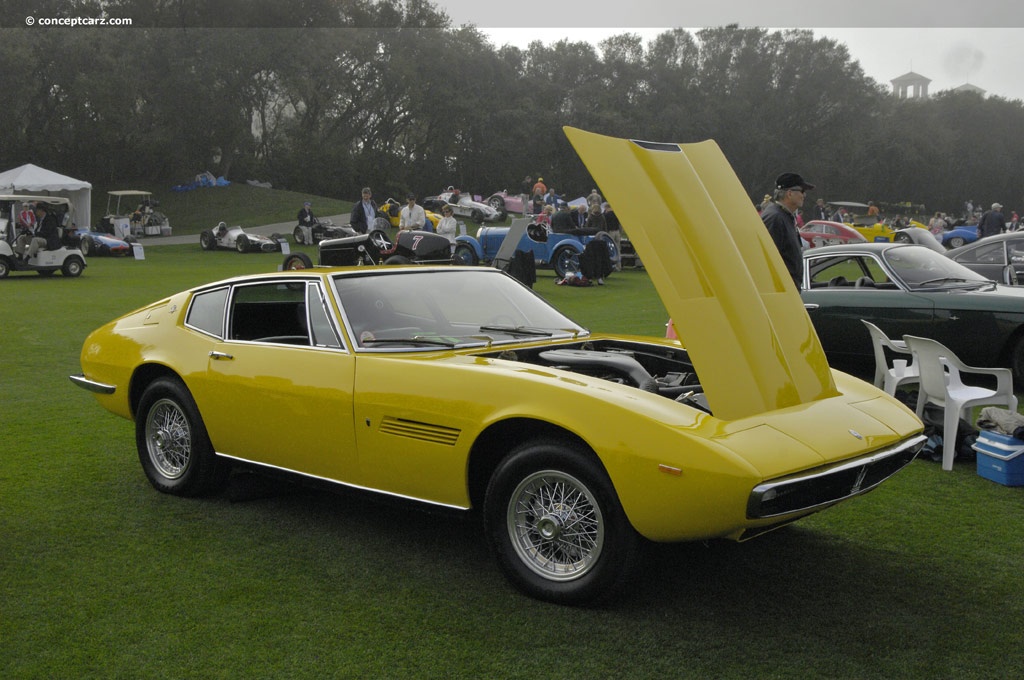
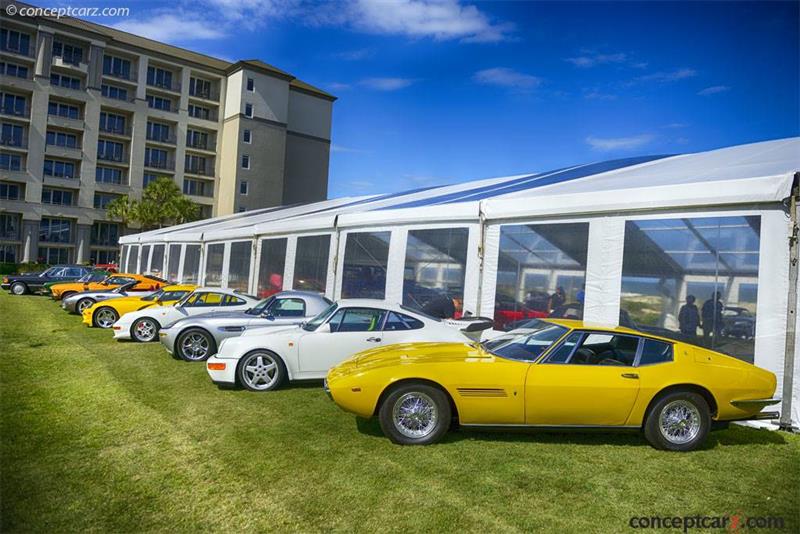
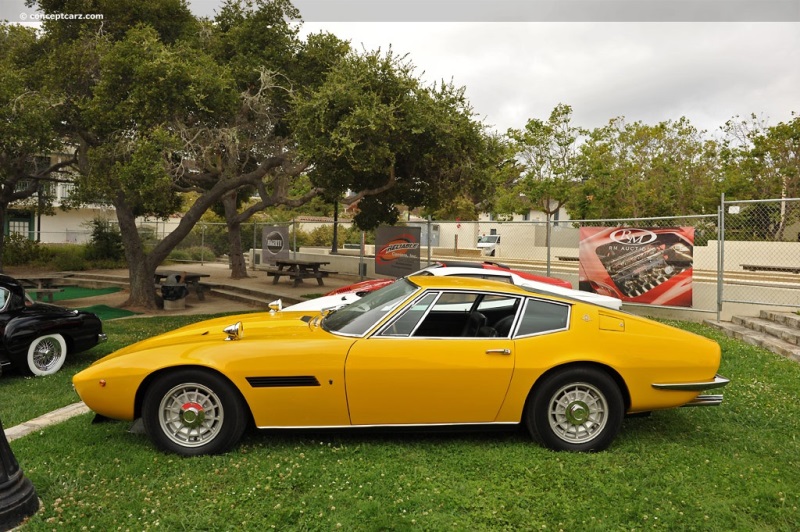
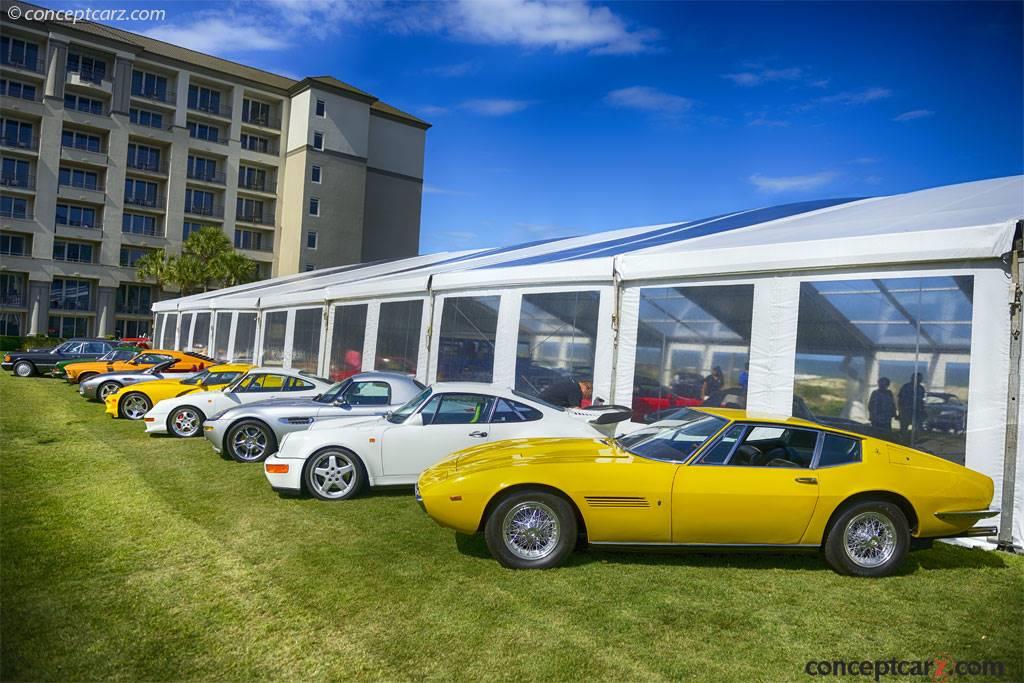
This particular Maserati Ghibli is one of just 1,149 examples producing during the production lifespan, lasting from 1967 through 1973. It is painted in yellow and has a black interior. There is a ZF five-speed manual gearbox and four-wheel disc brakes. The engines quad camshafts are chain driven which eliminates the expense of having to replace belts.
This car was owned by a Maserati-Ferrari mechanic for 27 years. In the early 2000s, it was reconditioned both mechanically and cosmetically. In 2009, this 154 MPH Ghibli was offered for sale at the Gooding & Company auction held in Scottsdale, Arizona. It was expected to sell for $100,000 - $130,000 and offered without reserve. The lot was sold for $77,000 including buyer's premium.
In 2010, the car was offered for sale at the Sports & Classics of Monterey presented by RM Auctions. It was estimated to sell for $120,000 - $140,000. As bidding came to a close, the car had been sold for the sum of $107,250 inclusive of buyer's premium.
By Daniel Vaughan | Dec 2010
The Maserati Ghibli was put into production in 1967 but it was the prior year at the Turin Auto Show where it made its debut. The 2+2 coupe body was designed by Giugiaro, an employee for the Ghia design studio. The headlights were pop-up configuration adding to the sleek and aerodynamic design. Powered by a 4.7-liter eight-cylinder engine, the vehicle produced 340 horsepower. The rear suspension was comprised of a live axle with leaf springs and anti-roll bar while the front used an independent suspension with double wishbones and coil springs plus anti-roll bar. The Ghibli sat atop a Mexico chassis that had been shortened and received increased stiffness and rigidity. Ventilated disc brakes where placed on all four corners and a five-speed manual gearbox helped send power to the rear wheels. In 1968 a three-speed automatic was offered as optional equipment.
In 1968 a convertible was offered, also designed by Ghia. To add to the versatility, a hard-top was offered on the convertible, making the vehicle suitable in all types of weather and driving conditions.
In 1970 the Ghbli SS was introduced featuring a 4.9-liter engine capable of producing nearly 360 horsepower.
During the production lifespan, ending in 1973, 1149 Coupes were produced. Only a very small number of convertibles were created, adding to the exclusivity. 125 Spyders and 25 Spyder SS models were created.
By Daniel Vaughan | Jun 2006
In 1968 a convertible was offered, also designed by Ghia. To add to the versatility, a hard-top was offered on the convertible, making the vehicle suitable in all types of weather and driving conditions.
In 1970 the Ghbli SS was introduced featuring a 4.9-liter engine capable of producing nearly 360 horsepower.
During the production lifespan, ending in 1973, 1149 Coupes were produced. Only a very small number of convertibles were created, adding to the exclusivity. 125 Spyders and 25 Spyder SS models were created.
By Daniel Vaughan | Jun 2006
Maserati has lately reinvented its presence in the U.S. market. After being driven out in the very early 1990's by pitifully slow sales of the underappreciated Biturbo, Maserati made a return to the U.S. for 2003. It brought with it an entirely revamped product line consisting of some phenomenal cars. Fast forward to now, and Maserati had just released a beautiful new coupe, the GranTurismo. Its name may not be the most creative or interesting label for what is, after all, a grand touring car, but its message is clear: Maserati is back, and it hasn't forgotten its roots.
While many would argue that Maserati's real roots were in racing cars, the fact is that the company never achieved real success as a production car manufacturer until it turned its efforts toward producing stunning GT automobiles. The Ghibli was one of those spectacular machines.
That's not to say that the Ghibli was a mere gentleman's luxury car as some GT vehicles were. For as superb and smooth a GT as it was, the Ghibli's design was teeming with racing heritage. Its engine was a perfect example. Derived from the V8 powering the successful 450 S racecar, the 4.7L V8 in the Ghibli had a good compression ratio of 8.5:1 and was fed by a quartet of Weber carbs. Its most impressive feature had nothing to do with compression or carburetion, though, but with its advanced lubricating system.
The Ghibli's V8 employed dry-sump lubrication. As opposed to the traditional wet sump that stores oil in a pan beneath the engine, dry-sump systems use a separate reservoir to hold oil, from where it is pumped into the engine for lubrication and then recirculated back into the reservoir. This design, popular on racing cars of the era and even today used almost exclusively in high-performance applications, gave many advantages. First, and perhaps most important to the Ghibli's menacing shape, was its allowance for an engine with as little vertical height as possible. With no need for an oil sump beneath the engine, the Ghibli's motor could be lowered in the car's frame to allow for a low center of gravity and, of course, the car's mean, low hoodline. Dry-sump lubrication also prevented oil starvation and provided better oil cooling, making the Ghibli's engine comfortable on any track.
The impressive V8 coupled to a ZF five-speed gearbox of equal quality. This team fed a limited-slip differential, which supplied power to the rear Campagnolo mags with ferocity. Though wire wheels were also available, the Campagnolos seemed a better choice with their light weight and nice design that complemented the Ghibli‘s shape.
Performance figures were staggering. From a standstill, the Ghibli could achieve 60mph in a scant 6.4 seconds. The quarter mile passed in 14.5 seconds. When the Ghibli SS was introduced in 1970 with an updated 4.9L V8 producing 335hp, this Maserati became capable of reaching incredible speeds. The Ghibli SS could reportedly exceed 280 kilometers per hour. Converted to a measurement we can fathom, that meant over 170mph. That type of speed was unreal in 1970, and it turned the Ghibli, which was named after a rapid wind, into a legend more than capable of living up to its label.
The Ghibli's imposing posture was the work of one of Italy's most prolific car designers, Giorgetto Giugiaro. The Ghia badge adorning the Ghibli's body designated the design house for which Giugiaro was then working, Carrozzeria Ghia. Giugiaro had a hand in styling some of history's best remembered cars, and the Ghibli's shape continues to impress today.
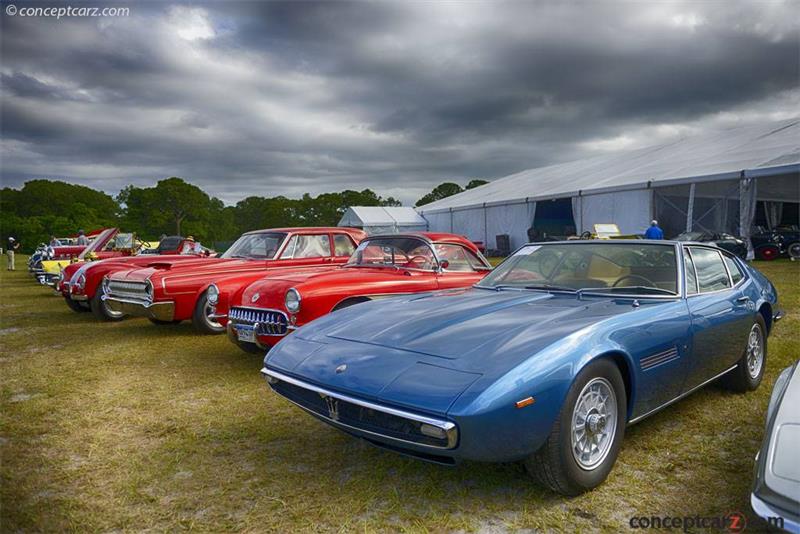
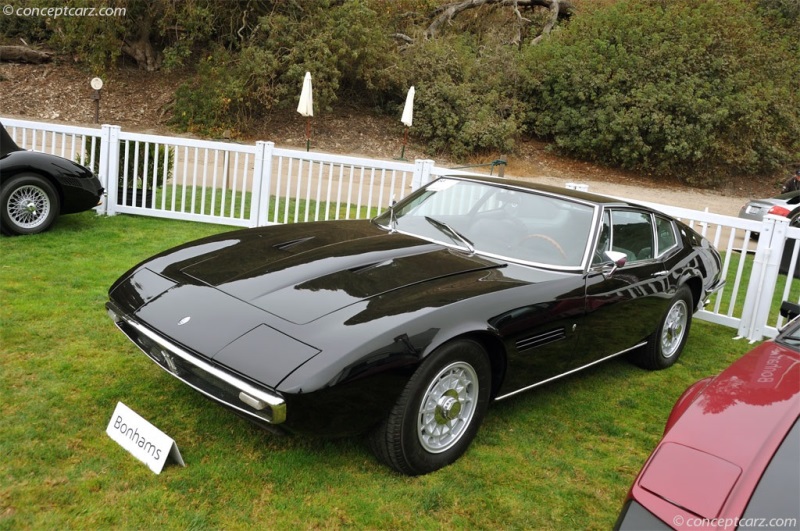
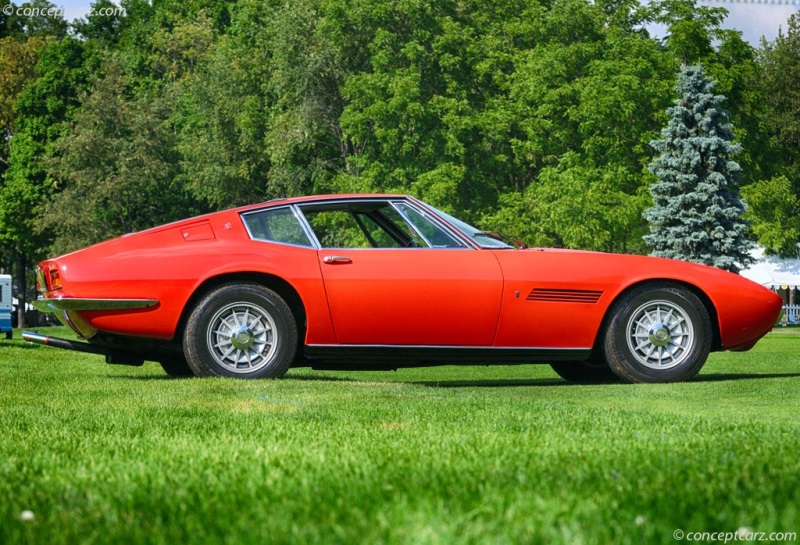
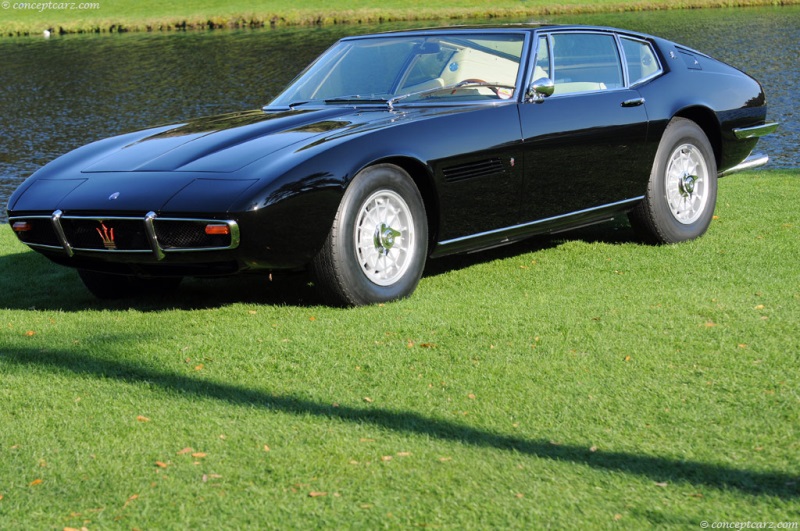
Pop-up lights and the dry-sump allowed for a low hood and an imposing frontal aspect featuring a wide grille of black mesh with the trident standing proudly at its center. The windshield's aggressive rake continued the theme, and it swept up to a low roof (the Ghibli stood just 45 inches tall). That roof was tilted towards the rear of the car, and it met the backlight seamlessly where it continued its downward slope to endow the car with a clean fastback shape. The rear was finished with a tight Kamm tail.
A convertible version of the Ghibli was also produced. Called the Spyder, it was made in much smaller numbers. With its sloping trunk lid, the Spyder was able to carry on the theme of the Ghibli's design successfully without the use of a fastback.
Not to leave anyone fooled by the sweeping lines and motorsport-inspired powertrain and drivetrain, the Ghibli's sumptuous interior reminded that this really was a GT car. With a generous trunk and comfortable seats, the Ghibli was set to erase miles quickly on the open road.
Throughout its production run from 1967 to 1973, the Ghibli proved itself worthy of the trident badge. It was a well-engineered machine clothed in fine Italian style, and it is remembered today as one of the finest road-going Maseratis ever produced. A success for its parent company, 1,149 Ghibli coupes were produced along with 125 Spyders. The relatively high production numbers once made Ghiblis easy to pick up for reasonable prices. Collectors are catching on, though, and values are on the rise. These stunning Maseratis are sure to be remembered as one of the company's greatest achievements.
Factual information in this article supplied by http://www.thecarnut.com/ and http://www.qv500.com/. The site http://www.maserati-alfieri.co.uk/ also supplied helpful information, and is an excellent source for the histories of all Maserati models. By Evan Acuña
For more information and related vehicles, click hereWhile many would argue that Maserati's real roots were in racing cars, the fact is that the company never achieved real success as a production car manufacturer until it turned its efforts toward producing stunning GT automobiles. The Ghibli was one of those spectacular machines.
That's not to say that the Ghibli was a mere gentleman's luxury car as some GT vehicles were. For as superb and smooth a GT as it was, the Ghibli's design was teeming with racing heritage. Its engine was a perfect example. Derived from the V8 powering the successful 450 S racecar, the 4.7L V8 in the Ghibli had a good compression ratio of 8.5:1 and was fed by a quartet of Weber carbs. Its most impressive feature had nothing to do with compression or carburetion, though, but with its advanced lubricating system.
The Ghibli's V8 employed dry-sump lubrication. As opposed to the traditional wet sump that stores oil in a pan beneath the engine, dry-sump systems use a separate reservoir to hold oil, from where it is pumped into the engine for lubrication and then recirculated back into the reservoir. This design, popular on racing cars of the era and even today used almost exclusively in high-performance applications, gave many advantages. First, and perhaps most important to the Ghibli's menacing shape, was its allowance for an engine with as little vertical height as possible. With no need for an oil sump beneath the engine, the Ghibli's motor could be lowered in the car's frame to allow for a low center of gravity and, of course, the car's mean, low hoodline. Dry-sump lubrication also prevented oil starvation and provided better oil cooling, making the Ghibli's engine comfortable on any track.
The impressive V8 coupled to a ZF five-speed gearbox of equal quality. This team fed a limited-slip differential, which supplied power to the rear Campagnolo mags with ferocity. Though wire wheels were also available, the Campagnolos seemed a better choice with their light weight and nice design that complemented the Ghibli‘s shape.
Performance figures were staggering. From a standstill, the Ghibli could achieve 60mph in a scant 6.4 seconds. The quarter mile passed in 14.5 seconds. When the Ghibli SS was introduced in 1970 with an updated 4.9L V8 producing 335hp, this Maserati became capable of reaching incredible speeds. The Ghibli SS could reportedly exceed 280 kilometers per hour. Converted to a measurement we can fathom, that meant over 170mph. That type of speed was unreal in 1970, and it turned the Ghibli, which was named after a rapid wind, into a legend more than capable of living up to its label.
The Ghibli's imposing posture was the work of one of Italy's most prolific car designers, Giorgetto Giugiaro. The Ghia badge adorning the Ghibli's body designated the design house for which Giugiaro was then working, Carrozzeria Ghia. Giugiaro had a hand in styling some of history's best remembered cars, and the Ghibli's shape continues to impress today.
Pop-up lights and the dry-sump allowed for a low hood and an imposing frontal aspect featuring a wide grille of black mesh with the trident standing proudly at its center. The windshield's aggressive rake continued the theme, and it swept up to a low roof (the Ghibli stood just 45 inches tall). That roof was tilted towards the rear of the car, and it met the backlight seamlessly where it continued its downward slope to endow the car with a clean fastback shape. The rear was finished with a tight Kamm tail.
A convertible version of the Ghibli was also produced. Called the Spyder, it was made in much smaller numbers. With its sloping trunk lid, the Spyder was able to carry on the theme of the Ghibli's design successfully without the use of a fastback.
Not to leave anyone fooled by the sweeping lines and motorsport-inspired powertrain and drivetrain, the Ghibli's sumptuous interior reminded that this really was a GT car. With a generous trunk and comfortable seats, the Ghibli was set to erase miles quickly on the open road.
Throughout its production run from 1967 to 1973, the Ghibli proved itself worthy of the trident badge. It was a well-engineered machine clothed in fine Italian style, and it is remembered today as one of the finest road-going Maseratis ever produced. A success for its parent company, 1,149 Ghibli coupes were produced along with 125 Spyders. The relatively high production numbers once made Ghiblis easy to pick up for reasonable prices. Collectors are catching on, though, and values are on the rise. These stunning Maseratis are sure to be remembered as one of the company's greatest achievements.
Factual information in this article supplied by http://www.thecarnut.com/ and http://www.qv500.com/. The site http://www.maserati-alfieri.co.uk/ also supplied helpful information, and is an excellent source for the histories of all Maserati models. By Evan Acuña
| POW! BAM! ZOOM! The Original 1966 TV Batmobile To Cross Auction Block At Barrett-Jackson Scottsdale | |
![]() | Holy Grail of TV Star Cars to be Sold for First Time January 19, 2013 Barrett-Jackson, the World's Greatest Collector Car Auctions™, announced today that it will offer one of the most recognized and popular pieces of entertainment history worldwide, at its 42nd annual Scottsdale www.barrett-jackson.com/scottsdale/ auction in January – the only 1955 Lincoln Futura concept car which was heavily modified by legendary customizer George Barris to become the original 1966 Batmobile in the l...[Read more...] |
| Inaugural Concours d'Elegance of Texas deemed a massive success | |
![]() | Houston, Texas. May 15, 2012. Last weekend, the award winning La Torretta Lake Resort & Spa in Montgomery played host to the biggest and most prestigious classic car weekend in Texas, welcoming thousands of visitors through its gates for the inaugural Concours d'Elegance of Texas, a highlight of The Houston Classic Weekend. Concours organizers had promised a spectacular gathering of world class cars at a world class venue, and they definitely delivered, assembling a superb selection of ra...[Read more...] |
| Faces of the future: the concept cars at the Concorso d'Eleganza Villa d'Este 2012 | |
![]() | The participants in this year's Concept Cars & Prototypes competition have been announced at the Concorso d'Eleganza Villa d'Este press conference in Milan. 'We're delighted to see a steady rise in the number of entrants for the Concept Cars & Prototypes concours,' said Karl Baumer, President of the Concorso d'Eleganza Villa d'Este and Director of BMW Group Classic. 'The contrast between the historical façade of the Grand Hotel Villa d'Este and the automotive design of the future holds a very sp...[Read more...] |
| Allard Automobiles Featured at 2012 Glenmoor Gathering | |
![]() | Allard automobiles will be one of the featured marques at the 2012 Glenmoor Gathering. More than 20 Allard automobiles are expected to be on display during the Glenmoor Gathering weekend. Allards featured lightweight bodies built in England but were usually fitted with big American engines, resulting in a terrific power to weight ratio. Shown above at last year's Glenmoor Gathering is an award-winning 1950 Allard J2 roadster owned by David K. Hans of Barrington, Illinois, that was displayed in...[Read more...] |
| Legendary Tucker Automobiles on Display at 2012 Glenmoor Gathering | |
![]() | Several 1948 Tucker Automobiles will be part of the show field at the 2012 Glenmoor Gathering, including an unrestored Tucker from the Gilmore Car Museum Collection (above). A total of 51 cars were built before production stopped and most of them survive today. The distinctive car-the brainchild of Preston Tucker-was designed by Alex Tremulis. In all, more than 200 vintage and classic American and European automobiles and motorcycles will be on the show field. The motorcycle class will f...[Read more...] |
1967
Maserati
models |
| Maserati Mexico |
| Maserati Mistral |
| Maserati Sebring |
| Similar Automakers | |
| Aston Martin | Bentley |
| Bugatti | Devon |
| Ferrari | GTA |
| Koenigsegg | Lamborghini |
| Lotus | Maybach |
| McLaren | Porsche |
| Rolls-Royce | Spyker |
| Tesla | |
| Similarly Sized Vehicles from 1967 |
| Citroen DS21 |
| Daimler 250 |
| Ferrari 365 California |
| Ferrari 365 GT |
| Ferrari 500 Superfast |
| Ford GT40 |
| Ford Mustang |
| Ford Mustang GT 350 |
| Ford Mustang GT 500 |
| Jaguar Mark II |
| Maserati: 1961-1970 |
| Similar Automakers |
| Maserati History |
| Other models by Maserati |
| Manufacturer Website |
| |||||||||||||||||||||||||||||||||||||||||
| 150S 200 Si 228 250 250F | 300S 3500 GT 430 450 4CL | 5000 GT 6CM 8CM 8CTF A6 | Bi-Turbo Birdcage Bora Coupe Coupe / Spyder | Ghibli GranCabrio GranTurismo Indy Khamsin | MC12 Merak Mexico Mistral Quattroporte | Sebring |
1968 Ghibli ![]() |


1967