Packard's management had been intrigued and fascinated with the Cord L-29 and the Miller-engined race cars, both were front-drive cars. A front-drive prototype was commissioned with power from a new twelve-cylinder engine. The length of the V12 was shorter than Packard's inline eight which allowed more flexibility in packaging the front-drive chassis. The Achilles heel was quickly realized during testing, which revealed weakness in the front-drive chassis' design. These setbacks, coupled with the high development costs and Cadillac's introduction of the new sixteen and twelve-cylinder models, put pressure on Packard to respond. The solution was born of necessity; the new twelve-cylinder engine was installed into Packard's Deluxe Eight chassis. The result was the Twin Six, in recognition and honor of Packard's first V12, introduced over 15 years earlier. The name was changed to the Packard Twelve in 1933.
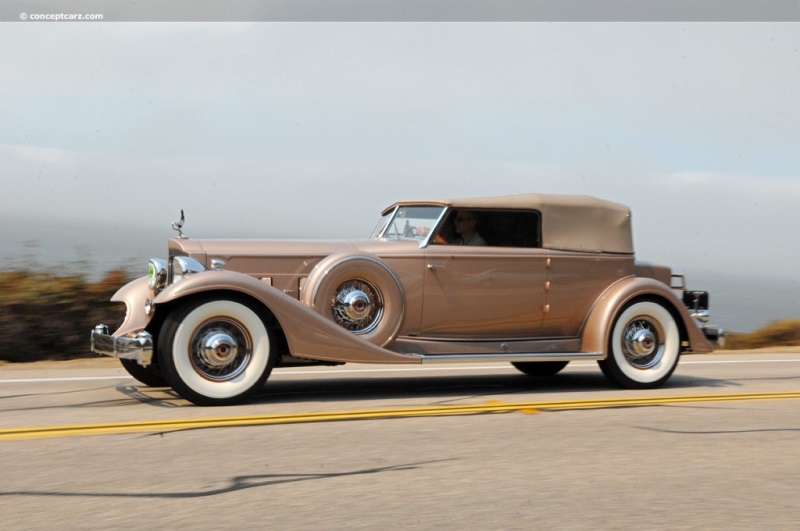
Convertible Victoria by Dietrich
Chassis #: 901360
Engine #: 901368
View info and history
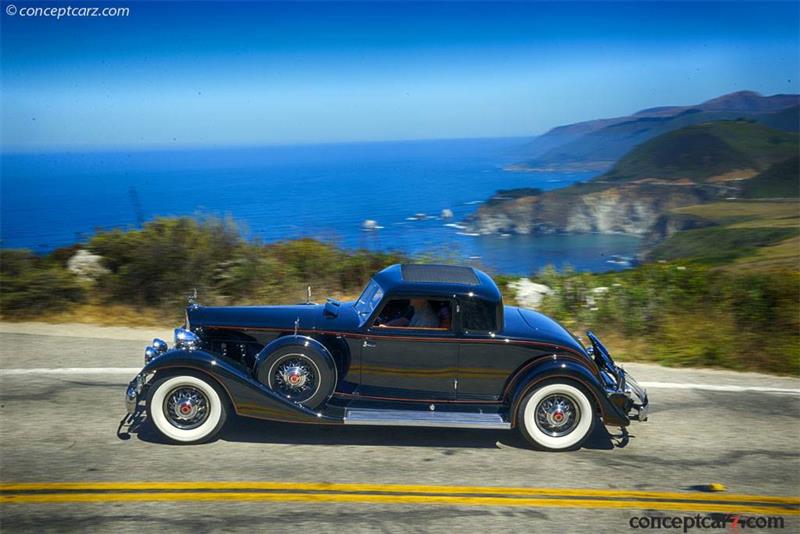
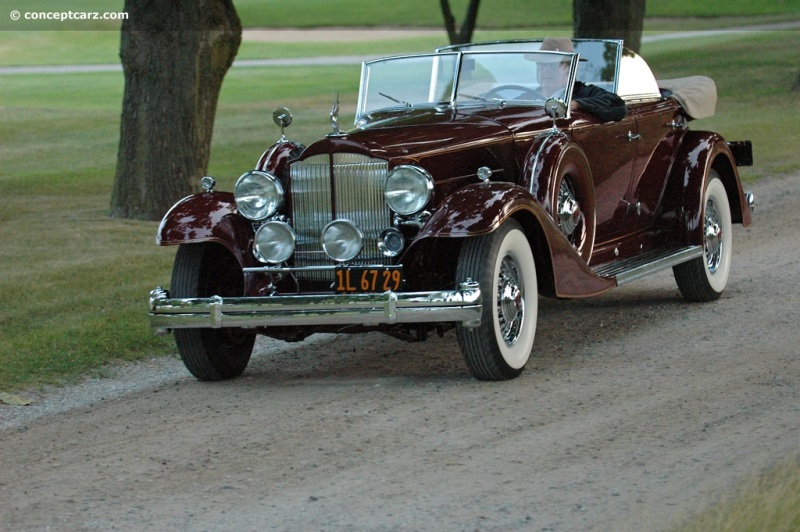
Auction entries : 1The Tenth Series 1933 Packard Twelve models incorporated classically swept fender lines, but now the fenders were skirted, neatly hiding the mechanical components underneath. The V-12 engine was positioned behind the vee'd radiator shell and rested on a new tapered frame. New mechanical refinements included a single dry-plate clutch and automatic choke.The 1933 Packard Tenth Series Twelve included the 1005 Series resting on a 142-inch wheelbase platform and the Series 1006 on a larger 147-inch wheelbase platform. Both were equipped with a 445.5 cubic-inch twelve-cylinder engine with four main bearings, a cast iron monoblock, 6.0:1 compression, a Stromberg carburetor, and developing 160 horsepower at 3,200 RPM. The engine was backed by a three-speed selective synchromesh transmission with a single dry plate clutch and floor shift controls. Mechanical brakes on all four wheels provided the stopping power. The total production of all 1933 Packard Twelves was 520 units.
Sedan by Fernandez & Darrin
View info and historyStandard coachwork on the Series 1006 included a seven-passenger sedan listed at $4,085 and a limousine at $4,285. All-Weather coachwork included a Landaulet, town car, and cabriolet. Custom coachwork by Dietrich included a coupe priced at $6,000, a convertible at $6,085, a convertible victoria at $6,070, a sport phaeton at $5,875, a convertible sedan at $6,570, and a formal sedan at $7,000. LeBaron coachwork included an all-weather cabriolet and an all-weather town car with both priced at approximately $7,000. Many agree that the 1933 and 1934 Packards are arguably the highlights of Packard's Classic Era design.
by Daniel Vaughan | Aug 2019
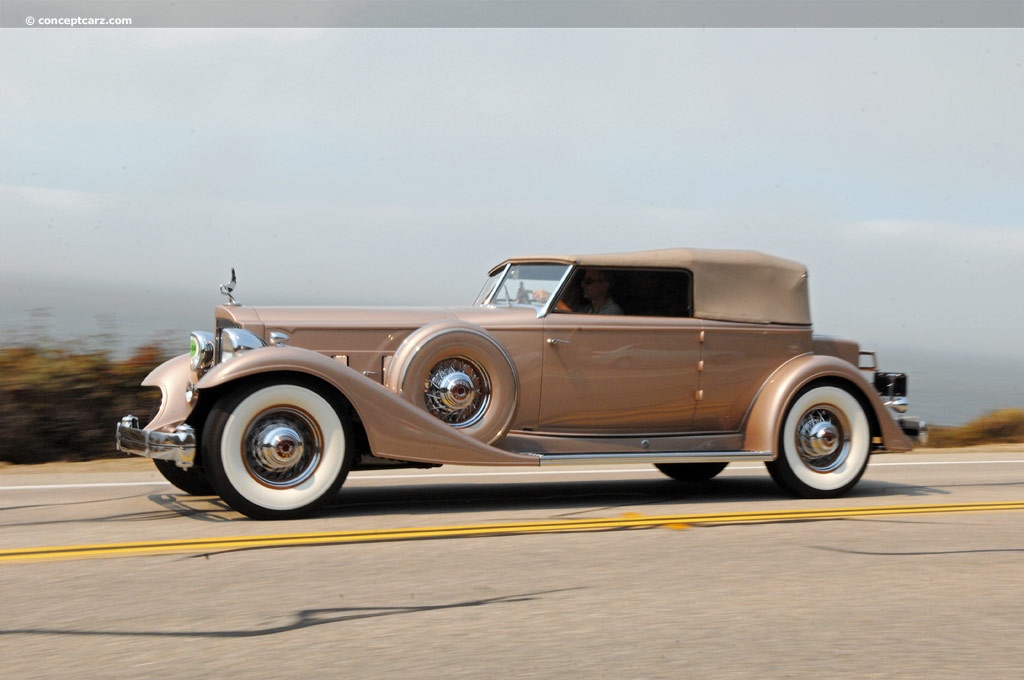
Convertible Victoria by Dietrich
Chassis #: 901360
Engine #: 901368
View info and history
Auction entries : 1
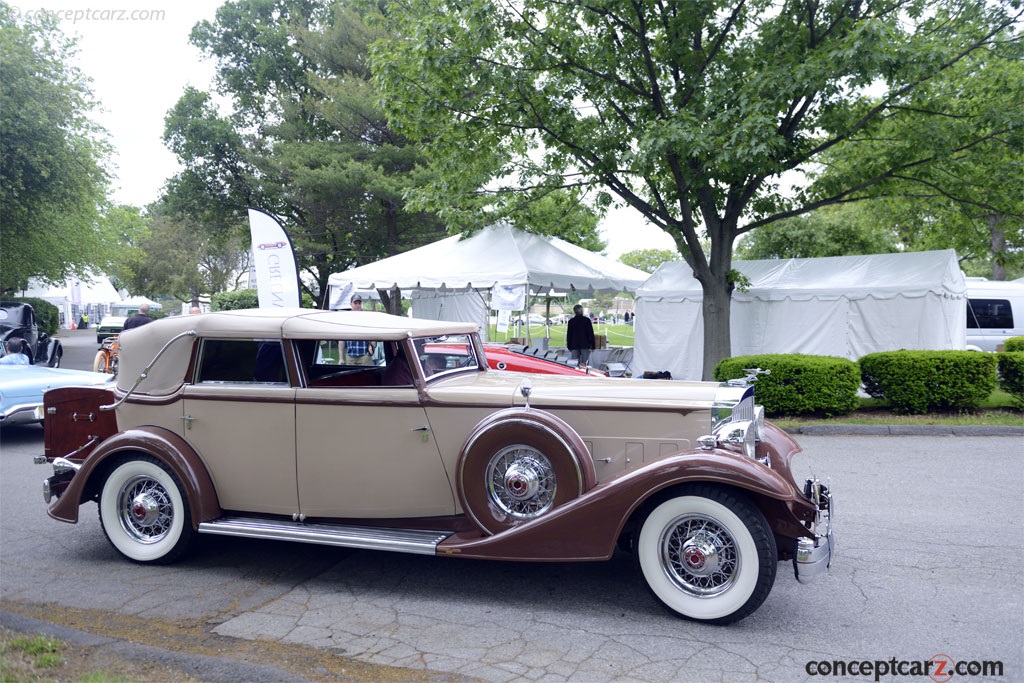
Sedan by Fernandez & Darrin
View info and history
by Daniel Vaughan | Aug 2019
Related Reading : Packard Twelve History
The Packard Twelve was produced from 1933 to 1939 with over 35,000 examples produced. It is considered by many to be one of the finest automobiles produced by Packard and one of the most significant creations of the classic car era. The long and flowing front hood hid a 445 cubic-inch side-valve twelve-cylinder engine that was refined, powerful, smooth, and quiet. The engine was originally destined....
Continue Reading >>
Continue Reading >>
Similar Automakers


1933 Packard 1006 Twelve Vehicle Profiles





Recent Vehicle Additions


Performance and Specification Comparison
Price Comparison
$2,200 - $2,300
$2,350 - $3,085
$2,800 - $3,650
$3,700 - $4,700
Twelve Tenth Series Specification Comparison by Year
Year
Production
Wheelbase
Engine
Prices
Related Automotive News

Past Best of Show Winners at The Pebble Beach Concours d'Elegance
overview1
The 70th anniversary of the Pebble Beach Concours dElegance was celebrated with a spectacular display of previous Best of Show winners. Thirty-seven examples graced the showfield and many were still with the same owners who raised the trophy...

Alfa Romeo Named Best of Show at the 68th Pebble Beach Concours d'Elegance
Touring-Bodied Alfa Romeo 8C 2900B Named Best of Show at the 68th Pebble Beach Concours dElegance
PEBBLE BEACH, Calif. (August 26, 2018) — After an intense competition that drew diverse cars from around the globe, the coveted gold Best of Show...

1929 Mercedes-Benz S Barker Tourer Named Best Of Show At The 67Th Pebble Beach Concours d'Elegance
PEBBLE BEACH, Calif. (August 20, 2017) — Just a week ago, Bruce R. McCaws 1929 Mercedes-Benz S Barker Tourer emerged from the restoration shop of Steve Babinsky in Lebanon, New Jersey. Today, having crossed the country, the boattailed beauty captured...

Two Best of Show Winners : Similar Designs : Same Owner
When these two vehicles won Best of Show honors at major Concours dElegance events, they both were owned by Judge Joseph Cassini III. The green colored Chrysler 4 door Phaeton with tan convertible top wears coachwork by LeBaron. In 2012, it won the...

63rd Pebble Beach Concours d'Elegance Names 1934 Packard 'Best of Show'
The competition showcased 248 cars, including 48 from abroad
PEBBLE BEACH, Calif. (August 18, 2013) -- A 1934 Packard 1108 Twelve Dietrich Convertible Victoria owned by Joseph and Margie Cassini III of West Orange, New Jersey, was named Best...