1955 Alfa Romeo 1900 CSS news, pictures, and information | ||
| Tweet | ||
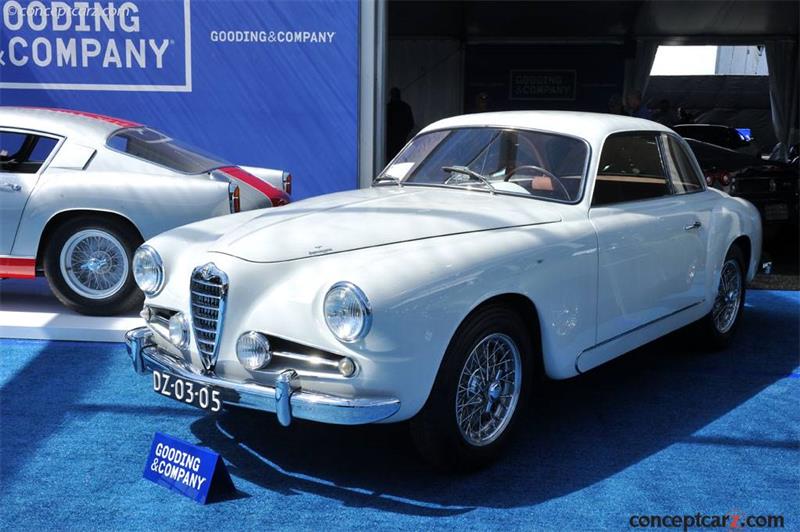
![]() | ![]() | ![]() | Coupe Coachwork: Touring |
Beginning with the launch of a sedan in 1950, the 1900 was the first Alfa Romeo model to emerge from the legendary marque's factories after World War II, its first four-cylinder engine, and its first unitary frame. Designed by Orazio Satta, the car featured exceptionally advanced design, but retained the traditional Alfa Romeo twin overhead cam engine layout.
A unique short (corto) chassis emerged in 1952 and endeared itself to the custom coachbuilders that flourished in Italy, such as Touring, Pinin Farina, Ghia, Zagato, Castagna and Boano who produced attractive GT type coupes and cabriolets. The most prolific builder was Carrozzeria Touring, linked closely with Alfa for decades and delivering four main body styles over seven years.
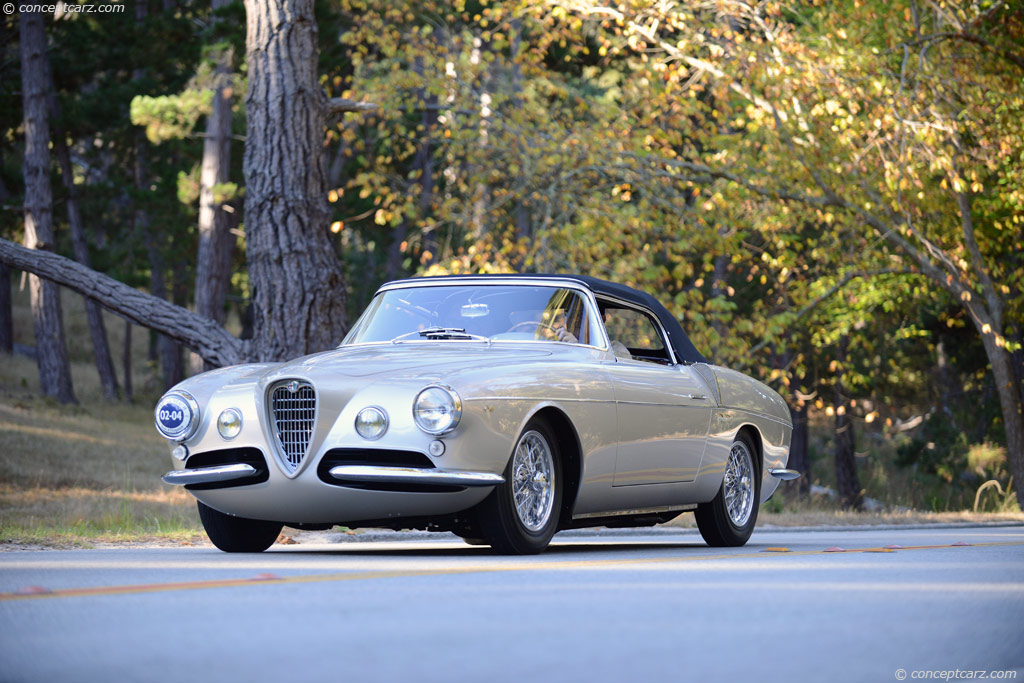
This Touring Superleggera Tipo III has a hand-build alloy body. To further reduce weight, Perspex rear windows replaced heavier glass. The Borrani wire wheels have alloy rims and are mounted on exceptionally large alfin brake drums with cooling ducts in front. The column shift operates a five-speed all synchro gearbox, which was quite amazing for its time.
The current owner, who purchased this car 32 years ago, managed an 11 year restoration which was completed in 1990.
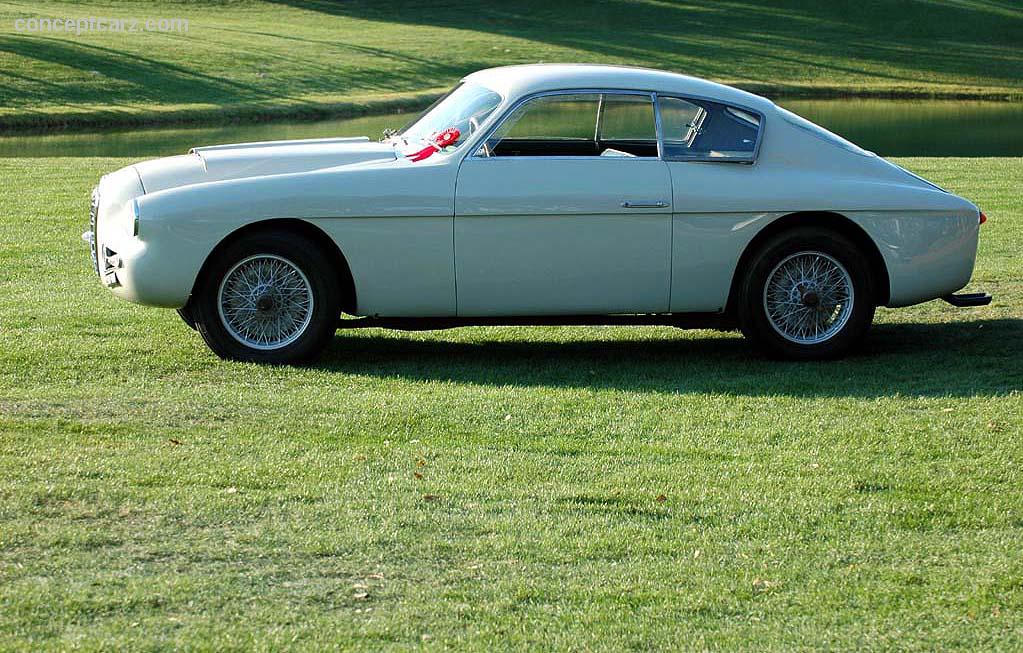
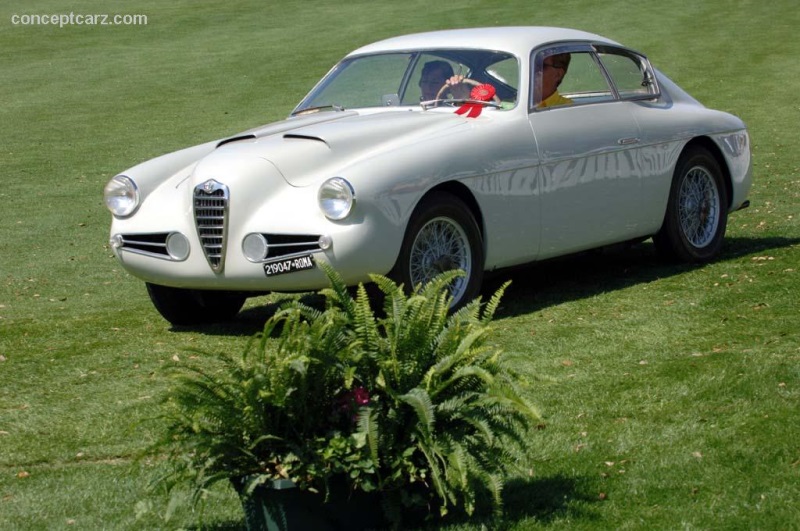
![]() | ![]() | ![]() | Competition Berlinetta Coachwork: Ghia Chassis Num: AR1900C 01742 Engine Num: AR1308 00690 |
The 1900 was Alfa Romeo's first production car without a separate chassis as well as the first Alfa offered with left-hand drive steering configuration. It was also the company's first series built on a standardized production line.
The 1900 was available as a 2-door coupe and 4-door sedan and initially powered by a new 1884cc, 90 horsepower, 4-cylinder twin cam engine. They had independent front suspension (double wishbones, coil springs and hydraulic telescopic shock absorbers) and one of the very best live rear axle designs seen up to that point.
In 1951 the short wheelbase 1900C ('C' for corto (Italian for short)) version was introduced. They rested on a wheelbase of 2500mm rather than the standard 2530mm standard coupe and sedan. The 1900TI was also introduced that same year, with a more powerful 100BHP engine. The 1900TI had bigger valves, higher compression ratio and equipped with twin-carburetors. Two years later the 1900 Super and 1900TI Super (also 1900SS or Super Sprint) with enlarged 1975cc engine were introduced. The TI Super with twin carburetors produced 115 horsepower and featured a 4-speed gearbox with revised ratios but still using the standard final drive ratio.
The ultimate specification of the 1900 line-up was the 'CSS' variant that featured both the shorter chassis as well as the most developed and best performing engine, gearbox and revised final drive ratios. Brakes were 'Alfin' double-leading shoe, self-adjusting at all four corners and the fronts featured ducting and scoops for added cooling.
Alfa Romoe's 1900CSS models were well designed and thoroughly sorted 5-speed gearbox with full synchronization on 2nd, 3rd, 4th and 5th gear. The ratios were carefully selected to match the torque and RPM curve of the high specification, twin-cam 'Tipo 1308' series engine. As a result of the performance increase and use of a five rather than a four-speed gearbox, the standard 4.1:1 final drive ratio was unnecessary. A taller 3.75:1 unit was instead fitted which allowed for far better top-speed as well as far less RPM at speed in any gear.
The 1900CSS was clothed by such legendary coachbuilders such as Touring, Pinin Farina, Zagato and Ghia. While those from Touring and Pinin Farina utilized mostly steel bodies with some alloy opening panels, Zagato and Ghia's examples featured all alloy body construction. The standard production 1900s weighed around 2400lbs while the Zagato and Ghia versions of the 1900CSS were often less than 2,000 lbs. This reduction in weight added to better performance on the track and in the tours and rallies.
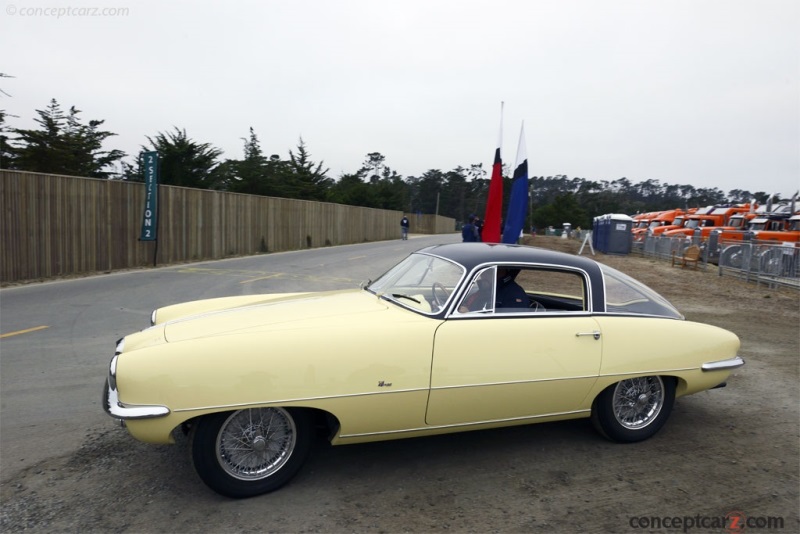
![]() | ![]() | ![]() | Coupe Coachwork: Touring Chassis Num: AR1900CO1998 |
By Daniel Vaughan | Jan 2013
Much of Europe was devastated by bombing and attacks during World War II and factories that had been producing vehicles switched to producing materials and vehicles in support of the war efforts. The war ended in 1947 and by 1950 Alfa Romeo had a new vehicle ready for serious production. It was designed by Dr. Orazio Satta Puliga and was the first Alfa Romeo to use unitary construction. Under the hood was a four-cylinder engine with dual-overhead-camshafts which was a tribute to the companies racing history. The suspension was also sporty with an Independent front suspension with wishbones and coil springs. In the rear was a live rear axle.
This was a very important vehicle for Alfa Romeo as the company struggled to regain its market-presence after the war. The 1900 was produced by Alfa Romeo in a variety of bodystyles with the sedan being the most popular. Though custom coachbodies was not as prevalent after the 1940's, nearly every major Italian Coachbuilder created a coupe or cabriolet version of the vehicle. Part of the popularity was the vehicles sporty characteristics which made it easier for the coachbuilder to design and create attractive bodies.
Touring created three series of Super Sprints on a shortened version of the chassis. As mentioned before, the majority of the vehicles were sedans and only 10% of the vehicles created sat atop a shortened (corto) chassis. It is estimated that Touring created around 965 examples of the corto chassis, each were hand built and created as a special-order purchase. Many of the details were left up to the consumer to cater to their every wish and desire.
The examples created by Pinin Farina were mostly cabriolets. Zagato created 41 examples with most being coupes and two being convertibles. The bodies by Zagato are considered some of the most memorable and exciting of all the custom built Alfa Romeo 1900's.
When the 1900 was first introduced it was powered by a four-cylinder engine that produced an adequate 90 horsepower. A few years later the Ti version was introduced which raised the horsepower to about 100. Throughout the years, horsepower would again be improved and specifications varied.
Production of the 1900 lasted for ten years with more than 21,000 examples produced.
By Daniel Vaughan | Apr 2007
This was a very important vehicle for Alfa Romeo as the company struggled to regain its market-presence after the war. The 1900 was produced by Alfa Romeo in a variety of bodystyles with the sedan being the most popular. Though custom coachbodies was not as prevalent after the 1940's, nearly every major Italian Coachbuilder created a coupe or cabriolet version of the vehicle. Part of the popularity was the vehicles sporty characteristics which made it easier for the coachbuilder to design and create attractive bodies.
Touring created three series of Super Sprints on a shortened version of the chassis. As mentioned before, the majority of the vehicles were sedans and only 10% of the vehicles created sat atop a shortened (corto) chassis. It is estimated that Touring created around 965 examples of the corto chassis, each were hand built and created as a special-order purchase. Many of the details were left up to the consumer to cater to their every wish and desire.
The examples created by Pinin Farina were mostly cabriolets. Zagato created 41 examples with most being coupes and two being convertibles. The bodies by Zagato are considered some of the most memorable and exciting of all the custom built Alfa Romeo 1900's.
When the 1900 was first introduced it was powered by a four-cylinder engine that produced an adequate 90 horsepower. A few years later the Ti version was introduced which raised the horsepower to about 100. Throughout the years, horsepower would again be improved and specifications varied.
Production of the 1900 lasted for ten years with more than 21,000 examples produced.
By Daniel Vaughan | Apr 2007
The Alfa Romeo 1900 Series was produced from the very early 1900s through 1959. It was designed by Italian designer, Orazio Satta, and became the company's first car built on a production line. This vehicle signaled a radical departure from the type of business Alfa Romeo had constructed in the pre-War era. This shift towards an affordable production automobile was a necessary evolution for the company and a gamble that would prove to be the correct endeavour. In the pre-War era, the company had created expensive and powerful performance machines. Other marque's, such as Delahaye and Talbot Lago, had also be renowned for their performance machines, and had continued to cater only to this type of business in the post-War era. By the close of the 1950's, Alfa Romeo was still in business, while Talbot and Delahaye both were not.
In keeping with Alfa Romeo's tradition, Satta was given the difficult task of creating a vehicle that was affordable and could be mass produced, yet still retain the company's heritage of quality and performance. What was created was a major advancement, as the vehicle was given a unitary construction where the body worked as part of the chassis and housed many of the mechanical components. Prior to this, the body and chassis had been constructed separately, which was a traditional method by most marque's. The unitary construction made mass production much easier, allowed cost to remain low, and kept the vehicles performance to maximum. The major drawback to this type of construction was the difficulty it provided with custom coachwork.
The design of the vehicle was perfected by the Alfa Romeo designers with the help of wind tunnels. The vehicle was given a very aerodynamic body that was elegant and memorable. Under the bonnet was a four-cylinder engine that displaced 1884cc and fitted with dual overhead camshafts. Horsepower was impressive considering the engines size, rated at around 90 which put it on par with the larger 6C 2500 six-cylinder engine. The engine was placed in the bay at a longitudinally angle, matted to a four-speed manual gearbox with steering-column levers, and powered the rear wheels. Top speed was achieved at just over 105 mph.
The vehicle was attractive, sporty, and elegant. It was a fine addition to Alfa Romeo's proud heritage and their quest to create a more affordable, mass produced automobile. 7,400 base model examples were produced between 1950 through 1954 making it their most popular vehicle to date.
One year after the vehicles introduction, Alfa Romeo introduced the Ti and Super versions. Both were created in a way that provided flexibility to coachbuilders to create a wide range of custom bodies. The list of builders included Ghia, Touring, and Pinin Farina. The list of body styles ranged from racing machines to two-seater luxury automobiles. The Super body style had a shorter wheelbase and was an excellent platform to create sporty versions of the 1900.
By 1954, Alfa Romeo introduced a larger engine that increased horsepower even further. The top-of-the-line version in terms of performance was the Super Sprint, which offered 115 horsepower. It seems that after Alfa Romeo secured their initial goals of creating an affordable automobile, they immediately searched for ways to improve upon its performance.
By Daniel Vaughan | Aug 2007
For more information and related vehicles, click hereIn keeping with Alfa Romeo's tradition, Satta was given the difficult task of creating a vehicle that was affordable and could be mass produced, yet still retain the company's heritage of quality and performance. What was created was a major advancement, as the vehicle was given a unitary construction where the body worked as part of the chassis and housed many of the mechanical components. Prior to this, the body and chassis had been constructed separately, which was a traditional method by most marque's. The unitary construction made mass production much easier, allowed cost to remain low, and kept the vehicles performance to maximum. The major drawback to this type of construction was the difficulty it provided with custom coachwork.
The design of the vehicle was perfected by the Alfa Romeo designers with the help of wind tunnels. The vehicle was given a very aerodynamic body that was elegant and memorable. Under the bonnet was a four-cylinder engine that displaced 1884cc and fitted with dual overhead camshafts. Horsepower was impressive considering the engines size, rated at around 90 which put it on par with the larger 6C 2500 six-cylinder engine. The engine was placed in the bay at a longitudinally angle, matted to a four-speed manual gearbox with steering-column levers, and powered the rear wheels. Top speed was achieved at just over 105 mph.
The vehicle was attractive, sporty, and elegant. It was a fine addition to Alfa Romeo's proud heritage and their quest to create a more affordable, mass produced automobile. 7,400 base model examples were produced between 1950 through 1954 making it their most popular vehicle to date.
One year after the vehicles introduction, Alfa Romeo introduced the Ti and Super versions. Both were created in a way that provided flexibility to coachbuilders to create a wide range of custom bodies. The list of builders included Ghia, Touring, and Pinin Farina. The list of body styles ranged from racing machines to two-seater luxury automobiles. The Super body style had a shorter wheelbase and was an excellent platform to create sporty versions of the 1900.
By 1954, Alfa Romeo introduced a larger engine that increased horsepower even further. The top-of-the-line version in terms of performance was the Super Sprint, which offered 115 horsepower. It seems that after Alfa Romeo secured their initial goals of creating an affordable automobile, they immediately searched for ways to improve upon its performance.
By Daniel Vaughan | Aug 2007
| Next Generation European Compact Car From Nissan To Be Manufactured By Renault In Europe | |
![]() | Nissan Motor Co., Ltd. today announced that the replacement for the current Nissan Micra compact car will be manufactured at a Renault plant in Europe. Due to start production in 2016, the vehicle will be exported across Europe's left-hand drive markets. Under the Nissan Power 88 six-year business plan, the company will launch, on average, one new model every six weeks for the duration of the plan. Consequently, available capacity across the relevant plants in the Nissan manufacturing networ...[Read more...] |
| LAMBORGHINI'S 50TH ANNIVERSARY: '100 YEARS OF INNOVATION IN HALF THE TIME' | |
![]() | In 2013, the 50th year since it was founded, Automobili Lamborghini is participating in the annual Techno Classica fair at Essen, where Lamborghini will be showing two of its supercars that have made automotive history, at pavilion 7. Introduced in 1964, the 350 GT was the first mass-produced Lamborghini, while the 1972 P 400 Miura SV was the final evolution of the legendary Miura - the first super sports car with a modern design. Both vehicles on display were taken from the extensive collec...[Read more...] |
| GENEVA MOTOR SHOW DEBUTS DESTINED FOR SALON PRIVÉ | |
![]() | Salon Privé 2013 confirmed for 4th to 6th September at West London's Syon Park Syon Park, London, 5th March 2013 – Salon Privé, the Luxury Super Car Show and Concours d'Elégance, will return to West London's Syon Park from Wednesday 4th to Friday 6th September 2013, with exhibitor plots and visitor tickets already selling out fast. Featuring a new format to include the world-renowned Chubb Insurance Concours d'Elégance on day 1 (opened by the Tour d'Elégance concours car parade), ...[Read more...] |
| Final Countdown Underway To South Florida's Premier Collector Car Auction | |
![]() | • Auctions America kicks off its 2013 auction season, March 22-24 with its highly anticipated Fort Lauderdale Collector Car Auction • Celebrating its 11th year, the multi-day auction features more than 550 quality collector cars • Latest feature attractions include an outstanding 1963 Shelby Cobra and a 1974 Ferrari Dino 246 GTS • Digital catalog now available for download at auctionsamerica.com AUBURN, Indiana (February 27, 2013) – With the final countdown underway to its highly an...[Read more...] |
| Bonhams Monaco sale | |
![]() | Now in its 26th year, Bonhams celebrated sale 'Les Grandes Marques à Monaco' will be held at the Musée des Voitures du Prince, Monte Carlo on the 11th May and will once again be under the patronage of the Grimaldi Family. The sale also coincides with the biannual Monaco Historic Grand Prix, the focal point for historic motor racing enthusiasts during May. Highlights from the Sale include examples from Bugatti, Ferrari, Alfa Romeo, Rolls-Royce, Aston Martin, Maserati and Facel Vega. Partic...[Read more...] |
1955
Alfa Romeo
models |
| Alfa Romeo 1900 SS |
| Alfa Romeo Giulietta Berlina Prima Jerie |
| Alfa Romeo Speciale 1900 CSS | 1955 Alfa Romeo Concepts |
| Alfa Romeo B.A.T. 9 |
| Alfa Romeo Giulietta Prototype |
| Similar Automakers | |
| Citroen | Fiat |
| Lancia | Morgan |
| Opel | Peugeot |
| Renault | Seat |
| Skoda | Vauxhall |
| Similarly Sized Vehicles from 1955 |
| Alfa Romeo 1900 SS |
| Alfa Romeo Speciale 1900 CSS |
| Lancia Aurelia |
| Alfa Romeo: 1951-1960 |
| Similar Automakers |
| Other models by Alfa Romeo |
| 147 156 164 1750 1900 SS | 2000 24HP 2600 6C 8C | 8C 2600 90 Alfetta Arna BAT | Giulia Giulietta Junior Zagato Milano Montreal | P3 RL Spider Sprint Zagato SZ | Tipo 158 Alfetta Tipo 33 TZ |


1955