1962 MG MGA 1600 pictures and wallpaper 1962 MG MGA 1600 pictures and wallpaper 1962 MG MGA 1600 pictures and wallpaper 1962 MG MGA 1600 pictures and wallpaper 1962 MG MGA 1600 pictures and wallpaper
1962 MG MGA 1600 pictures and wallpaper 1962 MG MGA 1600 pictures and wallpaper 1962 MG MGA 1600 pictures and wallpaper 1962 MG MGA 1600 pictures and wallpaper


1962 MG MGA 1600 news, pictures, and information

Roadster
Chassis Num: GHNL2/101755
 
This blue 1962 MGA MK II 1600 Roadster finished in Iris blue was offered for sale at the 2006 RM Auction in Monterey where it was offered without reserve. It was expected to sell between $35,000-$45,000. The MGA Mark II was the last of the MGA Series which had been introduced in 1955 and continued until June of 1962. In total, 8,719 examples were produced in both roadster and fixed head coupe configuration. Under the hood was a BMC 1622 cc engine capable of producing 93 horsepower. The engine was cast-in-block which provided for the increase in horsepower by 13 over the previous MGA models. Torque also increased by 12 percent.

The vehicle shown has a blue interior with white piping. It has been treated to a three year frame-off restoration. All mechanical systems on the car were replaced with new components. On auction day the vehicle was sold for $36,300.
View more photos
Roadster
 
MG produced the 'A' model from 1955 to 1962 as a roadster and a coupe. This 1962 is a Mark II Roadster, the only year that the MKII was produced. It is distinguished from the other earlier model A's by a recessed grille, the 1622 cc motor, vinyl covered dash, and tail lights mounted below the boot lid (where earlier models were fender-mounted). The name MG came from Cecil Kimber starting the MG brand at the Morris Garage, thus MG for short. The 1622cc higher compression motor produces 90 horsepower with 97 foot-pounds of torque at 5500 revolutions. The MG engine is mated to a four-speed transmission. This award winning MG has been owned by the Hickman's since 1975 and they have driven the car on many long distance trips; the last being to Key West Florida in April of 2006.
Coupe
Chassis Num: GHDL2/105849
Engine Num: 16GCUH5915
 
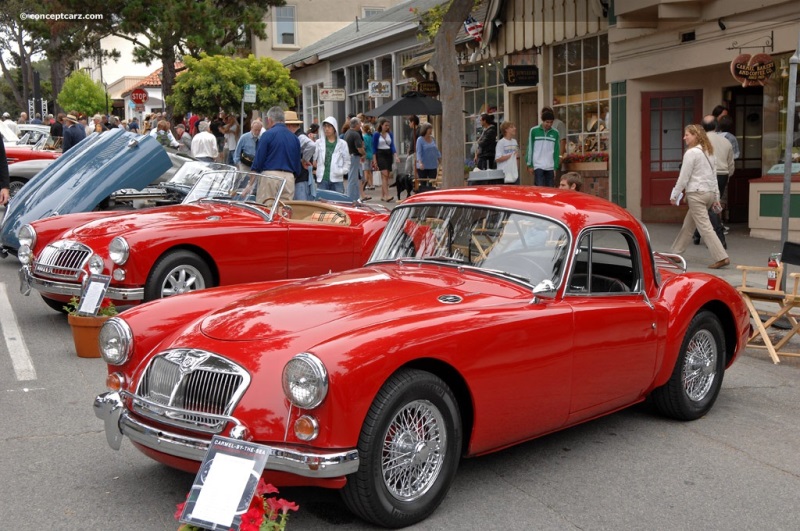
This Chariot red over black coupe is from the last year of MG A production and features a 1622cc B-Series engine and a 4:1 rear axle for lower revs at highway speeds. These last years of the MG A brought the Mark II cars and only 521 MK2 coupes were built, compared to 8198 roadsters. The car has body-on-frame construction and non-powered rack-and-pinion steering. Its low styling was a dramatic break from the more upright T-type cars that preceded it in MG's line-up.
The MGA began production in 1955. The styling and mechanics were different from previous MG models. The public had been given hints of its new design during the 1951 Le-Mans 24 hour endurance race. The car was driven by George Phillips and was actually a TD Midget with body modifications.
The XPAG engine that had power many previous MG's was replaced by a new power-plant. This 1489 cc four-cylinder, B-series engine provided between 68 and 72 horsepower. The BMC B-series unit had made its debut in the MG Magnette saloon and proved to be a reliable and powerful engine.

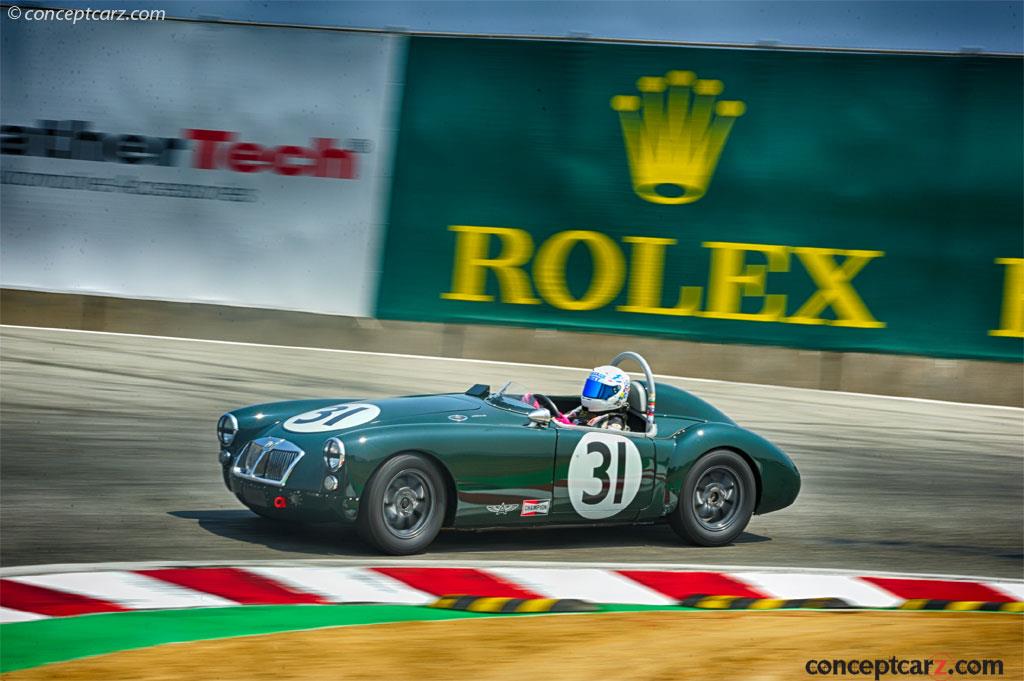
To create enthusiasm for the cars prior to release, three aluminum bodied prototypes were created and dubbed EX182. They were entered into the Le Mans race where they finished fifth and sixth in their class. This epic achievement gave the MGA racing credibility and mechanical reliability.

The styling of the car was undeniably elegant. Its aerodynamic design and two-seat open-body was stylish and sporty. The vehicle sat very low to the ground providing an excellent center of gravity. This improved the handling and cornering ability. The chassis was a modified TD Midget unit with widely spaced side rails allowing for a low-seating position.

In the rear of the vehicle was a spare wheel mounted on the upper portion of the outside of the vehicle. Underneath was adequate trunk-space for luggage. At the front of the vehicle sat the engine.

Steel disc wheels were standard equipment but centre-locking wire wheels could be substituted at an additional fee. Since the car had an open top, it was subjected to the elements. A hard-top could be purchased making the vehicle more versatile.

A coupe version quickly followed and offered features such as wind-up windows, soft-top version, and other amenities that helped appeal to a wider customer base. To stay competitive on the race track, the MGA twin-cam version was introduced in 1958. This high performance version could be driven to the race track, race, and then be driven home. The engine had been modified with aluminum components, twin overhead camshafts, and dual SU carburetors. These enhancements increased the horsepower rating to 110 and the overall top speed to 115 miles-per-hour. Disc brakes replaced the drums which not only made the car more competitive, it made it safer. Unfortunately, the vehicle suffered from reliability issues and did not hold up well to the strain of racing. So in 1960, MG discontinued its production.

In 1959, MG introduced the MGA 1600's and offered them in coupe and open form. These were the standard MGA cars but with 1588 cc B-series pushrod engines. Drum brakes were used in the rear of the vehicle, but disc brakes were placed in the front.

In 1961, the MGA 1600 MKII was introduced. It featured a 1622 cc. B-series engine that was capable of producing 93 horsepower. 100 miles per hour was easily achieved by the MKII. Minor aesthetic changes were made to the front and rear of the vehicle.

In 1962, MG ceased production of the MGA. Nearly 100,000 examples had been produced during its life span making it the longest-running and best-selling MG. The success of the vehicle was in part to its styling, racing history, performance, and its competitive pricing. Many of the MGA's produced were exported to the United States. In the end and after so many years, the MGA was having trouble staying competitive with models offered by other manufacturers.
For more information and related vehicles, click here

© 1998-2009. All rights reserved. This material may not be published, broadcast, rewritten, or redistributed.