Formed in 1933, the Nissan Motor Company marketed most of its exported products as Datsuns until the latter name was dropped in 1983. The early cars were utilitarian until the arrival of the Fairlay series of the 1960s, followed by the 240Z in 1969 which helped the Japanese firm establish itself as a major force to be reckoned with in the sports/GT market. Indeed, the Datsun 240Z was the first Japanese-made sports car to achieve worldwide recognition. Although designed at Nissan by a team headed by Yoshiko Matsuo, with input from consultant Count Albrecht Goertz, stylist of the BMW 503 and 507, the 240Z looked every inch a European product.
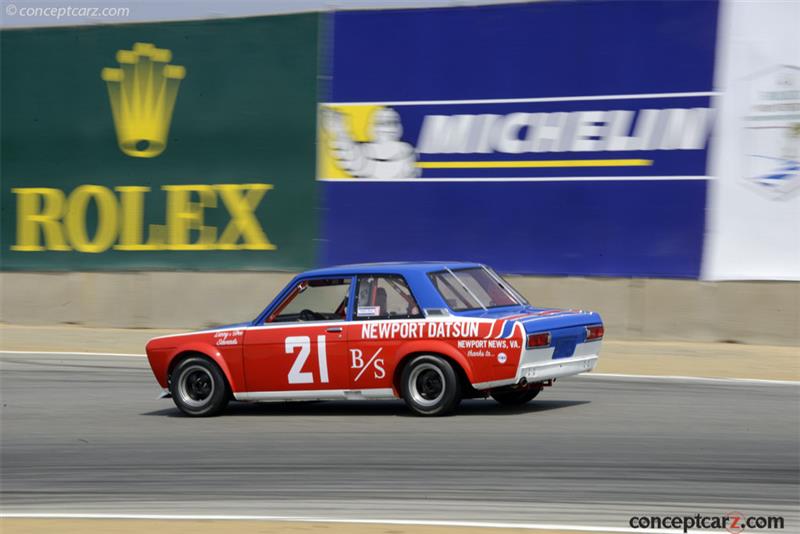
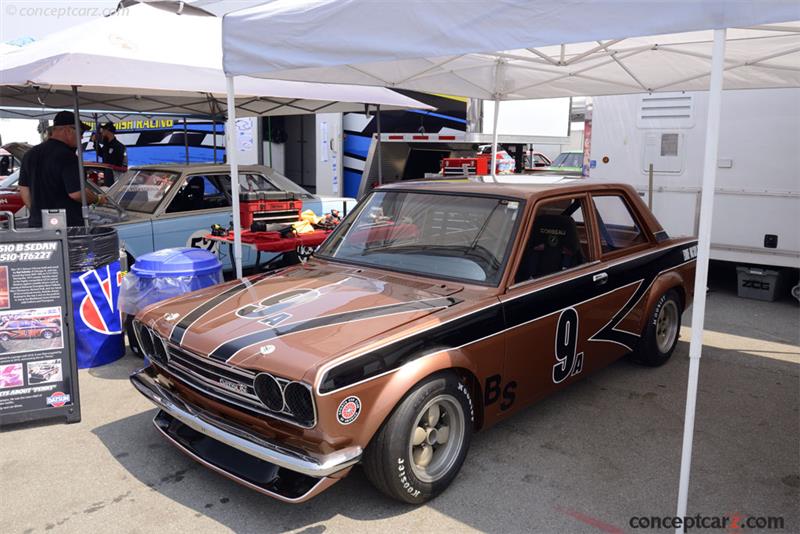
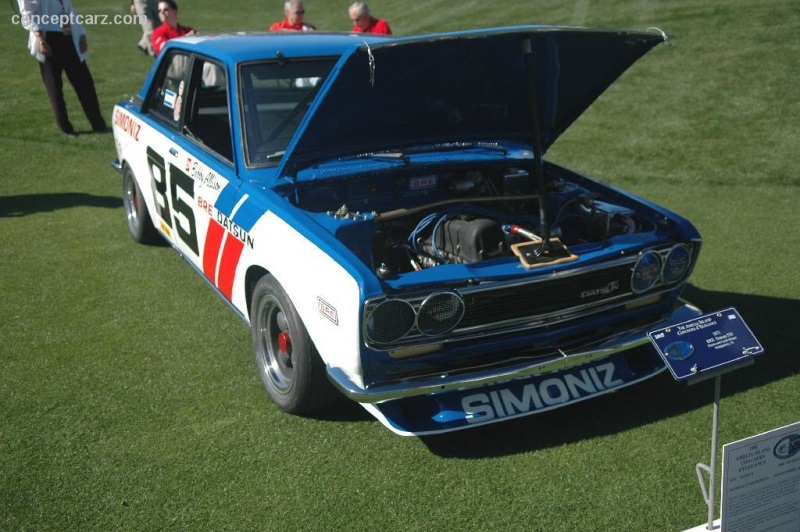
SedanNissan's Datsun brand of light-duty pickups had grown in popularity during the early 1960s, winning praises for their durability, reliability, and affordability. The cowboy star Roy Rogers helped popularize the Patrol 4x4 vehicles in the off-road market, albeit only making a small dent in this niche market. Datsun sedans had received a bit more power and were beginning to be seen on more and more streets in the U.S. The 1500cc Fairlady, model SPL310, was an innovative model which gained a cult following during 1963 and 1965. In 1965, a new and improved model, the SPL311, 1600 version was introduced and quickly became renowned in the sports scene for those on a tight budget. Actor turned race-car driver Paul Newman used a Fairlady for his first racing events which led him to become a major supporter of Peter Brock's BRE Datsun team. Peter Brock was the iconic designer of the Shelby Daytona Coupe and in late 1967, he faced a major dilemma. Toyota had contracted with his company, Brock Racing Enterprises (BRE), to campaign their 2000GT, but at the last minute, Toyota signed a deal with Shelby American for the 1968 race season. Furious with the 'double-crossing,' Brock set his sights on embarrassing his former boss, Carroll Shelby, and disrupting Toyota's million-dollar racing debut. His weapon of choice was the Datun 2000 Roadster, and after 'pulling some strings', had a racing budget from Nissan. By the end of the season, BRE and Datsun's 2000 took SCCA's Pacific Coast Championship, thoroughly achieving his goal.The 1960s were a time of change for Nissan, which merged with the Prince Motor Company in 1966, bringing more upmarket cars, including the Skyline and Gloria, into its selection. Nissan also gained Prince's family of advanced SOHC engines, similar to the ones used to power the early Skyline GT-Rs, and would soon be used to power the Datsun 510.
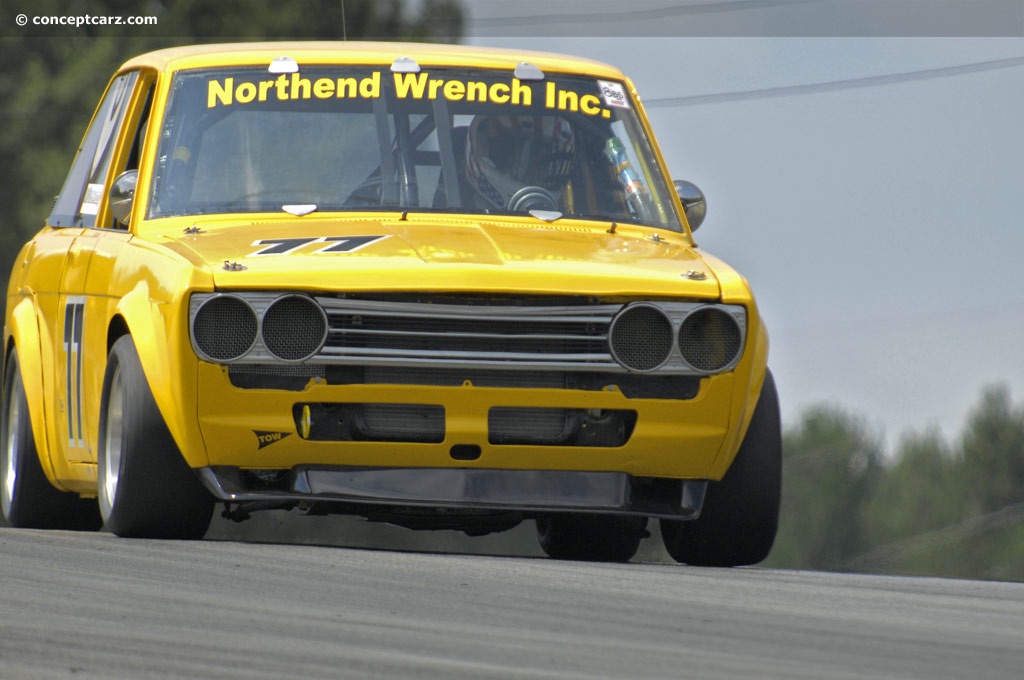
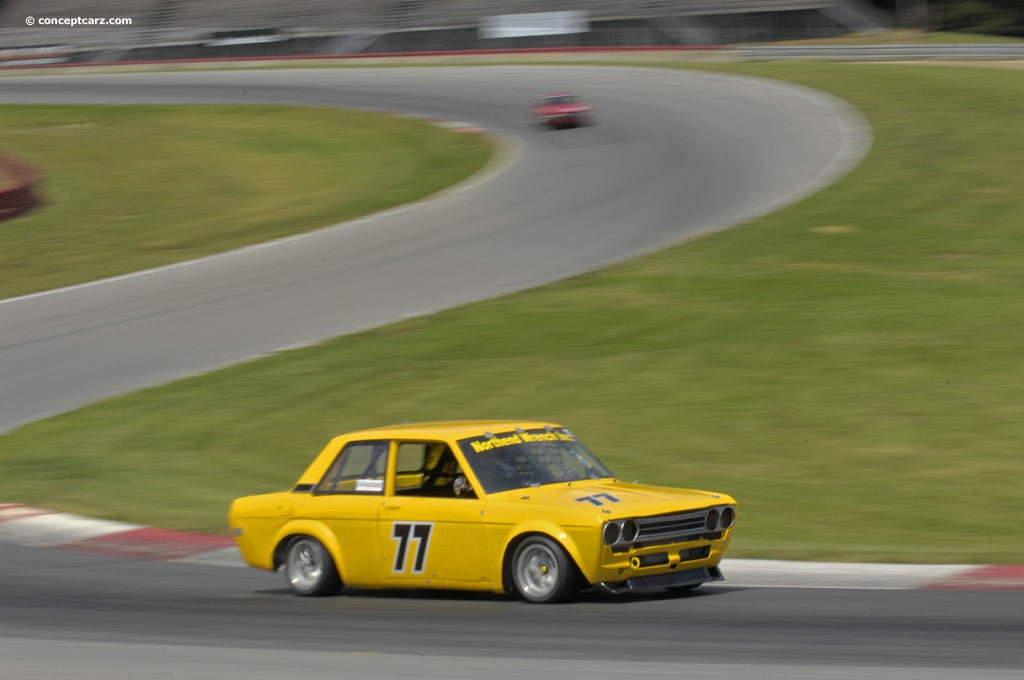
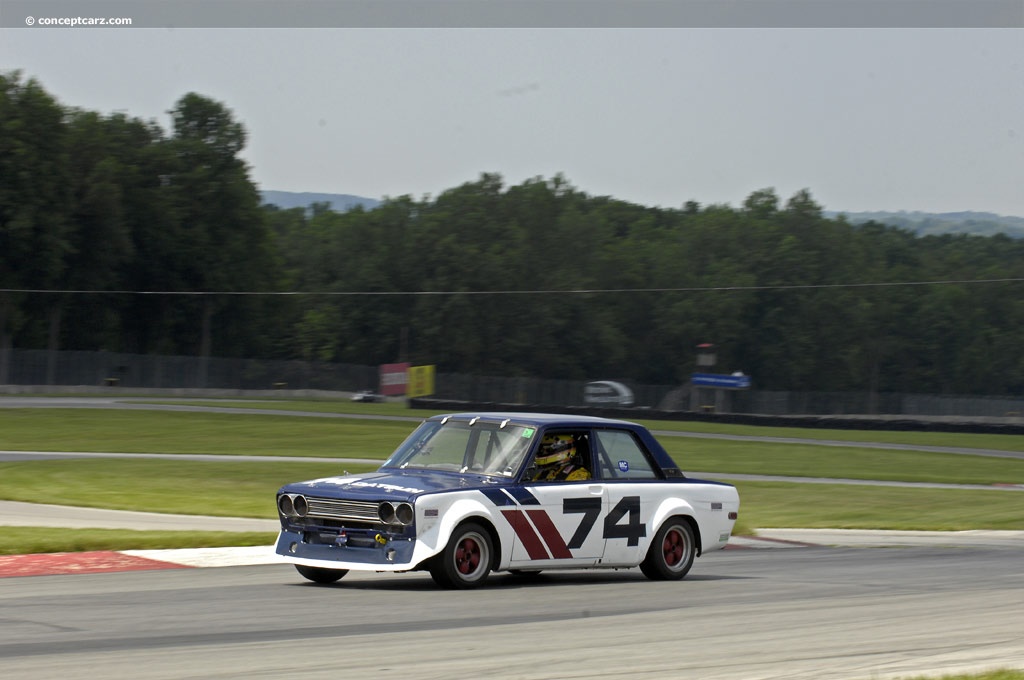
SedanThe Datsun 510 was introduced in October 1967 at the Tokyo Motor Show with engineering and design inspired by contemporary European sedans. Datsun's designer, Teruo Uchino, is credited with penning the design and body styles would include a four-door sedan, a two-door sedan, a five-door station wagon, and a two-door coupe. The two-door sedan was introduced in June of 1968 and the two-door coupe in November of 1968.The Datsun 510 was known as the 'Nissan Bluebird' in its home market was equipped with a 1.6-liter SOHC engine with a Hitachi downdraft carburetor that developed 95 horsepower and 100 ft-lbs of torque. The home market received the 1.3-liter version with around 70 horsepower. A three-speed manual gearbox was employed by the 1.3-liter unit while the North American customers received a four-speed all-synchromesh transmission. Japanese buyers were able to get the Bluebird with the 1600cc engine by October of 1968. The Datsun 510-Series Bluebirds were sold in many different markets, including South America, Asia, and Africa in various specifications. These markets typically received pushrod inline 4-cylinder engines from the J-series with either a 1.3-liter or larger 1.5-liter displacement size. The Datsun 510 rested on a 95.3-inch wheelbase and had a length of 163.2-inches. The suspension was independent in the front and rear with MacPherson struts in the front and semi-trailing arms in the back. Stopping power was provided by disc brakes in the front and drums at the rear. Transmission options included a four-speed manual or a three-speed automatic. Standard equipment included a three-speed heater/defroster, a lighter and ashtrays, front bucket seats with vinyl upholstery, windshield washers, twin padded sun visors, backup lights, and whitewall tires. 1971 Datsun 510
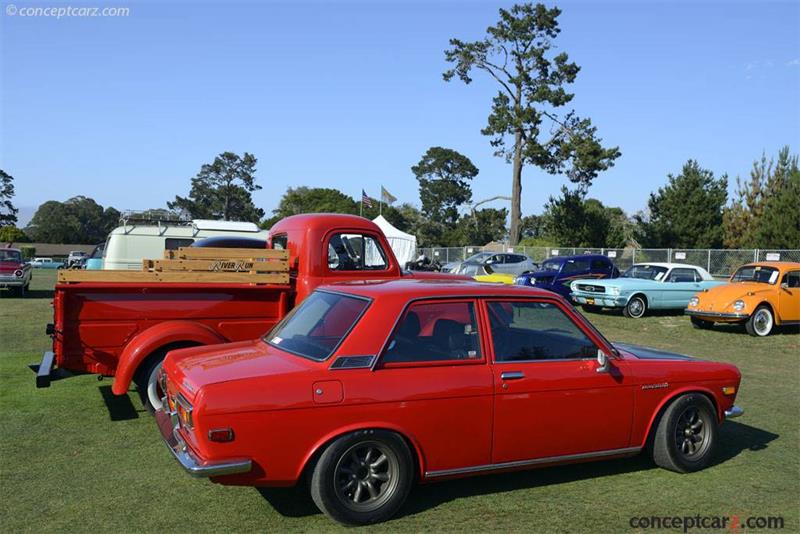
In the U.S. market, the 1971 Datsun 510 two-door sedan had a base price of $1,990, the four-door sedan at $2,120, and the four-door wagon at $2,350. Power was from an overhead-cam four-cylinder unit (Model L16) with a cast-iron block and aluminum head. It had a Hitachi two-barrel carburetor, solid valve lifters, a compression ratio of 8.5:1, a 12-volt electrical system, and delivered 96 horsepower at 5,600 RPM and 100 lb-ft of torque. The engine was backed by a four-speed manual transmission, steering was by a recirculating ball, and stopping power was by front disc, rear drum brakes. The three-speed automatic transmission was optional equipment and added an additional $170 to the base price. Air conditioning, an AM/FM stereo with an 8-track player, tachometer, electric clock, mag-style hubcaps, and a trailer hitch were also part of the options list.
SedanDatsun sold over (approximately) 188,000 vehicles in the United States in 1971, not including pickup trucks. This accounted for approximately ten percent of their total 1971 production.
by Daniel Vaughan | Oct 2021
Sedan
Sedan
In the U.S. market, the 1971 Datsun 510 two-door sedan had a base price of $1,990, the four-door sedan at $2,120, and the four-door wagon at $2,350. Power was from an overhead-cam four-cylinder unit (Model L16) with a cast-iron block and aluminum head. It had a Hitachi two-barrel carburetor, solid valve lifters, a compression ratio of 8.5:1, a 12-volt electrical system, and delivered 96 horsepower at 5,600 RPM and 100 lb-ft of torque. The engine was backed by a four-speed manual transmission, steering was by a recirculating ball, and stopping power was by front disc, rear drum brakes. The three-speed automatic transmission was optional equipment and added an additional $170 to the base price. Air conditioning, an AM/FM stereo with an 8-track player, tachometer, electric clock, mag-style hubcaps, and a trailer hitch were also part of the options list.
Sedan
by Daniel Vaughan | Oct 2021
Related Reading : Datsun 510 History
Inspired by contemporary BMWs, the Datsun 510 was a car range produced by Nissan of Japan from 1968. Introduced in late 1967, once it arrived in America in the fall of 1968 it became an instant hit. Sold in America as the Nissan Bluebird (510 series), it was also sold in various countries as the Datsun 1600 it was the 3rd generation of a line of cars produced by Datsun (Nissan). Under pressure....
Continue Reading >>
Continue Reading >>
Trans-Am Series VehiclesSimilarly Sized Vehicles
Similarly Sized Vehicles
from 1971


1971 Datsun 510 Vehicle Profiles
Recent Vehicle Additions


Related Automotive News

Renowned Racing Legends Grant Exclusive Nod to the Rolex Monterey Motorsports Reunion for New Run Groups
As the Rolex Monterey Motorsports Reunion celebrates the Golden Anniversary of historic racing at Montereys WeatherTech Raceway Laguna Seca, the illustrious gathering also honors the history and significant achievements throughout time. It seems fitting...
Rolex Monterey Motorsports Reunion Returns with Panache as 24 Hours of Le Mans Celebration Wows the Crowds
An amazing selection of 24 Hours of Le Mans winners and specials gathered for the traditional group photo.
Enthusiasm ran at full throttle as the Rolex Monterey Motorsports Reunion celebrated motorsport history with 400-plus incredible historic...

Nissan Honored As Featured Marque At The 2018 Classic Motorsports Mitty
NissanDatsun is featured marque at annual Road Atlanta vintage racing festival
Former Champion John Morton will serve as grand marshal
ROAD ATLANTA, Braselton, Georgia – Big news in the Nissan motorsports world NissanDatsun has been sele...

BMWUSA CLASSIC TO RUN SEVEN CLASSIC RACE CARS IN CENTENARY CELEBRATION AT THE ROLEX MONTEREY MOTORSPORTS REUNION 2016
Woodcliff Lake, N.J. – August 9, 2016…BMW USA Classic will run seven historic race cars at the 2016 Rolex Monterey Motorsports Reunion on August 18-21 in Monterey, California. BMW is the featured marquee at the Rolex Reunion and the brand will...

2016 BATTERY TENDER GLOBAL MAZDA MX-5 CUP PRESENTED BY BFGOODRICH TIRES SCHEDULE ANNOUNCED
40-plus Entries for Season Opener at Mazda Raceway Laguna Seca
IRVINE, Calif. (February 16, 2016) – Mazda announced the 2016 Battery Tender Global Mazda MX-5 Cup Presented by BFGoodrich Tires schedule today, following the series tradit...