Concept Cars Home
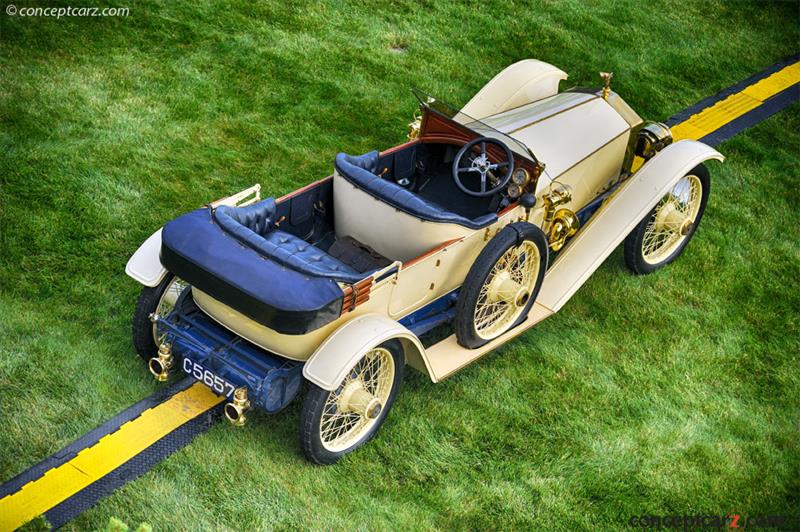
Image Left 1912 Silver Ghost BarkerImage Left 1912 Silver Ghost1914 Silver Ghost Image Right1914 Silver Ghost Shapiro-Schebera Skiff Image Right
 

1913 Rolls-Royce Silver Ghost news, pictures, and information
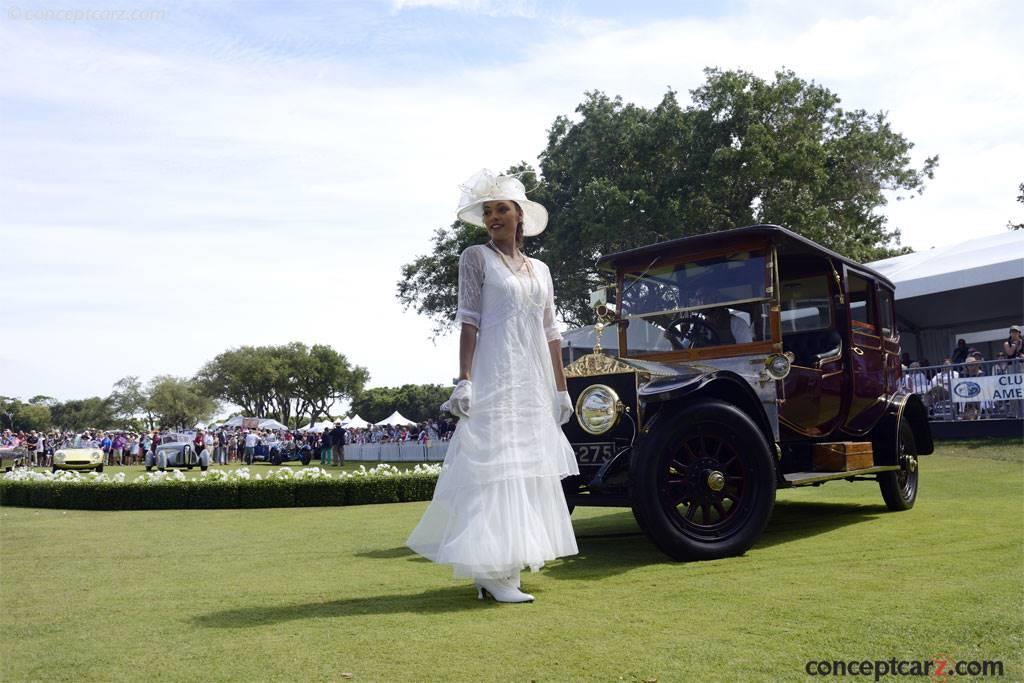
Saoutchick Coachbody
Coachwork: Saoutchik
Chassis Num: 2442
 
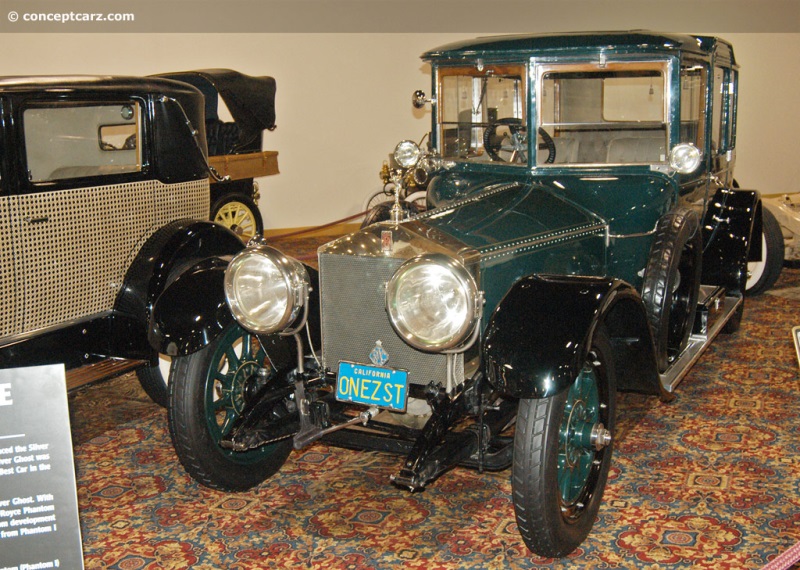
Electrical engineer Henry Royce, dissatisfied with the car he owned in 1903, resolved to build a better one. Within two years he had done just that. It was a predecessor of his masterpiece, the 40/50 Rolls-Royce (1906) which came to be known as the Silver Ghost model. This example is driven regularly on long trips and performs flawlessly. The owner has driven the car over 30,000 miles including across the Alps (2003) and through New Zealand in 2006. The car has the oldest known Jacques Saoutchik coachwork.
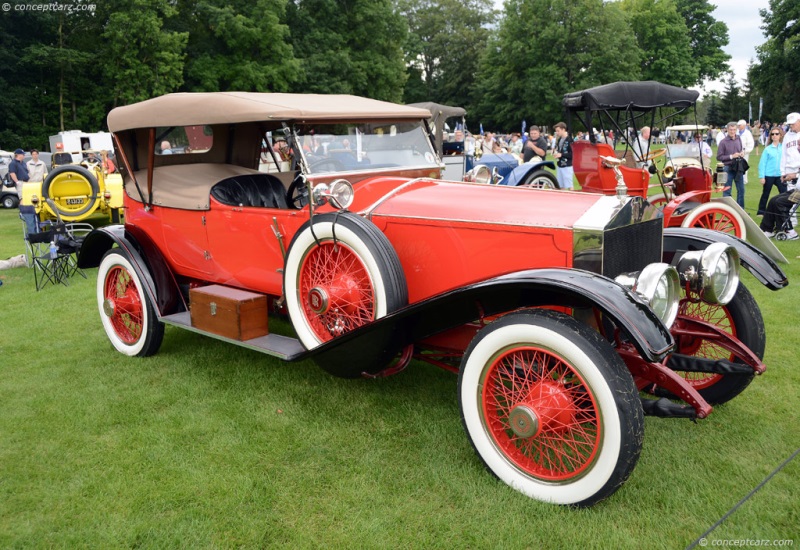
Torpedo Tourer Portholme
Coachwork: Portholme
Chassis Num: 2491
 
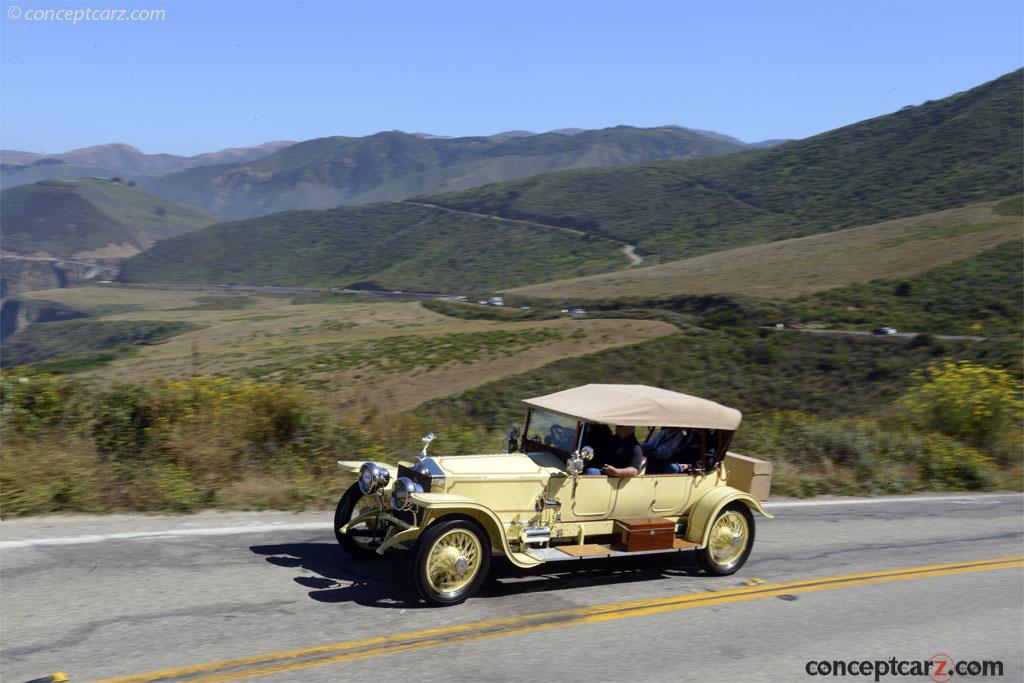
This 1913 Portholme Tourer, Chassis #2491, was delivered to James Radley who eventually sold it to Capt. W. D. Hall of Aldershot. The vehicle was then brought to the U.S. via R. W. Schuette in 1915 and sold to E. W. Bell of New York.

It was later acquired by Ben Moser of California and was purchased from his estate in September 1933 through John Bentley with the 2nd body which is illustrated in John deCampi's 'Rolls-Royce in America,' p.22. After changing fluids and lubricating the car, we completed a Trans Continental Tour of Nova Scotia, covering over 2,500 miles. The car was sent to Hugh Mearns of West Virginia for mechanical restoration and in 1966, it was shipped to England for the FIVA rally. Following the rally, David Hemmings gave it a ground up restoration that included a replica Portholme body of original issue. Hemmings' work earned the car the Eden-Little Memorial Award (first in class) at the 1998 Annual Rally at Cottesbrooke in England.

The car completed another Trans-Continental Tour of the National Parks in the U.S. and Canada in 1998, again about 2,500 miles. It has participated in other shorter tours several times a year. This has been a very dependable tour car.
Torpedo Tourer Portholme
Coachwork: Portholme
Chassis Num: 19MA
Engine Num: 101.R
 
Sold for $852,500 at 2007 RM Auctions.
Under the long and graceful bonnet of the Silver Ghost lurked a 454 cubic-inch L-head, six-cylinder, side valve engine. It had an aluminum alloy crankcase and a timing drive, and an ignition that was driven by gears. This engineering marvel ran without a puff of smoke and in complete silence. This accomplishment did much to boost the vehicles appeal. In a time when operation of a motorcar was noisy, smoky, and dirty, the Rolls-Royce reigned supreme.

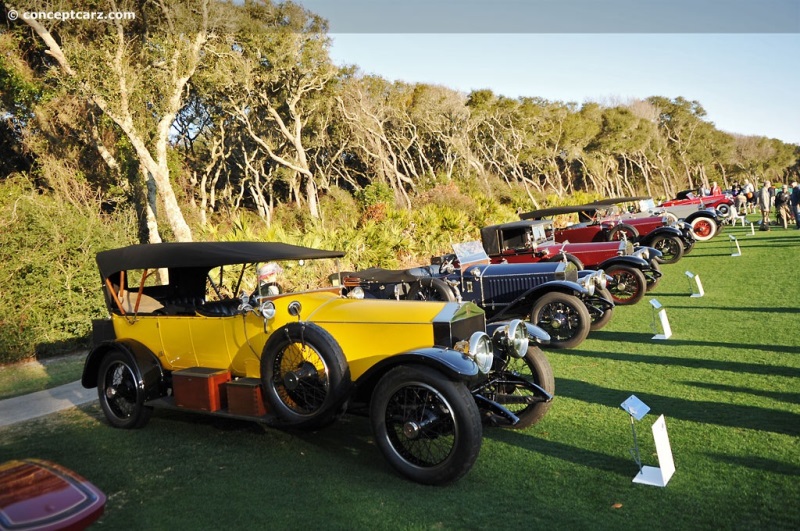
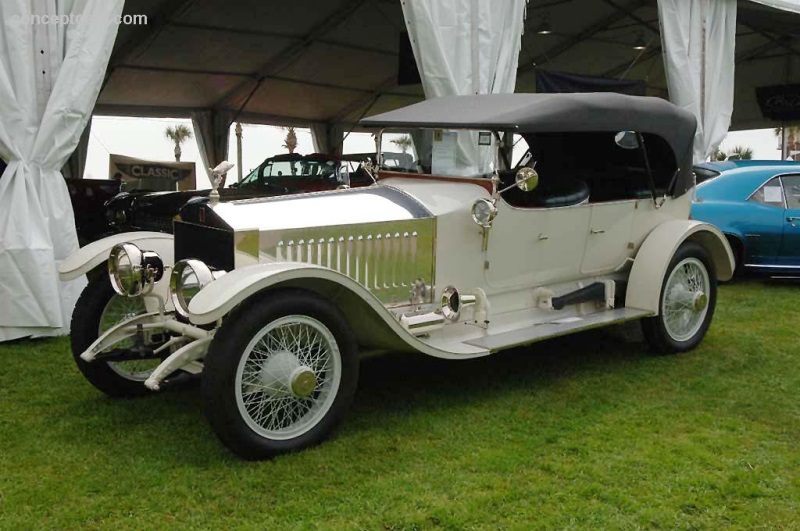
This 1913 Rolls-Royce Silver Ghost Torpedo Tourer was offered for sale at the 2007 RM Auctions held in Amelia Island, Florida. It was estimated to sell between $600,000 - $750,000. It is powered by a 7248cc six-cylinder engine capable of producing nearly 50 horsepower. There is a four-speed manual gearbox and rear wheel mechanically operated service and emergency drum brakes. There are four doors and it has right-hand drive.

The car was originally fitted with a Hooper Landaulette body planned to be exported to India. Plans changed, and the car was sent to New York City and into the care of Alfred Gwynne Vanderbilt. On a voyage from New York to Liverpool aboard the Lusitania, the ship was attacked by a German U-Boat and sank in less than 20 minutes. It was reported that Mr. Vanderbilt worked heroically to save the lives of many of the passengers and help them get to lifeboats. Mr. Vanderbilt and his valet were among the many, over 1000 passengers, who lost their lives that day.

Ownership of the car passed to his wife who kept the car until the late 1920s. The history from this point to the 1950s is not known for certain. What is known is that by the late 1950s, the car was in the care of Mr. Charles E. Lowe of Wethersfield, CT. The chassis remained in tact, but the body had been removed.

Mr. Lowe kept the car for nearly 40 years. It passed to its next owner who commissioned a comprehensive restoration. Penny Coachbuilders of Kingham was commissioned to create a new torpedo tourer body. The body was built in the style of Portholme Motor Coachworks and mimicked the body created for 17RB. The exterior is finished in white with light green accents. The interior is finished in dark green leather. The hood is finished in polished alloy.

During the restoration, the car was treated to several upgrades to make it even more enjoyable on touring expeditions. There is an engine oil filter and temperature gauge, a socket for a cell phone, rear brake lights and turn signals.

Though it is not an original car, its recreation was done to high standards, with excellent attention to detail. All of the modern upgrades have been carefully concealed and its period attire is prominent throughout the vehicle. It is a vintage automobile with a few modern enhancements that will make it a pleasure to drive on long distance trips. Apparently, these features of the vehicle were greatly appreciated, as bidding drove the selling price above the estimated value. The vehicle found its next owner for the price of $852,500.

By Daniel Vaughan | Apr 2007
London to Edinburgh Tourer
Coachwork: Cann
 
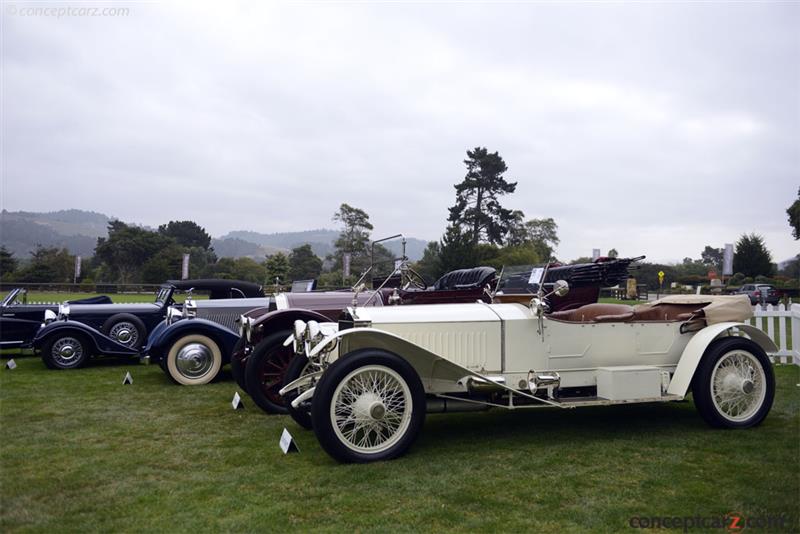
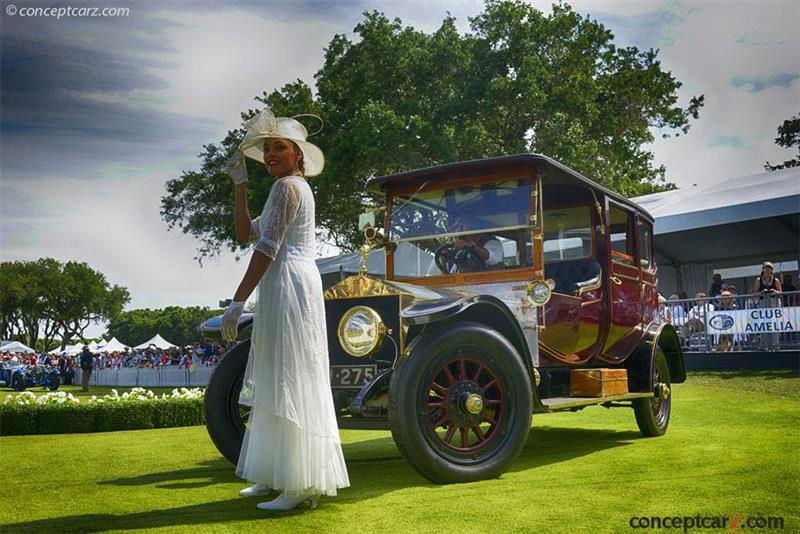
This 1913 Rolls-Royce Silver Ghost London to Edinburgh Tourer has coachwork by Cann. It was shown at the 2006 Pebble Beach Concours d'Elegance.

The bodystyle name 'London to Edinburgh' was given in recognition of the Silver Ghost which traveled the journey and back in top gear without any involuntary stopping. The car achieved a fuel consumption that averaged about 28 mpg, as low as 24 and as high as 32. After this amazing feat, the car was immediately brought to Brooklands where it was driven at 78.62 mph. No adjustments or tuning had been made to the tourer.

The London to Edinburgh bodystyles were built in similar fashion to the car that had completed the journey. They were given with higher gears, higher radiators, and lightweight bodies. Their engines were given slight modifications.

By Daniel Vaughan | Apr 2007
London to Edinburgh Tourer by Mulliner
Coachwork: Mulliner
Chassis Num: 2517
Engine Num: 17P
 
Sold for $1,870,000 at 2007 Gooding & Company.
Sold for $800,000 at 2010 RM Auctions.
Sold for $495,880 at 2011 RM Auctions.
In 1913, this Rolls-Royce 40/50HP Silver Ghost with chassis 2517 was ordered. It was fitted with a custom six-seater Torpedo body with coachwork handled by H.J. Mulliner. The original owner was the Maharaja of Patiala, Maharaja Bhupinder Singh, who held forth over the state of Patiala from 1900 to 1938. It is rumored that he married ten times and had 200 concubines and eighty-eight children. His Rolls-Royce rivals those rumors, as it was fitted with many custom features and luxury items. It came equipped with a Cobra horn, running-board coverings, tool roll, and a pair of jump seats. The larger-than-life persona of the Maharaja can be seen throughout the vehicle.

The Maharaja was a favored client of Rolls-Royce and was given the opportunity to order the first Rolls-Royce Twenty. He accepted, but went a bit farther; he ordered a whole fleet of them. Years later, during the 1930s, Rolls-Royce did not accept any orders from Maharaja Bhupinder Singh. In retaliation, the Maharaja assigned his Rolls-Royce cars to the streets, to be used for trash pickup. Only after Rolls-Royce relented did the Maharaja recall his fleet of Rolls-Royce from civil duties.

In 1985 this Rolls-Royce chassis 2517 was acquired by Richard Solove in India. The car was not in running condition, though solid and in fair condition throughout. It wore a London-to-Edinburgh Tourer coachwork which it still retains in modern times. It was brought to running and driving condition, and driven across Patiala and Pakistan to Karachi. Upon arrival, it was sent to Britain and to Jonathan Harley's shop where a four-year restoration was performed.

It is painted in a deep green with open Ghost coachwork mounted on a Colonial Silver Ghost chassis. The interior is tan leather accented by an abundance of light varnished wood trim and nickel brightwork. There is a crystal decanter and four matching tumblers. There are five bright plated wire wheels with one being an off-side mounted spare. The bell headlights are nickel plated, as is the Charles Sykes' Spirit of Ecstasy radiator-cap mascot.

There is a four-speed manual gearbox and its six-cylinder L-head engine produces 50 horsepower. In 2007 it was brought to the Gooding & Company auction held on Pebble Beach, Ca where it was offered without reserve and estimated to sell for $1.0 - $1.5 million. Bidding surpass those estimates as this gorgeous automobile with its magnificent history was clearly seen as the centerpiece of any fine collection. When the gavel struck for the third and final time, the lot had been sold for $1,870,000 including buyer's premium.

In 2010, this car was offered for sale at the 'Sports & Classics of Monterey' presented by RM Auctions. It was estimated to sell for $1,000,000 - $1,500,000. Bidding reached $800,000 but was not enough to satisfy's the car reserve. It would leave the auction unsold.

By Daniel Vaughan | Dec 2010
London to Edinburgh Tourer
Coachwork: Barker
Chassis Num: 52MA
 
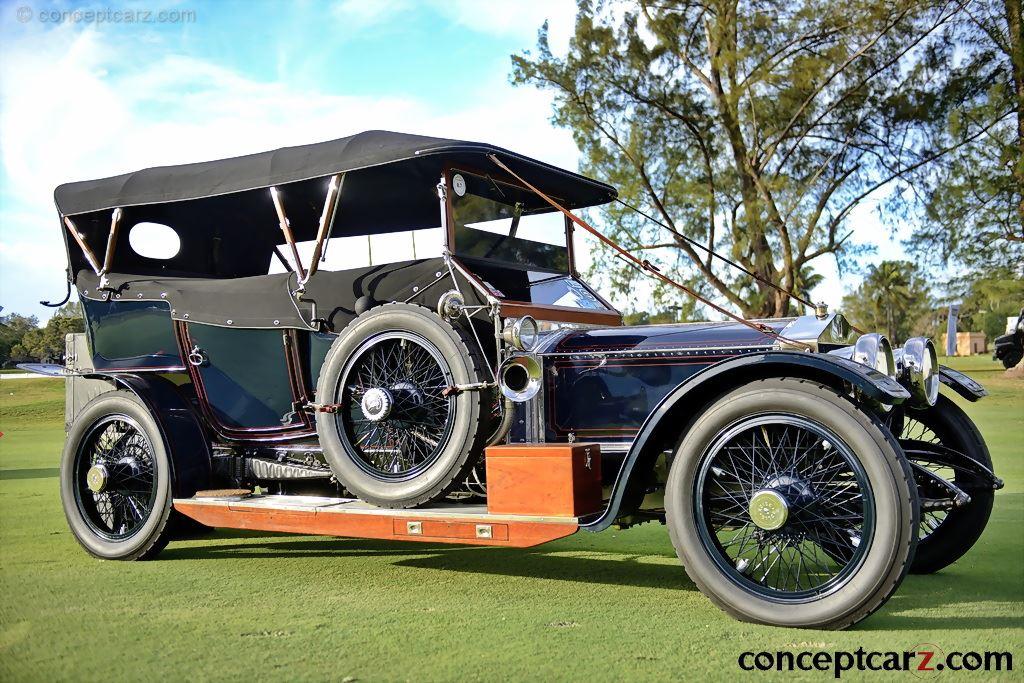
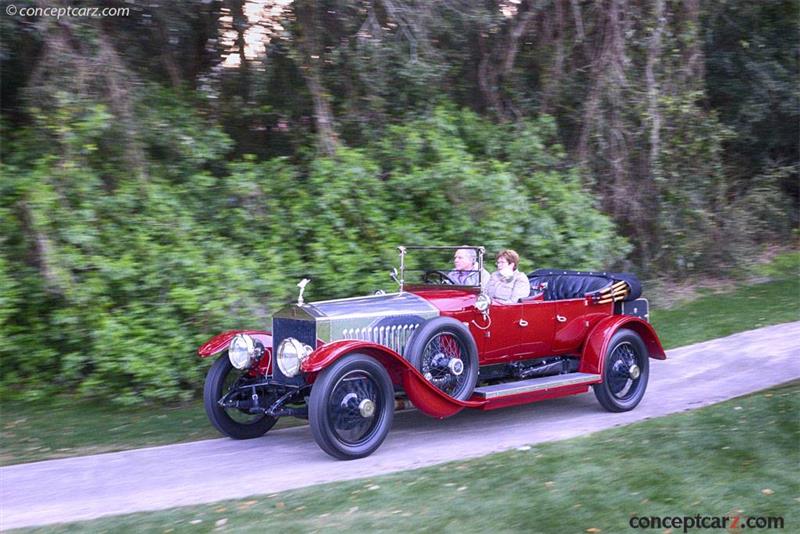
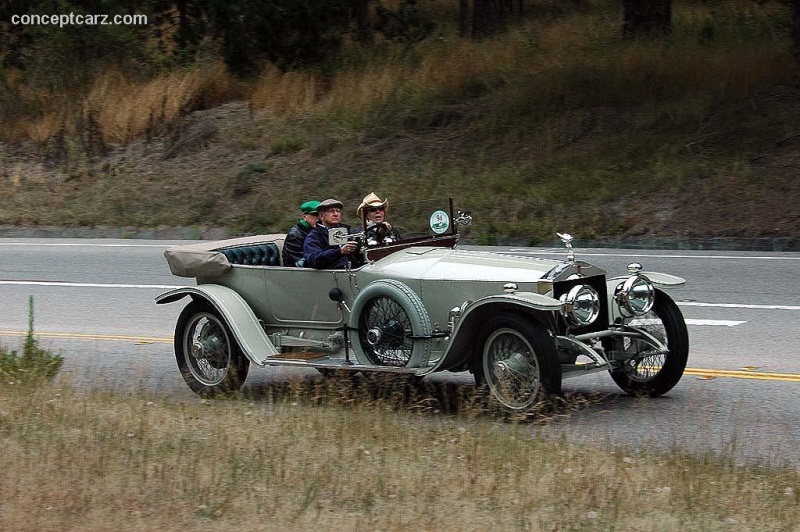
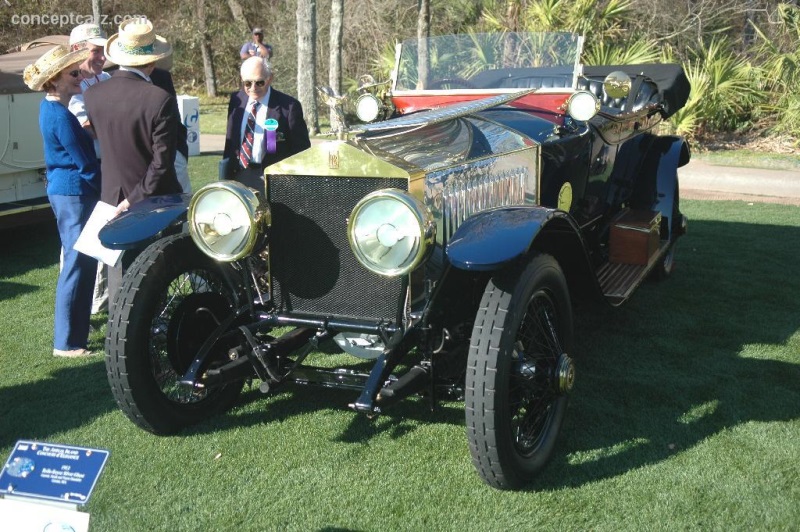
This Silver Ghost Barker Torpedo was constructed on a London to Edinburgh chassis for R.G. Reed of St. John, Newfoundland. This car luckily survived the confiscations of World War I, wherein almost every Ghost was rebuilt into an armored car. This car survived only because of its Newfoundland location. Discovered by Gord Smith in St. John in the late 1940s, the car was originally restored by Joe Lorey of Cleveland and subsequently driven over 100,000 miles, including five transcontinental tours by Tourmaster Millard Newman. Since 1996, the current owners have driven the car another 100,000 miles across North America and through about 30 states.
Tourer
 
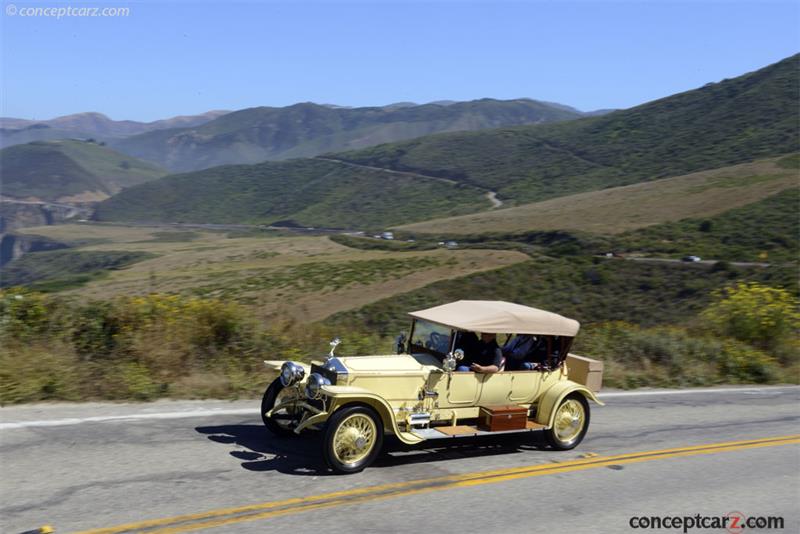
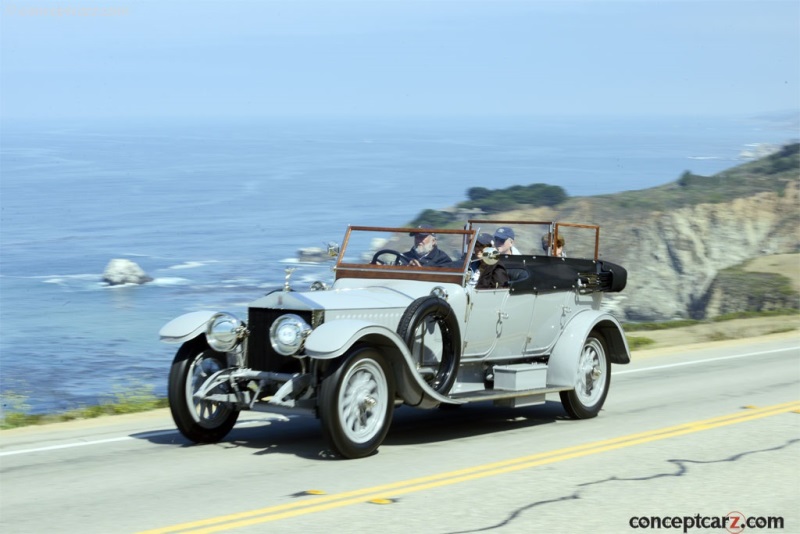
One of the most severe tests for motor cars before World War I was the Austrian Alpine Trails. The extremely steep grades of the mountain passes were guaranteed to take their roll on both the cars and their drivers. In the 1912 Trials, a Silver Ghost driven by James Radley failed the demand of an incline and only when the passengers had left the car and helped by pushing it, did the car get underway again. Rolls-Royce was shocked and immediately set out to identify the reasons for the car's failure, since Silver Ghosts had been tested on equally steep inclines in Scotland. Rolls-Royce had not taken into account the lower atmospheric density of the high Alps. The solution to these challenges was known as the 'Continental' model, which had a taller radiator for better cooling, a larger carburetor and the addition of a lower ratio fourth gear for better hill climbing. On their return in 1913, Radley and his Rolls dominated the rally with a top speed of 80 mph. This car has the 'Continental' modifications. It is fitted with a recreation of its original Portholme Tourister body, and has toured over 25,000 miles since restoration in the late 1990s.
Tourer
Coachwork: Robertson of Glasgow
Chassis Num: 1NA
 
Sold for $328,616 (£199,500) at 2009 Bonhams.
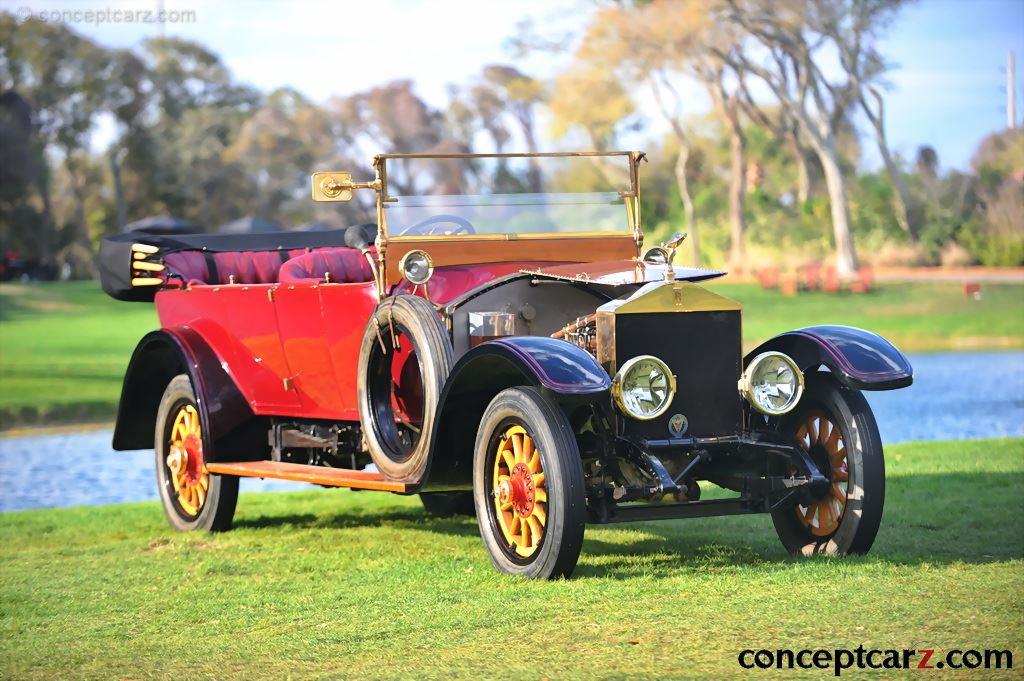
This chassis number 1NA was ordered in October of 1913 and duly sold to Rolls-Royce agents L.C. Seligman of Renfrew St. Glasgow. They were to commission respected coachbuilders Robertson of Glasgow to build coachwork for their customer, J.Neilson of Mollance, Castle Douglas, Scotland. The car remained in Neilson's family until his death in 1935. In 1959, the car was bought by motoring historian and illustrator George A. Oliver. In 1973, Oliver sold the vehicle to Thomas Love. Love began a painstaking restoration, the coachwork being entrusted to Perth craftsman, John Bodman, to the design of Cyril Fox. After Love's death in 2009, the current owners acquired the car.

The car is finished in maroon livery with black mudguards and furnished in black leather upholstery in front with cloth to the rear with two occasional seats and the essential cocktail cabinet. Driving equipment including C.A.V. lighting to the front and driver's helmet rear lamps, offside-mounted spare rim and tyre, Rotax 'Clarion' bulb horn and a brass rear view mirror. Dashboard equipment includes an Elliot 0-60mph speedometer, fuel and oil pressure gauges. A sliding glass division allows easy communication with the rear passengers. The rear doors feature railway carriage-style drop down windows and passenger grab slings.
Tourer
Coachwork: Hooper
 
This car was a chassis when found. The body was designed by Osmond Rivers Designer at Hooper & Company of London. After restoration in 1973, it was entered in the Great Alpine Rally 1913-1973. It was driven all across Europe to the start of the rally. It was the Overall Winner of the Rally. It has since participated in five Transcontinental Rallies, over 20 Glidden Tours as well as most Silver Ghost Association tours. It is still actively driven and has over 110,000 miles since restoration. It reportedly cruises comfortably at 53/58 mph and has a top speed of about 78 mph. It is fitted with a four-speed gearbox and other improvements and is known as a Colonial model Silver Ghost. The current owner has owned the vehicle for 35 years.
In 1906 a new model, the 40/50 horsepower, was developed wîth a longer chassis and a six-cylinder engine. The popularity of the new Rolls-Royce grew quickly as it developed a reputation for smoothness, silence, flexibility and, above all, reliability. In 1907 a writer from the 'Autocar' described riding in the Rolls-Royce 40/50 hp as '....the feeling of being wafted through the countryside.' Engineers at Rolls-Royce coined the word 'waftability' to encapsulate that sensation. Today it is a word that cannot be found in any direction but it is a key design and engineering criterion.

The twelfth 40/50 produced had all its fittings silver-plated and the coachwork painted in aluminum paint. This car became known as the Silver Ghost and is probably the most famous car in the world. The name was later adopted for all the 40/50 hp car and had an immediate international impact, enhanced by the coachbuilders of the day, who could produce bodies of breathtaking beauty. The Silver Ghost was, quite simply, in a class of its own.

The motor car's versatility is legendary. It overwhelmingly won every reliability trial and distance record, dominated the great Alpine Trial of 1913 and won the Spanish Grand Prix of that year.

In May 1907, Claude Johnson drove the car to Scotland and back. This run was a precursor to the Scottish Reliability Trial for which the motor car was later awarded a gold model by the RAC.

The original idea was to drive 10,000 miles without stopping the engine, but the Silver Ghost proved so reliable that the target was raised to 15,000 miles. Despite a stall at 629 miles, when rough roads shook the petrol switch to the off position, the Silver Ghost ran faultlessly for 40 days and nights.

A further challenge was designed by Napier for Rolls-Royce to compete against them in a run from London to Edinburgh followed by high-speed runs at Brooklands. But the challenge was to complete the distance without changing gear, as opposed to how far you could travel. The car, driven by Ernest Hives, averaged 24.3 mpg between London and Edinburgh and attained a speed of 78.2 mph at Brooklands.

As an armored car in the First World War The Silver Ghost delivered exemplary service to the extent that Colonel T.E Lawrence (Lawrence of Arabia) is quoted as saying, 'A Rolls in the desert is above rubies'.

In more elegant guise the Silver Ghost was the choice of the rich and famous across the globe. Kings, queens, maharajas, tsars and emperors owned them. The demand for the Silver Ghost was so high that manufacture was started in the Únited States in 1921 and continued in production wîth worldwide success until 1925.

Source - Rolls-Rocye Motor Cars Limited
The Rolls-Royce vehicles have always been the pinnacle of design, technology, and ambiance. The loudest noise that could be heard by occupants of their vehicles was said to be the clock. In 1904 engineer Frederick Henry Royce joined with the entrepreneur and businessman, the Honorable Charles Stewart Rolls. This union became known as the Rolls-Royce Company.

The Silver Ghost became available in 1906 and brought with it quality and technology to a level that had never been seen before on a motor vehicle. Most engines of the time had long and flexible crankshafts that were prone to vibration and noise. The Rolls-Royce engines had large bearings and pressurized oiling systems, secured by seven main bearings. This was then enclosed in a strong aluminum alloy crankcase eliminating much noise and creating a pleasurable driving experience for the occupants of the vehicle. The crankshaft had an accuracy of .00025 on its bearing surface. They were hand polished to remove any surface cracks left by the grinder. Instead of using noisy chains to drive the ignition, Royce used gears. Phosphor bronze and nickel steel were used in the construction of the timing gears which were then ground and polished by hand. The engine was further shortened by casting in triplets. Cooling problems and leaks were eliminated by the removable cylinder blocks and fixed heads. A Royce designed twin jet carburetor gave the engine all the breathing it required.

The Rolls Royce vehicles could accelerate from zero to top speed without shifting. Shifting during the early 1900's was a chore, with the lower gears never being smooth. It was not until top gear was achieved that the automobiles would operate properly. The Rolls-Royce Ghosts would accelerate as though they were being pulled. This feature, coupled with the vehicles silent operation amplified the vehicles prestige and was the ultimate driving experience of its day.

When first introduced, the Ghosts were given a four-speed gearbox with a direct drive third and an overdrive fourth. As time passed, the overdrive was dropped. The chassis was mostly conventional. Royce had fine-tuned the chassis to standards much higher than most marque's of the day. The body was held in place by a live rear axle carried in three quarter elliptical springs. In the front there was a solid axle supported by semi-elliptic leaf springs. Braking was by a food pedal connected to a transmission brake. A hand brake operated twin rear drums.

Where Royce excelled in engineering, Rolls excelled in promoting and marketing. In 1906 a Ghost was entered in the Tourist Trophy Race, one of the most prestigious races of the time. The Ghost emerged victorious - well, much more than that. It had beaten the next nearest competitor by 27 minutes. Next, Rolls and Royce entered a Ghost in a 15,000 mile reliability run in 1907 which it did without incident. Upon its return to the Rolls-Royce shop, it took a small amount of money, about two-pounds or roughly ten-dollars by today's exchange rates, to restore the vehicle back to new condition.

The Silver Ghosts were entered in the Austrian Alpine Trials where the hoods were sealed shut to prevent any maintenance. The Silver Ghosts again dominated the competition and traversed the Alpine passes which were impassable for many motor cars.

This marketing worked and soon the Rolls-Royce vehicles became legendary and renowned for their durability, reliability, and style. To improve upon the prestige even further, Rolls supplied the Silver Ghosts to British royalty, a move that made sure the vehicles were seen in the right places by the right people.

The first Rolls-Royce distributor in the United States was Walter Martin of New York City, who was also a Cadillac distributor. As Cadillac continued to improve the ambiance of their vehicles, Martin naturally gave them more attention as the logistics of company location was in their favor. Rolls-Royce, on the other hand, was an ocean apart.

Over the early years of Rolls-Royce production, Brewster would become more effective in bringing Rolls-Royce chassis to America than Martin. Brewster imported several dozen chassis to supply its coachwork clients.

In 1913, the business manager for Rolls-Royce, Claude Johnson, formed a factory depot in New York and rented space from Brewster. Baker's US agent, Robert W. Schuette was appointed as Rolls-Royce distributor. At the time, Schuette also represented Fleetwood, Holbrook, Brewster, and Quinby. Around 100 Rolls-Royce's were imported over the next two years by Schuette, with around half of them bodied by Brewster.

As the First World War began to escalate, the production of Rolls-Royce automobiles slowed considerably. The factory's attention was turned to cars for military clients. Engines were produced for aircraft. By 1916, there were no more new Rolls-Royces available. Schuette and Brewster were still able to satisfy US demand for Rolls-Royce's by buying up existing chassis, renovating, and then fitting them with new coachwork.

By Daniel Vaughan | May 2008
For more information and related vehicles, click here

Rolls-Royce ‘Works Team' Stops Off In London En Route To The 2013 Alpine Trial
In May 1913, James Radley set off from Brown's Hotel in London's Mayfair for a famous motoring adventure – the 1913 Alpine Trial. A century later, the same Rolls-Royce Silver Ghost driven by this pioneer, aviator and adventurer has returned to Brown's Hotel, ready to depart for a re-enactment of the event. Radley's account of his departure in 1913 reflects the spirit of those early days of motoring: 'We must have a bottle to christen her. Here, John, just fetch a bottle of 'The Widow', wil...[Read more...]
RM Auctions' Don Davis Collection Attracts Texas-Size Bids
• RM Auctions posts over $21.2 million at the record-breaking sale of the distinguished Don Davis Collection, April 27 in Fort Worth, Texas • Top seller: a rare 1967 Ferrari 330 GTS sold for $1,936,000, to establish a new auction record • Five lots achieve million-dollar-plus results, with numerous auction records shattered • Toyota 2000GT enters history books with seven-figure sales price • Exceptional collection attracts bidders from 14 countries around the world FORT WORTH, Texas (A...[Read more...]
Mini Cars Attract Mega Interest At RM's Record-Setting Bruce Weiner Microcar Museum Sale
• RM Auctions' highly anticipated Bruce Weiner Microcar Museum sale generates more than $9.1 million with 100 percent of all lots sold • Multi-day auction shines spotlight on microcar values with numerous new records set • Top sellers: 1958 F.M.R. Tg 500 'Tiger' brings $322,000, a world record price for a microcar sold at auction; 1951 Reyonnah achieves a remarkable $184,000 • The world's smallest production car, the 1964 Peel P50, triples pre-sale estimate, realizing an impressive $120,750 ...[Read more...]
Magnificent Series of Coachbuilt Classics To Grace RM's Amelia Island Concours D'Elegance Sale
• RM Auctions returns as the official auction house of the Amelia Island Concours d'Elegance, March 9, 2013 • Single-day sale features breathtaking roster of more than 80 investment-quality collector cars • Notable highlights include an outstanding series of coachbuilt classics headlined by a multi-million-dollar 1935 Duesenberg Model SJ Walker-LaGrande Convertible Coupe and a trio of Cords from the personal collection of Jim Fasnacht • Frequently updated list of entries available online at r...[Read more...]
TOPLINE COLLECTORS PLACE SPOTLIGHT on SPEED'S BARRETT-JACKSON BROADCAST FROM SCOTTSDALE
• TOPLINE COLLECTORS PLACE SPOTLIGHT on SPEED'S BARRETT-JACKSON BROADCAST FROM SCOTTSDALE
• 'LOST' SHELBY DUAL PROTOTYPE, HAGERTY GIVEAWAY & SALON COLLECTION HIGHLIGHT 39 HOURS OF LIVE COVERAGE
The 42nd annual Barrett-Jackson Scottsdale (Ariz.) Collector Car Event, the first of four set for live coverage in 2013, kicks off the auction season in grand style as some of the world's most sought-after machines cross the block starting Tuesday, Jan. 15 at 7 p.m. ET/4 p.m. PT. SP...[Read more...]
Last Mercer Will Compete At Pebble Beach Concours d'Elegance
When the Pebble Beach Motoring Classic commences on August 7, Johnny Crowell will don his leather cap and goggles and settle in behind the wheel of his 1925 Mercer Series 6 Raceabout -- the last Mercer ever to exit the factory. The Roebling family along with designer Finley Robertson Porter debuted the Mercer Raceabout Type 35R in 1911. The result was one of the most admired sports cars of the early era: a stripped-down, two-seat speedster designed to be driven fast. By 1925, they had perfec...[Read more...]
20/25HP
20HP
25/30HP
Camargue
Corniche
Ghost
Phantom
Phantom I
Phantom II / Phantom II Continental
Phantom III
Phantom IV
Phantom V
Phantom VI
Silver Cloud I, II, and III
Silver Dawn
Silver Ghost
Silver Seraph / Park Ward
Silver Shadow I, II/Silver Wraith II
Silver Spirit
Silver Wraith
Wraith

Image Left 1912 Silver Ghost BarkerImage Left 1912 Silver Ghost1914 Silver Ghost Image Right1914 Silver Ghost Shapiro-Schebera Skiff Image Right
© 1998-2012. All rights reserved. The material may not be published, broadcast, rewritten, or redistributed.