1969 Ghibli | 1971 Ghibli ![]() |
1970 Maserati Ghibli news, pictures, and information | ||
| Tweet | ||
![]() | ![]() | ![]() | Convertible Chassis Num: AM11S1185 Engine Num: S-2360 |
| Sold for $249,000 at 2008 Bonhams. Sold for $249,000 at 2008 Bonhams. | |||
The Ghibli was Maserati's first V8 GT car. It was designed by Giorgetto Giugiaro, then working at Ghia, as a two-seater fastback coupe. It was introduced at the 1966 Turin show where it was powered by a four-cam 4719cc, 330 BHP V8 engine from the four-passenger Mexico coupe. Zero-to-sixty took a mere 6.8 seconds and had a top speed of 154 mph. The production cars were available with either a ZF five speed manual or a three-speed Borg-Warner automatic. The tubular frame was derived from the Mexico and the Quattroporte sedan. In the front were disappearing headlamps while the interior had leather seats. The car rode on alloy wheels at all four corners.
In 1969, the company introduced a Spyder version. A year later, a larger, 4930cc engine with 335 horsepower was introduced. Total production for the Ghibli was 1,149 coupes, 125 Spyders, and 25 Spyder SS models with the larger engine.
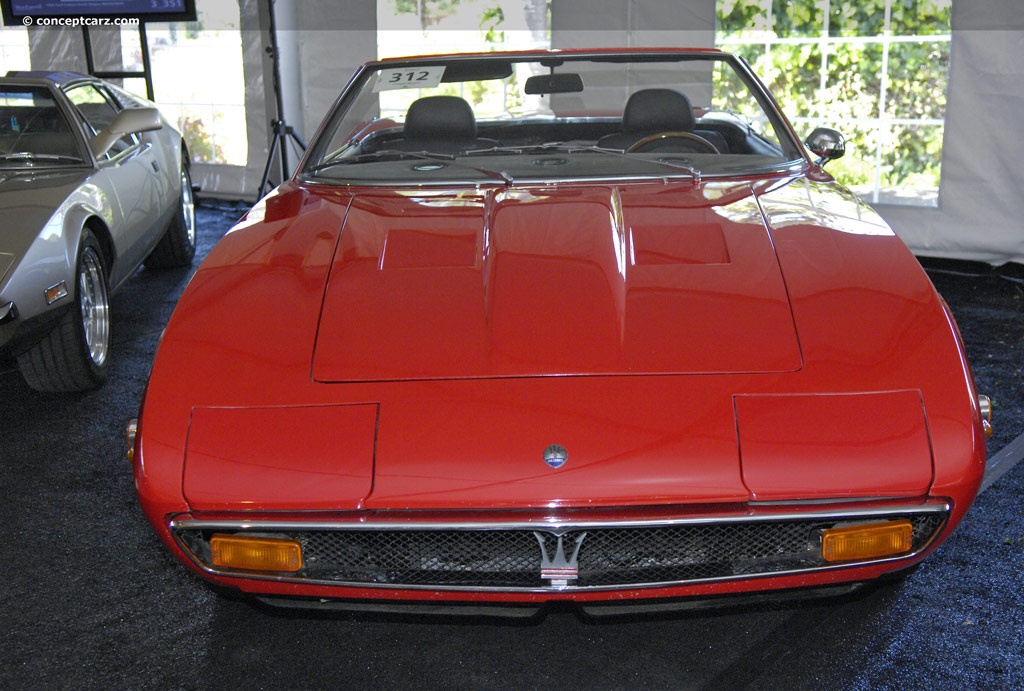
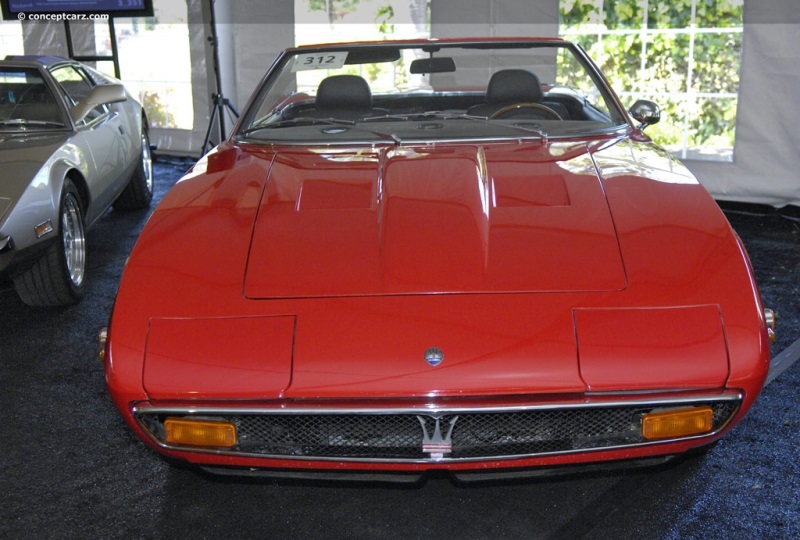
This Spyder is a rarity. It was the subject of a cosmetic restoration in the mid-1990s and was given mechanical improvements and tuning since purchase by the current owner. The odometer shows just 32,000 miles since new. It has participated in both the New England 1000, and the Cooperstate 1000. It is painted in red with black leather interior.
In 2008, this Spyder was offered for sale at the 'Quail Lodge, A Sale of Exceptional Motorcars and Automobilia' where it was sold for $249,000 inclusive of buyer's premium.
This 1970 Maserati Ghibli Spyder is one of 100 produced and has coachwork by Ghia.
By Daniel Vaughan | Jun 2011
![]() | ![]() | ![]() | Convertible |
Along the way, it picked up a Chevrolet engine, but through the generosity of John Weinberger of Chicago, received a proper 4.7-liter engine and five-speed gearbox.
![]() | Convertible |
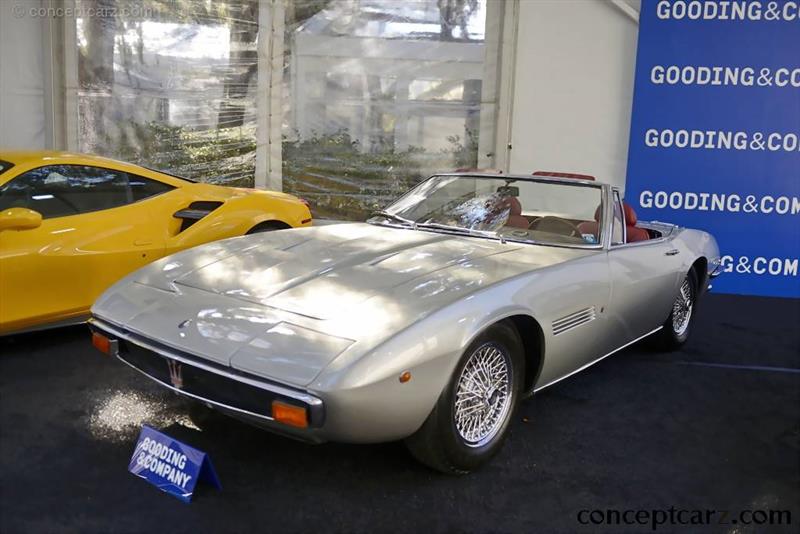
A convertible (Spyder) was introduced in 1969 and only 125 cars were ever manufactured by this time production ceased in 1973. This Ghibli has 14,000 original miles and includes the rare removable hardtop.
This car is powered by a 4.7 liter, V8 engine with two overhead camshafts per cylinder bank, producing 330 horsepower, and capable of 160 mph. The 3,500-pound car sold for $19,900 in 1971.
![]() | ![]() | ![]() | Coupe Chassis Num: 1564 |
The Ghibli has unusual features which include limited production taillights and a 'non-mouse fur' leather dash cover, both from the factory and also had pop-up headlights and a handbrake lever sticking out of the driver's seat. It is also equipped with power steering, power brakes, power windows and air conditioning. It has a V-8 engine offering 330 horsepower and was capable of reaching 265 km/h and 2 fuel tanks for 100 liters of gas with fill pipes on both sides of the car.
The Maserati Ghibli was put into production in 1967 but it was the prior year at the Turin Auto Show where it made its debut. The 2+2 coupe body was designed by Giugiaro, an employee for the Ghia design studio. The headlights were pop-up configuration adding to the sleek and aerodynamic design. Powered by a 4.7-liter eight-cylinder engine, the vehicle produced 340 horsepower. The rear suspension was comprised of a live axle with leaf springs and anti-roll bar while the front used an independent suspension with double wishbones and coil springs plus anti-roll bar. The Ghibli sat atop a Mexico chassis that had been shortened and received increased stiffness and rigidity. Ventilated disc brakes where placed on all four corners and a five-speed manual gearbox helped send power to the rear wheels. In 1968 a three-speed automatic was offered as optional equipment.
In 1968 a convertible was offered, also designed by Ghia. To add to the versatility, a hard-top was offered on the convertible, making the vehicle suitable in all types of weather and driving conditions.
In 1970 the Ghbli SS was introduced featuring a 4.9-liter engine capable of producing nearly 360 horsepower.
During the production lifespan, ending in 1973, 1149 Coupes were produced. Only a very small number of convertibles were created, adding to the exclusivity. 125 Spyders and 25 Spyder SS models were created.
By Daniel Vaughan | Jun 2006
In 1968 a convertible was offered, also designed by Ghia. To add to the versatility, a hard-top was offered on the convertible, making the vehicle suitable in all types of weather and driving conditions.
In 1970 the Ghbli SS was introduced featuring a 4.9-liter engine capable of producing nearly 360 horsepower.
During the production lifespan, ending in 1973, 1149 Coupes were produced. Only a very small number of convertibles were created, adding to the exclusivity. 125 Spyders and 25 Spyder SS models were created.
By Daniel Vaughan | Jun 2006
Maserati has lately reinvented its presence in the U.S. market. After being driven out in the very early 1990's by pitifully slow sales of the underappreciated Biturbo, Maserati made a return to the U.S. for 2003. It brought with it an entirely revamped product line consisting of some phenomenal cars. Fast forward to now, and Maserati had just released a beautiful new coupe, the GranTurismo. Its name may not be the most creative or interesting label for what is, after all, a grand touring car, but its message is clear: Maserati is back, and it hasn't forgotten its roots.
While many would argue that Maserati's real roots were in racing cars, the fact is that the company never achieved real success as a production car manufacturer until it turned its efforts toward producing stunning GT automobiles. The Ghibli was one of those spectacular machines.
That's not to say that the Ghibli was a mere gentleman's luxury car as some GT vehicles were. For as superb and smooth a GT as it was, the Ghibli's design was teeming with racing heritage. Its engine was a perfect example. Derived from the V8 powering the successful 450 S racecar, the 4.7L V8 in the Ghibli had a good compression ratio of 8.5:1 and was fed by a quartet of Weber carbs. Its most impressive feature had nothing to do with compression or carburetion, though, but with its advanced lubricating system.
The Ghibli's V8 employed dry-sump lubrication. As opposed to the traditional wet sump that stores oil in a pan beneath the engine, dry-sump systems use a separate reservoir to hold oil, from where it is pumped into the engine for lubrication and then recirculated back into the reservoir. This design, popular on racing cars of the era and even today used almost exclusively in high-performance applications, gave many advantages. First, and perhaps most important to the Ghibli's menacing shape, was its allowance for an engine with as little vertical height as possible. With no need for an oil sump beneath the engine, the Ghibli's motor could be lowered in the car's frame to allow for a low center of gravity and, of course, the car's mean, low hoodline. Dry-sump lubrication also prevented oil starvation and provided better oil cooling, making the Ghibli's engine comfortable on any track.
The impressive V8 coupled to a ZF five-speed gearbox of equal quality. This team fed a limited-slip differential, which supplied power to the rear Campagnolo mags with ferocity. Though wire wheels were also available, the Campagnolos seemed a better choice with their light weight and nice design that complemented the Ghibli‘s shape.
Performance figures were staggering. From a standstill, the Ghibli could achieve 60mph in a scant 6.4 seconds. The quarter mile passed in 14.5 seconds. When the Ghibli SS was introduced in 1970 with an updated 4.9L V8 producing 335hp, this Maserati became capable of reaching incredible speeds. The Ghibli SS could reportedly exceed 280 kilometers per hour. Converted to a measurement we can fathom, that meant over 170mph. That type of speed was unreal in 1970, and it turned the Ghibli, which was named after a rapid wind, into a legend more than capable of living up to its label.
The Ghibli's imposing posture was the work of one of Italy's most prolific car designers, Giorgetto Giugiaro. The Ghia badge adorning the Ghibli's body designated the design house for which Giugiaro was then working, Carrozzeria Ghia. Giugiaro had a hand in styling some of history's best remembered cars, and the Ghibli's shape continues to impress today.
Pop-up lights and the dry-sump allowed for a low hood and an imposing frontal aspect featuring a wide grille of black mesh with the trident standing proudly at its center. The windshield's aggressive rake continued the theme, and it swept up to a low roof (the Ghibli stood just 45 inches tall). That roof was tilted towards the rear of the car, and it met the backlight seamlessly where it continued its downward slope to endow the car with a clean fastback shape. The rear was finished with a tight Kamm tail.
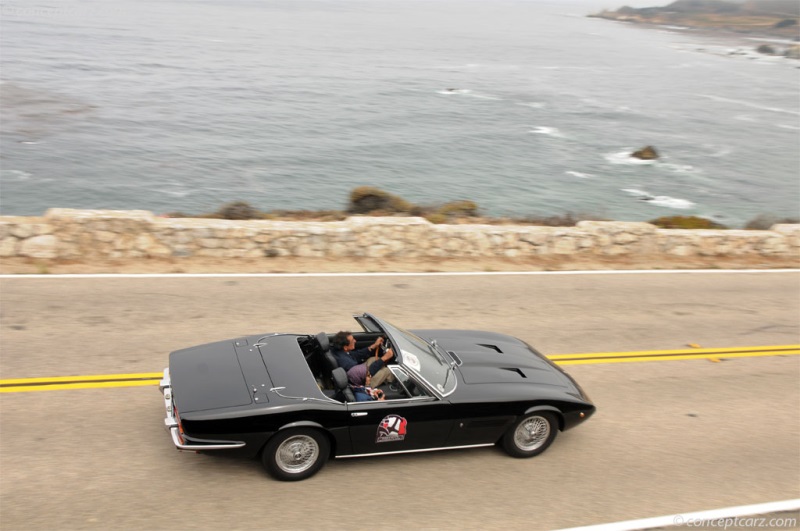
A convertible version of the Ghibli was also produced. Called the Spyder, it was made in much smaller numbers. With its sloping trunk lid, the Spyder was able to carry on the theme of the Ghibli's design successfully without the use of a fastback.
Not to leave anyone fooled by the sweeping lines and motorsport-inspired powertrain and drivetrain, the Ghibli's sumptuous interior reminded that this really was a GT car. With a generous trunk and comfortable seats, the Ghibli was set to erase miles quickly on the open road.
Throughout its production run from 1967 to 1973, the Ghibli proved itself worthy of the trident badge. It was a well-engineered machine clothed in fine Italian style, and it is remembered today as one of the finest road-going Maseratis ever produced. A success for its parent company, 1,149 Ghibli coupes were produced along with 125 Spyders. The relatively high production numbers once made Ghiblis easy to pick up for reasonable prices. Collectors are catching on, though, and values are on the rise. These stunning Maseratis are sure to be remembered as one of the company's greatest achievements.
Factual information in this article supplied by http://www.thecarnut.com/ and http://www.qv500.com/. The site http://www.maserati-alfieri.co.uk/ also supplied helpful information, and is an excellent source for the histories of all Maserati models. By Evan Acuña
For more information and related vehicles, click hereWhile many would argue that Maserati's real roots were in racing cars, the fact is that the company never achieved real success as a production car manufacturer until it turned its efforts toward producing stunning GT automobiles. The Ghibli was one of those spectacular machines.
That's not to say that the Ghibli was a mere gentleman's luxury car as some GT vehicles were. For as superb and smooth a GT as it was, the Ghibli's design was teeming with racing heritage. Its engine was a perfect example. Derived from the V8 powering the successful 450 S racecar, the 4.7L V8 in the Ghibli had a good compression ratio of 8.5:1 and was fed by a quartet of Weber carbs. Its most impressive feature had nothing to do with compression or carburetion, though, but with its advanced lubricating system.
The Ghibli's V8 employed dry-sump lubrication. As opposed to the traditional wet sump that stores oil in a pan beneath the engine, dry-sump systems use a separate reservoir to hold oil, from where it is pumped into the engine for lubrication and then recirculated back into the reservoir. This design, popular on racing cars of the era and even today used almost exclusively in high-performance applications, gave many advantages. First, and perhaps most important to the Ghibli's menacing shape, was its allowance for an engine with as little vertical height as possible. With no need for an oil sump beneath the engine, the Ghibli's motor could be lowered in the car's frame to allow for a low center of gravity and, of course, the car's mean, low hoodline. Dry-sump lubrication also prevented oil starvation and provided better oil cooling, making the Ghibli's engine comfortable on any track.
The impressive V8 coupled to a ZF five-speed gearbox of equal quality. This team fed a limited-slip differential, which supplied power to the rear Campagnolo mags with ferocity. Though wire wheels were also available, the Campagnolos seemed a better choice with their light weight and nice design that complemented the Ghibli‘s shape.
Performance figures were staggering. From a standstill, the Ghibli could achieve 60mph in a scant 6.4 seconds. The quarter mile passed in 14.5 seconds. When the Ghibli SS was introduced in 1970 with an updated 4.9L V8 producing 335hp, this Maserati became capable of reaching incredible speeds. The Ghibli SS could reportedly exceed 280 kilometers per hour. Converted to a measurement we can fathom, that meant over 170mph. That type of speed was unreal in 1970, and it turned the Ghibli, which was named after a rapid wind, into a legend more than capable of living up to its label.
The Ghibli's imposing posture was the work of one of Italy's most prolific car designers, Giorgetto Giugiaro. The Ghia badge adorning the Ghibli's body designated the design house for which Giugiaro was then working, Carrozzeria Ghia. Giugiaro had a hand in styling some of history's best remembered cars, and the Ghibli's shape continues to impress today.
Pop-up lights and the dry-sump allowed for a low hood and an imposing frontal aspect featuring a wide grille of black mesh with the trident standing proudly at its center. The windshield's aggressive rake continued the theme, and it swept up to a low roof (the Ghibli stood just 45 inches tall). That roof was tilted towards the rear of the car, and it met the backlight seamlessly where it continued its downward slope to endow the car with a clean fastback shape. The rear was finished with a tight Kamm tail.
A convertible version of the Ghibli was also produced. Called the Spyder, it was made in much smaller numbers. With its sloping trunk lid, the Spyder was able to carry on the theme of the Ghibli's design successfully without the use of a fastback.
Not to leave anyone fooled by the sweeping lines and motorsport-inspired powertrain and drivetrain, the Ghibli's sumptuous interior reminded that this really was a GT car. With a generous trunk and comfortable seats, the Ghibli was set to erase miles quickly on the open road.
Throughout its production run from 1967 to 1973, the Ghibli proved itself worthy of the trident badge. It was a well-engineered machine clothed in fine Italian style, and it is remembered today as one of the finest road-going Maseratis ever produced. A success for its parent company, 1,149 Ghibli coupes were produced along with 125 Spyders. The relatively high production numbers once made Ghiblis easy to pick up for reasonable prices. Collectors are catching on, though, and values are on the rise. These stunning Maseratis are sure to be remembered as one of the company's greatest achievements.
Factual information in this article supplied by http://www.thecarnut.com/ and http://www.qv500.com/. The site http://www.maserati-alfieri.co.uk/ also supplied helpful information, and is an excellent source for the histories of all Maserati models. By Evan Acuña
| VOLKSWAGEN BEETLE TURBO AND JETTA GLI RECEIVE POWER BOOST | |
| - New EA888 Gen 3 engine, produced in Silao, Mexico, makes its U.S. debut - Engine offers 10 hp increase over previous Gen 2 powerplant - Beetle models have a manufacturer estimated fuel economy improvement of up to eight percent on the combined cycle - Beetle R-Line® coupe will be priced from $30,135 with the six-speed manual transmission Herndon, VA - The Volkswagen Beetle Turbo, Beetle Turbo Convertible, and the Jetta GLI receive a number of running changes to 2013 model year car...[Read more...] | |
| Volkswagen Of America Reports April Sales | |
| - April sales total 33,644 units delivered - April sales total 33,644 units, representing an 10.3 percent decrease versus the prior year - Chattanooga-built Passat delivered 9,069 units for the month, 30.8 percent TDI® Clean Diesel - Jetta Sedan achieved 11,110 sales in April - Best year-to-date sales of Tiguan with 10,439 units delivered through April and 2,488 for the month - High-mileage, TDI® Clean Diesel models accounted for 21.7 percent of sales in April and 21.5 percent of sales year...[Read more...] | |
| HYUNDAI MOTOR AMERICA SELLS ITS FIRST SPECIAL EDITION VELOSTER RE:MIX MODEL | |
![]() | Hyundai's Innovative 3-door Sport Coupe Now Available in a Uniquely Aggressive Sporty Variant with Premium Features and a 450-watt Dimension® Audio System COSTA MESA, Calif., Feb. 22, 2013 – Hyundai Motor America recently delivered the first of its new Veloster RE:MIX limited edition models to its excited new owner at Sterling McCall Hyundai in Houston, Texas. Hyundai began selling its special edition production Veloster in mid-February alongside a comprehensive offering of sty...[Read more...] |
| MINI AT THE 83RD GENEVA INTERNATIONAL MOTOR SHOW 2013 | |
![]() | The passion for extreme driving fun, a richly varied model range and the wide selection of personalization options for which MINI is renowned form the centerpiece of the British premium brand's stand at the 2013 Geneva International Motor Show. As part of its ongoing model push, MINI is introducing further additions to its portfolio of attractive design models. Indeed, this year's Geneva Show will host the world premiere of the MINI Clubman Bond Street. Generously equipped and with a searching e...[Read more...] |
| Mopar® Customized Rides Take Spotlight at Beijing International Automotive Exhibition | |
| Company's Service, Parts and Customer-care Brand to Display 'Moparized' Chrysler 300 Ruyi Design Concept, Jeep® Wrangler Arctic and Fiat® Freemont • Fiat Freemont features numerous Mopar accessories • Jeep® Wrangler Arctic gets 'Moparized' • 'Moparized' Chrysler 300 Ruyi Design Concept to make debut • New 172,222 square-foot Mopar product distribution center in Shanghai distributes more than 35,000 parts and accessories Auburn Hills, Mich. - Chrysler Group LLC will head to the...[Read more...] | |
1970
Maserati
models |
| Maserati Indy |
| Maserati Mistral |
| Similar Vehicles | |
![]() | 1969 Intermeccanica Italia |
| Similar Automakers | |
| Aston Martin | Bentley |
| Bugatti | Devon |
| Ferrari | GTA |
| Koenigsegg | Lamborghini |
| Lotus | Maybach |
| McLaren | Porsche |
| Rolls-Royce | Spyker |
| Tesla | |
| Similarly Priced Vehicles from 1970 |
| Ferrari 365 GT 2+2 ($18,895-$18,895) |
Average Auction Sale: $182,545 |
| Maserati: 1960-1970 |
| Similar Automakers |
| Maserati History |
| Other models by Maserati |
| Manufacturer Website |
| |||||||||||||||||||||||||||||||||||||||||
| 150S 200 Si 228 250 250F | 300S 3500 GT 430 450 4CL | 5000 GT 6CM 8CM 8CTF A6 | Bi-Turbo Birdcage Bora Coupe Coupe / Spyder | Ghibli GranCabrio GranTurismo Indy Khamsin | MC12 Merak Mexico Mistral Quattroporte | Sebring |
1969 Ghibli | 1971 Ghibli ![]() |


1969 Ghibli


1970