History
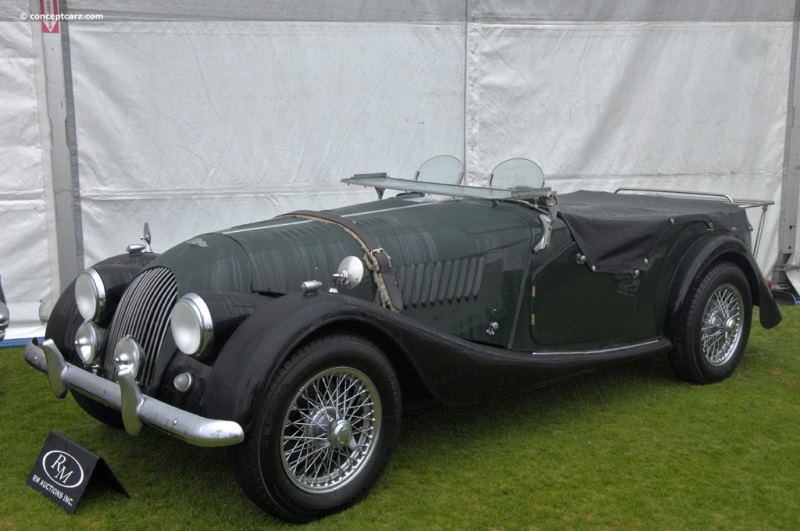
In 1936, the Morgan 4/4 was first introduced as Morgan Motor Company's first car. The '4-4', which would later come to be known as '4/4', stood for four cylinders and four wheels. The vehicles that Morgan had produced prior to the 4-4 were three-wheelers, with V-twin engines.
Throughout the years, there have been many variations, body styles, and series of the original '4-4'. Production of the '4-4' has been nearly constant since the beginning, except for a short halt of production during World War II. During the War, it manufactured anti-aircraft gun parts and undercarriage components.
From 1936 through 1939, there were 663 two-seater versions produced. All with a four-speed Meadows transmission. They featured an 1122 cc. Coventry Climax engine with overhead inlet and side exhaust valves that produced 34 horsepower. The morgan was quick with a top speed of 80 miles-per-hour and a 0 to sixty time of around 28 seconds. A year after the introduction, a four-seater option became available. Though not as popular as the two-seater, 99 were produced from 1937 through 1939. In 1938 the DropHead coupe variation was introduced of which, 58 were produced between 1938 to 1939.
Production took a break during World War II, but later resumed. From 1946 through 1950, 2490 more examples were constructed and used a Standard Special 1256 cc. overhead cam engine producing 38.8 horsepower. A Moss transmission was used in place of the Meadows gearbox. The four-seater and drophead coupe options were still available. During the 1946 to 1950 time frame, 140 four-seaters and 106 DropHead coupes were produced.
In 1947, the Standard Motor Company informed Morgan that after 1949, the 1267 cc. engine would not be available due to their 'One Engine Policy'.
In 1949, when the 1267 cc was no longer available, Morgan began using a Vanguard 1.8 litre engine and introduced to the public the 'Plus Four'. Eventually, a 2080cc Vanguard engine that produced 68 horsepower was used. The front suspension was improved, the frame was strengthened, and Girling hydraulic brakes were fitted on all four corners. The top speed was 85 miles per hour with a zero to sixty time of 17.9 seconds. Priced competitively, the Plus Four was an instant success.
In 1954 the Vanguard engine was replaced with a Triumph TR2 1991 cc. powerplant that provided 90 horsepower. The zero to sixty time was now around 13 seconds. The 100-mile-per-hour mark was easily achievable. To help with the aerodynamics, the radiator was placed beneath the bodywork.
The Series II was introduced in 1955. Instead of the Standard Special engine, a Ford 100E engine utilizing a Ford three-speed gear was used. The engine was capable of producing 36 horsepower. Production of the Series II lasted five years and ended near the end of 1960. 386 examples were produced.
In 1956, the Plus 4 received a Triumph TR3 engine that was capable of producing 100 horsepower. The vehicle could be ordered in lightweight aluminum bodies making them excellent for competition. In 1959, performance and safety were enhanced by the addition of 11-inch Girling disc brakes.
The Series III picked up where the Series II left off. Mounted in the front, the Ford Anglia 105E, 997 cc. engine was capable of producing 39 horsepower. The three-speed transmission was replaced with the four-speed gearbox adding to the performance of the vehicle. During its production life span which last from October of 1960 through November of 1961, only 58 examples were produced.
Following the Series III was the Series IV. It too had a relatively short life span lasting from October of 1961 through March of 1963. The Series IV used a Ford Classic 109E engine that now produced 23 more horsepower than its predecessor. With a total of 62 horsepower and a Ford four-speed transmission, the Series IV was quick. 114 examples were produced.
In 1961, the Plus 4 Super Sport was introduced. With the highly tuned Triumph engine producing 116 horsepower, speeds exceeding 115 miles-per-hour were easily achieved.
The 4/4 Series V was introduced in February of 1963 and produced until March of 1968. 65 horsepower was produced from the Ford Cortina 116E engine. A Ford four-speed manual gearbox was still standard equipment. During it's life span, 639 examples were produced.
During the 1963 Earl's Court Motor Show, Morgan introduced the Plus 4 Plus. The Plus 4 Plus featured a stronger Plus 4 chassis, glass fiber body, and a 2138 cc. Triumph TR4 engine. The top speed was around 100 miles per hour. Unfortunately, the car did not sell very well and production ceased two years later. Only twenty-six examples were produced.
In 1966, the Triumph TR engine was replaced with a powerplant supplied by Rover Motor Company. The engine was an aluminum V8 engine that brought about the Morgan Plus 8, a project headed by Maurice Owen. The Plus 8 was not introduced to the public until the 1968 Earls Court Motor Show. The 3529 cc. V8 engine was capable of producing 160 horsepower at 5200 rpm. It was fast! With a 0 to sixty time of 6.7 and a top speed of 125 mph, it was a substantial improvement over the Plus 4.
In 1968, the 1600 was introduced. The name 1600 came about due to its engine size of 1599 cc. The Ford Kent engine came in different flavors. There was a 2737E that produced 70 horsepower, a 2737 GT and 2265E that both produced 95.5 horsepower. Produced until March of 1982, 3513 examples were created.
In November of 1981, the engine was replaced with a Fiat 1584 cc twin-cam engine and Fiat five-speed gearbox. The horsepower rating was now up to 98. Production continued until 1985 during which time 96 examples were created.
In March of 1982, a Ford 1597 cc CVH engine and Ford four-speed gearbox powered the Morgan. A Ford five-speed transmission from the Ford Sierra replaced the four-speed in 1984. During the production life span lasting from 1982 through November of 1991, 1652 examples were created.
In November of 1991, a Ford 1597 cc CVH engine with electronic fuel injection and creating 100 horsepower was being used.
The Morgan 4/4 has stood the test of time. The light and sturdy frame matched with some impressive power plants have made the vehicle practical, cost-competitive, and fun to drive.
By Daniel Vaughan | Sep 2009
Throughout the years, there have been many variations, body styles, and series of the original '4-4'. Production of the '4-4' has been nearly constant since the beginning, except for a short halt of production during World War II. During the War, it manufactured anti-aircraft gun parts and undercarriage components.
From 1936 through 1939, there were 663 two-seater versions produced. All with a four-speed Meadows transmission. They featured an 1122 cc. Coventry Climax engine with overhead inlet and side exhaust valves that produced 34 horsepower. The morgan was quick with a top speed of 80 miles-per-hour and a 0 to sixty time of around 28 seconds. A year after the introduction, a four-seater option became available. Though not as popular as the two-seater, 99 were produced from 1937 through 1939. In 1938 the DropHead coupe variation was introduced of which, 58 were produced between 1938 to 1939.
Production took a break during World War II, but later resumed. From 1946 through 1950, 2490 more examples were constructed and used a Standard Special 1256 cc. overhead cam engine producing 38.8 horsepower. A Moss transmission was used in place of the Meadows gearbox. The four-seater and drophead coupe options were still available. During the 1946 to 1950 time frame, 140 four-seaters and 106 DropHead coupes were produced.
In 1947, the Standard Motor Company informed Morgan that after 1949, the 1267 cc. engine would not be available due to their 'One Engine Policy'.
In 1949, when the 1267 cc was no longer available, Morgan began using a Vanguard 1.8 litre engine and introduced to the public the 'Plus Four'. Eventually, a 2080cc Vanguard engine that produced 68 horsepower was used. The front suspension was improved, the frame was strengthened, and Girling hydraulic brakes were fitted on all four corners. The top speed was 85 miles per hour with a zero to sixty time of 17.9 seconds. Priced competitively, the Plus Four was an instant success.
In 1954 the Vanguard engine was replaced with a Triumph TR2 1991 cc. powerplant that provided 90 horsepower. The zero to sixty time was now around 13 seconds. The 100-mile-per-hour mark was easily achievable. To help with the aerodynamics, the radiator was placed beneath the bodywork.
The Series II was introduced in 1955. Instead of the Standard Special engine, a Ford 100E engine utilizing a Ford three-speed gear was used. The engine was capable of producing 36 horsepower. Production of the Series II lasted five years and ended near the end of 1960. 386 examples were produced.
In 1956, the Plus 4 received a Triumph TR3 engine that was capable of producing 100 horsepower. The vehicle could be ordered in lightweight aluminum bodies making them excellent for competition. In 1959, performance and safety were enhanced by the addition of 11-inch Girling disc brakes.
The Series III picked up where the Series II left off. Mounted in the front, the Ford Anglia 105E, 997 cc. engine was capable of producing 39 horsepower. The three-speed transmission was replaced with the four-speed gearbox adding to the performance of the vehicle. During its production life span which last from October of 1960 through November of 1961, only 58 examples were produced.
Following the Series III was the Series IV. It too had a relatively short life span lasting from October of 1961 through March of 1963. The Series IV used a Ford Classic 109E engine that now produced 23 more horsepower than its predecessor. With a total of 62 horsepower and a Ford four-speed transmission, the Series IV was quick. 114 examples were produced.
In 1961, the Plus 4 Super Sport was introduced. With the highly tuned Triumph engine producing 116 horsepower, speeds exceeding 115 miles-per-hour were easily achieved.
The 4/4 Series V was introduced in February of 1963 and produced until March of 1968. 65 horsepower was produced from the Ford Cortina 116E engine. A Ford four-speed manual gearbox was still standard equipment. During it's life span, 639 examples were produced.
During the 1963 Earl's Court Motor Show, Morgan introduced the Plus 4 Plus. The Plus 4 Plus featured a stronger Plus 4 chassis, glass fiber body, and a 2138 cc. Triumph TR4 engine. The top speed was around 100 miles per hour. Unfortunately, the car did not sell very well and production ceased two years later. Only twenty-six examples were produced.
In 1966, the Triumph TR engine was replaced with a powerplant supplied by Rover Motor Company. The engine was an aluminum V8 engine that brought about the Morgan Plus 8, a project headed by Maurice Owen. The Plus 8 was not introduced to the public until the 1968 Earls Court Motor Show. The 3529 cc. V8 engine was capable of producing 160 horsepower at 5200 rpm. It was fast! With a 0 to sixty time of 6.7 and a top speed of 125 mph, it was a substantial improvement over the Plus 4.
In 1968, the 1600 was introduced. The name 1600 came about due to its engine size of 1599 cc. The Ford Kent engine came in different flavors. There was a 2737E that produced 70 horsepower, a 2737 GT and 2265E that both produced 95.5 horsepower. Produced until March of 1982, 3513 examples were created.
In November of 1981, the engine was replaced with a Fiat 1584 cc twin-cam engine and Fiat five-speed gearbox. The horsepower rating was now up to 98. Production continued until 1985 during which time 96 examples were created.
In March of 1982, a Ford 1597 cc CVH engine and Ford four-speed gearbox powered the Morgan. A Ford five-speed transmission from the Ford Sierra replaced the four-speed in 1984. During the production life span lasting from 1982 through November of 1991, 1652 examples were created.
In November of 1991, a Ford 1597 cc CVH engine with electronic fuel injection and creating 100 horsepower was being used.
The Morgan 4/4 has stood the test of time. The light and sturdy frame matched with some impressive power plants have made the vehicle practical, cost-competitive, and fun to drive.
By Daniel Vaughan | Sep 2009
Similar Automakers
Similarly Sized Vehicles
from 1966


1966 Morgan Plus Four Vehicle Profiles
Recent Vehicle Additions


Performance and Specification Comparison
Price Comparison
$2,400
Plus Four Specification Comparison by Year
Year
Production
Wheelbase
Engine
Prices
96.00 in.
4 cyl., 121.50 CID., 90.00hp
4 cyl., 121.50 CID., 100.00hp
4 cyl., 130.47 CID., 115.00hp
4 cyl., 121.50 CID., 100.00hp
4 cyl., 130.47 CID., 115.00hp
$2,600 - $2,700
96.00 in.
4 cyl., 121.50 CID., 90.00hp
4 cyl., 130.47 CID., 105.00hp
4 cyl., 130.47 CID., 105.00hp
4 cyl., 130.47 CID., 120.00hp
4 cyl., 130.47 CID., 105.00hp
4 cyl., 130.47 CID., 105.00hp
4 cyl., 130.47 CID., 120.00hp
$2,650 - $2,960
96.00 in.
4 cyl., 130.47 CID., 100.00hp
4 cyl., 130.47 CID., 105.00hp
4 cyl., 130.47 CID., 115.00hp
4 cyl., 130.47 CID., 105.00hp
4 cyl., 130.47 CID., 115.00hp
$2,960 - $3,350
Related Automotive News

Auctions America Continues Successful 2013 Season with its Annual Fall Carlisle Sale
Auctions America rounds out its 2013 auction season in Carlisle, Pennsylvania, October 3-4
Two-day Fall Carlisle sale, held in conjunction with the Carlisle Events Collector Car Swap Meet %26 Corral, features a diverse roster of 300 classics, exot...

Auctions America Readies for Highly Anticipated Spring Carlisle Collector Car Weekend
Auctions America returns to Carlisle, Pennsylvania for its annual Spring Carlisle sale, April 25-26
Two-day sale lifts the gavel on a diverse roster of approximately 300 quality collector cars
Notable highlights include a rare 1959 Chevrolet C...

VICARI AUCTION COMPANY OFFERS RARE '62 & '63 Z06 CORVETTES AT 2013 CRUISIN' NOCONA
In a recent rare find, two classic Chevrolet Corvettes (one 62 and one 63) - stored for decades-are being made available by the Vicari Auction Company. Both vehicles will cross the block during 2013 Cruisin Nocona, a north Texas collector car auction...

Barrett-Jackson Flavors Its January Scottsdale Auction With NASCAR Treats
RACING HERITAGE, HIGH PERFORMANCE ARE RECIPES FOR CAR-COLLECTING FEAST
SPEED™ SET FOR 39 HOURS of LIVE COVERAGE STARTING JAN. 15
The great Henry Ford once said, Auto racing began five minutes after the second car was built.
...

TOPLINE COLLECTORS PLACE SPOTLIGHT on SPEED'S BARRETT-JACKSON BROADCAST FROM SCOTTSDALE
TOPLINE COLLECTORS PLACE SPOTLIGHT on SPEEDS BARRETT-JACKSON BROADCAST FROM SCOTTSDALE
LOST SHELBY DUAL PROTOTYPE, HAGERTY GIVEAWAY %26 SALON COLLECTION HIGHLIGHT 39 HOURS OF LIVE COVERAGE
The 42nd annual Barrett-Jackson Scottsdale (Ar...