Concept Cars Home
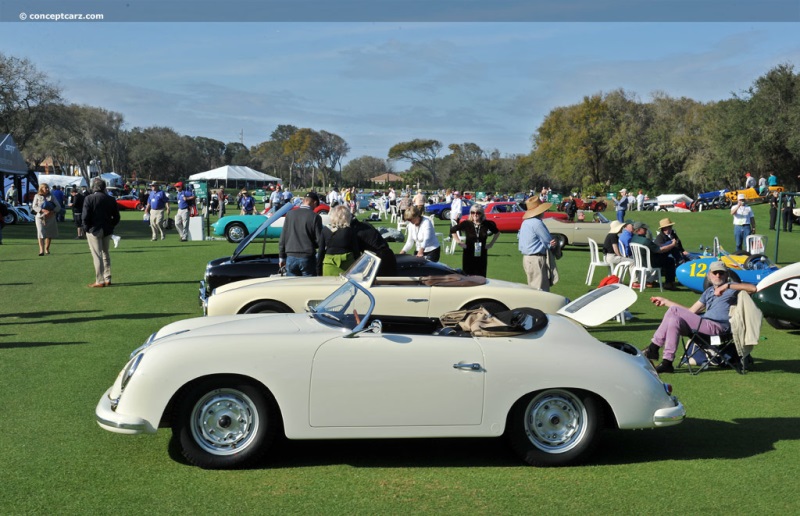
Image Left 1956 356A
 

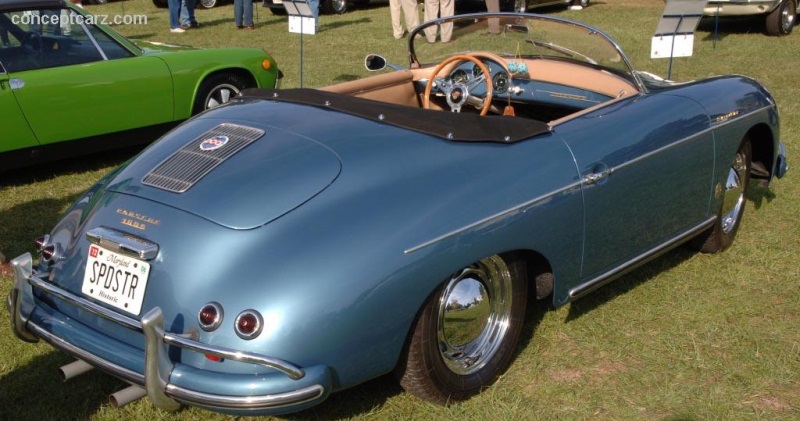
1957 Porsche 356 A news, pictures, and information

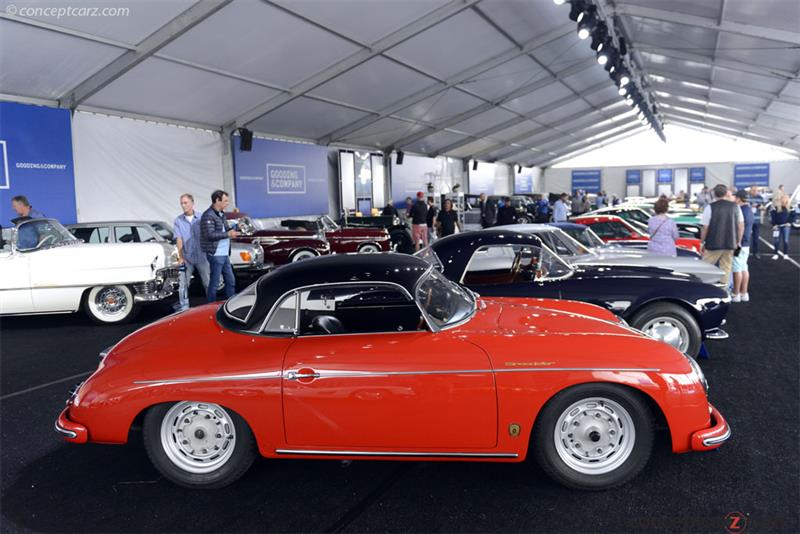
Roadster
Chassis Num: 83069
Engine Num: 80861
 
Sold for $245,000 at 2012 Gooding & Company.
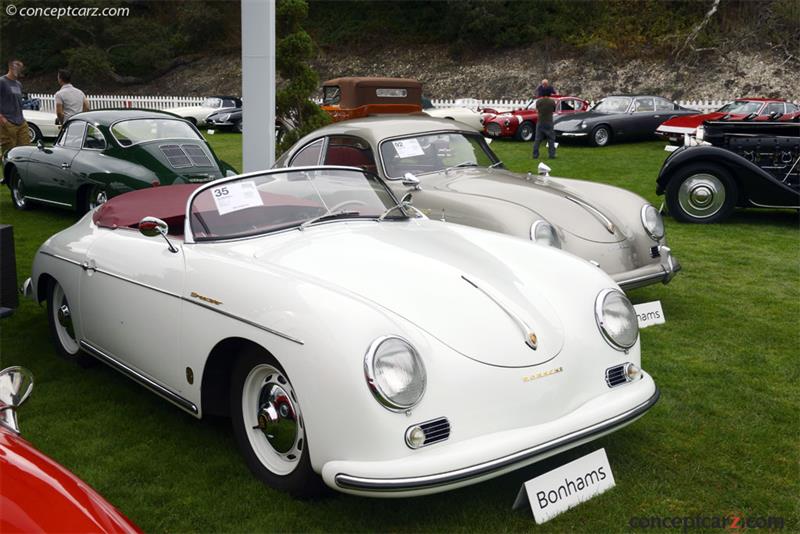
The Porsche 356A cars were introduced in 1956 after revisions to the original 356 series. Differences between the two included a curved one-piece windshield, horn grilles under the headlamps, and an inside gas gauge. There were modifications to the torsion bars, 15-inch wheels, updates to the dashboard, and better legroom.

The 1956 and 1957 356A bodies were built by Reutter. Engine options began with the 1600 'Normal' engine delivering 70 horsepower. Next was the 1600 S (for 'Super') which had a higher compression ratio and 88 horsepower. Other options included the 1500 or 1600 GS/GT Carrera unit with dual overhead cams delivering 110 or 115 horsepower, respectively.

United States importer Max Hoffman had a reputation for encouraging European automakers to build specific models to meet the US market needs. The Speedster was one of the most famous and successful of Mr. Hoffman's initiatives. The Speedster used standard Porsche engines and clothed in lightweight coachwork. Priced at $2,995, the Speedster had minimalist seats, small side curtains, and a tiny top.

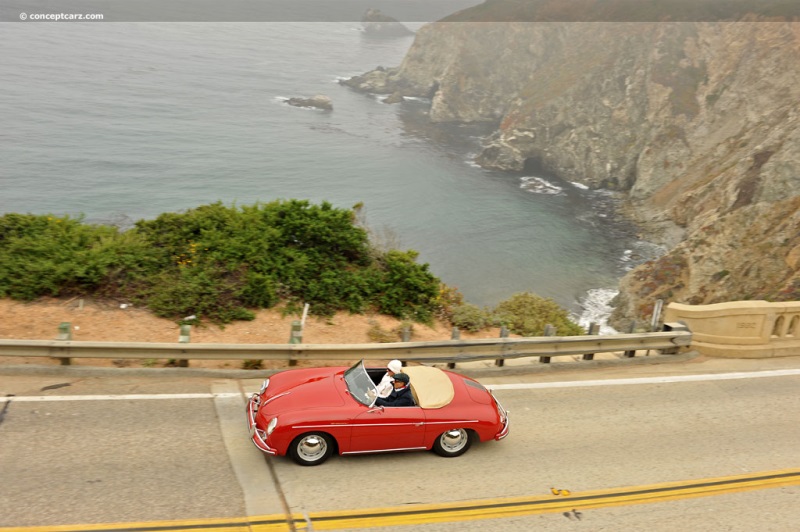
This 356 A Speedster, chassis number 83069, was completed on March 15th of 1957. It is a T-1 Speedster equipped with 'beehive' taillights and many refinements found on the earliest Pre-A variants.

This Porsche was built for export and finished in Signal Red (601) over black leatherette and equipped with US-specification bumpers and sealed-beam headlights. Of the 3,994 pushrod Speedsters built between 1954 and 1958, only 494 were equipped with high-performance 1600 Super engine, as was with this car.

The current owner purchased the car from its previous (and third) owner, living in Indiana. Shortly after being purchased, the car was treated to a two year restoration. The work was completed in 2010. After completion, the car was shown at the Porsche Parade in St. Charles, Illinois where it achieved an impressive 232.2 point score.

The car is powered by a 1582cc overhead valve air-cooled Boxer four-cylinder engine breathing through twin Solex 40 PCIB carburetors and delivering 75 horsepower. There is a four-speed manual gearbox and four-wheel hydraulic drum brakes.

In 2012, the car was offered for sale at the Gooding & Company auction in Scottsdale, Arizona. The car was estimated to sell for $250,000 - $300,000. As bidding came to a close, the car had been sold for the sum of $245,000 inclusive of buyer's premium.

By Daniel Vaughan | Feb 2012
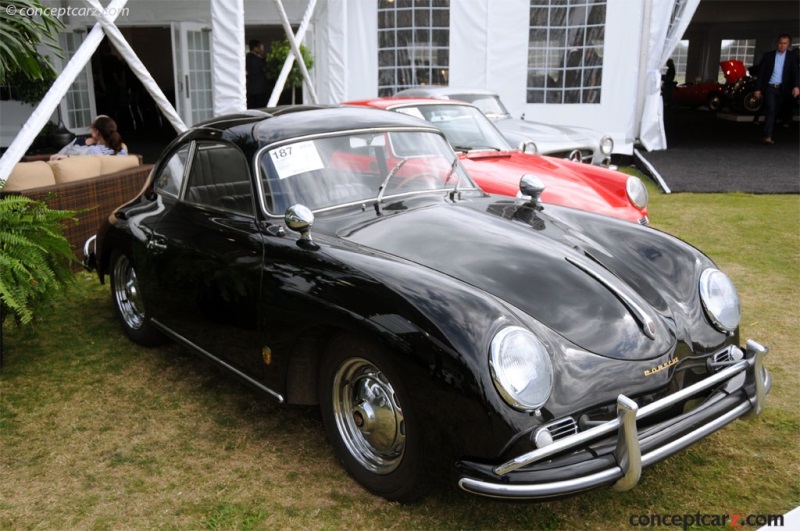
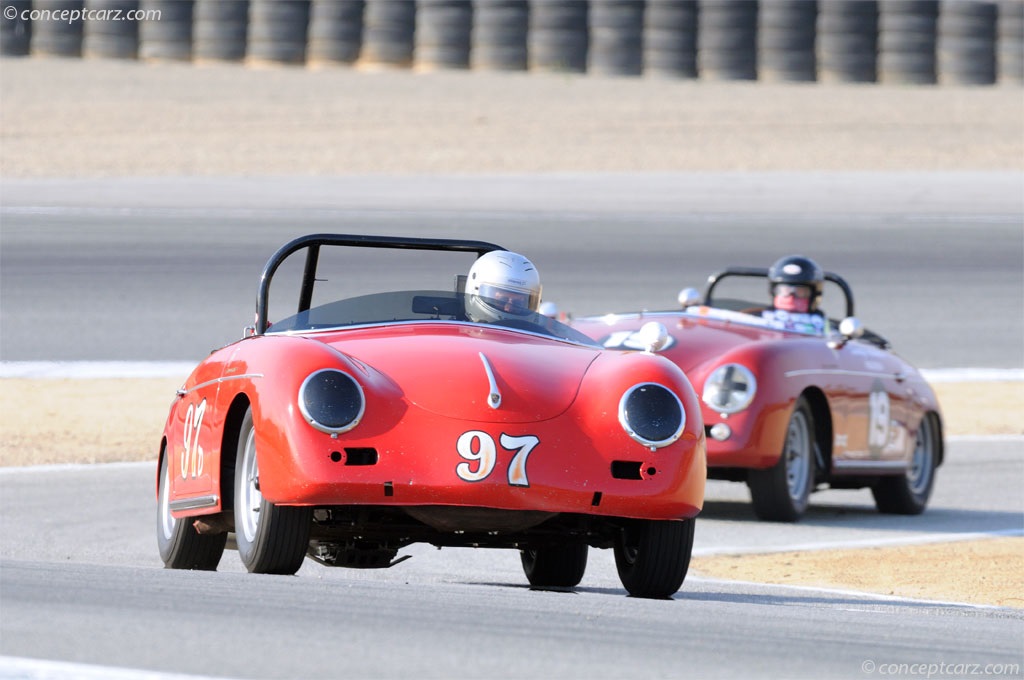
Coupe
Chassis Num: P66250
 
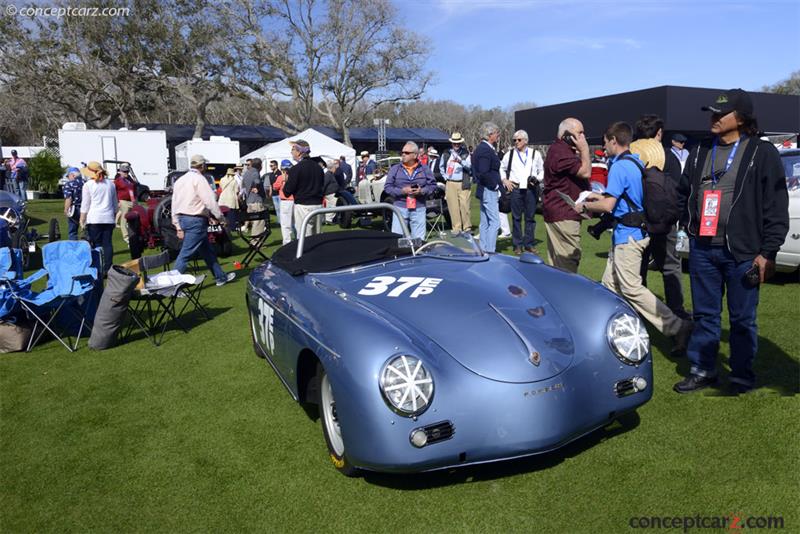
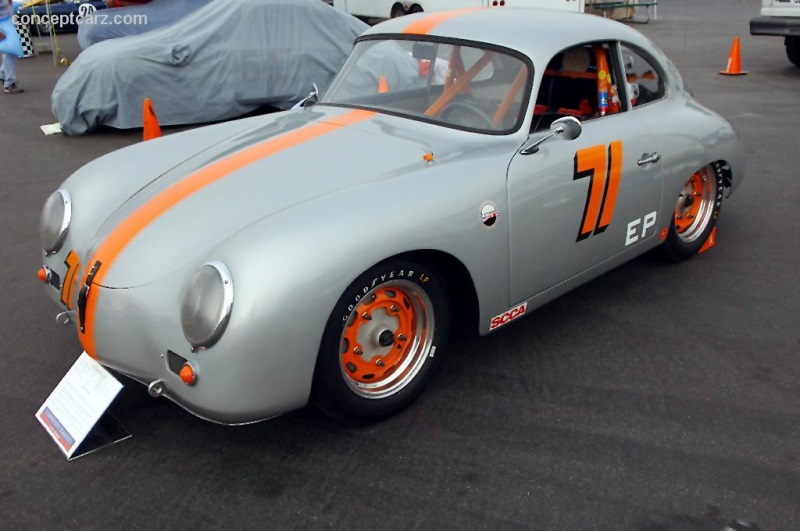
This 1957 Porsche 356A Coupe raced in SCCA E-Production in Southern California & Arizona in the late 1960's through the early 1980's. Road raced included Ontario, Riverside, & Tucson Airport. It was also driven in numerous rallies, hill climbs and autocrosses during that period.

Sometime in the 1970's, fender flares were added to accommodate wider tires. Mike McNally, who raced a speedster in Chicago in the 1960's & more recently Corvettes in California, bought this car in March of 2004. He trailered it to Ted Blake's 356 Restorations in September of 2004. There the car was fully restored for vintage racing.

In 2005, Mike raced the car in CSRG events at Infineon Raceway and Thunderhill Park, the Wine Country Classic and the Monterey Historics.

After the 2005 season, Mike sold the car to Darrell Bailey & Paul Frame who work in Ted's shop. Mike continued as a driver in 2006, racing at the CSRG event at Infineon Raceway and the Wine Country Classic.

Besides racing, the car was also entered in the Concours at Serrano in 2005 and the Shriners Concours d'Elegance in 2006 where it won 1st in Class at both events.
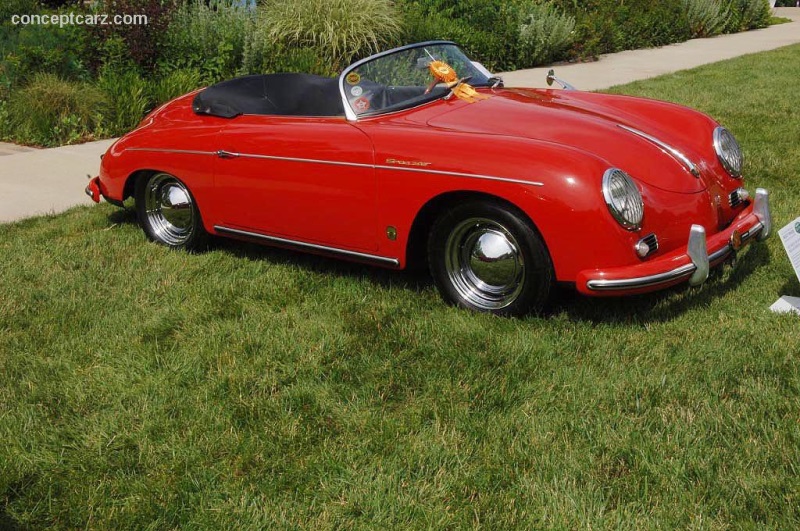
Cabriolet
Chassis Num: 83525
Engine Num: P810527
 
Sold for $143,000 at 2007 Christies.
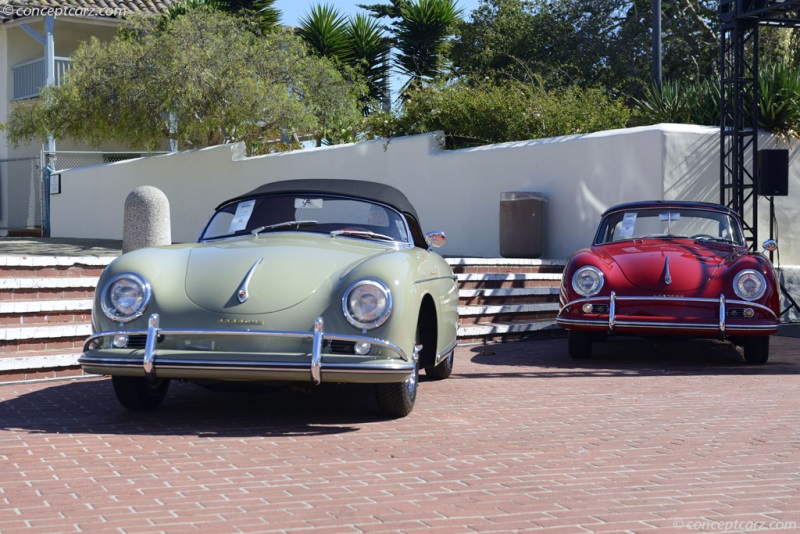
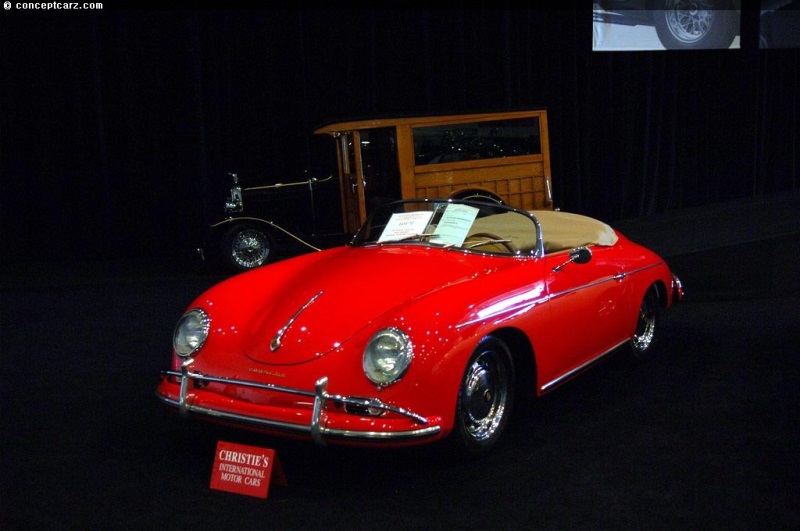
This 1957 Porsche 356A Super Speedster was offered for sale at the 2007 Christie's Auction of 'Exceptional Motor Cars at the Monterey Jet Center.' It is finished in red with tan leather interior. Power is provided from the four-cylinder air-cooled horizontally opposed engine capable of producing 90 horsepower. The engine is mated to a four-speed manual gearbox and braking is from the four wheel drums.

The Speedster was introduced in 1954 and targeted for the Sun Belt regions, such as California. The Speedsters were constructed by Reutter and given an aerodynamic and stylish body. Soon the 1500 engine was replaced by the 1600, giving Porsche a 100 mph car, and changing the vehicles designation to 356A.

At auction, the car was estimated to sell for $130,000 - $150,000. The estimate proved accurate, as a new owner was found and willing to pay $143,000 for this gorgeous automobile.
Roadster
Chassis Num: 83332
Engine Num: 830648
 
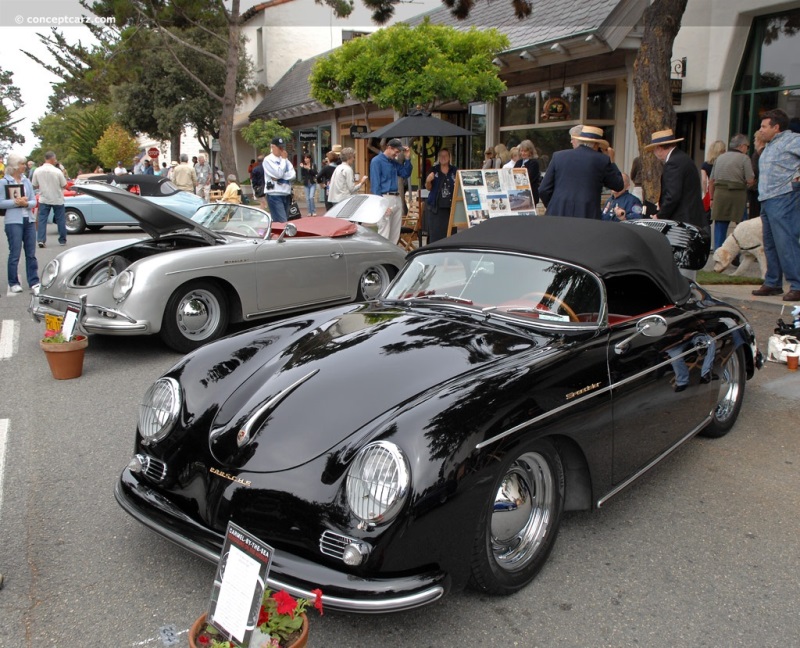
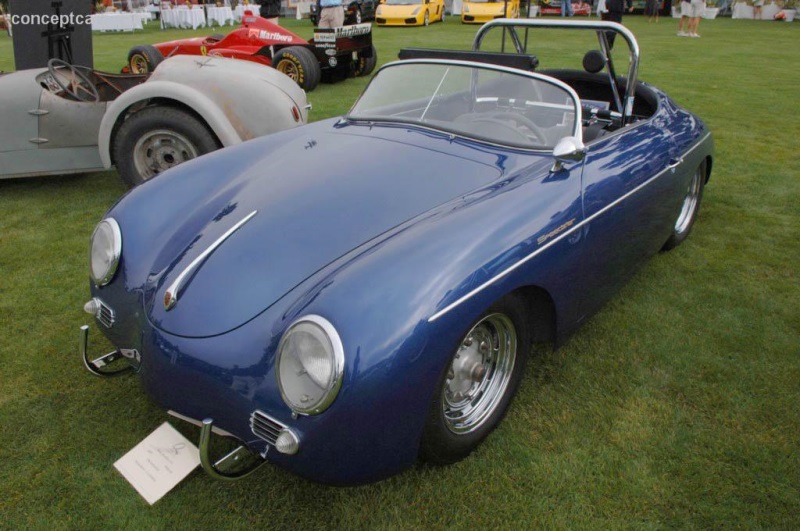
This 1957 Speedster has been the recipient of honors at many car shows and was featured on the back cover and interior of the book, Speedster 50th Anniversary: Celebration of an Icon. Painted black with a red interior, this restored and modified car won the peoples' choice award at steamboat in 2006, and was first in its class at the 2003 Speedsterfest in Ventura. Speedster production peaked at 1171 cars in 1957; after another year of production, the roadster role in the 356 line-up was assumed by the Convertible D, which wasn't nearly as aggressive in its appearance.
Roadster
Chassis Num: 86590
Engine Num: 66372
 
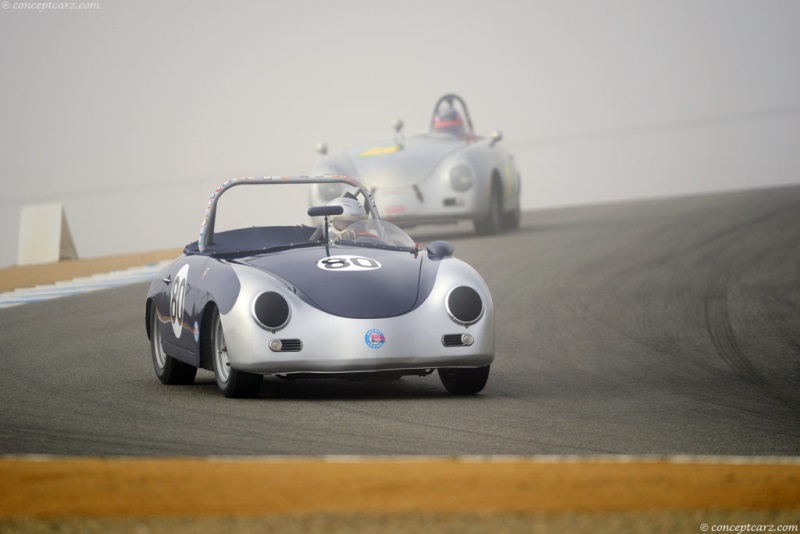
Back in 1983 this Speedster was transformed into a vintage-style racecar and was then campaigned on the West Coast during the subsequent decade. It appeared at the Monterey Historics, Riverside, Willow Springs, Sears Point, and the Palm Springs Grand Prix. It was featured at the 'Quail' in 2006 to commemorate 50 years of racing at Laguna Seca, but has not been shown since. The Speedster was created on the advice of Max Homman, Porsche's importer at the time, who said that a low-cost, open-top version of the 356 would be a hot seller.
Roadster
 
The first Porsche 356s built in 1947 in Gmund, Austria, carried aluminum bodies built upon a tubular frame using Volkswagen technology. Porsche moved production to Stuttgart, Germany, and continued to make 356 coupes there - in steel. Then, in 1954, coachbuilder Reutter created the Speedster, of which this is an all-original example.
Roadster
Chassis Num: 83301
Engine Num: 65352
 
Sold for $205,700 at 2012 RM Auctions.
Porsche's 356 Speedster was built as a more affordable price than the more luxurious 356 Cabriolet, at the insistence of Max Hoffman, Porsche's U.S. importer. The Speedster was priced at $2,995 and offered a small top, side curtains, and lightweight bucket seats. It had a rakish, cut-down windshield which gave the impression of speed and adventure, even while sitting at rest. Speedster production began in 1955 and peaked at 1,416 units for 1957, with just 2,922 examples built in total.

This 1600cc-powered Porsche 356 Speedster was built on May 9th of 1957 with sealed-beam headlamps, and finished in red with the 356 Coupe-type seats trimmed in black leatherette. The current owner acquired the car in the late 1990s. Just prior to the acquisition, the car had been professionally restored.

In 2012, this car was offered for sale at RM Auction's Monterey, CA sale. It was estimated to sell for $190,000 - $240,000. As bidding came to a close, the car had been sold for the sum of $205,700, inclusive of buyer's premium.

By Daniel Vaughan | Nov 2012
During the war Ferdinand 'Ferry' Porsche and a handful of his proven, faithful employees had started work on development number 356 in their workshops moved to the town of Gmünd in Kärnten. The first design drawings were completed on 17 July 1947 and on 8 June 1948 the Kärnten state government issued a special permit homologating the car. Returning home after being held by the French as a prisoner of war and bailed out of custody by his family, Professor Dr.-Ing.h.c.Ferdinand Porsche, Ferry's father, stated right away that 'every single bolt was just right'. No 1 was then followed by a small series of 52 additional cars built in Gmünd, production in Stuttgart from 1950 - 1965 subsequently amounting to 78,000 units of the 356 model Porsche No 1, a mid-engined roadster, is completed and homologated in the Austrian town of Gmünd. The engine displaces 1131 cc and develops maximum output of 35 bhp(26 kW). The first few 356 coupes are made of light alloy.
The Porsche 1500 S ('Super') was launched in 1952 and was capable of producing 70 bhp.

In 1953, the Porsceh 1300 S producing 60 horsepower was added to the Porsche line-up. This was also the year the Porsche was introduced to the Únited States. The split windshields are also replaced by bent windshields during this year.

1954 marked the production of the first 200 Porsche Speedsters.

In 1955, the Speedster becomes a genuine sales success. Production of the 356 A series starts in autumn wîth the proven 1300 and 1300 S power units soon joined by the 1600(1582 cc, 60 bhp/44 kW), 1600 S (1582 cc, 75 bhp/55 kW) and 1500 GS -the first Carrera marking the introduction of the new sports engine wîth four overhead camshafts - (1498 cc, 100 bhp/74 kW). The 1100-ccengines are dropped from the range.

During the 1956 model year, Porsche produces its 10,000th 356 model.

In 1957, the sporting and Spartan Porsche 1500 GS Carrera is joined by the more comfortable 1500GS de Luxe model.

In 1958, output of the Porsche 356 A 1500 GS Carrera GT is boosted to 110 bhp/81 kW. The Speedster is replaced by the Convertible D wîth a larger windscreen and winding windows at the side. The 1300-cc engines are dropped from the range.

In 1959, the Carrera receives extra power and is now called the 1600 GS-GT, wîth the sports version offering more output (1588 cc, 115 bhp/85 kW) than the de Luxe model (105 bhp/77 kW). The 356 B series is introduced in autumn, the Convertible D being renamed the Roadster.

Source - Porsche
The Porsche 365C has been named the number ten on the list of Top Sports Cars of the 1960s by Sports Car International in 2004. The Porsche 356 is still widely regarded as a collector car that has capably stood the test of time.

There is some debate over which vehicle was the first official Porsche, the pre-war Porsche 64 being actually a VW racing automobile. The 356 was a sports car designed by Porsche that sold from 1948 through 1964 and was Porsche's first production automobile. A prototype for the 356, the 'Number 1' had a mid-engine. The name for the 356 was chosen as it was the 356th project off the Porsche design desk. In 1949, production officially began in Stuttgart, Germany.

Designed and fabricated by Ferdinand 'Ferry' Porsche (the son of well-known Dr. Ing Ferdinand Porsche, founder of Porsche motors), the Project # 356 concept was then styled by Irwin Komenda. Bailed out of custody by his family, Professor Dr.-Ing.h.c.Ferdinand Porsche was a held as a prisoner of war by the French. During the war, Ferry Porsche and a small handful of his faithful employees began work on the 356 in their workshops moved to the town of Gmünd in Kärnten. On Dr. Porsche's return to his family, he stated right away that 'every single bolt was just right'.

On July 17th, 1947, the first design drawings were completed, and it was an entire year later when the Kärnten state government issued a special permit homologating the car on June 8th, 1948.

Komenda, born in 1904 in Austria, was also responsible for contributing substantially to the construction of the Volkswagen, Cistalia, Auto Union racers, and other vehicles of the day. Joining Porsche's design bureau in 1931, Komenda held various positions at Steyr, Daimler-Benz and other coach shops in both Austria and Germany. He is responsible for contributing to a variety of other designs in Porsche's history, and was the chief engineer and head of Porsche's coachwork from 1955 until he died in 1966. The 'confidential clerk' for Porsche, Karl Peter-Rabe became the chief business manager, after Dr. Ing Albert Prizing, until 1965. Prizing was a business manager who is famous for bringing 37 orders back to the factory following one importer's conference in Wolfsberg in 1950.

The prototype was taken various times by Ferry, variously with just the rolling chassis without body, up the steep mountain roads surrounding the city to test its agile handling and durability. Ferdinand Porsche went on to live a long life, and died on March 27th, at the age of 88. Contributing to the handling of the prototype was the gearbox and suspension specialist Karl Frolich.

Evolving through several updates through the years, the 365 was originally available as a coupe, a cabriolet and finally a roadster. The vehicle changed from mid-engine to rear, along with a myriad of details that evolved over the 22 year run of the model, though the recognizable shape of the vehicle remained the same, a timeless classic. The most desirable versions were the Porsche 356 Carrera, which came with a special racing engine, and the 'Super 90' and 'Speedster' models. The same price as a Cadillac at the time, the price of a late 1950's Porsche was nearly $4,000. Today, a 356 Carrera model can sell for well over $150,000.

The very first Porsche sport car was hand built in Gmünd/Kärnten, Austria. The entire aluminum body was hand beaten over a wooden buck. Without the benefits of a machine shop, all of the engine and drive-train components were made completely. Over 50 Gmünd cars were built and sold primarily in Austria and Germany. To be closer to parts suppliers, the Porsche Firm, located to Zuffenhausen, Austria, near the Reutter coachworks following the war. The only Porsche to ever have the engine mounted in front of the rear axle, the 356/1 was open top 2-seater. Designed with a tubular chassis, the vehicle was air-cooled and came with a 110 cc engine that remarkably light and quick for the times. Following this first ever radical design, every Porsche 356 to follow was constructed with the engine in the rear, behind the axle.
The Reutter Company, located in Stuttgart Germany, was given the assignment in late 1949 to construct 500 body works for an adjusted model of the 356 unit. This classic 356 was capable of reaching a speed of 140 kph. Under the belief that selling more than 500 units was an impossible feat, it was a pleasant surprise on March 15, 1954, car no. 5,000 left the factory.

Over the years, the 356 was updated with various mechanical refinements, though the basic shape was retained and remained instantly recognizable from year to year. The final 356B Roadster was built in early 1963, while both Coupe and Cabriolet models continued to be built every year up until 1965.

With a top speed of over 85 mph (135kph), a total of only 4 models of the 356 were produced in 1948. The 356/1 came with a 1.1 liter engine that was capable of making 40 horsepower. Less than 60 units were produced during 1949 and the earlier part of 1950. These very rare and unique models are known today as the Gmünd Coupes. The tiny sport cars continued to be built during 1950, but now at a factory in Stuttgart where Porsche moved production. A total of 298 units were built and delivered to their owners by the end of 1950.

One year later, three engines, all of them were flat-4's 'boxers' that were air cooled and were available from the factory. They were available at the 1,100cc, the 1,300cc, and the 1,500cc. The 1500 Super was the top power-plant during late 1952, which came with a synchromesh transmission. That same year the America Roadster was designed and created. Only a total of sixteen models were produced, and all units were an aluminum cabriolet body that came with a removable windshield. In 1992, this vehicle inspired the 40th Anniversary 1992 911 America Roadster.

Under the advice of Max Hoffman, the sole importer of Porsches into the U.S., the 356 'Speedster' was introduced in late 1954. The idea was to produce a lower cost vehicle that was a racier version that would appeal to the American market. Proving to be an instantaneous hit, the Speedster came with a low, raked windshield that was easily removed, bucket seats, and a minimal folding top. In 1954, the Speedster was available for $2,995. This unit was available in a variety of six different engine types, the 1100, 1300, 1300A, 1300S, 1500 and 1500S. The 1500Super was the top of the line model, while the Coupe and Cabriolet wore the 'Continental' badge designation. In 1955 the 1600 motor went into production.

In 1956, the 356A was unveiled to the world, and had an all steel body, curved windshield and smaller wheels. When the cars were introduced, numerous subtle differences in the shape of the body and features were highlighted. In 1956 the 10,000th 356 unit rolled off the assembly line. The 356 Carrera was introduced at the same time, which came with a 1500GS engine. Before being replaced in 1959 by the Convertible D model, the Speedster peaked at a total of 1,171 units produced. In this same year, the 1300 engine was dropped from the line. A new project was the result from continued improvements to the 356A, the Type 2 or 'T-2', now with a new transmission, the 644 replaced the earlier 519 with an improved shifter, better synchros, dual nose mounts and a split case design. A higher horsepower is achieved in 1958 as continuous improvements were made in the Carrera engines.

The D model featured more comfortable seating, along with a more practical windshield, and glass side windows. In an attempt to boost sinking sales, around 1300 of these models were produced. While previous models were developed by Reutter coachbuilders, the Convertible D model was developed by Drauz, which is what the ‘D' stands for. The D model falls somewhere between a Speedster and a Cabriolet in both luxury and lightweight appointments. In the later months of 1959, the Convertible D became a roadster with the new T-5 body style. Today to the convertible D is considered very desirable, due to the low number of units produced.

In 1960 the 356B offered the S90, or 'Super 90' motor as an available option. The vehicle also had a counterweighted crank, sodium-filled valves and Solex P40-II carburetors. The Karmann Coachworks were employed in 1961 to produce the 'Hardtop', a Cabriolet body with a fixed hard roof. The nickname 'Notchback' was affixed to these cars because of their profile. Nearly 1750 of these vehicles were produced during the two years of its production.

It was one year later when the 356B was introduced, updated with an entirely new body and Super 90 engine. In 1962 and 1963, the engine was once again revised, and changed body styles. A very small number of 356B 4-seater coupes were produced by a Swiss company. Though rare, several models are still around today. Next was the introduction of the Carrera 2 in April of 1962, and only around 450 models were produced in both Coupe and Cabriolet form. In the same year, Karmann produced 2170 coupes, and Reutter produced 4100. The production for the year topped 7900 when the almost 1600 Cabriolets are added into the count. The discussion is broached by Porsche with Reutter to purchase the coachmaker, and finally, after 12-years of co-operation, the successes are consolidated. 'Christophorus', a customer magazine filled with news and background on the Porsche lifestyle is launched by the Porsche factory.

Finally the 356C, the final model, known also as the Type 6 (T-6), was available in 1964 with an engine that came from the same lines as previous Spyder engines, the most powerful pushrod engine Porsche every produced, was cable of producing 130 horsepower. Offering the 1600C, 1600SC and Carrerra 2 engines, the 356C featured 4-wheel disc brakes. Both the C and SC were available for purchase in either Coupe or Cabriolet form.

In 1964, a total of 14,151 356 units were produced. Porsche had achieved a production rate higher in that year alone than the entire line production of the first 10 years of the Porsche 356. The 911 was introduced at this time, presaging the end of the 356 run. Through the end of 1965, the company continued to sell the 365C in North America as a lower-cost vehicle.

Achieving a victory in the 1100cc class during its first outing, the original 356-001 vehicle was raced at the Innsbruck city race. In Austria, on the 8th of June 1948, the Porsche was homologated by the state government of Kärnten. Frequently touring the world for special car shows and historic events, the original Porsche '001' vehicle is in the Factory Museum.

Near the end of 1965, more than 76,000 Porsche 356 models were produced and sold. Following 17 years of production, the model 912 eventually took over the 356's stance in the market. The push-rod engine from the 356 was reused to power the 'entry level' 912 model that was produced from 1965 to 1969.

The Porsche '901' was introduced at the Frankfurt Motor Show in 1963. Later after a protest by Peugeot, the name was changed to '911'. In 1964 the Porsche 911 began production.

By Jessica Donaldson
For more information and related vehicles, click here

SZYMCZAK TAKES MAZDA MX-5 CUP RACE ONE AT MAZDA RACEWAY
MONTEREY, Calif. (May 10, 2013) – Christian Szymczak, of Palos Verdes, Calif., won Round Three of the SCCA Pro Racing Playboy Mazda MX-5 Cup doubleheader at Mazda Raceway Laguna Seca. Elliott Skeer, of Carlsbad, Calif., crossed the line in second, followed by John Dean, of Sebring, Fla. Szymczak, in the No. 34 ALARA Racing MX-5, set himself up for a clean sweep at the 11-Turn, 2.238-mile Mazda Raceway, with a 9.5-second gap. Szymczak was the fastest in qualifying and each of the practi...[Read more...]
SCCA PRO RACING PLAYBOY MAZDA MX-5 CUP ROUNDS ONE AND TWO
The SCCA Pro Racing Playboy Mazda MX-5 Cup begins its 2013 campaign at Sebring International Raceway this week with a pair of races at the 61st Mobil 1 Twelve Hours of Sebring Fueled by Fresh From Florida. Aside from battling for the Playboy MX-5 Cup Championship, each driver is also fighting to earn the MAZDASPEED prize. The prize, which is given to the champion, is a funded ride in the next step up the motorsports ladder for 2014. Last year, Stevan McAleer drove his No. 28 CJ Wilson Childre...[Read more...]
12C GT3 Now Approved To Race In North America, As Pirelli World Challenge Confirms Eligibility
•12C GT3 is eligible to race in the Pirelli World Challenge Series •Pirelli World Challenge supports the IZOD IndyCar series •McLaren has claimed five back-to-back Can-Am titles (1967-71) and three Indy500 victories (1972, 1974, 1976) in an illustrious racing history in the North American market The McLaren 12C GT3 has been confirmed as eligible for the Pirelli World Challenge (PWC), by the series organisers following a strong competitive debut season in Europe. This announcement means t...[Read more...]
And Then There Were Three - Meet the Playboy MX-5 Cup Title Contenders
With the final two races of the season this week at Road Atlanta, the SCCA Pro Racing Playboy Mazda MX-5 Cup championship has come down to three drivers, with a fourth still mathematically in contention. The man in the driver's seat for the Mazda-funded ride higher up the development ladder next season is Stevan McAleer, who began his rookie season wondering if he had the resources for a full season in the No. 28 Blue Mercury Capital/Numerix MX-5. Two wins and seven podium finishes has kept ...[Read more...]
Road America Announces 2013 Season Schedule
Road America President and General Manager, George Bruggenthies, announced Road America's 2013 season schedule today. 'Road America has the most active and diverse schedule of any road race circuit in the U.S. and we look forward to hosting the AMA, NASCAR Nationwide Series, SCCA and three separate vintage events again in 2013,' said Bruggenthies. 'We also look forward to being the first circuit to have the opportunity to show the world what the new race format of the recently announced GRAN...[Read more...]

Arrow Right 1957 Porsche models
Porsche 356
Porsche 356 Carrera 1500 GS/Carrera
Porsche 356A 1500 GS-GT Carrera Sunroof Coupe
Porsche 550A RS Spyder

Similar Automakers
Aston MartinBentley
BugattiDevon
FerrariGTA
KoenigseggLamborghini
LotusMaserati
MaybachMcLaren
Rolls-RoyceSpyker
Tesla
Similarly Sized Vehicles from 1957
Alfa Romeo 1900 Primavera
Aston Martin DB 2/4 MKIII
BMW 507
Devin MG Special
Ferrari 250 GT
Ferrari 250 GT Boano
Ferrari 250 GT California
Ferrari 250 GT Ellena
Ferrari 250 GT TdF
Ferrari 250 TR

Similarly Priced Vehicles from 1957
Chevrolet Corvette C1 ($3,460-$3,460)
Porsche 356 ($3,215-$3,915)
Ford Thunderbird ($3,406-$3,406)
Buick Century Series 60 ($3,315-$3,830)
Alfa Romeo Giulietta ($2,800-$3,785)
Oldsmobile Golden Rocket Fiesta Super 88 ($3,210-$3,210)
DeSoto Fireflite ($3,485-$4,120)

Average Auction Sale: $134,323

 
Porsche: 1951-1960
Similar Automakers
Porsche History
Other models by Porsche
Manufacturer Website

Related Articles and Event Coverage
RM Auctions - Monterey
Pittsburgh Vintage Grand Prix
The Elegance at Hershey
Gooding & Company, Amelia Island, Fl
Gooding and Company - The Scottsdale Auction
RM-Automobiles of Arizona
Pittsburgh Vintage Grand Prix
61st Pebble Beach Concours d'Elegance
PVGP BeaveRun Historic Races
The 28th Annual Pittsburgh Vintage Grand Prix
Rolex Monterey Motorsports Reunion
Kohler International Challenge
Rolex Monterey Historic Automobile Races
Carmel-By-The-Sea Concours On The Avenue
Pittsburgh Vintage Grand Prix
Greenwich Concours d'Elegance : European Car Display
Concours d'Elegance of the Eastern United States
Pittsburgh Vintage Grand Prix
Monterey Historic Races at Laguna Seca
PVGP Historic Races at BeaveRun
Watkins Glen HSR
Christie's Exceptional Motor Cars at the Monterey Jet Center
Pittsburgh Vintage Grand Prix
Historics at BeaveRun
2006 Pittsburgh Vintage Grand Prix
Monterey Historic Automobile Races
2006 PVGP BeaveRun Historic Races
2006 17th Annual Concours d'Elegance of the Eastern United States
2006 RM Auctions at Amelia Island
2006 Gooding & Company Auction: Palm Beach
2005 50TH Annual Porsche Parade. Hershey Pennsylvania
2005 Pittsburgh Vintage Grand Prix
2004 Pittsburgh Vintage Grand Prix
2004 Jefferson 500

Porsche
Monthly Sales FiguresVolume
April 20134,032 
March 20133,487 
February 20132,805 
January 20133,358 
December 20122,952 
November 20123,865 
October 20123,211 
September 20122,736 
August 20123,026 
July 20122,803 
June 20123,002 
May 20122,852 
(More Details)

 
356
550/718 Sports Racing Cars
597
904
906
907
908
911
912
914
917
924
928
934/935
944
956 and 962
968
Boxster
Carrera GT
Cayenne
Cayman
GT3
Panamera
Type 959

Image Left 1956 356A
© 1998-2012. All rights reserved. The material may not be published, broadcast, rewritten, or redistributed.