1971 914/6 Murene ![]() | 1971 914/6 ![]() |
1970 Porsche 914/6 news, pictures, and information | ||
| Tweet | ||
![]() | ![]() | Targa |
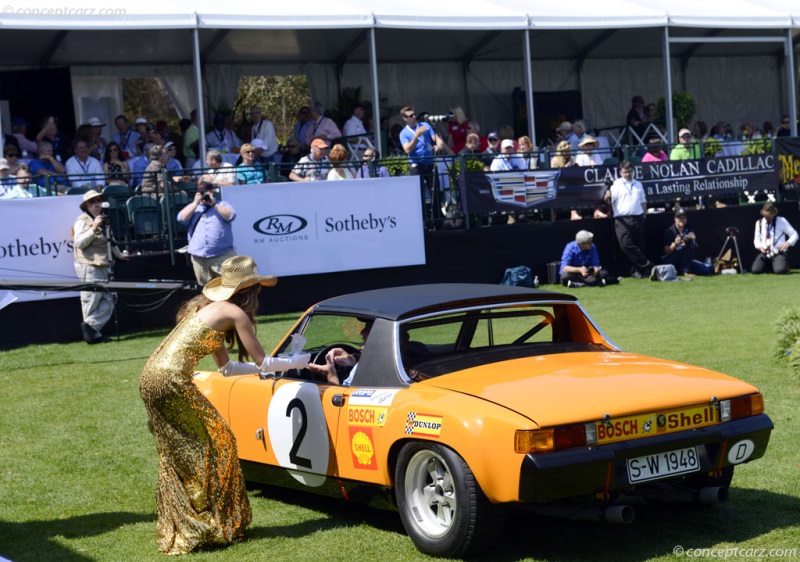
Imported to the USA in 1986, it spent 15 years sitting in a chicken barn in central Massachusetts. The present owner purchased the car in 2001 and a complete restoration was begun to bring it back to its 1970 configuration. The restoration was completed and the car raced in April 2004 at Daytona International Speedway at the Rennsport Reunion II.
![]() | ![]() | Prototype Coupe Chassis Num: 914 043 0691 |
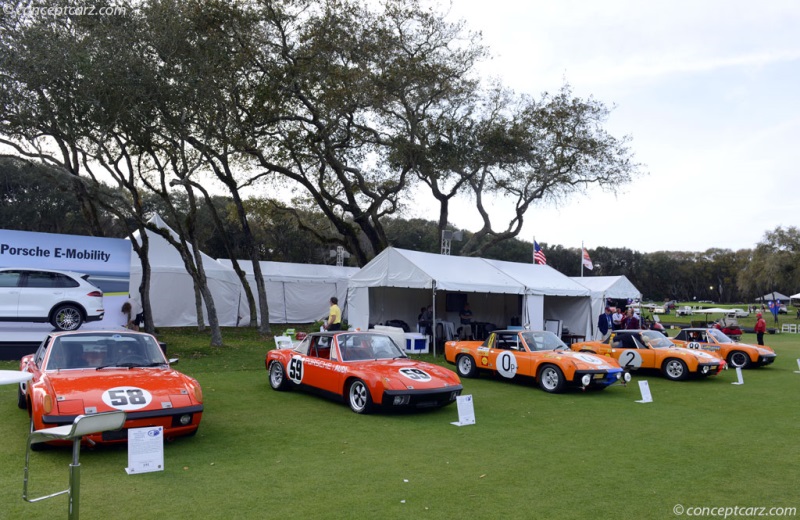
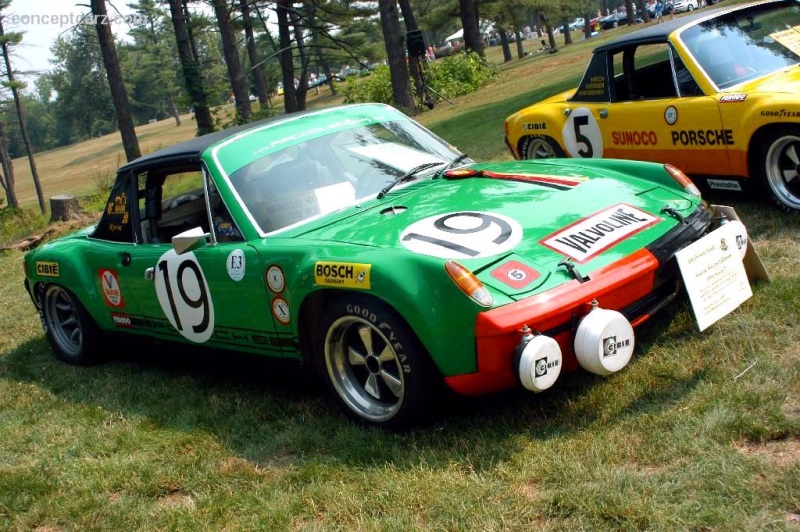
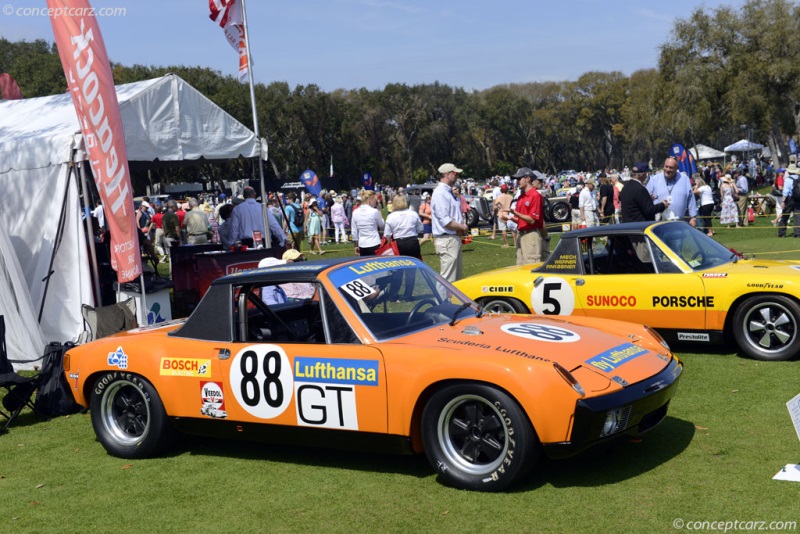
This was the first of approximately 12 original FIA Group 4 Porsche 914-6 GTs built at Zuffenhausen in 1970. It was equipped with Type 901/36 twin plug 6-cylinder engine #640 0295, steel wheel flares and painted light ivory. Delivered to Autohaus Max Mortiz GmbH where it was modified per factory instructions for racing with 908 front brakes and engine modifications increasing its horsepower to 220 DIN, painted Conda Green.
First race in the 1000 km Rennen Nurburgring on May 31, 1970, driven by Gerhard Quist and Dietrich Krumm The Porsche 914-6GT went on to win 9 of its next 12 ADAC series races, setting lap records at Hockenhein, Germany and Zolder, Belgium, and was described as 'Europe's Fastest GT' by the German Press.
The 914 043 0691 earned Porsche the 1970 international GT Trophy. That Trophy was later presented to Auto Haus Max Moritz, thus ending its European History.
Late in 1970 #914 043 0691 was sold to Ralph Meany Inc, in Mass. USA. This car was entered as #19 in the '24 Hours of Daytona' January 31, 1971. Driven by Steve Behr, John Buffum and Erwin Kremer finishing 2nd in GTU Class and 8th Overall. (Padro Rodriguez and Jackie Oliver won the race in a Porsche 917 K).
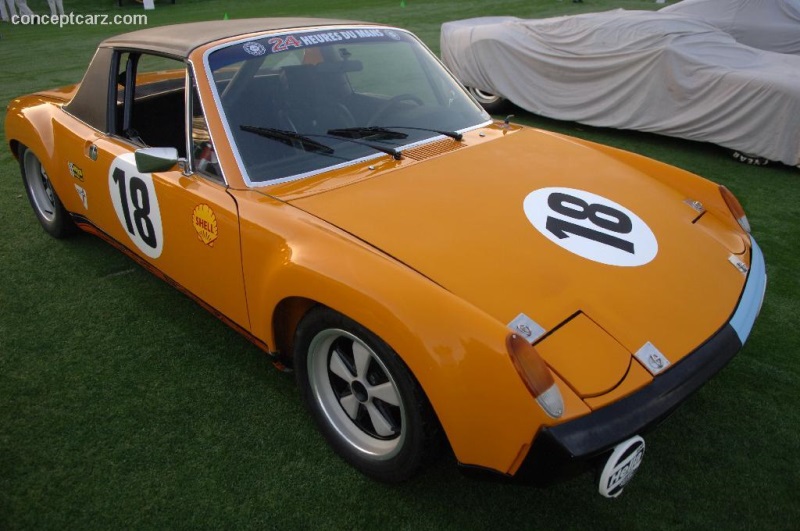
Ralph Meany entered another Porsche 914-6, #18 also painted Conda Green, which he drove with Bill Bean and Gary Wright. They finished 21st overall.
Both cars were entered at the '12 Hours of Sebring' race on March 20, 1971. #19, now raced as #29, was driven by Steve Behr, John Buffum, and Astronaut Charles (Pete) Courad Jr. they finished 29th overall. #18, entered as #28, was heavily damaged and was later run as the 1st windshield-less GTU car in IMSA.
During 1971, #19 raced at the 'Six Hours of Watkins Glen' July 24 and ran the inaugural IMSA event at Virginia International Raceway finishing 2nd in GTU, 3rd overall. After several SCCA races in the northeast it won the B/P Championship. (The Porsche 914-6 GT was later banned by the SCCA because of its prowess.)
Its last professional appearance was on September 19, 1971 at the 'Newly Created' Summit Point Raceway.
914 043 0691 is one of the few cars (let alone Porsches) that has both significant European and USA race history.
![]() | ![]() | ![]() | Daytona Coupe |
![]() | ![]() | ![]() | Targa Chassis Num: 914-043-0653 |
![]() | ![]() | ![]() | Targa |
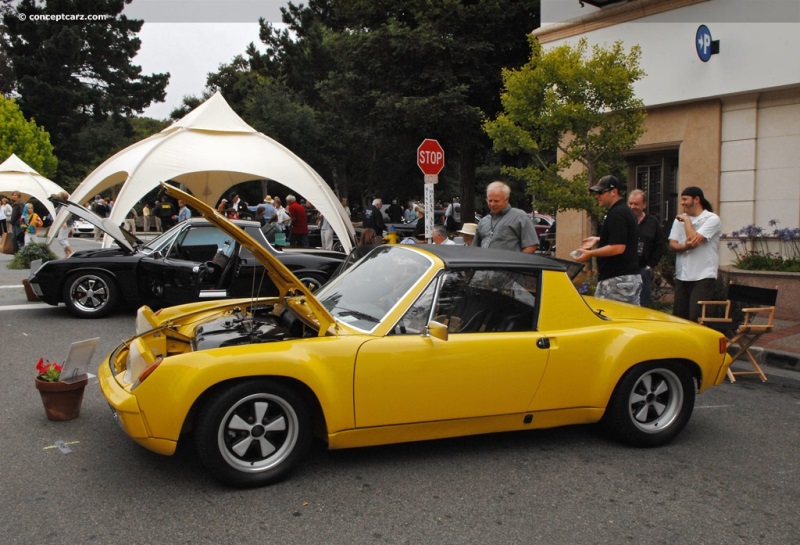
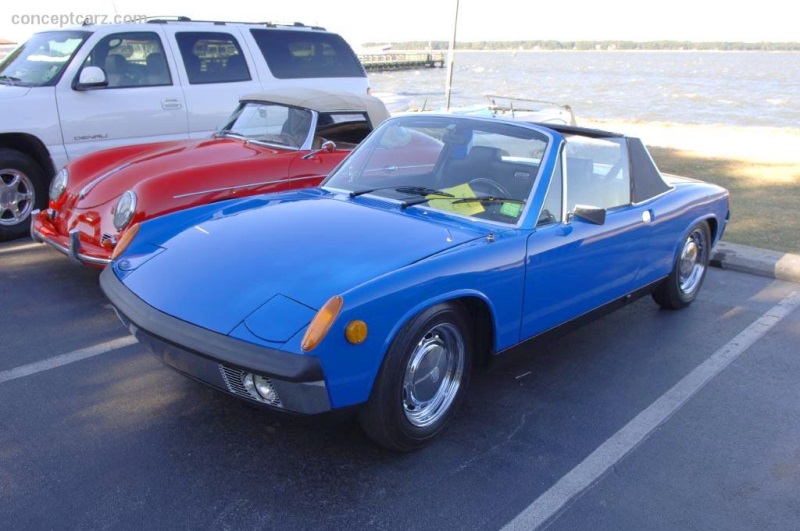
The car was purchased by the present owner in 1997, mileage at that time was 65,000 miles. It has been driven across the US on two occasions, to participate in Porsche Club events and was driven at speed at the Circuit Mont Tremlant and Road America.
The engine is 1991 cc's, producing 110 horsepower at 5800 RPM's. It has twin Weber Down-Draft carburetors and a Porsche 901 5-speed gearbox. Top speed is approximately 125 MPH.
![]() | Targa Chassis Num: 432591 |
![]() | ![]() | ![]() | Targa Chassis Num: 9140431543 |
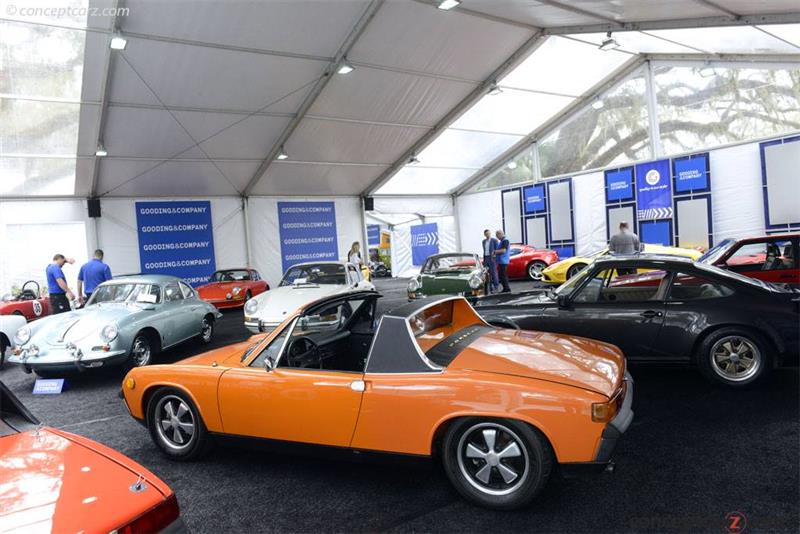
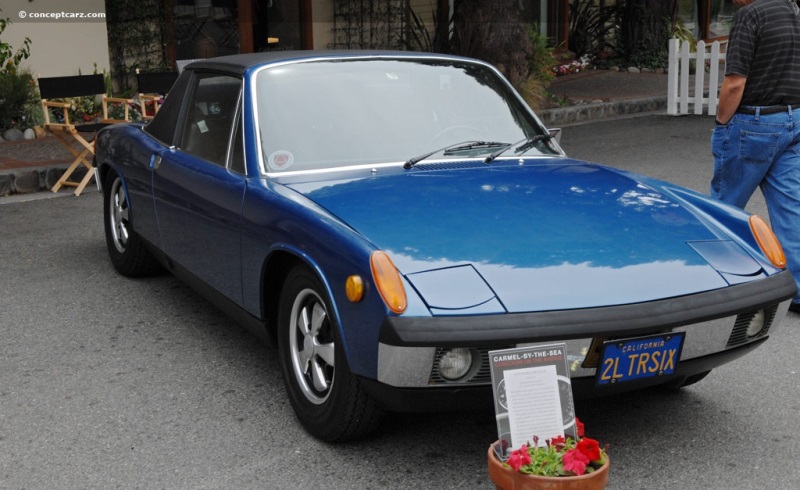
The Porsche 914 was introduced in September of 1969 as a collaborative effort between Porsche and Volkswagen to produce a sporty car. The car they came up with was a mid-engined vehicle with seating for two and featured a targa top. A 4-cylinder boxer engine provided the power. Volkswagen need a vehicle to replace the aging Karmann-Ghia while Porsche was looking for another option to add to their line up. The VW bodied vehicles were known as 914/4S while the Porsche variants were known as 914/6s. However, all 914S's sold in North America were considered Porsches.
The car sits very low and the suspension is stiff making it a great competition car rather than a touring car. The headlights hide in the hood and pop-up when needed. The targa top can be stored in the trunk.
The horizontally opposed flat-four engine is mid-mounted and came in three differnent sizes, 1.7, 1.8 or 2 liter. The 1.7 liter engine produced 80 horsepower, the 1.8 produced 79, and the 2.0 liter engine produced 95. A five-speed manual gearbox was standard equipment on all models.
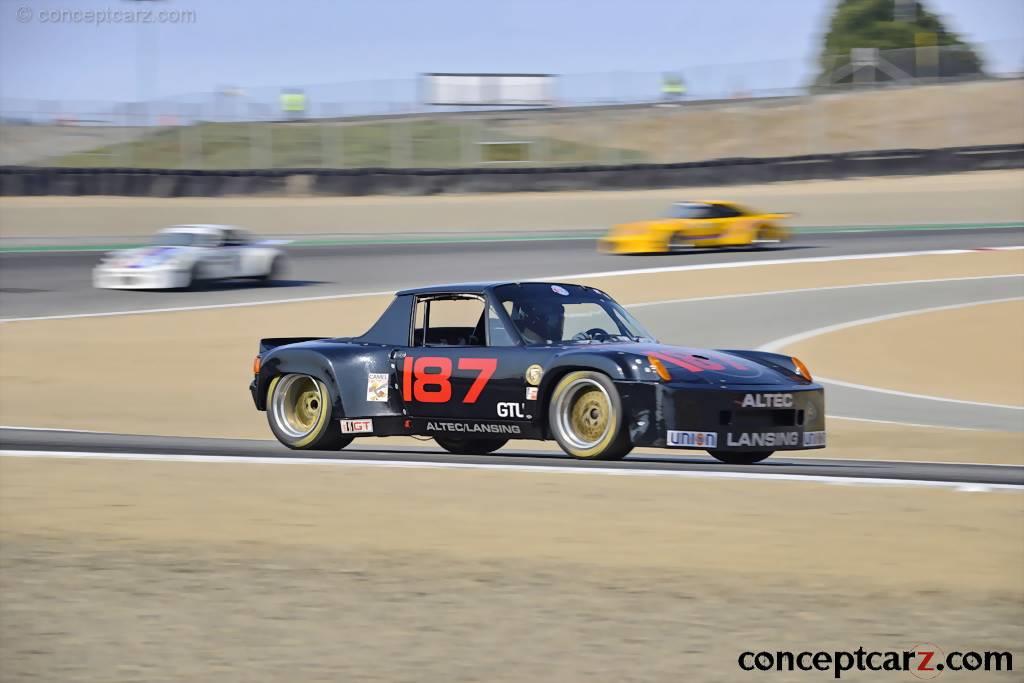
The 914/6 was short lived with only 3360 examples produced between 1970 and 1972. All featured the 2.0 liter flat-six engine. It was raced using different engine configurations. This included the 'T' specification, which was basically a stock 911 engine. Another popular configuration was to use a converted Carrera 6 engine.
In 1970 Porsche entered a 914/6 GT in the grueling 24-hours of Le Mans race. It finished 6th overall and won its class. A remarkable accomplishment. This was only one chapter in the vehicles extensive racing career which continues even to this day.
By Daniel Vaughan | Jan 2007
The car sits very low and the suspension is stiff making it a great competition car rather than a touring car. The headlights hide in the hood and pop-up when needed. The targa top can be stored in the trunk.
The horizontally opposed flat-four engine is mid-mounted and came in three differnent sizes, 1.7, 1.8 or 2 liter. The 1.7 liter engine produced 80 horsepower, the 1.8 produced 79, and the 2.0 liter engine produced 95. A five-speed manual gearbox was standard equipment on all models.
The 914/6 was short lived with only 3360 examples produced between 1970 and 1972. All featured the 2.0 liter flat-six engine. It was raced using different engine configurations. This included the 'T' specification, which was basically a stock 911 engine. Another popular configuration was to use a converted Carrera 6 engine.
In 1970 Porsche entered a 914/6 GT in the grueling 24-hours of Le Mans race. It finished 6th overall and won its class. A remarkable accomplishment. This was only one chapter in the vehicles extensive racing career which continues even to this day.
By Daniel Vaughan | Jan 2007
Just happening to be the cheapest modern Porsche one could buy, the Porsche 914 debuted with a low price point to attract buyers. When first introduced at the Frankfurt Automobile Show in September of 1969, the Porsche 914 was a return to Porsche's roots. The 914 was a much more affordable Volkswagen-based sports vehicle that was conceived to bring the pride and pleasure of owning a Porsche to a wider audience than
before.
Near the end of the 1960's, both Porsche and Volkswagen were searching for new models. Porsche needed a new model to replace their entry-level 912 and Volkswagen was seeking a new range-topping sports coupe that could replace the aging Karmann Ghia. To fulfill their contract, Volkswagen needed to contract out one final project and the mid-engined 914 Porsche was this project. The head of this project was Ferdinand Piëch, a designer in charge of research and development at Porsche. The 914 with seating for two, featured a targa top, and was sold collaboratively by Porsche and Volkswagen from 1969 through 1976.
The 914 was originally intended to be sold with a flat four-cylinder engine as a Volkswagen, and carrying the flat six-cylinder engine as a Porsche, Porsche was able to convince Volkswagen to sell both versions as Porsches in North America. The Porsche 914 sat very low and had a stiff suspension which made it a great competition vehicle instead of a touring car. The targa top can be stored in the trunk, and the headlights hide in the hood and could be popped-up when needed.
The first 914 Prototype was introduced on March 1st 1968. Unfortunately, the death of Heinz Hordhoff, the chairman of Volkswagen complicated the development as his successor Kurt Lotz chose not to be tied within the verbal agreement between Porsche and Volkswagen. Lotz believed that Porsche had no claim at all to the model, and Volkswagen claimed all, especially when Porsche would not share in tooling expenses.
All of this resulted in the price of the chassis rising considerably and the 914/6 costing only slightly less than the 911T, Porsche's next lowest priced vehicle. Sales were dramatically affected, and the 914/6 did not sell well. The less expensive 914-4 became Porsche's top seller during its run, and managed to outsell the 911 very easily, with a total of 118,000 vehicles sold worldwide.
Taking the idea from the 1969 911T, the 914/6 variant featured a carbureted 110 hp 2.0 L flat-6 engine, while Volkswagen versions originally came with an 80 hp fuel-injected 1.7 L flat-4 engine that was based on the Volkswagen's air-cooled engine. The 914's engine was place in the middle, in front of a version of the 1969 911's '901' gearbox, so it was set up for mid-engine operation. The rolling chassis was manufactured by Karmann at his own plant, and then either sent them to Porsche for fitment of the Porsche suspension and flat-six engine, or they were kept in house for Volkswagen hardware. The brakes and suspension used in 914/6 models were very similar to the Porsche 911.
A joint venture between Volkswagen and Porsche in the beginning, export to the U.S. was taken care of by Volkswagen of America, where both versions were sold and badged as Porsches. The four-cylinder vehicles were sold as Volkswagen- Porsches in Europe, at Volkswagen dealerships.
From 1970 through 1972 the 914 model featured both front and rear bumpers that were flat across and were available in either painted metal or chrome. For 1973 the vehicle received new bumpers stops, and for the following year, bumper stops were also added to the rear of the vehicle. The bumpers were heavy and rubber covered from 1975 through 1976.
Unfortunately, the 914/6 variants was discontinued in 1972 due to rising costs and very slow sales. A total of 3,360 units were produced during its cycle. In 1973 a brand new 95 hp 2.0L, fuel-injected version of the Volkswagen's Type 4 engine replaced the 914/6. The following year, the 1.7 L engine was replaced by a 76 hp 1.8 L. To aid with emissions control, the new Bosch L-Jetronic fuel injection system was added to American units. Production for the 914 ended in 1976 and the 2.0 L flat-4 engine continued to be used in the 912E, which was the entry-level model until the 924 was introduced.
For 1970, the Porsche 914 was named Motor Trend's Import Car of the Year. Finishing sixth overall at the '70 24 Hours of Le Mans, a 914/6 GT piloted by Claude Ballot-Lena and Guy Chasseuil won the GTS class.
Several special edition models of the Porsche 914 were created over the years. Nearly 500 models of the Creamsicle 914 were created; a light ivory-based color scheme concept, basically a carryover from the '73 911 Carrera RS series car design precedent. 500 Bumblebee models were produced. The Bumblebee featured a black exterior with yellow decals, bumpers, skirts, and wheels.By Jessica Donaldson
For more information and related vehicles, click herebefore.
Near the end of the 1960's, both Porsche and Volkswagen were searching for new models. Porsche needed a new model to replace their entry-level 912 and Volkswagen was seeking a new range-topping sports coupe that could replace the aging Karmann Ghia. To fulfill their contract, Volkswagen needed to contract out one final project and the mid-engined 914 Porsche was this project. The head of this project was Ferdinand Piëch, a designer in charge of research and development at Porsche. The 914 with seating for two, featured a targa top, and was sold collaboratively by Porsche and Volkswagen from 1969 through 1976.
The 914 was originally intended to be sold with a flat four-cylinder engine as a Volkswagen, and carrying the flat six-cylinder engine as a Porsche, Porsche was able to convince Volkswagen to sell both versions as Porsches in North America. The Porsche 914 sat very low and had a stiff suspension which made it a great competition vehicle instead of a touring car. The targa top can be stored in the trunk, and the headlights hide in the hood and could be popped-up when needed.
The first 914 Prototype was introduced on March 1st 1968. Unfortunately, the death of Heinz Hordhoff, the chairman of Volkswagen complicated the development as his successor Kurt Lotz chose not to be tied within the verbal agreement between Porsche and Volkswagen. Lotz believed that Porsche had no claim at all to the model, and Volkswagen claimed all, especially when Porsche would not share in tooling expenses.
All of this resulted in the price of the chassis rising considerably and the 914/6 costing only slightly less than the 911T, Porsche's next lowest priced vehicle. Sales were dramatically affected, and the 914/6 did not sell well. The less expensive 914-4 became Porsche's top seller during its run, and managed to outsell the 911 very easily, with a total of 118,000 vehicles sold worldwide.
Taking the idea from the 1969 911T, the 914/6 variant featured a carbureted 110 hp 2.0 L flat-6 engine, while Volkswagen versions originally came with an 80 hp fuel-injected 1.7 L flat-4 engine that was based on the Volkswagen's air-cooled engine. The 914's engine was place in the middle, in front of a version of the 1969 911's '901' gearbox, so it was set up for mid-engine operation. The rolling chassis was manufactured by Karmann at his own plant, and then either sent them to Porsche for fitment of the Porsche suspension and flat-six engine, or they were kept in house for Volkswagen hardware. The brakes and suspension used in 914/6 models were very similar to the Porsche 911.
A joint venture between Volkswagen and Porsche in the beginning, export to the U.S. was taken care of by Volkswagen of America, where both versions were sold and badged as Porsches. The four-cylinder vehicles were sold as Volkswagen- Porsches in Europe, at Volkswagen dealerships.
From 1970 through 1972 the 914 model featured both front and rear bumpers that were flat across and were available in either painted metal or chrome. For 1973 the vehicle received new bumpers stops, and for the following year, bumper stops were also added to the rear of the vehicle. The bumpers were heavy and rubber covered from 1975 through 1976.
Unfortunately, the 914/6 variants was discontinued in 1972 due to rising costs and very slow sales. A total of 3,360 units were produced during its cycle. In 1973 a brand new 95 hp 2.0L, fuel-injected version of the Volkswagen's Type 4 engine replaced the 914/6. The following year, the 1.7 L engine was replaced by a 76 hp 1.8 L. To aid with emissions control, the new Bosch L-Jetronic fuel injection system was added to American units. Production for the 914 ended in 1976 and the 2.0 L flat-4 engine continued to be used in the 912E, which was the entry-level model until the 924 was introduced.
For 1970, the Porsche 914 was named Motor Trend's Import Car of the Year. Finishing sixth overall at the '70 24 Hours of Le Mans, a 914/6 GT piloted by Claude Ballot-Lena and Guy Chasseuil won the GTS class.
Several special edition models of the Porsche 914 were created over the years. Nearly 500 models of the Creamsicle 914 were created; a light ivory-based color scheme concept, basically a carryover from the '73 911 Carrera RS series car design precedent. 500 Bumblebee models were produced. The Bumblebee featured a black exterior with yellow decals, bumpers, skirts, and wheels.By Jessica Donaldson
| Corvette's Chassis Innovations Refined on the Race Track | |
![]() | Zora Arkus-Duntov's racing-bred development legacy continues to improve Corvette It's been said that racing improves the breed, and when it comes to the Chevrolet Corvette, nearly six decades of checkered flags are the proof. As Corvette marks its 60th anniversary in 2013, the design of the chassis, suspension and other drivetrain features are rooted in the rigors of competition. 'Candidly, Corvette was not a high-performance car until Zora Arkus-Duntov fitted it with a V-8, and be...[Read more...] |
| 1967 Can-Am Road America: The Beginning of the 'Bruce and Denny Show' | |
![]() | While Formula One will be forever considered the pinnacle of motorsport, from a period between 1966 and 1986 there existed a series that would likely be the closest to 'anything goes' as any motor racing series could truly get. Based upon the FIA Group 7 cars but allowed to showcase unlimited engine sizes and unfettered aerodynamics, the Can-Am cars would have to be considered the pinnacle of motorsport technology and power of their era. And for more than a couple of years there would be one tea...[Read more...] |
| Road America announces 2013 event dates for The HAWK with Brian Redman | |
![]() | Building on the success of this year's The HAWK with Brian Redman, officials from Road America announced today that one of the largest vintage racecar gatherings in the United States, featuring over 50 classes of cars racing in several groups will return on July 18-21, 2013. A mid-summer classic including everything from a special concourse on Friday and Saturday along the streets of Elkhart Lake, to a Historic CAN-AM with an impressive field of cars is expected to gather in celebration of CAN-A...[Read more...] |
| AMERICAN LE MANS SERIES ROAD RACE SHOWCASE RETURNS TO ROAD AMERICA AUGUST 16-18 | |
![]() | Road America has hosted The American Le Mans Series (ALMS) every year since 2002 and the fabled four-mile, 14-turn circuit - the longest on the series schedule - still provides close finishes with narrow margins of victory year after year. A popular late-summer tradition, this prestigious event will showcase more than 36 cars in several classes on Saturday August 18. Everything from prototypes to production-based sports cars from numerous manufacturers in several classes will battle for position...[Read more...] |
| Vintage Racing Ushers In The 2012 Season At Road America | |
![]() | It has been 62 years since racers tore through the streets of this tiny village about 60 miles north of Milwaukee. Still, every spring you would swear that the town speed limit doesn't exist when the sounds of historic racecars from days gone by seem to echo throughout the hillside. May 18-20 the Spring Vintage Weekend returns to Road America and kicks-off the start of a summer full of racing, from vintage and historic cars to motorcycles and even NASCAR. Racing came to Elkhart Lake in 1950...[Read more...] |
1970
Porsche
models |
| Porsche 908/3 |
| Porsche 911 ST |
| Porsche 911E |
| Porsche 911S |
| Porsche 911T |
| Porsche 914/4 |
| Porsche 917 | 1970 Porsche Concepts |
| Porsche Tapiro Concept |
| Similar Automakers | |
| Aston Martin | Bentley |
| Bugatti | Devon |
| Ferrari | GTA |
| Koenigsegg | Lamborghini |
| Lotus | Maserati |
| Maybach | McLaren |
| Rolls-Royce | Spyker |
| Tesla | |
| Similarly Sized Vehicles from 1970 |
| Alfa Romeo Montreal |
| BMW 2800 |
| Jaguar XKE E-Type |
| Lancia Fulvia |
| Lotus Europa |
| Maserati Mistral |
| Porsche 914/4 |
| Volkswagen Karmann-Ghia |
| Similarly Priced Vehicles from 1970 |
| Lotus Elan ($4,800-$5,990) |
Average Auction Sale: $47,140 |
| Porsche: 1960-1970 |
| Similar Automakers |
| Porsche History |
| Other models by Porsche |
| Manufacturer Website |
| ||||||||||||||||||||||||||||||||||||||||||||
| 356 550/718 Sports Racing Cars 597 904 | 906 907 908 911 | 912 914 917 924 | 928 934/935 944 956 and 962 | 968 Boxster Carrera GT Cayenne | Cayman GT3 Panamera Type 959 |
1971 914/6 Murene ![]() | 1971 914/6 ![]() |


1970