1971 Ferrari 365 Daytona
1971 Ferrari 365 Daytona Navigation
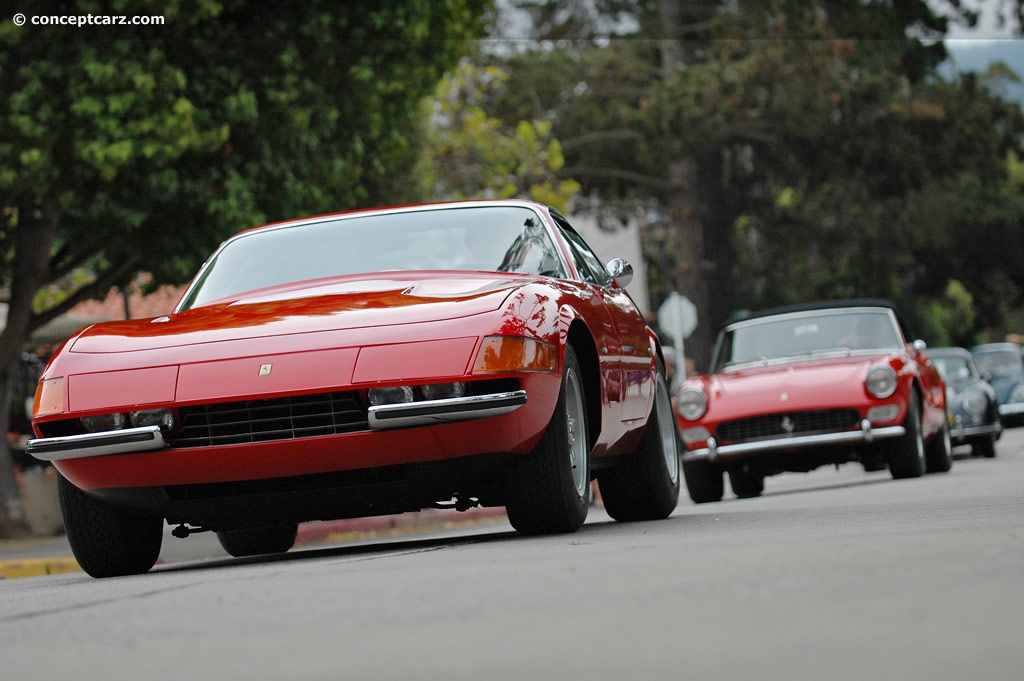
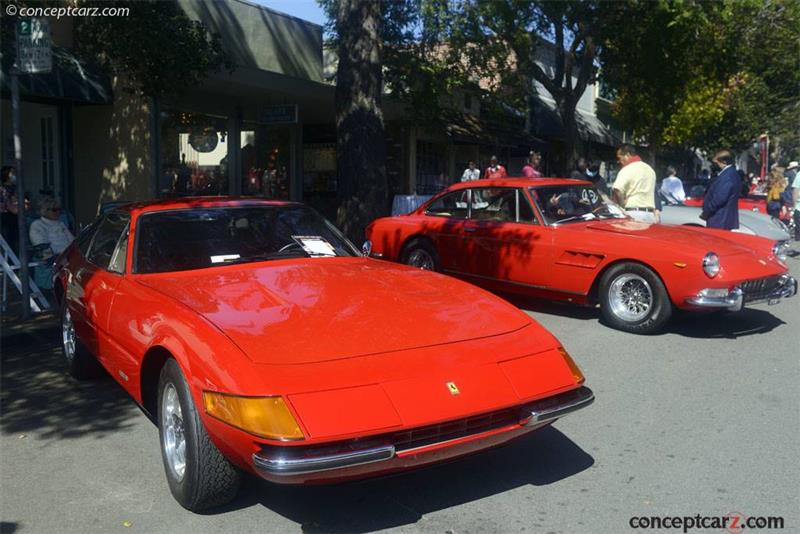
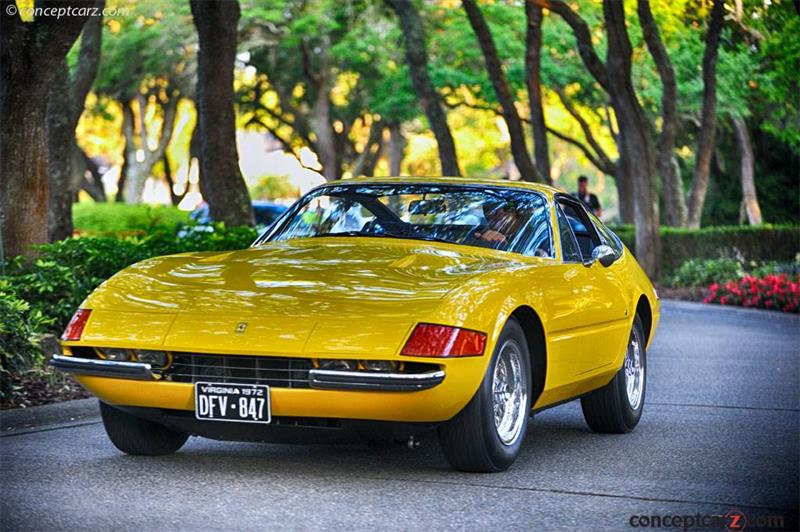
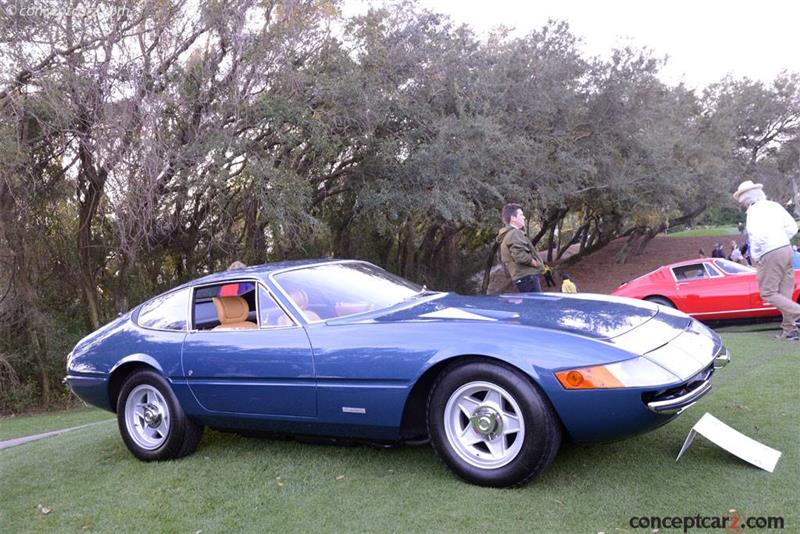
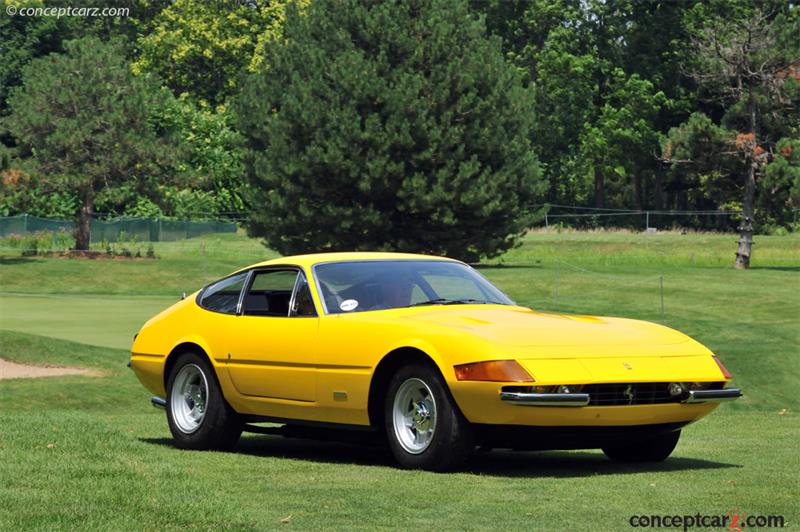
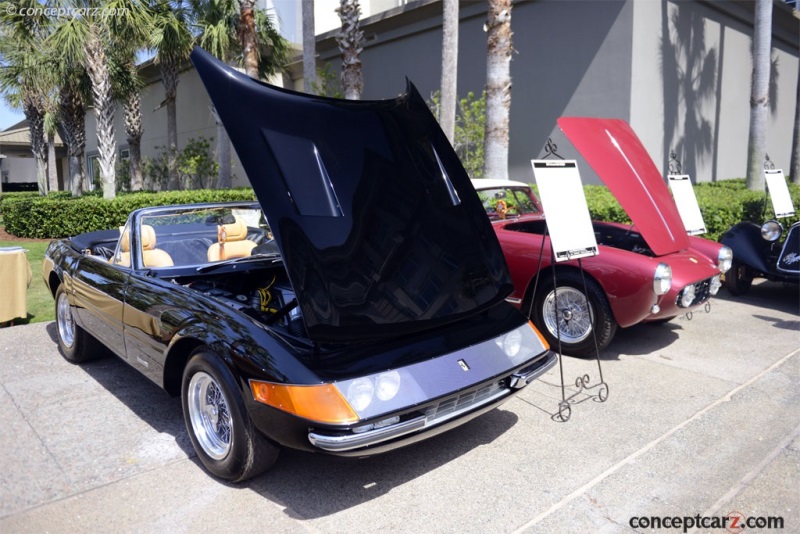
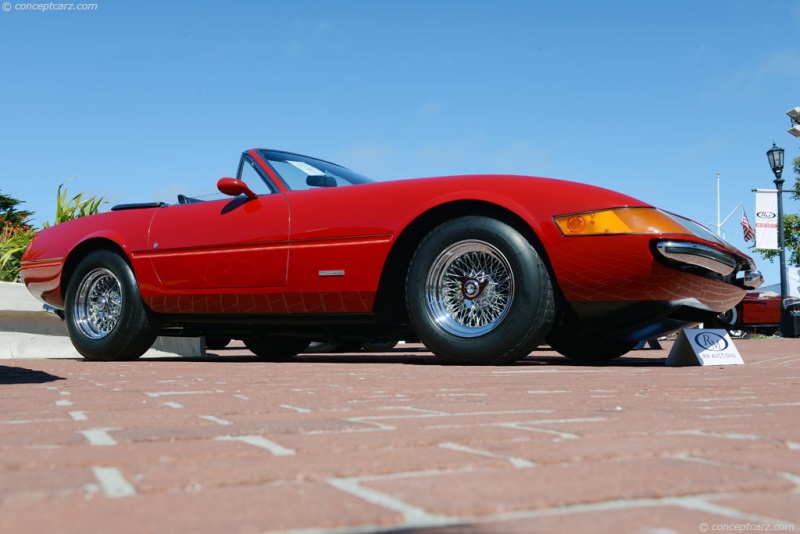
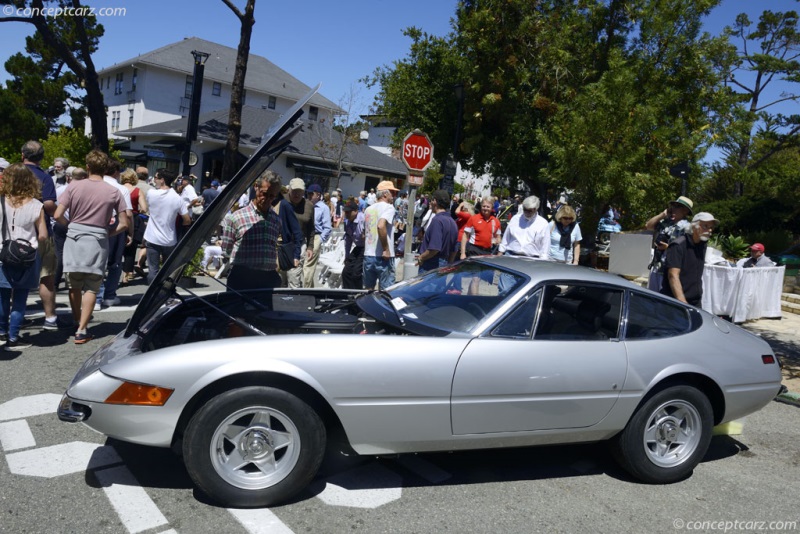
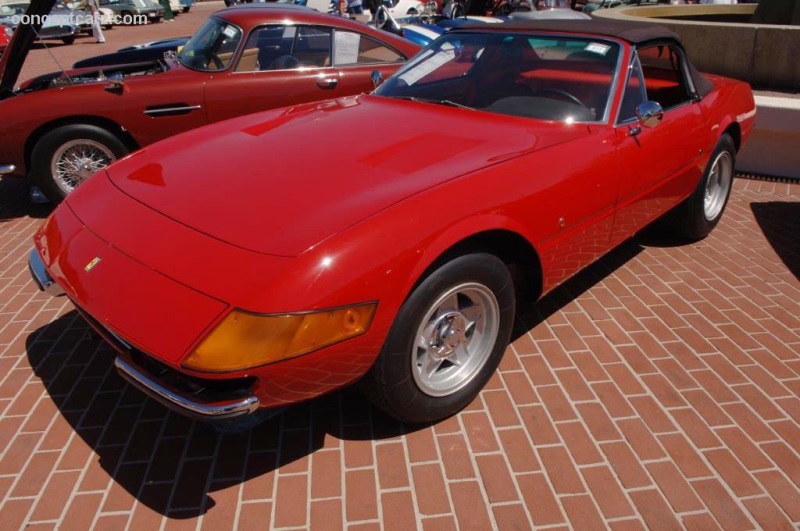
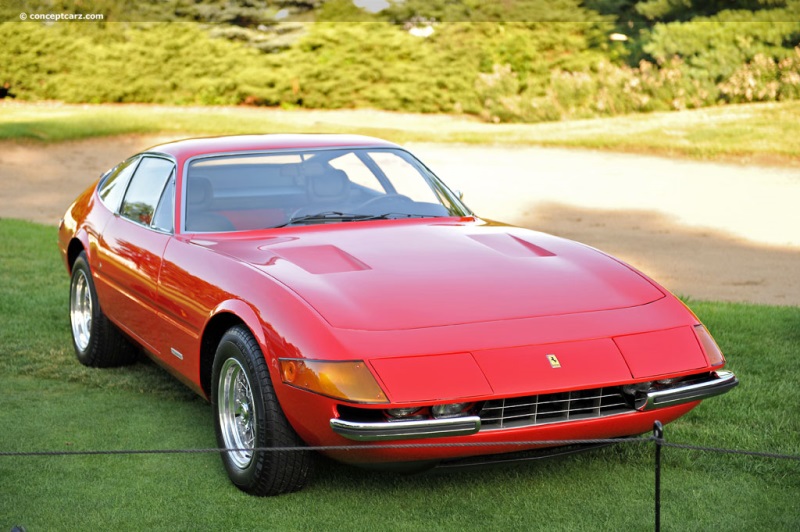
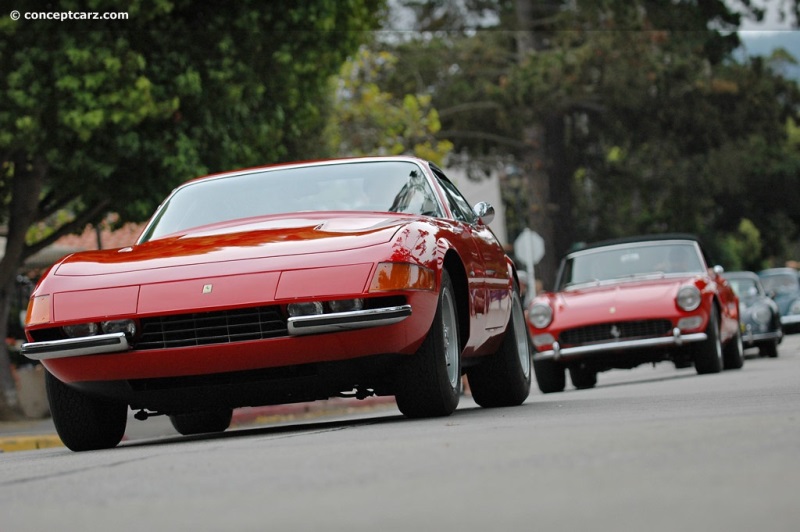
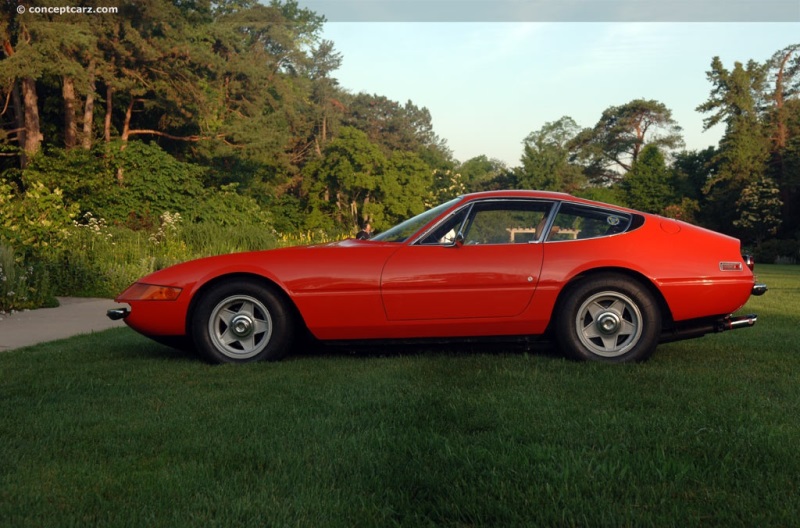
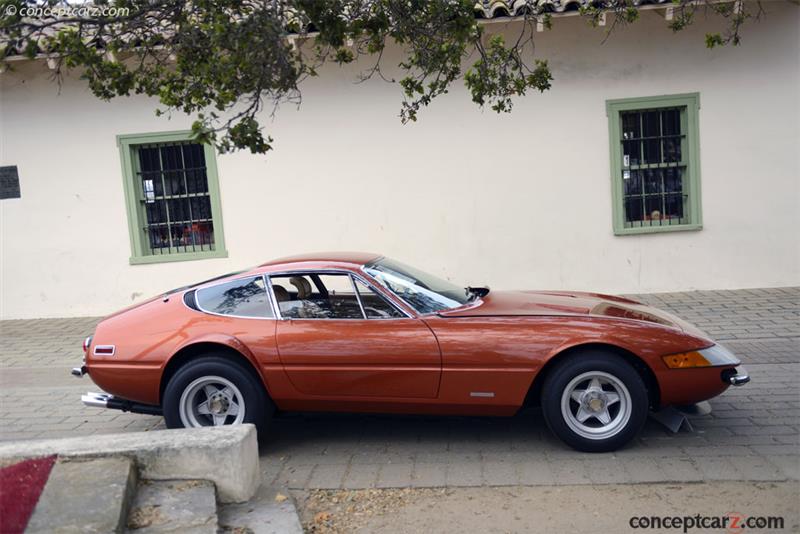
The Ferrari 365 GTB/4 succeeded the highly regarded 275 GTB/4 to become Ferrari's new two-seat Grand Touring model. Introduced at the Paris Salon in October 1968, the 365 GTB/4 quickly became known as the 'Daytona' in recognition of Ferrari's one-two-three podium sweep at the 1967 running of the 24 Hours of Daytona. It became the last front-engine, V-12 Ferrari GT model designed and announced prior to Italian industrial giant Fiat's takeover of Ferrari road-car production in 1969. 
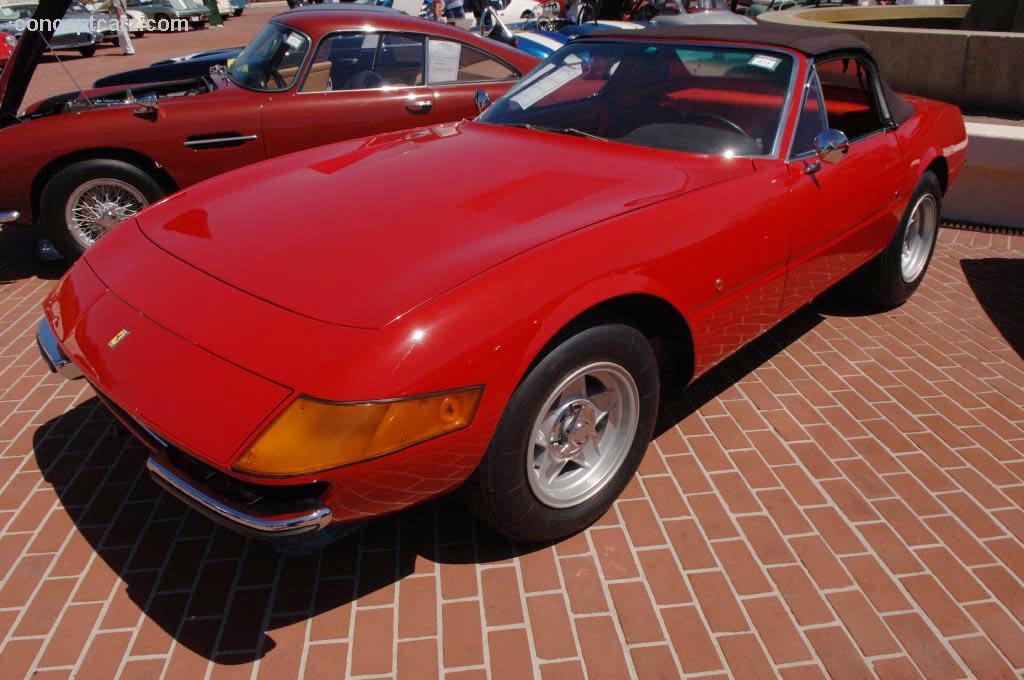
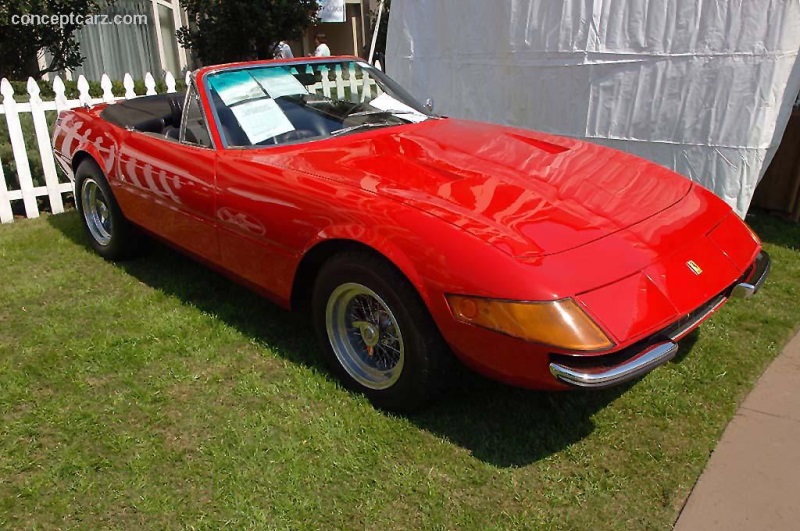
GTS/4 Spyder
Chassis #: 14085
View info and history
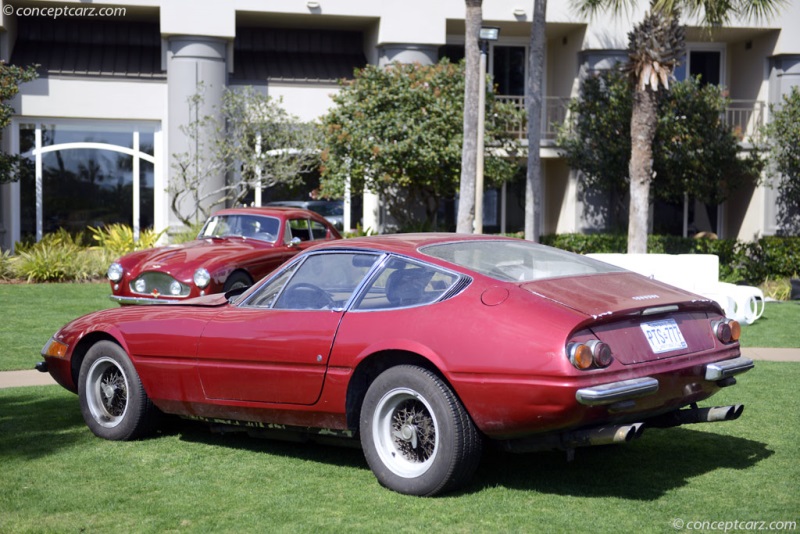
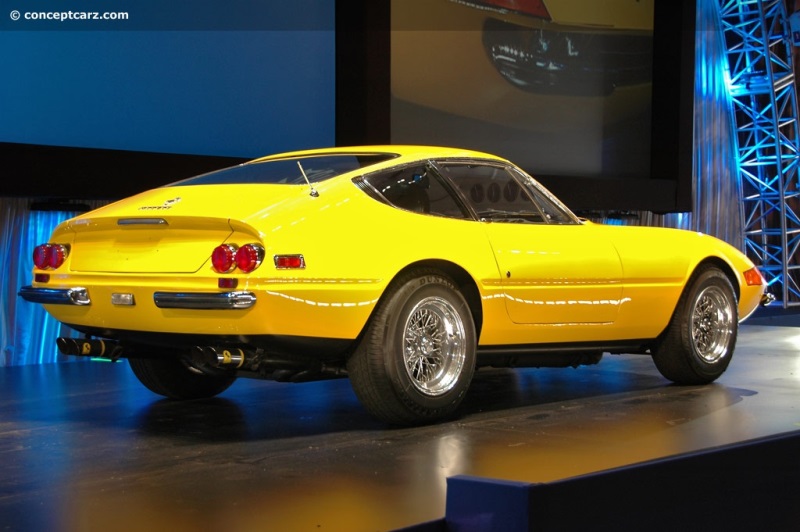
Auction entries : 1The Ferrari race department had been building mid-engined sports cars since the early 1960s, and the Lamborghini Miura and the DeTomaso Pantera had proven the benefits of this exotic design in road-going production cars. Ferrari chose to remain with the tried-and-true front-engine configuration with twelve-cylinder power for the 365 GTB/4. Production of the Daytona Berlinettas continued until 1974 when they were replaced by the mid-engine 365 GT4/BB. The 365 GTB/4 would be the final GT Berlinetta to use the traditional front engine layout until the arrive of the 550 Maranello in 1996. This would also be the last 12-cylinder Ferrari to be officially sold new in the United States until the arrival of the Testarossa in 1984.The 365 GTB/4 used the 94.5-inch wheelbase, tubular-steel chassis of its predecessor, with fully independent underpinnings and rear-mounted transaxle. The curvaceous styling of the 275 GTB/4 was replaced by modern and edgy lines penned by Pininfarina designer Leonardo Fioravanti that would influence later Ferrari styling into the 1990s. The bodies were built by Carrozzeria Scaglietti with hand-formed and hammer-welded steel panel-work throughout with the exception of the lightweight aluminum-alloy trunk lid, hood, and doors. To help meet U.S. side-impact regulations, later cars received steel doors and internal bracing. The early examples had clear Perspex covered headlamps, while retractable units were introduced in 1971 in compliance with U.S safety regulations. American cars also were fitted with several emissions devices, including fast idle control and exhaust manifold air-injection. In the back were four chrome tail pipes, an aero-efficient Kamm tail, and quad round tail lamps. The engine was an enlarged Tipo 251 version of the outgoing 275 GTB/4 with twin-cam cylinder heads developed by Franco Rocchi, a Ferrari engineer since 1949. The 60-degree V12 engine breathed through six 40-millimeter Weber twin-choke carburetors helping to produce 352 horsepower and 315 pounds-feet of torque at 7,500 rpm. Dry-sump lubrication enabled it to be installed low in the oval-tube chassis. Similar to the 275 GTB/4, the 365 GTB/4 used a five-speed manual gearbox which formed part of the rear-mounted transaxle, helping to achieve perfect 50/50 weight distribution. Unlike the 365 GTC/4, the Daytona was not equipped with power steering. Power four-wheel discs were standard, though air conditioning and power windows were optional.
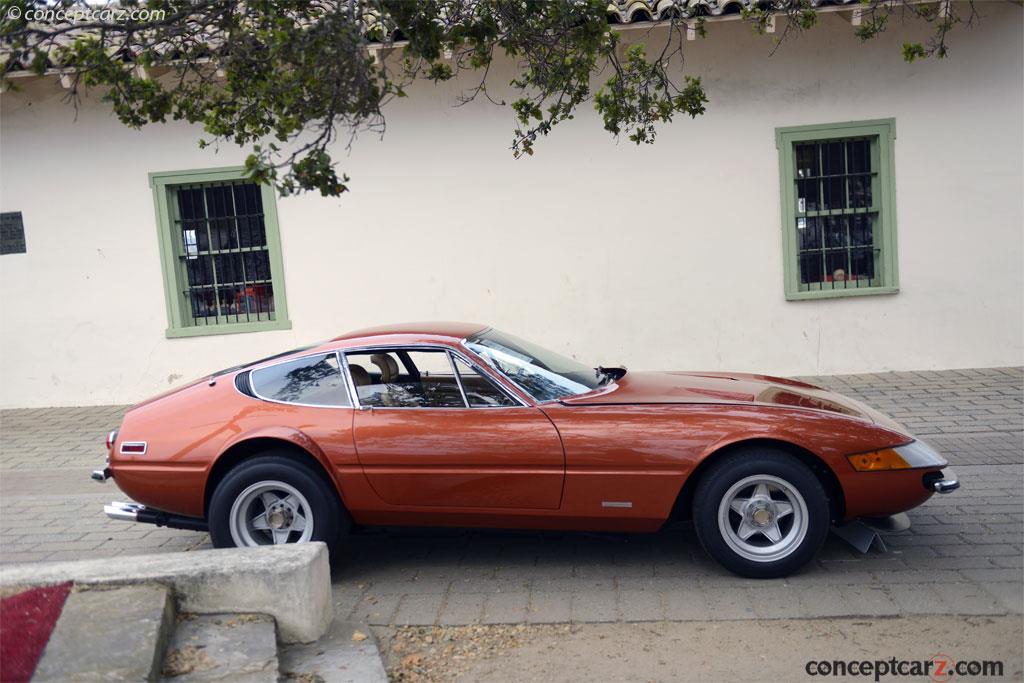
GTS/4 Spyder
Chassis #: 14169
Engine #: B 910
View info and history
Auction entries : 2The Daytona did not employ the exotic-appearing mid-engine configuration of the Lamborghini Miura, but its factory-claimed 174 mph top speed was slightly faster than that of the Miura and the fastest production car in its day. Intended for road use and built to deliver superlative performance, it was still a Ferrari, which meant it was not long before competition versions were built. Between 1970 and 1979, 18 365 GTB/4 'Competizione' models contested the 24 Hours of Daytona race, resulting in five Top-10 finishes and two second-place podiums. The Modena Sports Car entry driven by John Morton and Tony Adamowicz achieved a GTO class victory in 1979. Dan Gurney and Brock Yates set an unofficial cross-country record during the 'Cannonball Baker Seas-to-Seas Memorial Trophy Dash,' later known as the 'Cannonball Run.' From 1968 to 1974 a total of 1,383 examples of the 365 GTB/4 Berlinetta were built, plus 121 of the open 'Daytona Spider.'
by Daniel Vaughan | Apr 2020
GTS/4 Spyder
Chassis #: 14085
View info and history
Auction entries : 1
GTS/4 Spyder
Chassis #: 14169
Engine #: B 910
View info and history
Auction entries : 2
by Daniel Vaughan | Apr 2020
Related Reading : Ferrari 365 History
The 365 Series was introduced in the late 1960s and stayed in production until the early 1970s. The 365s were often powered by a Columbo SOHC 4390 cc V-12 engine with three Weber carburetors capable of producing around 300 horsepower. The front and rear suspension for most of the series was independent with double wishbones and coil springs. The 365 GT4 22 had an independent with transverse parallelograms....
Continue Reading >>
Continue Reading >>
- 1971 Ferrari 365 Daytona Menu
- Article
- Image gallery
- Valuation
- Specifications
- Profiles
Ferrari
Similar Vehicles
Similar Automakers
Similarly Sized Vehicles
from 1971
- BMW 2800
BMW 3.0 CS
BMW 3.0 CSL
Ferrari 312 B2
Ferrari 365 GTB/4 Daytona Competitizione
Ferrari 365 GTB4 NART
Intermeccanica Italia
Lamborghini Miura P400
Maserati Quattroporte
Volkswagen Type 3
Similarly Priced Vehicles
- Ferrari 365 GTB/4 Daytona Competitizione ($19,700-$19,700)
Average Auction Sale: $574,751


1971 Ferrari 365 Daytona Vehicle Profiles




Recent Vehicle Additions


Performance and Specification Comparison
Price Comparison
365 GTB/4 Daytona Specification Comparison by Year
Year
Production
Wheelbase
Engine
Prices
Related Automotive News

Cannonball Run Cars at the Greenwich Concours
The Greenwich Concours hosted a group of original outlaws depicted in the 1981 film Cannonball Run. This marked the third reunion since the first car took off from the Red Ball Garage in New York City in 1971. A number of the original outlaws were...

Show-Quality, Coachbuilt Italian Exotics, Including Zagato-Bodied Maserati A6G/54 Berlinetta and ex-Emperor Bao Dai Ferrari 410 Superamerica, Announced for Pebble Beach
Gooding %26 Companys Pebble Beach Auctions to feature lineup of concours-level Italian classics from Ferrari, Maserati, Lamborghini, Lancia, and a one-off Serenissima by Ghia.
International auction house Gooding %26 Company has announced...

Pebble Beach Auctions Online Catalogue Now Live; Historic, Unrestored 1962 Ferrari 250 GT SWB Berlinetta Unveiled as Headlining Car
Gooding %26 Company launches its entire online catalogue for the Pebble Beach Auctions, announces a remarkably original 1962 Ferrari 250 GT SWB Berlinetta along major Italian star cars.
Gooding %26 Company, the official auction house of the Pebble...

Platinum Award-Winning Ferrari 275 GTB and Aston Martin DB5 Convertible Lead Gooding & Company's Blue-Chip Icons for Upcoming Pebble Beach Auctions
The official auction house of the Pebble Beach Concours dElegance® will present a 1966 Ferrari 275 GTB, a 1965 Aston Martin DB5 Convertible, and a 1968 Lamborghini Miura P400 among other ultra-collectible 1960s sports cars.
Gooding...

Celebrity Owned 1963 Ferrari 250GT Lusso Set to Take Center Stage at Russo and Steele Monterey 2015!
Scottsdale, Arizona (April 15, 2015) – By the early 1960s, Ferraris racing and street cars began to diverge in basic essence, with the Scuderias competition cars quickly becoming more specialized and the road cars reflecting the growing demand...

REVERED FERRARI 250 LM LEADS SUPERLATIVE ROSTER OF ITALIAN SPORTS CARS AT RM'S FLAGSHIP MONTEREY SALE
· RM Auctions announces a legendary 1964 Ferrari 250 LM by Scaglietti as the latest multi-million-dollar highlight for its flagship Monterey sale, August 15–16 in California
· 250 LM leads a superb roster of no less than 26 Ferraris at...
Vehicle information, history, and specifications from concept to production.