Concept Cars Home
Image Left 1965 330 GT 2+2Image Left 1965 330 GT Shooting Brake1967 330 GT 2+2 Image Right1967 330 GT Michelotti Image Right
 

1966 Ferrari 330 GT news, pictures, and information

Coupe
Designer: Pininfarina
 
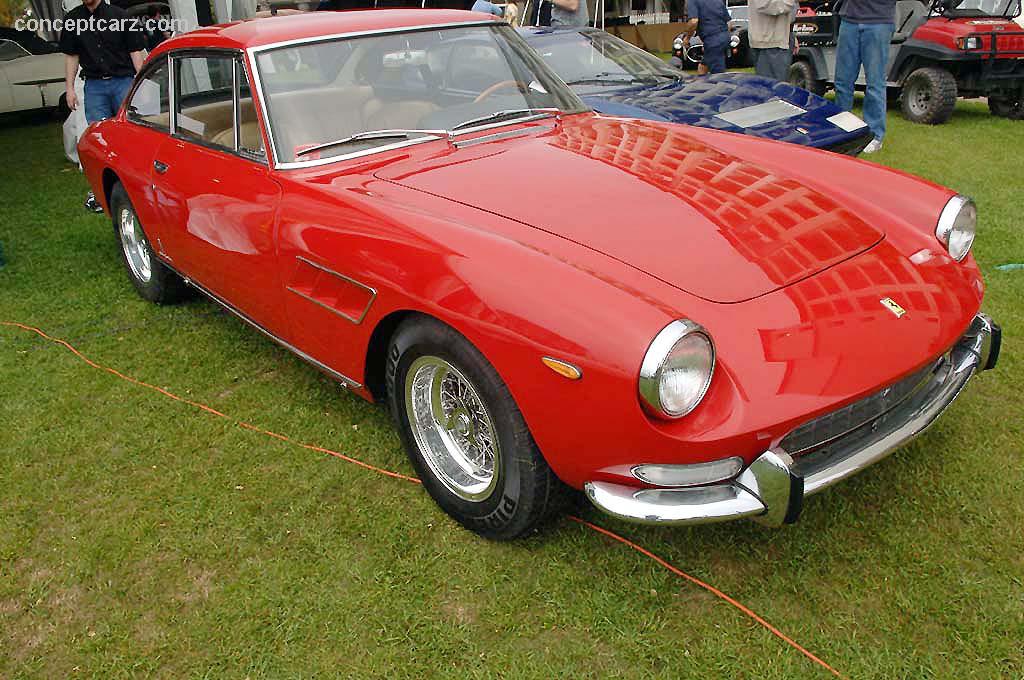
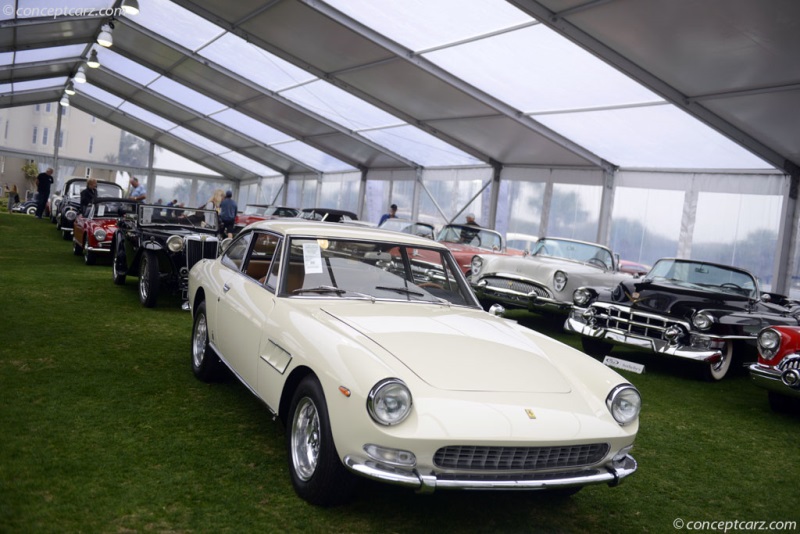
The 330 GT 2+2 was introduced in January 1964. Evolving from the 250 GT, the styling featured a sharper nose and tail and a wide grille. Mechanical features included Koni adjustable shock absorbers, a dual circuit braking system that used discs all around, a five-speed gearbox for 1965, a switch back to a dual-light front clip, alloy wheels, and the addition of optional air conditioning and power steering.

Production of the 330 GT 2+2, includes 628 Series I (including 125 'interim' cars) and 460 Series II cars were built before this model was discontinued in 1967.

The Ferrari 330 engine is a V12 of 3976cc/242 cubic-inches, developing 300 horsepower and capable of a 151 miles per hour top speed.
Coupe
Designer: Pininfarina
 
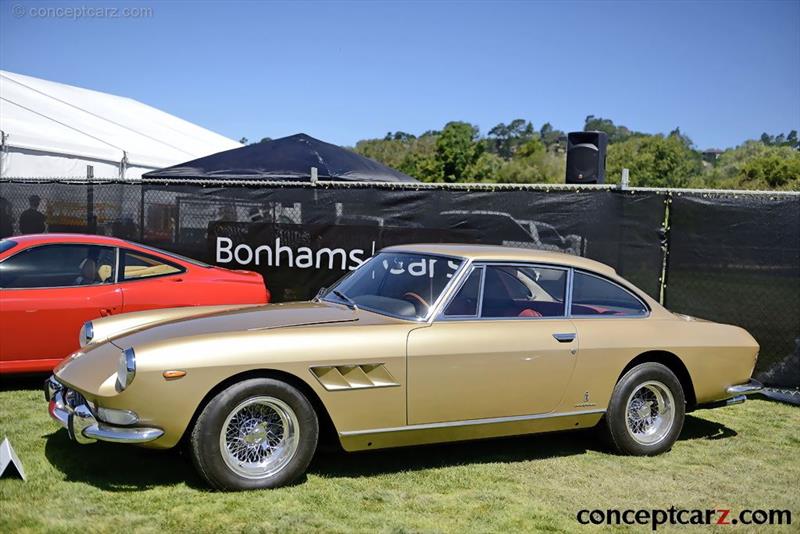
The 330 GT represents American stylist Tom Tjaarda's first full design for Pininfarina. It had many improvements over its predecessor, including a new longer wheelbase and wider track chassis. The 330's V-12 displaced 3967cc (33o per cylinder) and had 60 more horsepower than the 250. They were built from 1964 until 1967 with a total of 1099 produced.
Coupe
Designer: Pininfarina
Chassis Num: 8025
Engine Num: 8025
 
Sold for $110,000 at 2007 RM Auctions.
Sold for $100,100 at 2011 Worldwide Auctioneers.
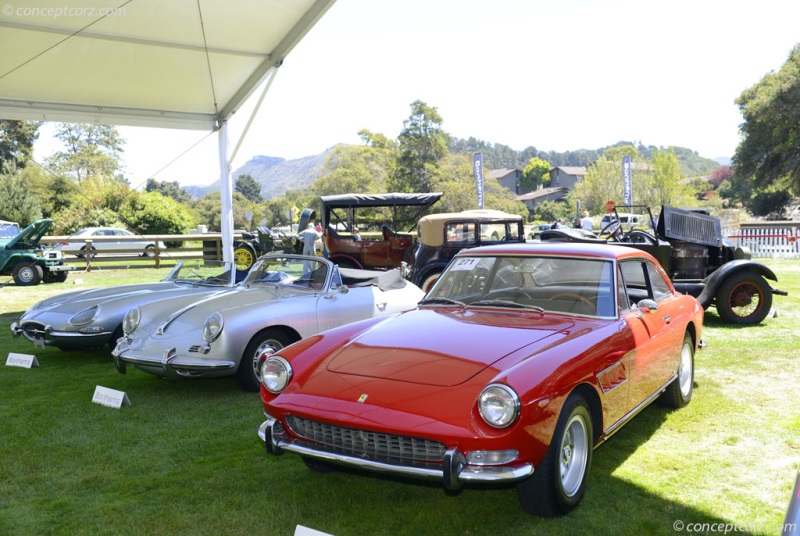
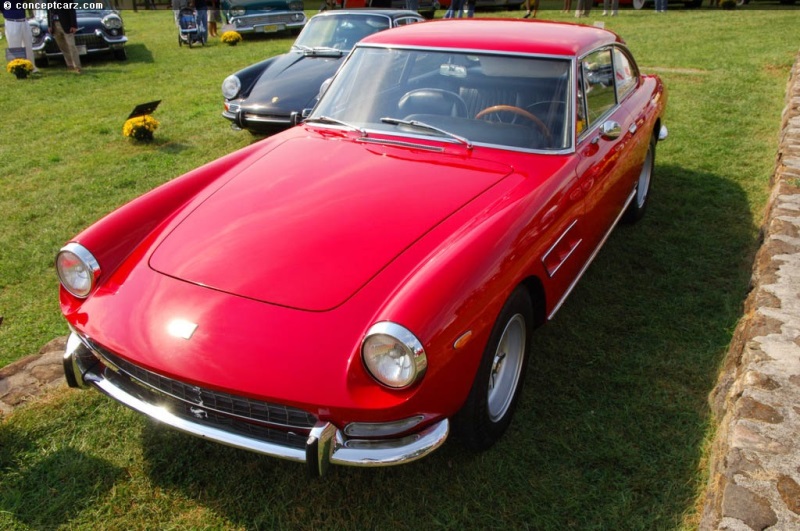
This 1966 Ferrari 330GT 2+2 was offered for sale at the 2007 RM Auctions held in Amelia Island, Florida. The car was offered without reserve and estimated to sell between $85,000 - $110,000. The car is powered by a 3967cc single overhead cam V12 engine with three Weber 40DCZ double-barrel carburetors capable of producing 300 horsepower. There is a five-speed manual gearbox and four-wheel disc brakes. This car is a highly sought after single headlight version with air conditioning and Borrani wheels. The exterior is finished in Rosso Corsa with a tan interior.

At auction, the car was sold on the high-side of the estimated value, fetching $110,000.

By Daniel Vaughan | Aug 2011
Coupe
Designer: Pininfarina
Chassis Num: 8959
Engine Num: 8959
 
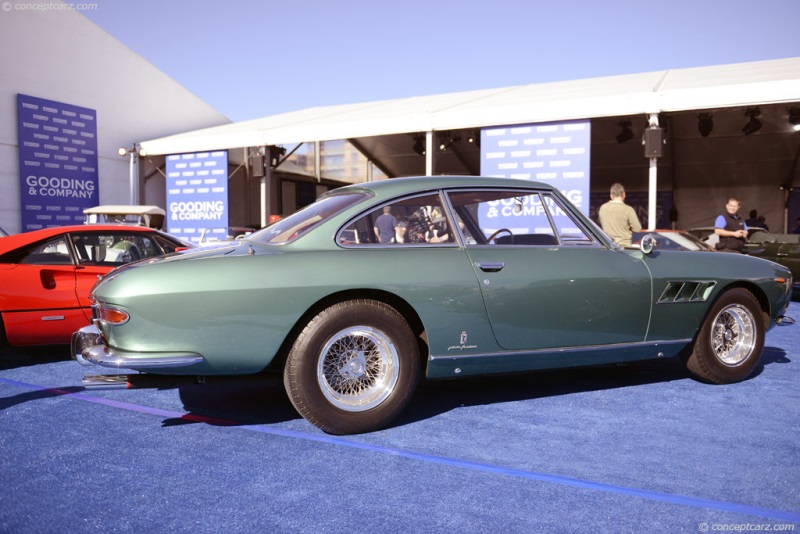
Sold for $242,000 at 2013 Gooding & Company.
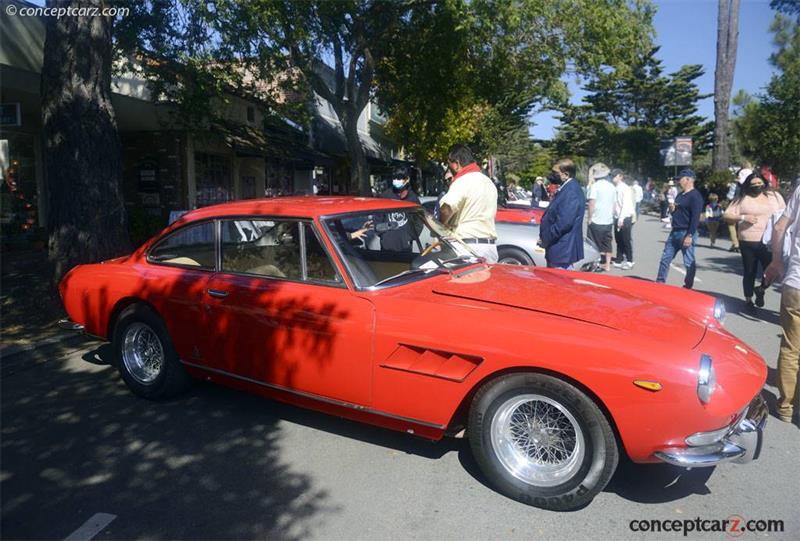
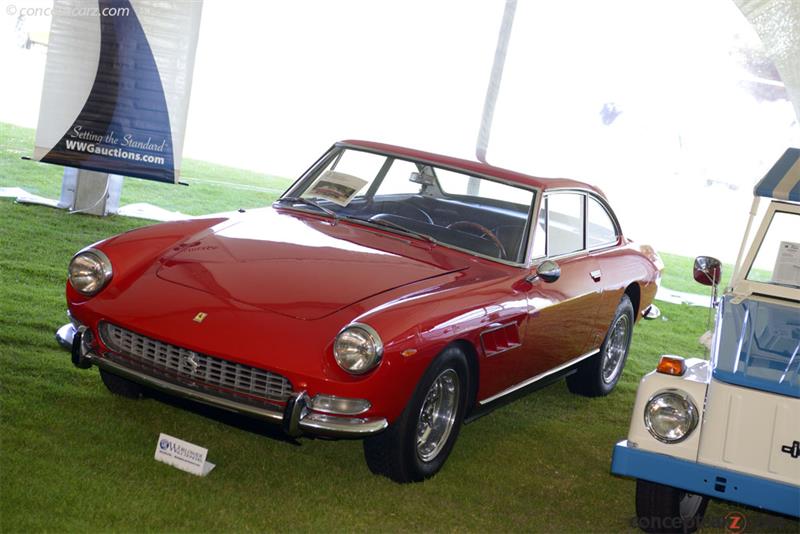
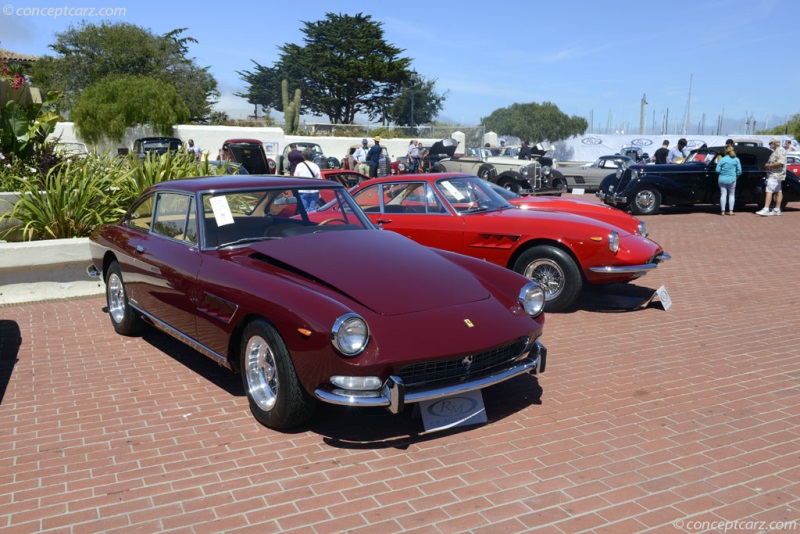
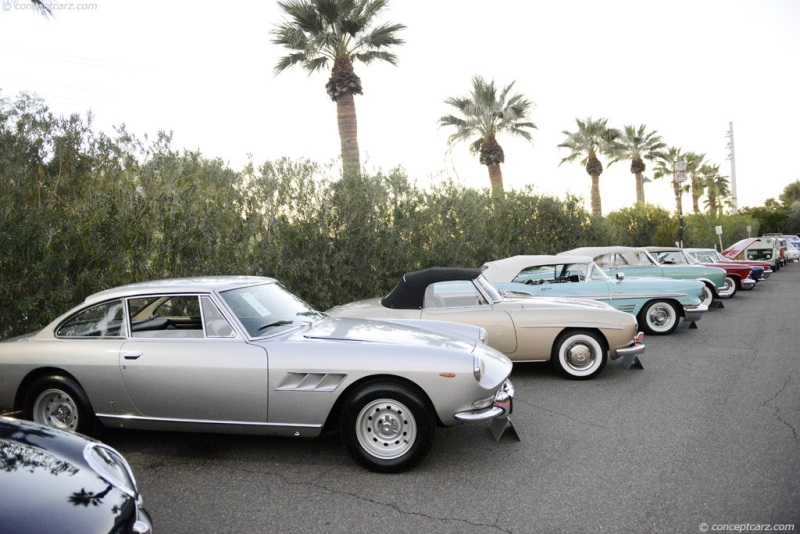
At the 1964 Brussels Motor Show, Ferrari introduced its new 2+2 grand tourer which signaled a new direction in Pininfarina styling. It featured thin A-pillars and a sizable glass canopy. Under the bonnet of the 330 GT 2+2 lurked a four-liter V12 engine offering 300 horsepower. In mid-1965, the design was updated with a new nose reminiscent of the concurrent 275 GTS, with single headlamps and triple-louver fender vents. Along with the exterior revisions, Ferrari improved the 330 GT 2+2 by fitting a five-speed gearbox, hanging pedal assembly, hydraulic clutch actuation, and a revised dashboard layout. In total, just 474 examples of these second-series cars were manufactured before the 330 GT 2+2 ceased production in 1967.

This 330 GT 2+2 was originally purchased by a New York-based owner named Mr. Tuttleman in October of 1966. It was purchased through East Coast distributor Luigi Chinetti Motors of Greenwich, Connecticut. It was a US-specifications example with power windows, power steering, and air conditioning.

By the early 1970s the car was in the possession of Dan Greer of Cheyenne, Wyoming who owned the car at least through 1977. By the close of the 1970s, the car may have been purchased by a principal at the Shepherd of the Hills Historical Society of Branson, Missouri, a local theatrical company.

In July 1990, William Kinsman of New York offered the car for sale and described the Ferrari as a 43,000 mile example. It was later purchased by the Blackhawk Collection. In recent years, the car was purchased by the current owner.

The car is currently equipped with a Becker Europa TR radio and wears Borrani wire wheels. The 3967cc SOHC Tipo 209 V-12 engine is breathing through three Weber carburetors and offering 300 horsepower. There is a five-speed manual gearbox and four-wheel Servo-assisted Dunlop disc brakes.

By Daniel Vaughan | May 2013
The Ferrari 330 series was produced from 1963 through 1968. They were replacements for the Ferrari 250 GT 2+2 with many of the series retaining the style and mechanical components of their predecessors.
The front-engined, rear-wheel drive vehicle were powered by a derivative of the 400 Superamerica's four-liter Colombo 12-cylinder engine.

The first in the series was the 330 America, which was actually a 250 with a new engine. During its production lifespan, lasting only a year, 50 examples were produced of the 2+2 sports car.

The 330 GT 2+2 was introduced to the public at the 1964 Brussels Motor Show, built as a replacement for the 330 America. The 330 GT 2+2 is unique in that it provided ample seating for four individuals plus luggage. These were the ultimate road-going, practical sports cars that could be used for every-day transportation. The 330 GT 2+2 was a new product, not just an engine modification. Under the hood was a Tipo 209, twelve-cylinder engine capable of producing 300 horsepower. Disc brake were placed on all four corners to provided the stopping power. The 1964 model used a four-speed manual gear box with overdrive. The 1965 version, known as the Series II, received a 5-speed manual gearbox. Other changes included alloy wheels, dual-light front clip, and optional power steering and air conditioning.

The 330 GT 2+2 was produced from 1963 through 1968. Around 1080 models were produced of the 330 GT with 50 of them being Type 330 GTE Americas.

The 330 was a replacement for the 275. The shortened wheelbase and independent rear suspension was courtesy of its predecessor. The GTC (Gran Turismo Coupe) Pininfarina designed vehicle was debuted in 1966 at the Geneva Auto Show. It had a V-12 engine mounted in the front that was capable of producing 300 horsepower. The five-speed manual gearbox was located in the rear transaxle.

The 330 GTS (Gran Turismo Spyder) was shown in October 1966 at the Paris Auto Show.

There were around 600 coupes and 100 spyders produced during the production lifespan. In 1968 they were replaced by the 365 GTC/4 Daytona.

By Daniel Vaughan | Aug 2006
The Ferrari 330 series belonged to a long line of Ferrari road cars with front-mounted V12 engines, cars that were members of a bloodline whose history is still being written by the 612 Scaglietti and 599 GTB Fiorano. The 330's name derived from the then-familiar Ferrari practice of naming cars for their per-cylinder displacement in cubic centimeters, indicating that the engines used to power this series of cars displaced a total of 12x330cc, or about four liters. Preceded by the 275 and replaced by the 365, the 330 was caught right in the middle of a glorious era for Ferrari road cars.

The 330 spawned the vaunted 330 P series of mid-engined racers, which battled Ford's GT-40 in sports car racing throughout the mid-1960s. A successor to the legendary 250 GTO was also created using the 330 motor, named the 330 LMB. Ferrari produced only four of these latter models.

The 330 road cars were decidedly more relaxed and less exhilarating than the racing cars mentioned above, but their relatively high sales numbers and use of race-bred components meant that they were still important cars to Ferrari's history. Ferrari produced the 330 road cars primarily in four guises: the 330 America, the 330 GT 2+2, and the coupe/spider couple named 330 GTC and 330 GTS.

Ferrari introduced the 330 America first. It was a transitional model, essentially a 250 GTE 2+2 with the new 330 motor. The 330 GT 2+2 followed in 1964, and was a more thoroughly revised grand tourer built on a chassis stretched by 50mm compared to the America. This newer model, though still closely related to its predecessor, wore a controversial body design by the familiar Pininfarina. Its front end styling used an unconventional quad-headlight arrangement that mounted the two lights per side in clusters canted down toward the egg crate grille, creating an aggressive but cumbersome appearance of slanted eyes. The Mulliner Park Ward-bodied Rolls-Royce Silver Cloud III of the mid-1960s used a similar frontal treatment, also with questionable results.

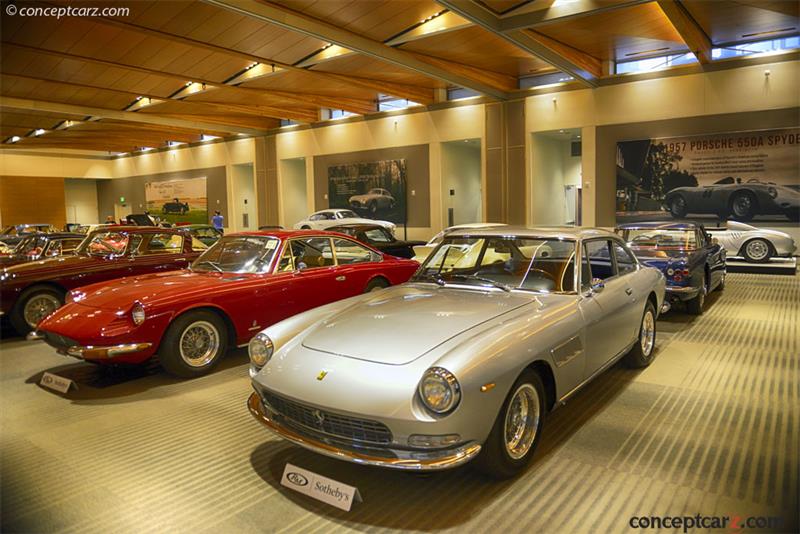
A more harmonious front end debuted on the 1965 Ferrari 330 GT 2+2, reverting to a more traditional twin-headlight approach. Other changes for 1965 included the replacement of the four-speed with overdrive gearbox by a 5-speed unit, and the introduction of power steering and air conditioning as options. Production of the 330 GT 2+2 continued until late 1967, by which time Ferrari had produced some 1,075 examples of the model. This was an excellent figure for a 1960s Ferrari, especially when compared to the 50 examples of the transitional 330 America that the company produced.

At the Geneva Motor Show of 1966, Ferrari introduced a two-seater 330 coupe called the GTC. Also styled by Pininfarina, the GTC looked surprisingly sultry given that its design was an amalgamation of prior cues. From the front the GTC aspired to 500 Superfast or 400 Superamerica greatness, while from the back the car looked like a 275 GTS with a fixed roof. Somehow the look came together remarkably well, though, creating an iconic Ferrari design without the hand-me-down flavor that could have resulted from the borrowed styling features.

Later in 1966, at Paris, the spider version of the 330 appeared. Named 330 GTS and clearly an open version of the GTC, it too was a lovely design. Production of both the GTC and GTS ended in 1968, after Ferrari produced approximately 600 coupes and 100 spiders.

The engine common to all 330 series road cars was a 60-degree V12 of 3,967cc displacement. The block and heads were cast silumin, an aluminum and silicon alloy. A chain-driven single overhead camshaft per cylinder bank operated two inclined valves per cylinder that opened into hemispherical combustion chambers. Ferrari employed three Weber carburetors and an 8.8:1 compression ratio in the 330 motor to create a power plant that was capable of 300bhp at 6,600rpm in street tune. The V12 was bolted to a 5-speed gearbox in all 330 road cars, excepting the 330 America and early 330 GT 2+2, which used 4-speed gearboxes with overdrive.

Double wishbones and coil springs suspended the front end of all 330 road cars. The GTC and GTS used independent rear suspensions, but the 2+2 models retained live axles. Brakes were assisted four wheel discs on all models, using an unconventional dual-circuit design that incorporated two master cylinders and two servos.

Pininfarina styled and bodied all four standard versions of the 330 road car, though there were bespoke examples crafted by other coachbuilders including Michelotti and Drogo. The 330 chassis was made of tubular steel, and the Pininfarina bodies too were primarily steel, but with opening panels in aluminum.

As witnesses of Ferrari's finest days, the 330 series road cars have become historically important and commensurately collectible. The GTC and GTS remain the thoroughbred sophisticates of the series and command high prices. The 2+2 models, though, especially the oddly styled early 330 GT 2+2s, represent good value and are some of the most attainable machines to emit the distinctive mechanical symphony of a 1960s Ferrari V12.

Sources:

'Ferrari 330.' CarsfromItaly.net n. pag. Web. 27 Dec 2010. http://carsfromitaly.net/ferrari/index.html.

'Specifications.' 330 Register n. pag. Web. 27 Dec 2010. http://www.330register.com/models.cfm.

Tyer, Ben. 'Ferrari 330 GTC.' Supercars.net n. pag. Web. 27 Dec 2010. http://www.supercars.net/cars/551.html.

By Evan Acuña
For more information and related vehicles, click here

VOLKSWAGEN BEETLE TURBO AND JETTA GLI RECEIVE POWER BOOST
 - New EA888 Gen 3 engine, produced in Silao, Mexico, makes its U.S. debut - Engine offers 10 hp increase over previous Gen 2 powerplant - Beetle models have a manufacturer estimated fuel economy improvement of up to eight percent on the combined cycle - Beetle R-Line® coupe will be priced from $30,135 with the six-speed manual transmission Herndon, VA - The Volkswagen Beetle Turbo, Beetle Turbo Convertible, and the Jetta GLI receive a number of running changes to 2013 model year car...[Read more...]
1965 24 Hours of Le Mans: A Cool Head in the Face of a New Threat
Heading into the 1965 24 Hours of Le Mans it had become clear Ford was intent on taking the fight to Ferrari. Ford would spare no expense to take the fight to the company it had intended to buy. Ironically, the North American Racing Team would enter a Ferrari that would include the talented Jochen Rindt to help quell the storm. It would prove to be the wall necessary to provide Ferrari its last victory at Le Mans. Ford had made his declaration of intent to remove Ferrari from its throne as th...[Read more...]
Final Countdown Underway To South Florida's Premier Collector Car Auction
• Auctions America kicks off its 2013 auction season, March 22-24 with its highly anticipated Fort Lauderdale Collector Car Auction • Celebrating its 11th year, the multi-day auction features more than 550 quality collector cars • Latest feature attractions include an outstanding 1963 Shelby Cobra and a 1974 Ferrari Dino 246 GTS • Digital catalog now available for download at auctionsamerica.com AUBURN, Indiana (February 27, 2013) – With the final countdown underway to its highly an...[Read more...]
HYUNDAI MOTOR AMERICA SELLS ITS FIRST SPECIAL EDITION VELOSTER RE:MIX MODEL
Hyundai's Innovative 3-door Sport Coupe Now Available in a Uniquely Aggressive Sporty Variant with Premium Features and a 450-watt Dimension® Audio System COSTA MESA, Calif., Feb. 22, 2013 – Hyundai Motor America recently delivered the first of its new Veloster RE:MIX limited edition models to its excited new owner at Sterling McCall Hyundai in Houston, Texas. Hyundai began selling its special edition production Veloster in mid-February alongside a comprehensive offering of sty...[Read more...]
Mopar® Customized Rides Take Spotlight at Beijing International Automotive Exhibition
 Company's Service, Parts and Customer-care Brand to Display 'Moparized' Chrysler 300 Ruyi Design Concept, Jeep® Wrangler Arctic and Fiat® Freemont • Fiat Freemont features numerous Mopar accessories • Jeep® Wrangler Arctic gets 'Moparized' • 'Moparized' Chrysler 300 Ruyi Design Concept to make debut • New 172,222 square-foot Mopar product distribution center in Shanghai distributes more than 35,000 parts and accessories Auburn Hills, Mich. - Chrysler Group LLC will head to the...[Read more...]

Arrow Right 1966 Ferrari models
Ferrari 206 S
Ferrari 206 SP
Ferrari 275 GTB
Ferrari 275 GTB Competition
Ferrari 275 GTS
Ferrari 330 GTC
Ferrari 365 California
Ferrari 500 Superfast

Similar Automakers
Aston MartinBentley
BugattiDevon
GTAKoenigsegg
LamborghiniLotus
MaseratiMaybach
McLarenPorsche
Rolls-RoyceSpyker
Tesla
Similarly Sized Vehicles from 1966
Bizzarrini 5300 GT
Chevrolet Corvair Series
Chevrolet Corvair Yenko Stinger
Chevrolet Corvette C2
Chevrolet Electrovair II Experimental
Ferrari 500 Superfast
Ford Mustang
Ford Mustang GT350
Ford Mustang GT350-R
Ford Mustang GT350S Prototype

 
Ferrari: 1961-1970
Similar Automakers
Other models by Ferrari

Related Articles and Event Coverage
Gooding and Company - The Amelia Island Auction
Concorso Italiano
Concorso Italiano
Concorso Italiano
Radnor Hunt Concours d'Elegance
Ault Park Concours d'Elegance
Vintage Motor Cars at Amelia Island
2006 Meadow Brook Concours d'Elegance
2006 Le Belle Macchine d'Italia
2005 Meadow Brook Concours d'Elegance
2005 Jefferson 500 Car Cruise


156
166
166 F2
195
196
212
246
250 GT
250 Monza
250 Testarossa
275
288
308
312
328
330
333 SP
335
342 America
348
360
365
375
400
410
410 S
456
458
500 F2
500 Superfast
500 TR
512
512 BB/LM
550
553
575
599
612 Scaglietti
625
California
Dino
Enzo
F12berlinetta
F355
F40
F430
F430 GTC
F50
FF
LaFerrari
Mondial
Mondial 500
Testarossa
Type 340

Image Left 1965 330 GT 2+2Image Left 1965 330 GT Shooting Brake1967 330 GT 2+2 Image Right1967 330 GT Michelotti Image Right
© 1998-2012. All rights reserved. The material may not be published, broadcast, rewritten, or redistributed.