1966 330 GTC | 1968 330 ![]() |
1967 Ferrari 330 GTC news, pictures, and information | ||
| Tweet | ||
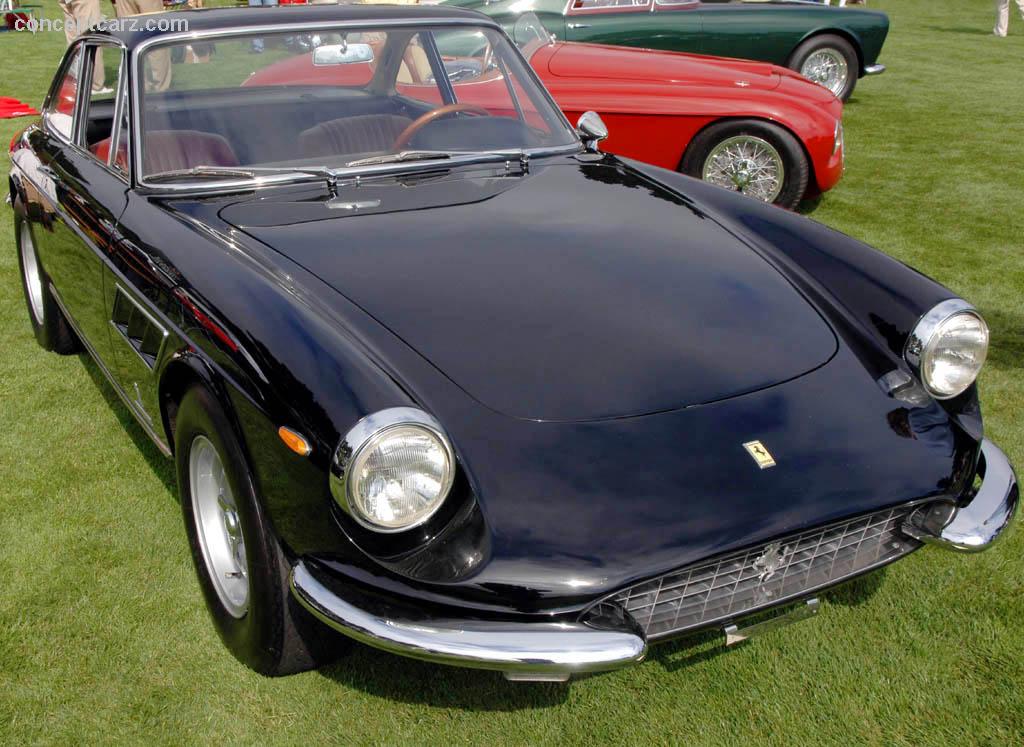
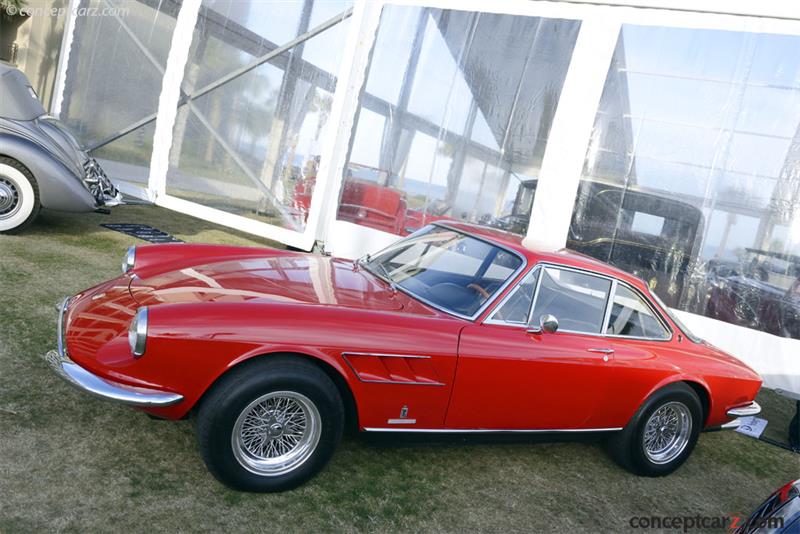
![]() | ![]() | ![]() | Coupe Coachwork: Pininfarina Chassis Num: 10377 Engine Num: 10377 |
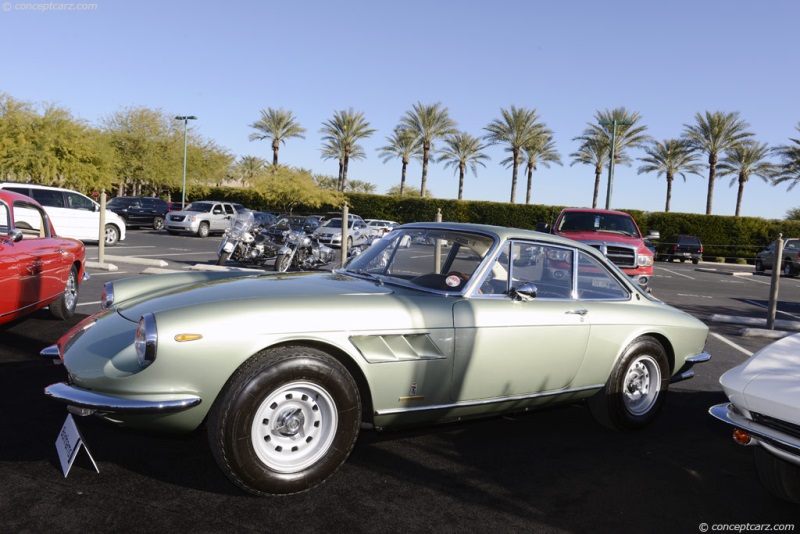
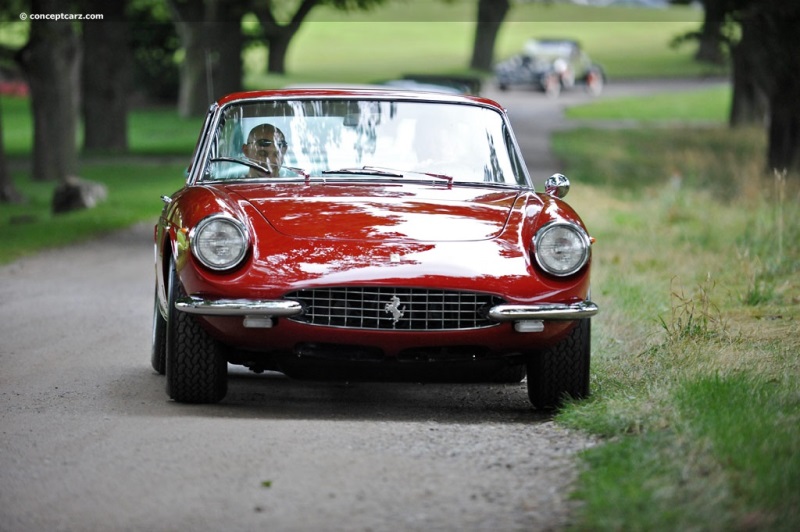
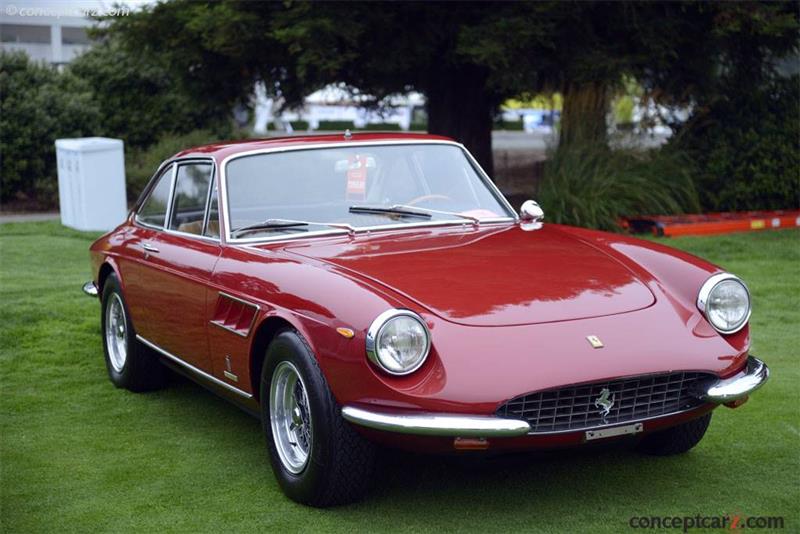
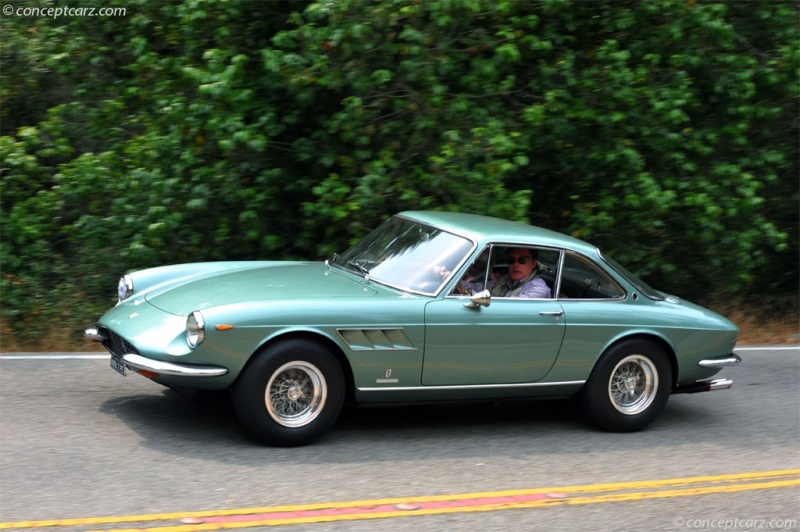
This was a sophisticated performance machine with plenty of power and ambiance. The interior had limited road noise as much development work had gone into making this a very refined and enjoyable tourer. It was well equipped with leather seats, electric windows and heated rear screen as standard equipment. Radio, air conditioning and Borrani wire wheels were offered as options. The sophisticated suspension provided a very comfortable ride and the potent powerplant responded well to the driver's wishes and demands.
Top speed was over 150 mph; it was a sports car that had seating for two people plus room for their luggage.
This 1967 Ferrari 330GTC Berlinetta with chassis and engine number 10377 was built in 1967 but not sold until 1969. Its first owner was based in California and this car has a smog exempt sticker on the windshield.
During the late 1990s the car was treated to a detailed and thorough mechanical restoration; since that time it has received a cosmetic restoration and servicing.
In 2007 this Berlinetta was brought to Bonhams auction, An Important Sale of Collectors' Motorcars and Automobilia, at the Quail Lodge Resort & Golf Club in Carmel, California. It had an estimated value of $250,000 - $275,000 but failed to find a buyer willing to satisfy the reserve. The lot was left unsold.
By Daniel Vaughan | Dec 2012
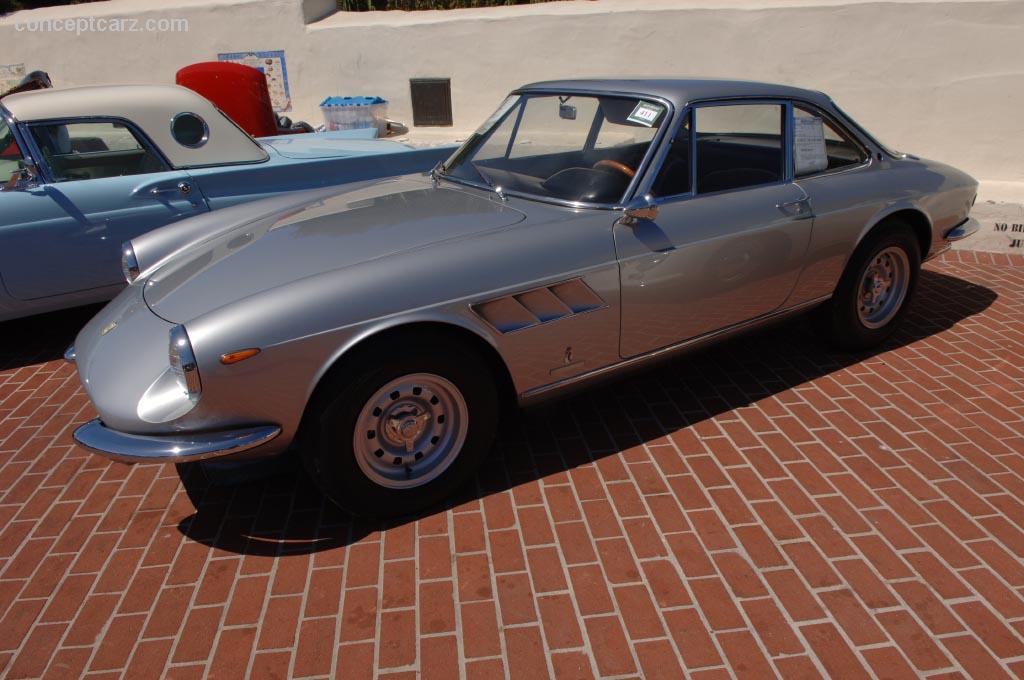
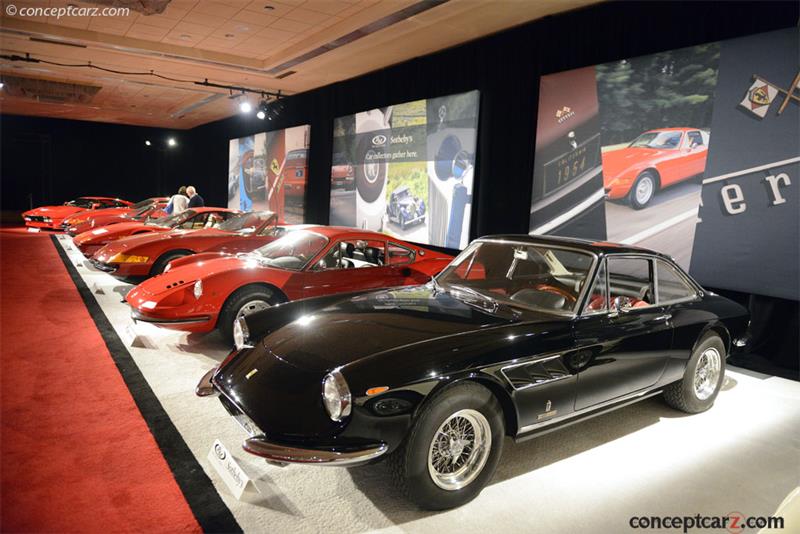
![]() | ![]() | Coupe Coachwork: Pininfarina Chassis Num: 11077 |
| Sold for $170,500 at 2006 RM Auctions. Sold for $222,965 (165,000) at 2007 RM Auctions. | ||
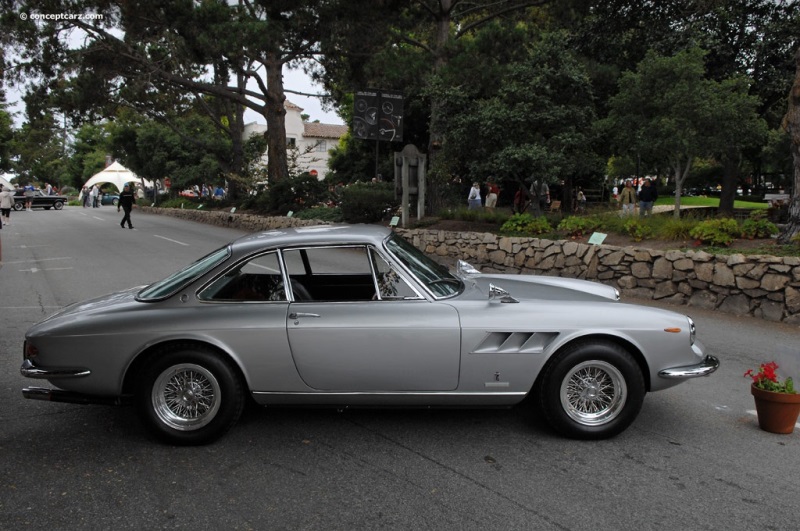
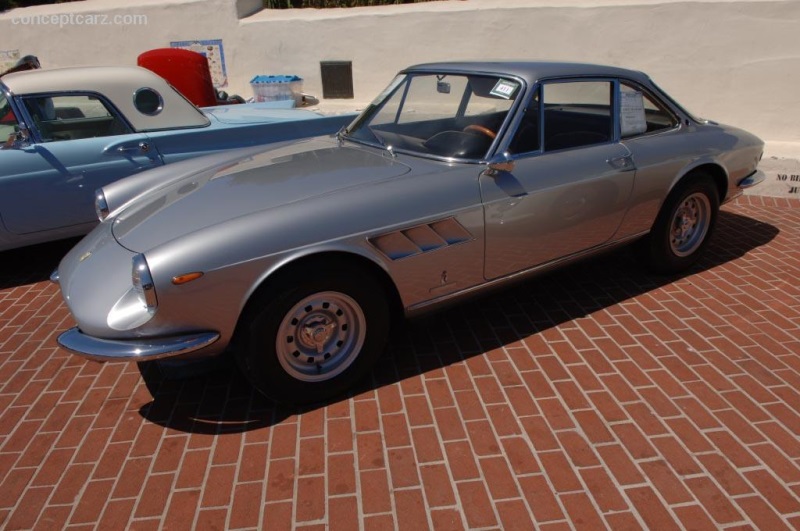
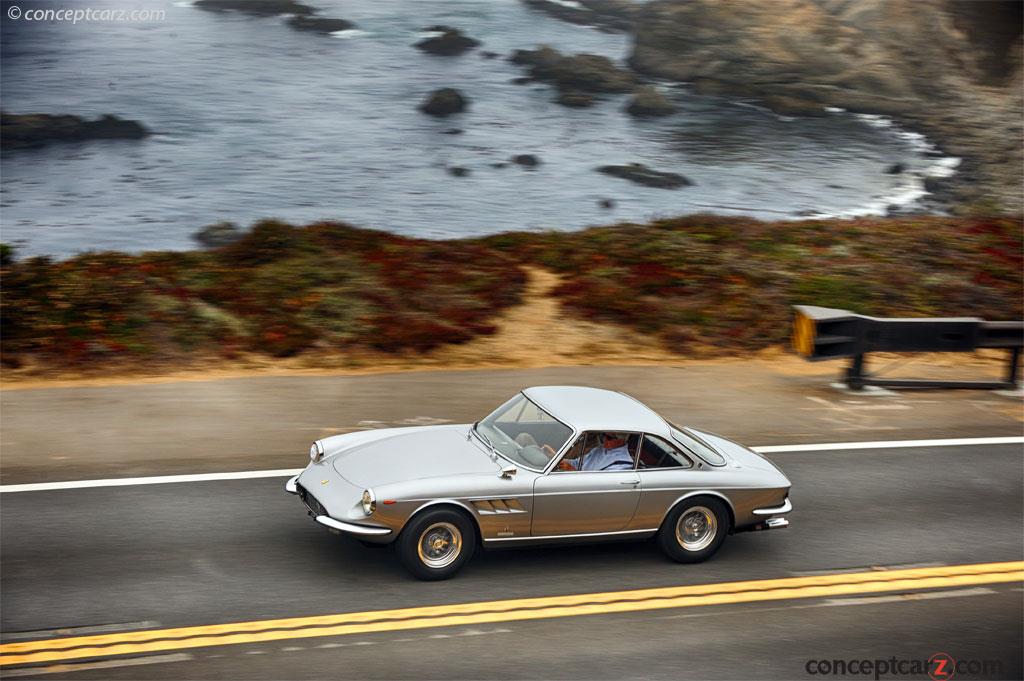
The 1967 Ferrari 330 GT 2+2 Coupe shown finished in silver was offered for sale at the 2006 RM Auction in Monterey, Ca where it was estimated to sell between $175,000-$225,000. It was offered without reserve. On auction day the vehicle found a new owner, selling for $170,500.
By Daniel Vaughan | Dec 2006
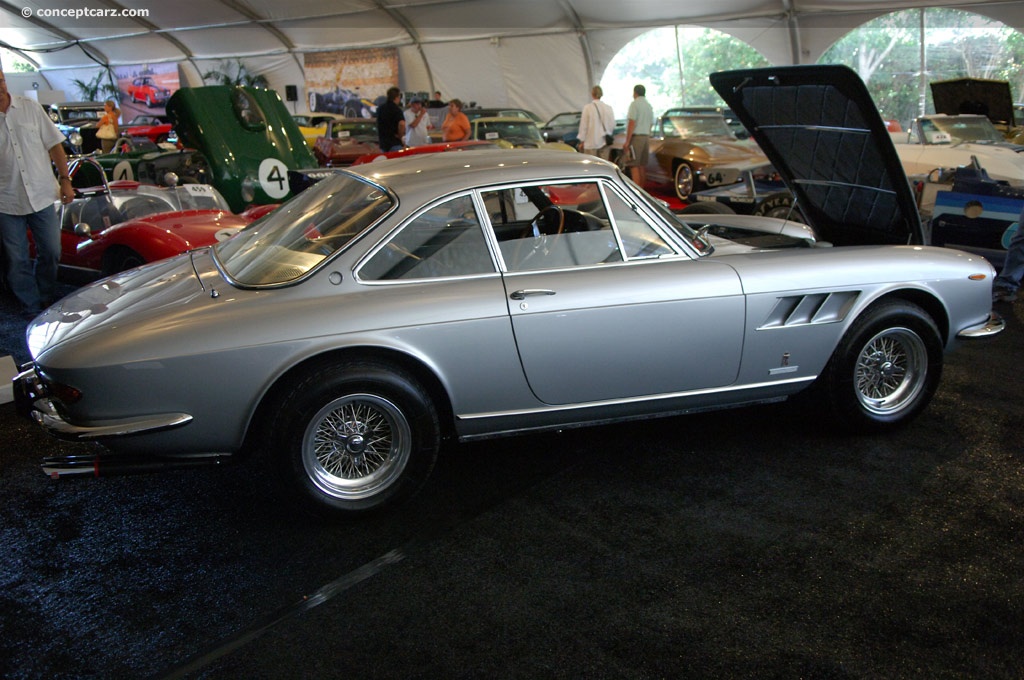
![]() | ![]() | Coupe Coachwork: Pininfarina |
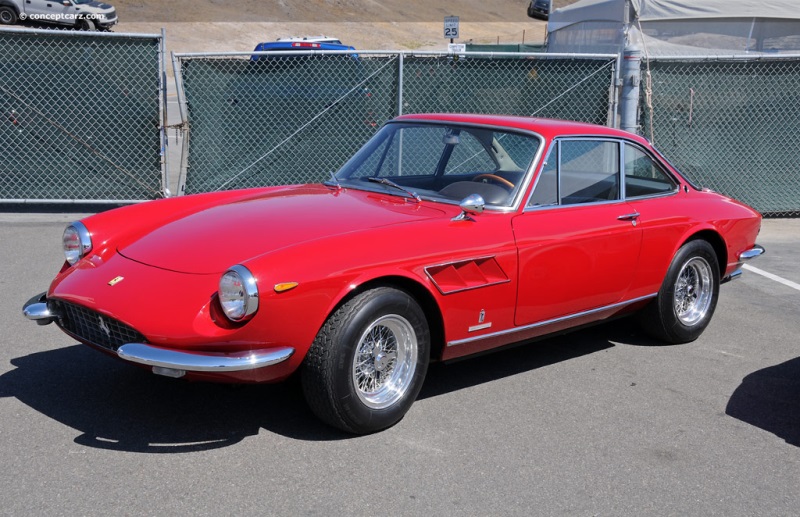
In 1963, Ferrari introduced their 330 as the 330 America with their sights set on the United States market. Largely, the earlier 250 GTE with the new, re-designed 400 Superamerica engine with wider bore spacing that paved the way to future displacement increases beyond 4-liters. Various other improvements brought output to about 300 horsepower and gave the 330 line of cars substantial performance in a beautiful proportion, 2-place sports car for the road.
The 330 GTC and its open counterpart, the GTS, replaced the 250 Lusso as the epitome of luxurious, high performance motoring. It was given a short wheelbase and impendent rear suspension from the earlier 275. Handing and ride quality improved with the 330 GTC (Berlinetta - Coupe) that was introduced in March of 1966 at the Geneva Motor Show. The GTS (Spyder - open) was introduced later at the Paris Motor Show. Both with Pininfarina styling and coachwork with elegant interiors of leather stated exclusive refinement for the buyer wanting performance in league with the world's very best.
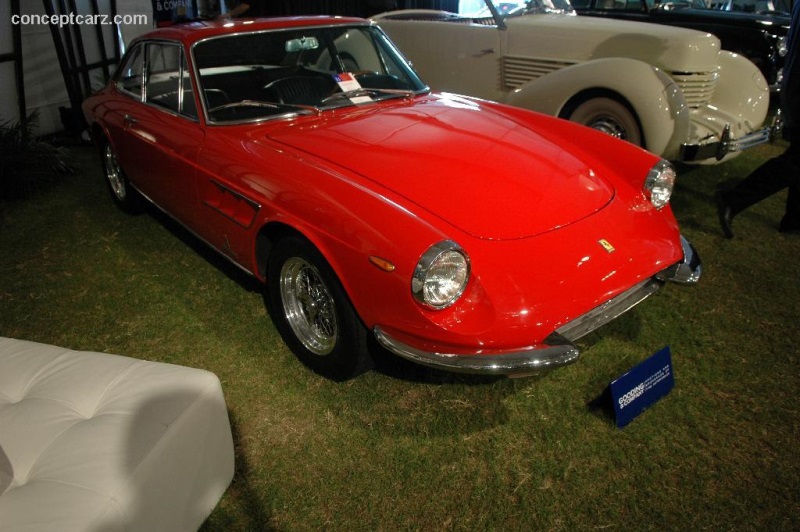
The 330 GTC/GTS cars were in production for two years, replaced by the 365 GTC and GTS series introduced in 1968. Total GTC production was 600 while GTS was 100. This example retains its original interior.
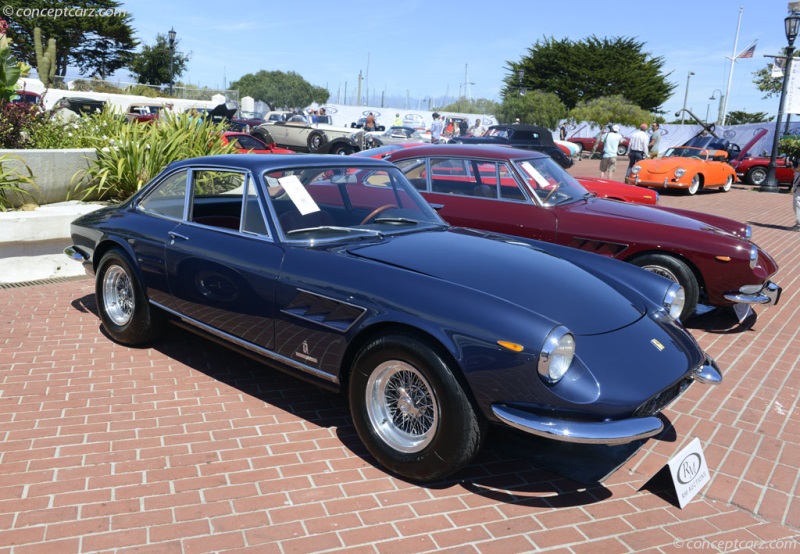
![]() | ![]() | Coupe Coachwork: Pininfarina Chassis Num: 9857 |
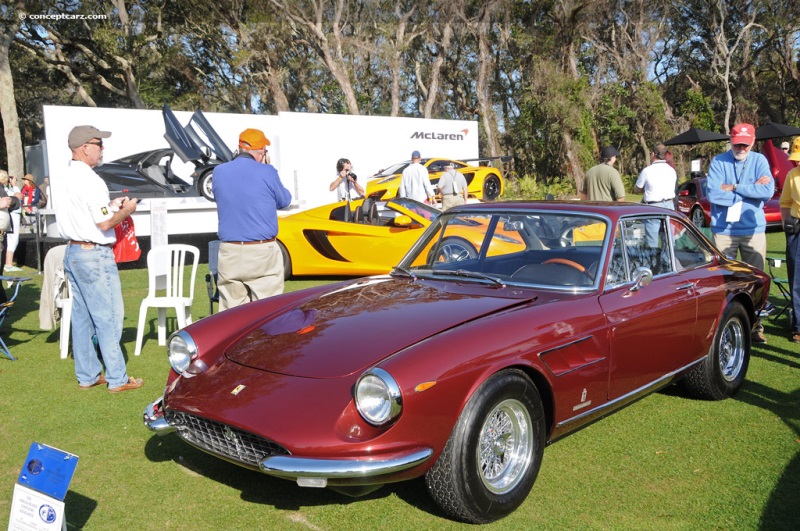
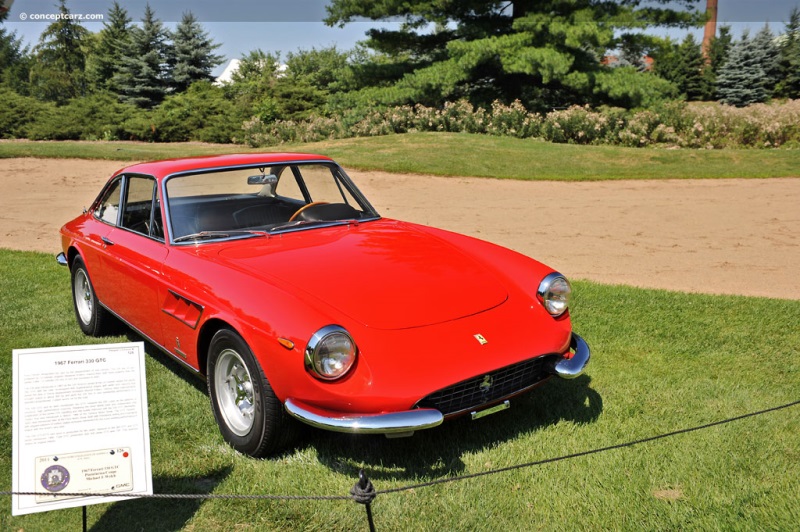
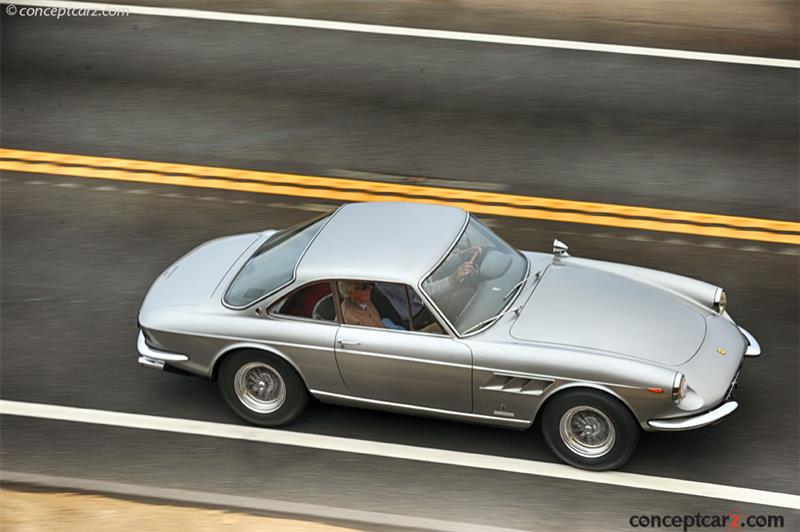
The gran turismo Ferrari 330 GTC complemented the 330 GT 2+2 and was built on the short 2400mm wheelbase which it shared with the 375 GTB. The coachwork was handled by Pininfarina. The 330 GTC had an improved torque tube driveline, a fully independent suspension with unequal A-arms, and a rigid single-unit drivetrain requiring just four mounts (two on the 300 horsepower engine and two on the 5-speed transalxe).
The 330 GTC were luxurious two-seat coupes that had splendid performance, responsiveness and handling, and Pininfarina's understated but stylish coachwork. The design featured a dramatic nose and air intake sourced from the 500 Superfast with the 275 GTB's sharply defined and modern tail.
![]() | Coupe Coachwork: Pininfarina Chassis Num: 10575 |
The 330 GTS (Gran Turismo Spyder) was shown in October 1966 at the Paris Auto Show.
First owner of #10575 was Bill Rudd, mechanic for Bill Harrah. Later acquired by current owner the car was brought to most perfect condition and campaigned in several concours where it won its awards. However, the owner uses the car regularly for its intended purpose: being a touring car. Both car and owners have been touring the California coast visiting the wine country if not simply driven on daily basis.
![]() | ![]() | ![]() | Coupe Coachwork: Pininfarina Chassis Num: 10105 |
![]() | ![]() | ![]() | Coupe Coachwork: Pininfarina |
![]() | ![]() | ![]() | Coupe Coachwork: Pininfarina Chassis Num: 10801 Engine Num: 10801 |
| Sold for $346,500 at 2011 Gooding & Company. | |||
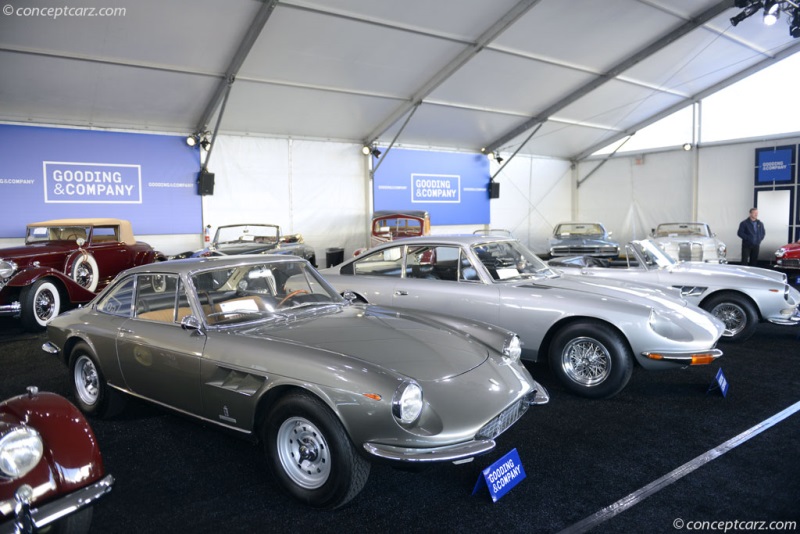
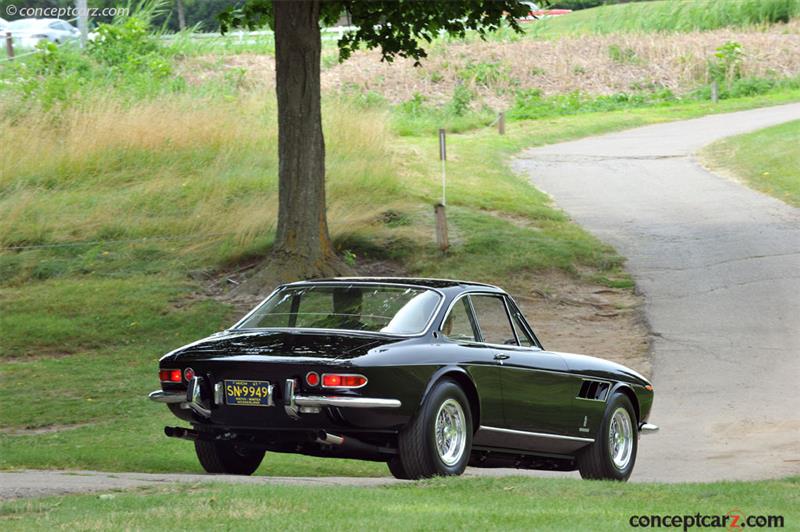
In January of 1968, it was exported to the United States where it was delivered through West Coast importer William 'Bill' Harrah and Modern Classic Motors to the official Seattle, Washington, Ferrari dealership Grand prix Motors. Tom K. Lewellen of Redmond, Washington, became the first owner of the car in the summer of 1968. Mr. Lewellen retained the car until the late 1970s, accumulating just 5,000 miles.
The second owner was Mr. Frederick J. Rahn of Seattle, Washington who then sold the car to David Moor of Snohomish, Washington in 1994. In September 2000, the car left the Northwest for the first time since new, relocating to California where Eric Hawley became the next caretaker. At that point in history, the car had covered less than 38,000 miles. In 2004, it was purchased by an individual from Seattle before being acquired in 2005 by the present owner. Since then, the car's been treated to a mechanical restoration and been properly maintained. It has accrued less than 48,000 miles.
In 2011, the car was offered for sale at the Gooding & Company auction where it was estimated to sell for $275,000-$350,000. As bidding came to a close, the car had been sold for the sum of $346,500 inclusive of buyer's premium.
By Daniel Vaughan | Nov 2011
![]() | Coupe Coachwork: Pininfarina Chassis Num: 09867 Engine Num: 09867 | |
| Sold for $275,000 at 2011 Gooding & Company. | ||
In 1970, it was exported to the United States and sold to Thomas J. gamble of Woodland Hills, California. In 1979, the GTC moved to Northern California where it came into the care of Harold Robinson, a resident of Berkley. It was later sold to George Neuwald, a resident living in Aptos.
By 1985, the Ferrari was in the care of Dennis Krieg, who offered it for sale in the Ferrari Market Letter. At the time, it was reported to have 96,000 original miles.
The car remained in Northern California through the late-1990s, by which time a subsequent owner had reportedly completed an engine top-end and suspension rebuild by a Ferrari specialist. It was in Virginia Beach for a brief period in 2003 before moving to Idaho where it has since resided in a collection of sports cars.
Some point in the vehicles history it was given a re-paint in the original color. The interior is largely original although the seats have been dyed to maintain their attractive patina.
The car rides on its Borrani wire wheels and retains the original Campagnolo spare wheel in the truck. There is an original leather pouch, tools, a jack and various handbooks.
In 2011, the car was offered for sale at the Gooding & Company auction held in Pebble Beach, California. It was estimated to sell for $250,000 - $325,000. As bidding came to a close, the car had been sold for the sum of $275,000 inclusive of buyer's premium.
By Daniel Vaughan | Nov 2011
![]() | ![]() | ![]() | Coupe Coachwork: Pininfarina Chassis Num: 10367 Engine Num: 10367 |
| Sold for $299,800 at 2012 Bonhams. | |||
In 1984, the car received an engine, transaxle and suspension rebuild. Five years later, the car was sold to another owner, Gary Thieltges of GT Motors in Glendale, California. Thieltges kept the car for eight years, occasionally offering it for sale. The current owner purchased the car in 1997.
In 2012, this vehicle was offered for sale at the Quail Lodge presented by Bonhams Auction. As bidding came to a close, the car had been sold for the sum of $299,800 including buyer's premium.
By Daniel Vaughan | Oct 2012
![]() | Coupe Coachwork: Pininfarina Chassis Num: 10683 Engine Num: 10683 | |
| Sold for $550,000 at 2012 Gooding & Company. | ||
The current owner has shown the car at prestigious Central and Southern California concours and has won numerous awards and trophies, including First in Class and Best Preserved Car. It has also won Ferrari Club of America's Gold and Platinum awards. Recently, it won Gold at the FCA Concorso Ferrari in Pasadena, California in May of 2012.
The tan leather seats and door panels have been re-upholstered years ago. The dash and console area, headliner, rear tray area and vinyl part of the door panels remain original. Gauges, fittings, knobs and switches also appear to be original. The odometer shows less than 40,000 miles which are believed to be the car's actual mileage. The car rides on the correct Campagnolo alloy wheels with Michelin XWX tires. The car has a complete tool roll, jack, books in a reproduction pouch, a spare parts catalogue, a workshop manual, and California blue and gold plates from the 1970s.
In 2012, the car was offered for sale at Gooding & Company's Pebble Beach, California auction. The car was estimated to sell for $300,000 - $375,000. As bidding came to a close, the car had been sold for the sum of $550,000, inclusive of buyer's premium.
By Daniel Vaughan | Dec 2012
![]() | Coupe Coachwork: Pininfarina Chassis Num: 10425 |
The engine is a 300 horsepower 4.0-liter version of the Single Overhead Cam V12 with three Webber carburetors. The excellent driving characteristics can be attributed to the fully independent front and rear suspension and 5-speed transaxle.
This 330 GTC, chassis number 10425, has been driven more than 109 thousand miles so far and has recently completed a 'factory built' restoration.
The Ferrari 330 series was produced from 1963 through 1968. They were replacements for the Ferrari 250 GT 2+2 with many of the series retaining the style and mechanical components of their predecessors.
The front-engined, rear-wheel drive vehicle were powered by a derivative of the 400 Superamerica's four-liter Colombo 12-cylinder engine.
The first in the series was the 330 America, which was actually a 250 with a new engine. During its production lifespan, lasting only a year, 50 examples were produced of the 2+2 sports car.
The 330 GT 2+2 was introduced to the public at the 1964 Brussels Motor Show, built as a replacement for the 330 America. The 330 GT 2+2 is unique in that it provided ample seating for four individuals plus luggage. These were the ultimate road-going, practical sports cars that could be used for every-day transportation. The 330 GT 2+2 was a new product, not just an engine modification. Under the hood was a Tipo 209, twelve-cylinder engine capable of producing 300 horsepower. Disc brake were placed on all four corners to provided the stopping power. The 1964 model used a four-speed manual gear box with overdrive. The 1965 version, known as the Series II, received a 5-speed manual gearbox. Other changes included alloy wheels, dual-light front clip, and optional power steering and air conditioning.
The 330 GT 2+2 was produced from 1963 through 1968. Around 1080 models were produced of the 330 GT with 50 of them being Type 330 GTE Americas.
The 330 was a replacement for the 275. The shortened wheelbase and independent rear suspension was courtesy of its predecessor. The GTC (Gran Turismo Coupe) Pininfarina designed vehicle was debuted in 1966 at the Geneva Auto Show. It had a V-12 engine mounted in the front that was capable of producing 300 horsepower. The five-speed manual gearbox was located in the rear transaxle.
The 330 GTS (Gran Turismo Spyder) was shown in October 1966 at the Paris Auto Show.
There were around 600 coupes and 100 spyders produced during the production lifespan. In 1968 they were replaced by the 365 GTC/4 Daytona.
By Daniel Vaughan | Oct 2006
The front-engined, rear-wheel drive vehicle were powered by a derivative of the 400 Superamerica's four-liter Colombo 12-cylinder engine.
The first in the series was the 330 America, which was actually a 250 with a new engine. During its production lifespan, lasting only a year, 50 examples were produced of the 2+2 sports car.
The 330 GT 2+2 was introduced to the public at the 1964 Brussels Motor Show, built as a replacement for the 330 America. The 330 GT 2+2 is unique in that it provided ample seating for four individuals plus luggage. These were the ultimate road-going, practical sports cars that could be used for every-day transportation. The 330 GT 2+2 was a new product, not just an engine modification. Under the hood was a Tipo 209, twelve-cylinder engine capable of producing 300 horsepower. Disc brake were placed on all four corners to provided the stopping power. The 1964 model used a four-speed manual gear box with overdrive. The 1965 version, known as the Series II, received a 5-speed manual gearbox. Other changes included alloy wheels, dual-light front clip, and optional power steering and air conditioning.
The 330 GT 2+2 was produced from 1963 through 1968. Around 1080 models were produced of the 330 GT with 50 of them being Type 330 GTE Americas.
The 330 was a replacement for the 275. The shortened wheelbase and independent rear suspension was courtesy of its predecessor. The GTC (Gran Turismo Coupe) Pininfarina designed vehicle was debuted in 1966 at the Geneva Auto Show. It had a V-12 engine mounted in the front that was capable of producing 300 horsepower. The five-speed manual gearbox was located in the rear transaxle.
The 330 GTS (Gran Turismo Spyder) was shown in October 1966 at the Paris Auto Show.
There were around 600 coupes and 100 spyders produced during the production lifespan. In 1968 they were replaced by the 365 GTC/4 Daytona.
By Daniel Vaughan | Oct 2006
The Ferrari 330 series belonged to a long line of Ferrari road cars with front-mounted V12 engines, cars that were members of a bloodline whose history is still being written by the 612 Scaglietti and 599 GTB Fiorano. The 330's name derived from the then-familiar Ferrari practice of naming cars for their per-cylinder displacement in cubic centimeters, indicating that the engines used to power this series of cars displaced a total of 12x330cc, or about four liters. Preceded by the 275 and replaced by the 365, the 330 was caught right in the middle of a glorious era for Ferrari road cars.
The 330 spawned the vaunted 330 P series of mid-engined racers, which battled Ford's GT-40 in sports car racing throughout the mid-1960s. A successor to the legendary 250 GTO was also created using the 330 motor, named the 330 LMB. Ferrari produced only four of these latter models.
The 330 road cars were decidedly more relaxed and less exhilarating than the racing cars mentioned above, but their relatively high sales numbers and use of race-bred components meant that they were still important cars to Ferrari's history. Ferrari produced the 330 road cars primarily in four guises: the 330 America, the 330 GT 2+2, and the coupe/spider couple named 330 GTC and 330 GTS.
Ferrari introduced the 330 America first. It was a transitional model, essentially a 250 GTE 2+2 with the new 330 motor. The 330 GT 2+2 followed in 1964, and was a more thoroughly revised grand tourer built on a chassis stretched by 50mm compared to the America. This newer model, though still closely related to its predecessor, wore a controversial body design by the familiar Pininfarina. Its front end styling used an unconventional quad-headlight arrangement that mounted the two lights per side in clusters canted down toward the egg crate grille, creating an aggressive but cumbersome appearance of slanted eyes. The Mulliner Park Ward-bodied Rolls-Royce Silver Cloud III of the mid-1960s used a similar frontal treatment, also with questionable results.
A more harmonious front end debuted on the 1965 Ferrari 330 GT 2+2, reverting to a more traditional twin-headlight approach. Other changes for 1965 included the replacement of the four-speed with overdrive gearbox by a 5-speed unit, and the introduction of power steering and air conditioning as options. Production of the 330 GT 2+2 continued until late 1967, by which time Ferrari had produced some 1,075 examples of the model. This was an excellent figure for a 1960s Ferrari, especially when compared to the 50 examples of the transitional 330 America that the company produced.
At the Geneva Motor Show of 1966, Ferrari introduced a two-seater 330 coupe called the GTC. Also styled by Pininfarina, the GTC looked surprisingly sultry given that its design was an amalgamation of prior cues. From the front the GTC aspired to 500 Superfast or 400 Superamerica greatness, while from the back the car looked like a 275 GTS with a fixed roof. Somehow the look came together remarkably well, though, creating an iconic Ferrari design without the hand-me-down flavor that could have resulted from the borrowed styling features.
Later in 1966, at Paris, the spider version of the 330 appeared. Named 330 GTS and clearly an open version of the GTC, it too was a lovely design. Production of both the GTC and GTS ended in 1968, after Ferrari produced approximately 600 coupes and 100 spiders.
The engine common to all 330 series road cars was a 60-degree V12 of 3,967cc displacement. The block and heads were cast silumin, an aluminum and silicon alloy. A chain-driven single overhead camshaft per cylinder bank operated two inclined valves per cylinder that opened into hemispherical combustion chambers. Ferrari employed three Weber carburetors and an 8.8:1 compression ratio in the 330 motor to create a power plant that was capable of 300bhp at 6,600rpm in street tune. The V12 was bolted to a 5-speed gearbox in all 330 road cars, excepting the 330 America and early 330 GT 2+2, which used 4-speed gearboxes with overdrive.
Double wishbones and coil springs suspended the front end of all 330 road cars. The GTC and GTS used independent rear suspensions, but the 2+2 models retained live axles. Brakes were assisted four wheel discs on all models, using an unconventional dual-circuit design that incorporated two master cylinders and two servos.
Pininfarina styled and bodied all four standard versions of the 330 road car, though there were bespoke examples crafted by other coachbuilders including Michelotti and Drogo. The 330 chassis was made of tubular steel, and the Pininfarina bodies too were primarily steel, but with opening panels in aluminum.
As witnesses of Ferrari's finest days, the 330 series road cars have become historically important and commensurately collectible. The GTC and GTS remain the thoroughbred sophisticates of the series and command high prices. The 2+2 models, though, especially the oddly styled early 330 GT 2+2s, represent good value and are some of the most attainable machines to emit the distinctive mechanical symphony of a 1960s Ferrari V12.
Sources:
'Ferrari 330.' CarsfromItaly.net n. pag. Web. 27 Dec 2010. http://carsfromitaly.net/ferrari/index.html.
'Specifications.' 330 Register n. pag. Web. 27 Dec 2010. http://www.330register.com/models.cfm.
Tyer, Ben. 'Ferrari 330 GTC.' Supercars.net n. pag. Web. 27 Dec 2010. http://www.supercars.net/cars/551.html.By Evan Acuña
For more information and related vehicles, click hereThe 330 spawned the vaunted 330 P series of mid-engined racers, which battled Ford's GT-40 in sports car racing throughout the mid-1960s. A successor to the legendary 250 GTO was also created using the 330 motor, named the 330 LMB. Ferrari produced only four of these latter models.
The 330 road cars were decidedly more relaxed and less exhilarating than the racing cars mentioned above, but their relatively high sales numbers and use of race-bred components meant that they were still important cars to Ferrari's history. Ferrari produced the 330 road cars primarily in four guises: the 330 America, the 330 GT 2+2, and the coupe/spider couple named 330 GTC and 330 GTS.
Ferrari introduced the 330 America first. It was a transitional model, essentially a 250 GTE 2+2 with the new 330 motor. The 330 GT 2+2 followed in 1964, and was a more thoroughly revised grand tourer built on a chassis stretched by 50mm compared to the America. This newer model, though still closely related to its predecessor, wore a controversial body design by the familiar Pininfarina. Its front end styling used an unconventional quad-headlight arrangement that mounted the two lights per side in clusters canted down toward the egg crate grille, creating an aggressive but cumbersome appearance of slanted eyes. The Mulliner Park Ward-bodied Rolls-Royce Silver Cloud III of the mid-1960s used a similar frontal treatment, also with questionable results.
A more harmonious front end debuted on the 1965 Ferrari 330 GT 2+2, reverting to a more traditional twin-headlight approach. Other changes for 1965 included the replacement of the four-speed with overdrive gearbox by a 5-speed unit, and the introduction of power steering and air conditioning as options. Production of the 330 GT 2+2 continued until late 1967, by which time Ferrari had produced some 1,075 examples of the model. This was an excellent figure for a 1960s Ferrari, especially when compared to the 50 examples of the transitional 330 America that the company produced.
At the Geneva Motor Show of 1966, Ferrari introduced a two-seater 330 coupe called the GTC. Also styled by Pininfarina, the GTC looked surprisingly sultry given that its design was an amalgamation of prior cues. From the front the GTC aspired to 500 Superfast or 400 Superamerica greatness, while from the back the car looked like a 275 GTS with a fixed roof. Somehow the look came together remarkably well, though, creating an iconic Ferrari design without the hand-me-down flavor that could have resulted from the borrowed styling features.
Later in 1966, at Paris, the spider version of the 330 appeared. Named 330 GTS and clearly an open version of the GTC, it too was a lovely design. Production of both the GTC and GTS ended in 1968, after Ferrari produced approximately 600 coupes and 100 spiders.
The engine common to all 330 series road cars was a 60-degree V12 of 3,967cc displacement. The block and heads were cast silumin, an aluminum and silicon alloy. A chain-driven single overhead camshaft per cylinder bank operated two inclined valves per cylinder that opened into hemispherical combustion chambers. Ferrari employed three Weber carburetors and an 8.8:1 compression ratio in the 330 motor to create a power plant that was capable of 300bhp at 6,600rpm in street tune. The V12 was bolted to a 5-speed gearbox in all 330 road cars, excepting the 330 America and early 330 GT 2+2, which used 4-speed gearboxes with overdrive.
Double wishbones and coil springs suspended the front end of all 330 road cars. The GTC and GTS used independent rear suspensions, but the 2+2 models retained live axles. Brakes were assisted four wheel discs on all models, using an unconventional dual-circuit design that incorporated two master cylinders and two servos.
Pininfarina styled and bodied all four standard versions of the 330 road car, though there were bespoke examples crafted by other coachbuilders including Michelotti and Drogo. The 330 chassis was made of tubular steel, and the Pininfarina bodies too were primarily steel, but with opening panels in aluminum.
As witnesses of Ferrari's finest days, the 330 series road cars have become historically important and commensurately collectible. The GTC and GTS remain the thoroughbred sophisticates of the series and command high prices. The 2+2 models, though, especially the oddly styled early 330 GT 2+2s, represent good value and are some of the most attainable machines to emit the distinctive mechanical symphony of a 1960s Ferrari V12.
Sources:
'Ferrari 330.' CarsfromItaly.net n. pag. Web. 27 Dec 2010. http://carsfromitaly.net/ferrari/index.html.
'Specifications.' 330 Register n. pag. Web. 27 Dec 2010. http://www.330register.com/models.cfm.
Tyer, Ben. 'Ferrari 330 GTC.' Supercars.net n. pag. Web. 27 Dec 2010. http://www.supercars.net/cars/551.html.By Evan Acuña
| Incredible Hypercar 'Full House' Tops Spectacular Ferrari Extravaganza | |
![]() | • RM Auctions announces amazing 16 car Ferrari haul for its forthcoming sale during the Concorso d'Eleganza Villa d'Este weekend, 25th May, on Lake Como, Italy • Hypercar 'full house' includes Ferrari Enzo, F50, F40, 288 GTO, and 599XX • Full list of handpicked entries available online at rmauctions.com LONDON (16 April, 2013) – RM Auctions, the world's largest collector car auction house for investment-quality automobiles, is delighted to announce that its exclusive sale during the...[Read more...] |
| MERCEDES-AMG HELPS TO ENSURE SAFETY IN FORMULA 1 | |
![]() | In the new 2013 Formula 1® season, Mercedes-AMG will once again help to ensure safety at all Formula 1® races forming part of the FIA Formula One World Championship™. For the 18th year the performance brand of Mercedes-Benz is providing the Official F1® Safety Car and the Official F1® Medical Car. The SLS AMG GT with 435 kW (591 hp) and the C 63 AMG Estate with 358 kW (487 hp) will be deployed at the direction of Race Control officials usually when weather or incidents are considered to impact o...[Read more...] |
| 'Ferrari Supercar. Technology. Design. Myth' Exhibition Opened Today | |
![]() | Maranello, 8 March - Today saw the official inauguration at the Ferrari Museum in Maranello of the 'Ferrari Supercar. Technology. Design. Myth' exhibition which includes the new LaFerrari, unveiled just a couple of days ago at the Geneva Motor Show, as well as all of the other limited edition special series cars that helped establish the Prancing Horse legend. Opened by Chairman Luca di Montezemolo, 'Ferrari Supercar. Technology. Design. Myth' retraces the story of all of the limited ...[Read more...] |
| Final Countdown Underway To South Florida's Premier Collector Car Auction | |
![]() | • Auctions America kicks off its 2013 auction season, March 22-24 with its highly anticipated Fort Lauderdale Collector Car Auction • Celebrating its 11th year, the multi-day auction features more than 550 quality collector cars • Latest feature attractions include an outstanding 1963 Shelby Cobra and a 1974 Ferrari Dino 246 GTS • Digital catalog now available for download at auctionsamerica.com AUBURN, Indiana (February 27, 2013) – With the final countdown underway to its highly an...[Read more...] |
| 1962 Monaco Grand Prix: McLaren Carries the Cooper Flag back to the Top | |
![]() | By the beginning of the 1962 Formula One season Jack Brabham had left Cooper to form his own racing team. It seemed the glories days of the double World Championship were well and truly behind them. However, left in Brabham's stead would be a man very akin to the Australian in so many ways. And in Bruce McLaren, Cooper had a driver and competitor more than apt to help carry the team forward into the future. The first race of the 1962 season, the Grand Prix of the Netherlands, certainly didn't...[Read more...] |
| Similar Automakers | |
| Aston Martin | Bentley |
| Bugatti | Devon |
| GTA | Koenigsegg |
| Lamborghini | Lotus |
| Maserati | Maybach |
| McLaren | Porsche |
| Rolls-Royce | Spyker |
| Tesla | |
| Similarly Priced Vehicles from 1967 |
| Ferrari 330 GTS ($14,195-$14,195) |
| Ferrari 330 GT 2+2 ($14,195-$14,195) |
Average Auction Sale: $223,670 |
| Ferrari: 1961-1970 |
| Similar Automakers |
| Other models by Ferrari |
1966 330 GTC | 1968 330 ![]() |


1966 330 GTC


1967