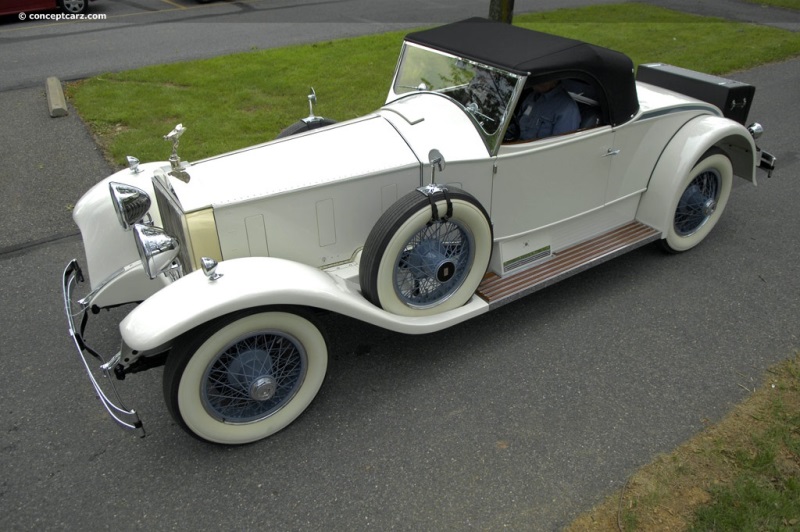
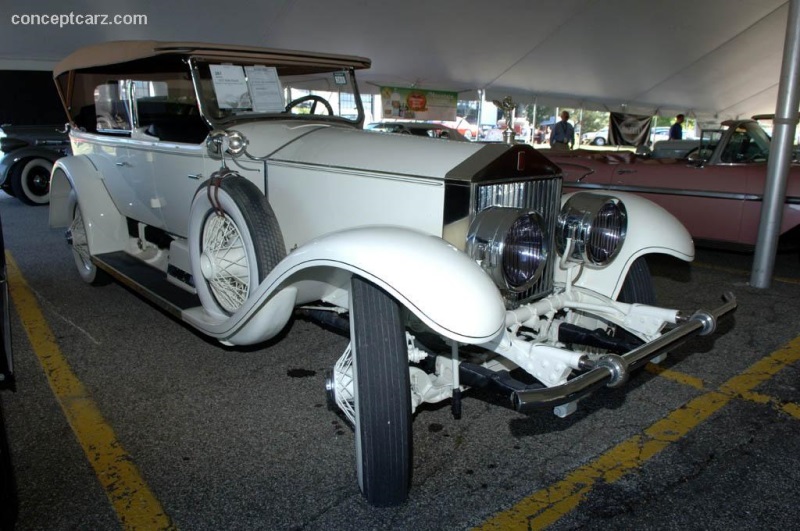
1926 Phantom I | 1928 Phantom I ![]() |
1927 Rolls-Royce Phantom I news, pictures, and information | ||
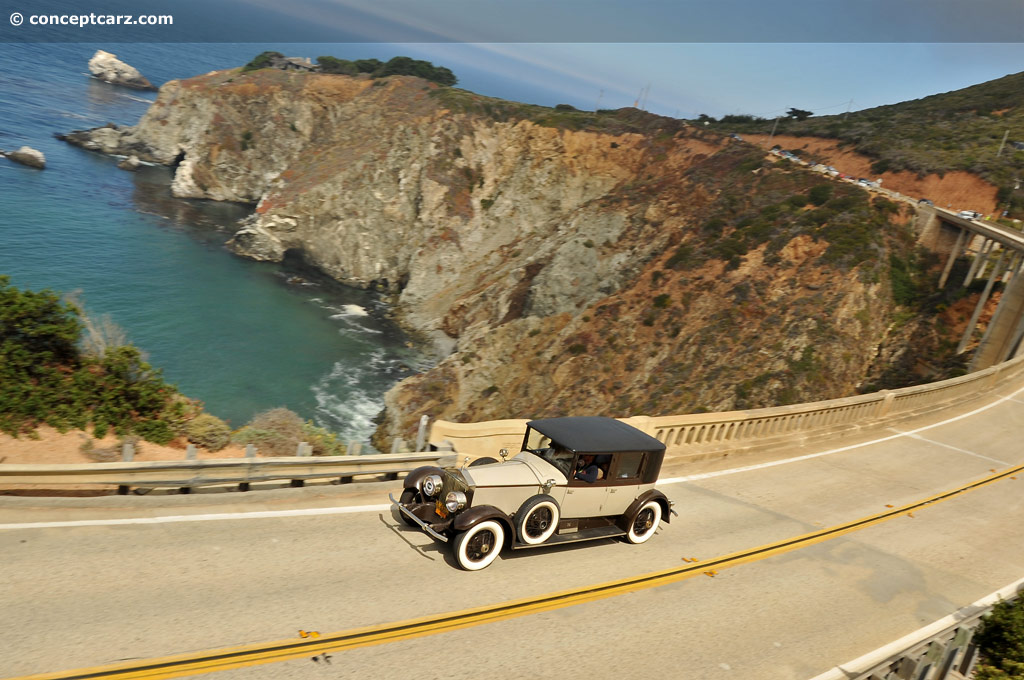
| Tweet | ||
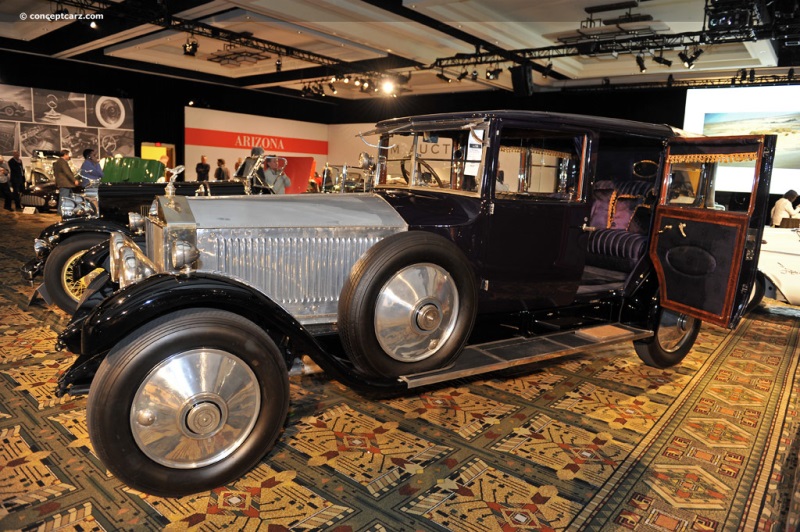
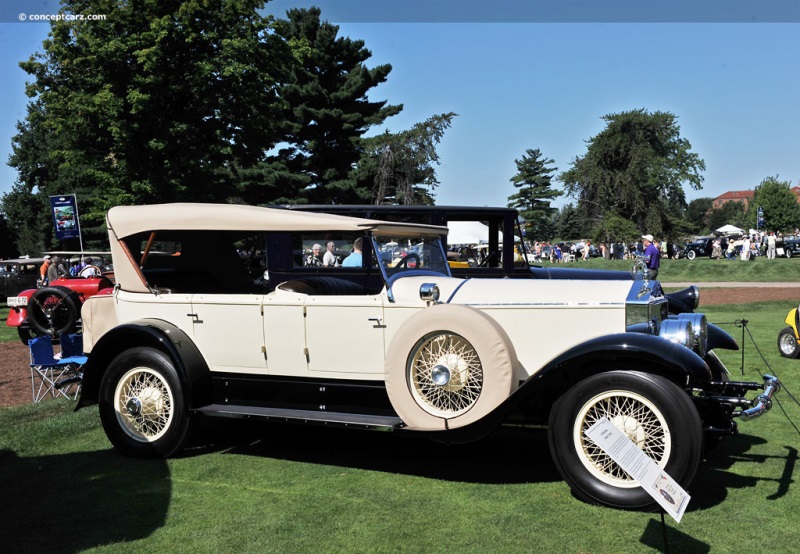
![]() | ![]() | ![]() | Pall Mall 6 Place Tourer Coachwork: Merrimac Chassis Num: S197PM |
| Sold for $121,000 at 2006 RM Auctions. | |||
The Rolls-Royce Company began its distinguished career in the early 1900's, focusing on quality and performance. During 1905 and 1906, forty vehicles were produced, all with four-cylinder engines producing 20 horsepower.
1906 was a big year for the young company, with Charles Stewart Rolls and Frederick Henry Royce officially registering the Rolls-Royce Limited Company. The legendary 40/50 six-cylinder Silver Ghost was introduced with much acclaim. During the same year, Rolls and Royce entered the Tourist Trophy Race, one of the most prestigious events of the time. Their powerful and durable car outran the rest of pack, beating the nearest competitor by 27 minutes. In 1907 the company further showcased their vehicles durability by participating in a 15,000 mile reliability event.
In a time when maintenance and durability were on the minds of every consumer, Rolls-Royce left their buyers with peace of mind. To add even more prestige to their vehicles, the vehicles were marketed to the most elite and well-to-do in society. By supplying their vehicles to British royalty, the Rolls-Royce Company concreted their reputation in history. The cars durability was matched by its comfort; they were outfitted with luxurious bodies by some of the top coachbuilders in the industry. The engines were powerful and provided a rather smooth and comfortable ride. The engines were engineering marvels, constructed of an aluminum alloy crankcase. Instead of chains, the timing and ignition drive were both run by gears. The parts were hand polished and constructed to a high degree of accuracy. The sturdy construction meant that conversation were possible, even while the vehicle was at top speed.
The 40/50 HP Silver Ghost models were sold for a period of fifteen years as the companies only offering. By 1922, the Rolls-Royce Company began offering the Twenty which was offered to a larger market, though still very exclusive. Competition such as Hispano Suiza had caught up with Rolls-Royce by 1925; Rolls-Royce responded. Development began on a more modern version of its Silver Ghost engine that would be more powerful and durable. The stroke was enlarged providing a greater increase in horsepower. The resulting vehicle was named the '40/50 New Phantom'. When the Phantom II was introduced in 1929, the '40/50 New Phantom' was retrospectively named the Phantom I. There were two wheelbases offered on the Phantom I, a 143.5 and a 150.5 inch. Many of the mechanical components stayed the same as the Silver Ghost. The gearbox was the same but the clutch was replaced with a single dry plate unit. This provided a smoother and quieter ride.
During a speed test at Brookland, the Phantom did not live up to expectations. It was unable to achieve a top speed that had been met by a 1911 Silver Ghost. There were many ideas on how to resolve this problem, such as tuning the engine or reducing the overall weight of the vehicle. A lightweight Barker touring body was created and placed on a Phantom chassis. Again, the Phantom failed to achieve the desired speeds during testing.
Ivan Evernden, a Rolls-Royce designer, proposed strict guidelines on a new tourer body. Amazingly, the quality was not sacrificed and the desired reduction was achieved. Tests at Brooklands proved the vehicles capabilities and traveled more than 89 mph.
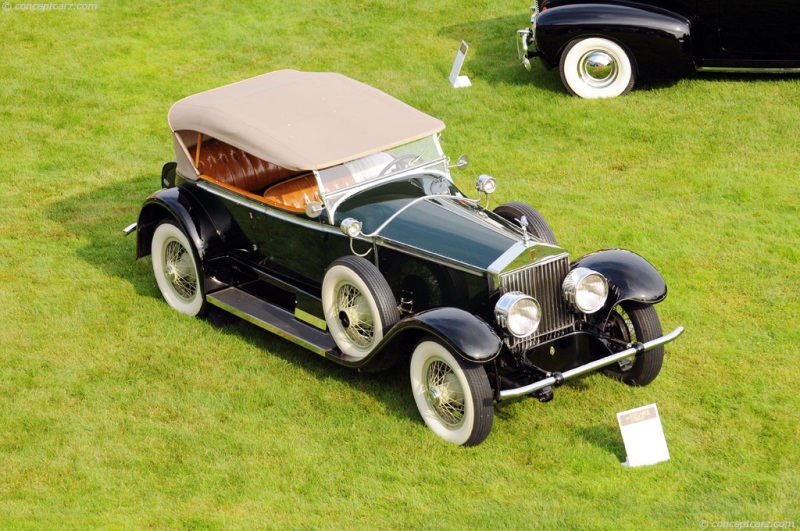
S197PM
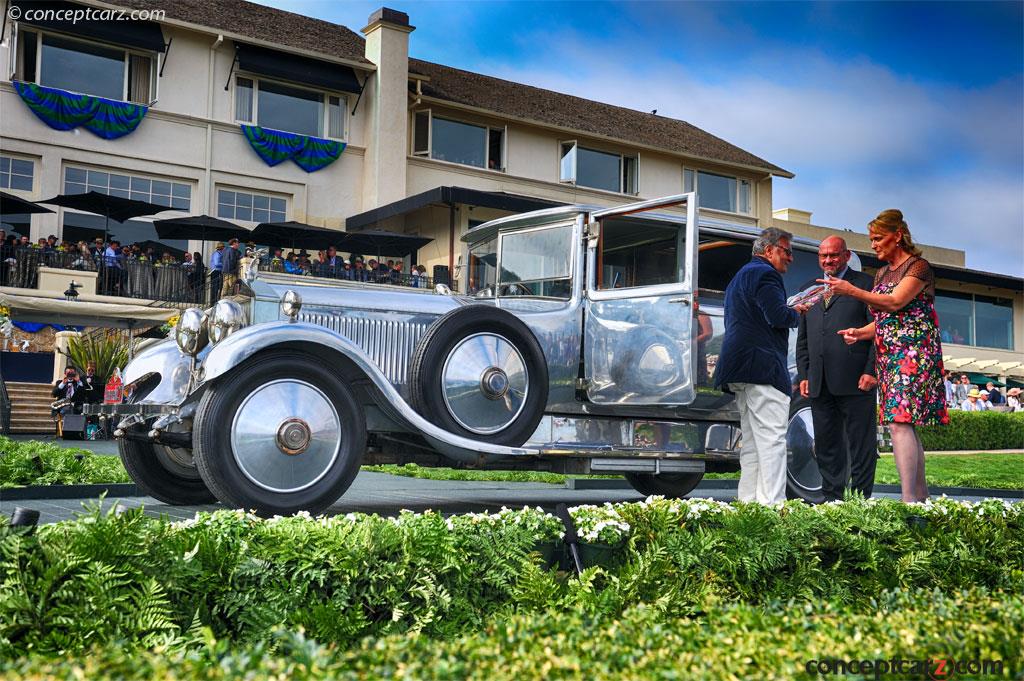
The example shown with chassis number S197PM is one of only five built with coachwork by Rolls-Royce Custom Coachworks and built by Merrimack. There are only two examples that have survived. Three of the five are believed to have been re-bodied. This example has retained its original body, chassis, and engine.
On November 26, 1927, Mrs. Anita Baldwin of Santa Anita, California took delivery of the vehicle.
The vehicle is powered by a 7668 cc overhead valve six-cylinder engine that produces 120 horsepower. A three-speed manual transmission is fitted, along with servo-assisted two-wheel drum brakes. It sits atop the longer wheelbase, measuring at a staggering 150.5 inches. It is suspended in place by leaf spring solid axle front suspension and a longitudinal leaf spring live axle rear suspension.
It was estimated to fetch between $150,000 - $200,000 at the RM Auctions in Meadow Brook of 2006, but sold for $121,000.
By Daniel Vaughan | Oct 2007
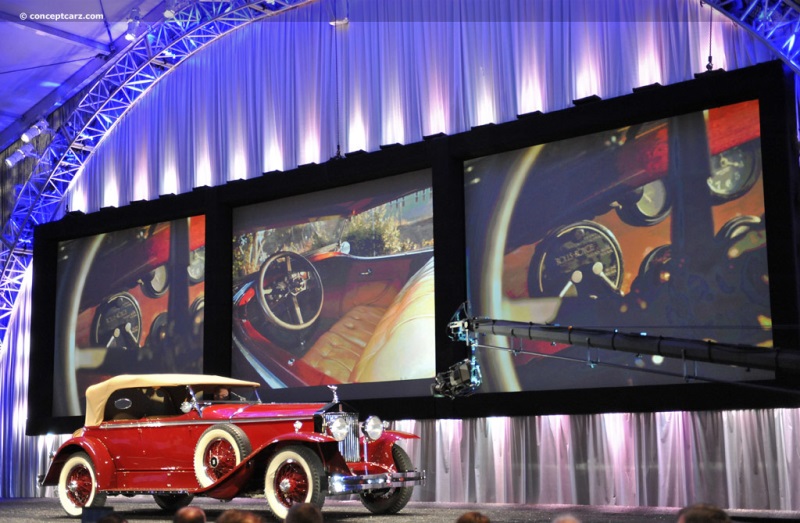
![]() | ![]() | ![]() | Playboy Roadster Coachwork: Brewster |
By Daniel Vaughan | Mar 2007
![]() | ![]() | Convertible Regent Coachwork: Brewster |
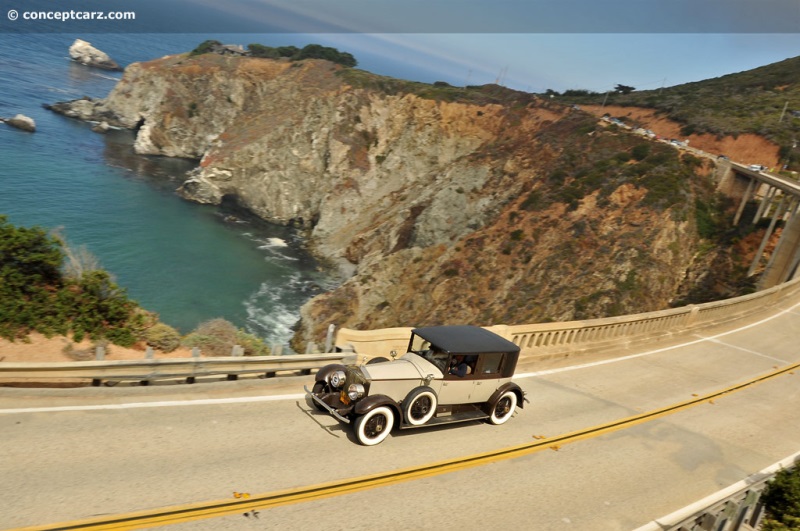
Rolls-Royce Springfield P1 Regent
This is an American Rolls-Royce, one of 3,000 cars built in Springfield, MA, between 1920 and 1931. It was delivered in 1928 with a Lonsdale limousine body. In 1934, Brewster & Company of New York re-bodied it was a custom-built convertible coupe body called a 'Regent.' The headlights and bumpers were replaced at that time to make the car look more modern. Some of the special features of this car include stainless steel wheels supplied by the Wire Wheel Corporation of Buffalo, NY; running boards made of Honduras mahogany; and a small door to gain easier access to the rumble seat. The 468 cubic-inch overhead valve engine is capable of comfortably maintaining highway speeds of 60 mph.By Daniel Vaughan | Mar 2007
![]() | ![]() | ![]() | Torpedo Tourer Coachwork: Barker Chassis Num: 21UF |
| Sold for $154,000 at 2007 RM Auctions. | |||
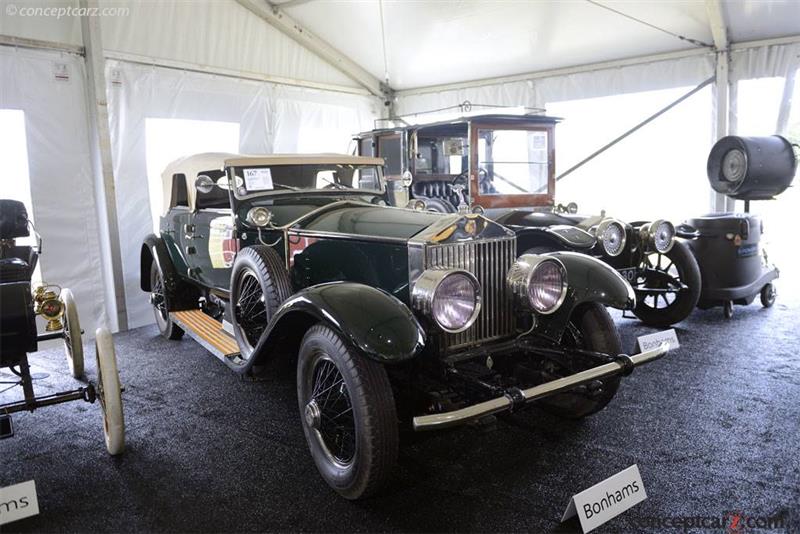
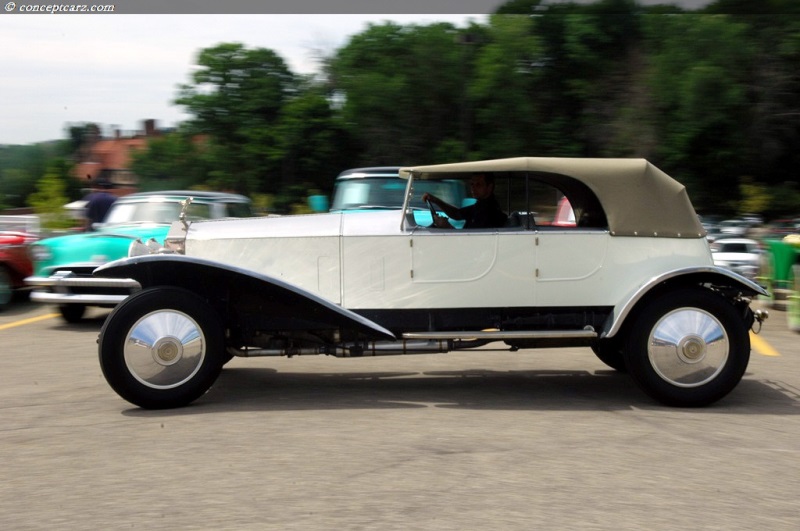
When the Phantom I was put through speed tests, it performance was similar to the Silver Ghosts of the early 1910s. To remedy this situation, a lightweight Barker Tourer body was commissioned in hopes of improving upon the vehicles performance. The goal was to create sporty and streamlined body that still encompassed the luxury refinements and style that were synonymous with the Rolls-Royce name.
Unfortunately, the special Tourer body was not enough. Rolls-Royce designer Ivan Evernden created another Tourer body of his own design. His design still kept with Rolls-Royce luxury standards, but cut as much weight as possible. The result was a vehicle that average 89 mph at Brooklands.
This example shown here is a testament to the work of the Rolls-Royce engineers and designers. It is powered by a 7668cc overhead valve inline six-cylinder engine capable of producing 120 horsepower. The car has a three-speed manual gearbox with servo-assisted two-wheel drum brakes. Many of the mechanical components were still Silver Ghost technology, but it did have a new overhead valve engine, front wheel brakes and many suspension and gearbox improvements which made it a fairly modern machine. This example was shown at the 2006 Meadow Brook Concours d'Elegance and then brought back the following year to be auctioned at the RM Auctions at Meadow Brook. The car has a Torpedo Phaeton body with coachwork by Barker. It was estimated to sell between $180,000 - $240,000. It is regarded as one of the best four place sports touring bodies of the time and one of Barker's finest creations.
The car passed through a few owners during its early life before being exported to the United States in 1945. It was kept in that owners possession for a very long time, a total of 44 years before selling to a fighter pilot in August of 1989. It passed through a few more owners before making its way to the RM Auction block.
It was originally finished in cream with polished alloy top surfaces and great leather. It was later painted grey, and then white. It has been treated to a very recent restoration that kept it as original as possible. It is now finished in its original colors and the leather was custom dyed to match samples recovered from the bottoms of the cushions.
At auction the car did find a new owner for the price of $154,000. The car did not generate as high of a sale as anticipated, though it still seems a fair price for both buyer and seller.
By Daniel Vaughan | Aug 2007
![]() | ![]() | Limousine Coachwork: Warwick |
This Warwick Limousine was purchased new by Mrs. Tina Pratt of Rochester, NY (whose husband drove a Rolls-Royce Phantom I Picadilly Roadster). Excepting new paint in 1963, this automobile is unrestored and a tribute to the fine quality cars.
![]() | ![]() | ![]() | Brougham Limousine de Ville Coachwork: Barker Chassis Num: 78 UF Engine Num: QL95 |
| Sold for $99,000 at 2011 RM Auctions. Sold for $82,500 at 2011 RM Auctions. | |||
In 2011, this vehicle was offered for sale at the Amelia Island auction presented by RM Auctions. The car was estimated to sell for $150,000 - $250,000 and offered without reserve. As bidding came to a close, the car had been sold for the sum of $99,000 including buyer's premium.
By Daniel Vaughan | Apr 2011
![]() | ![]() | Touring Coachwork: Brewster |
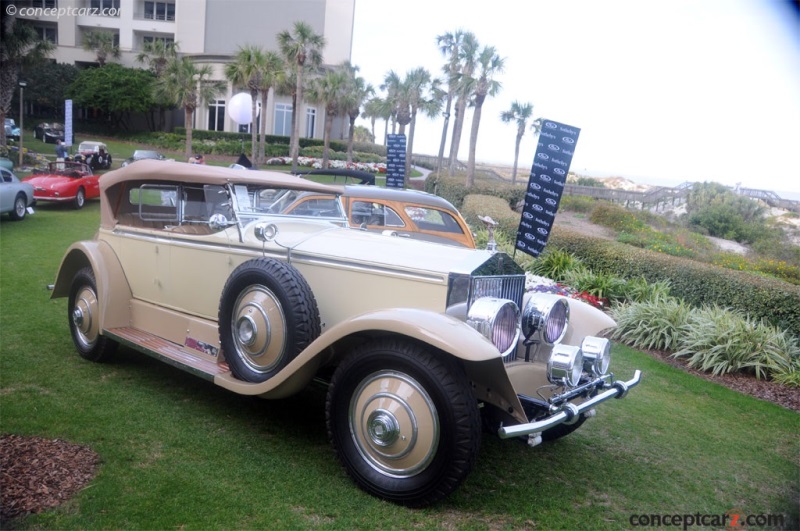
In 1914, Brewster & Company of Long Island City, New York, was selected as the official coachbuilder for Rolls-Royce in the United States. The 'Pall Mall' design was considered one of the most stylish open bodies of all time and was copied by many others.
The Rolls-Royce Phantom I was built until 1931 with fewer than 2,000 examples created. The price was around $20,000 depending on options and body choices.
![]() | ![]() | ![]() | Avon Sedan Coachwork: Brewster |
The Avon sedan was built as an owner-driven sedan; there is no division window separating the driver from the passengers. The car is powered by a Rolls-Royce 7668cc, inline six that offers 100 horsepower. This Brewster bodied Avon sedan has recently received an extensive mechanical rebuild.
![]() | ![]() | ![]() | Kenilworth Sedan Coachwork: Brewster Chassis Num: S329FM Engine Num: 20297 |
| Sold for $71,500 at 2011 Gooding & Company. | |||
The Kenilworth sedan was later sold to a second owner, whose family it would remain until being discovered after many years in static storage. It appears that at some point during its history, the paint was refinished in black. The interior is upholstered in brown leather, striped cloth as well as broadcloth, and is complete with the original ornate woodwork.
Brewster bodied just 35 Kenilworth Sedans, all of which were built on the Phantom I chassis.
In 2011, the car was offered for sale at the Gooding & Company auction held in Pebble Beach, CA. It was estimated to sell for $100,000-$140,000 and offered without reserve. As bidding came to a close, the car had been sold for the sum of $71,500 including buyer's premium.
By Daniel Vaughan | Nov 2011
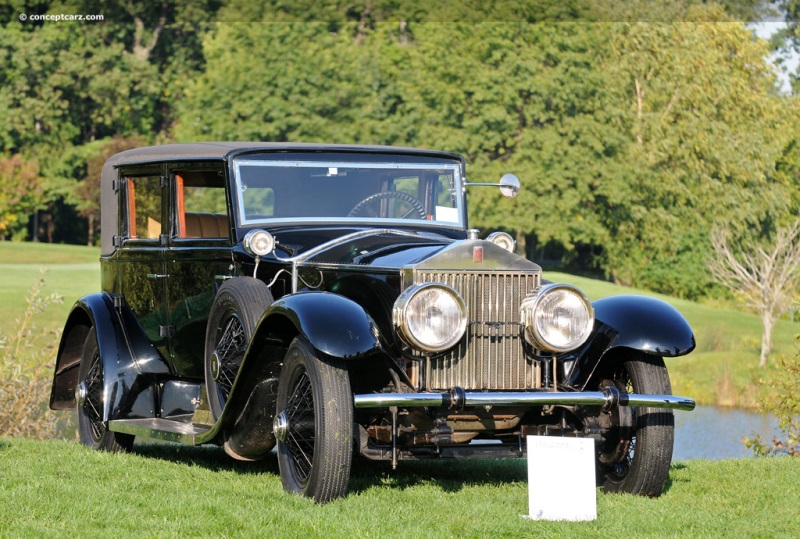
![]() | ![]() | ![]() | Touring Coachwork: Brewster Chassis Num: S455FL Engine Num: 20556 |
| Sold for $368,500 at 2012 Gooding & Company. | |||
This 1927 Rolls-Royce Phantom I is a Derby Tourer with coachwork by Brewster. This car was initially delivered in July of 1927 to Mr. Phipps and fitted with Warwick Limousine coachwork. Around four years later, another car (S172FR) was delivered to J.S. Swift of Chicago, Illinois, as a Derby Tourer, body B5552. Both cars, however, were soon returned to Rolls-Royce in Springfield. This car, S455FL, was fitted with Derby Tourer coachwork B5552, though it is believed that the early-style fenders were retained. Upon completion, the car was delivered to Revell J. Fisher and found a new home in Baldwin Park, California.
The Derby passed to AP Humphreys by December of 1932 and it is believed that the car remained in California until the 1970s. Around that time, Ben Paul Moser of Santa Barbra, Ca acquired the car. It was listed for sale in the RROC Flying Lady in 1972.
The car was purchased by Northwest collector Phil Schwartz and took delivery at the Harrah Swap Meet in Reno, Nevada. It remained with the car for around 15 years before selling it in the late 1980s to another Northwest collector, John Wallerich. After purchasing the car, it was sent to Alabama for a restoration. Unfortunately, the work was not completed and sent to another restorer in Connecticut. During this nut-and-bolt restoration, the fenders were replaced with more suitable Derby-style wings.
After the restoration in 1993, the car entered the RROC Meet where it won a Second Place in the Phantom I Concours class.
In 2012, this car was offered for sale at the Gooding & Company auction held in Scottsdale, Arizona. It had a pre-auction estimated value of $380,000 - $450,000 and offered without reserve. As bidding came to a close, the car had been sold for the sum of $368,500 inclusive of buyer's premium.
By Daniel Vaughan | Jan 2012
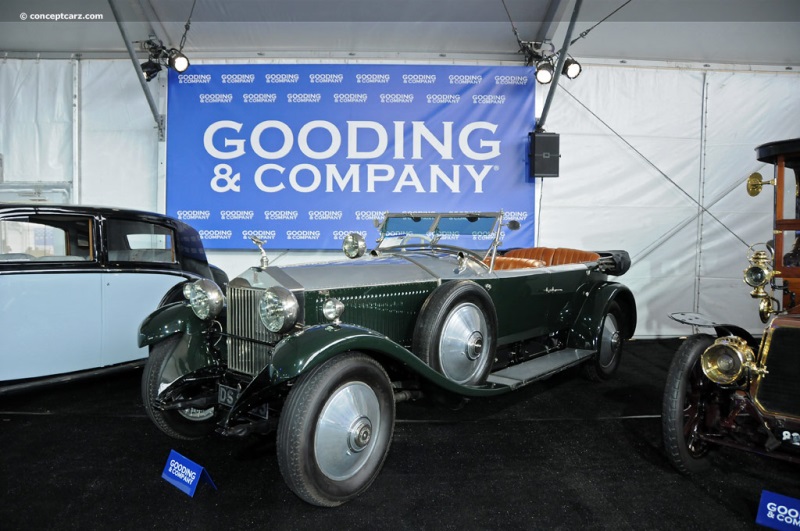
![]() | ![]() | ![]() | Tourer Coachwork: Hooper Chassis Num: 57-EF Engine Num: HS 75 |
In the back was a wooden cases outfitted with bottles, a card case, a mirror and a clock. A case in the front compartment between the seats was included to hold a revolver. Automatic running-board lights were included, illuminating when the doors were opened. A Barker dipping system was included to which Stephen Grebel headlamps were mounted to match the spotlight mounted to the scuttle.
The Rolls-Royce was completed in August and loaded aboard the S.S. Ranpura bound for Bombay in September.
Little is known of the car's existence after it arrived in India. In 1964, the maharaja passed away and the Rolls-Royce eventually made its way to America. Charles Howard purchased the car in 1989. The car returned to England where it was restored and subsequently displayed at the 1993 World Classic Auto Exposition in Pebble Beach, California. The car later passed to Thomas Barrett III of Scottsdale, Arizona, before being sold again and returned to England. A noted Rolls-Royce connoisseur in California purchased the car in 2011. An extensive restoration immediately began and upon completion, it was finished in Phthalo Green paint with a polished aluminum upper bonnet, scuttle and door tops. The car rides on polished aluminum wheel discs. Between the front seats holds the revolver - a Webley .455 Royal Irish Constabulary that was sold new by R.B. Rodda and Company of Dalhousie Square, Calcutta, India.
In 2012, the car was offered for sale at the Pebble Beach auction presented by Gooding & Company. The car was estimated to sell for $500,000 - $700,000. Unfortunately, a buyer willing to satisfy the car's reserve was not found and it would leave the auction unsold.
By Daniel Vaughan | Nov 2012
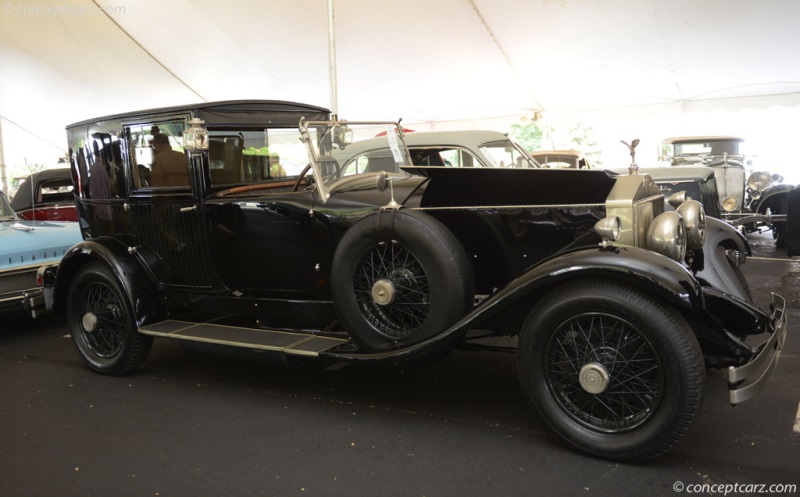
![]() | ![]() | ![]() | Enclosed Drive Landaulette Coachwork: Mulliner Chassis Num: 71RF Engine Num: FV55 |
| Sold for $198,000 at 2013 RM Auctions. | |||
This example is the long 150.5-inch variant, and it was sold on August 8th of 1927 to coachbuilders Arthur Mulliner, of Southampton, on behalf of their client, His Highness Sayajirao Gaekwad III, the Mahajarah of Baroda. This chassis was requested with hood locks, matte finished nickel radiator shutters, two side-mounted spare tire carriers, and an additional spare wheel. Mulliner outfitted the elegant enclosed drive landaulette coachwork with Connolly leather upholstery. The rear passenger compartment for His Majesty features a swivel-mounted armchair and two jump seats upholstered in royal purple silk, surrounded by burled walnut, polished brass, 24-karat gold, and sterling silver. The bodywork is finished in Royal Purple with the Maharajah's heraldry—a flamboyant peacock—on the doors, there is a collapsible leather roof over the passengers for use in parades, and the bare polished aluminum hood was installed as a sporty contrast.
The car was later given by the Maharajah to the United States Envoy for India. It later came stateside, ultimately residing i storage for over five decades in a barn in Utah. It was rescued in 1996 from within a cocoon of spider webs by an enthusiast from California and was restored to its original appearance.
The car was later purchased by the John O'Quinn estate.
In 2013, the car was offered for sale at RM Auction's sale in Scottsdale, Arizona. The lot was sold for the sum of $198,000 including buyer's commission.
By Daniel Vaughan | Feb 2013
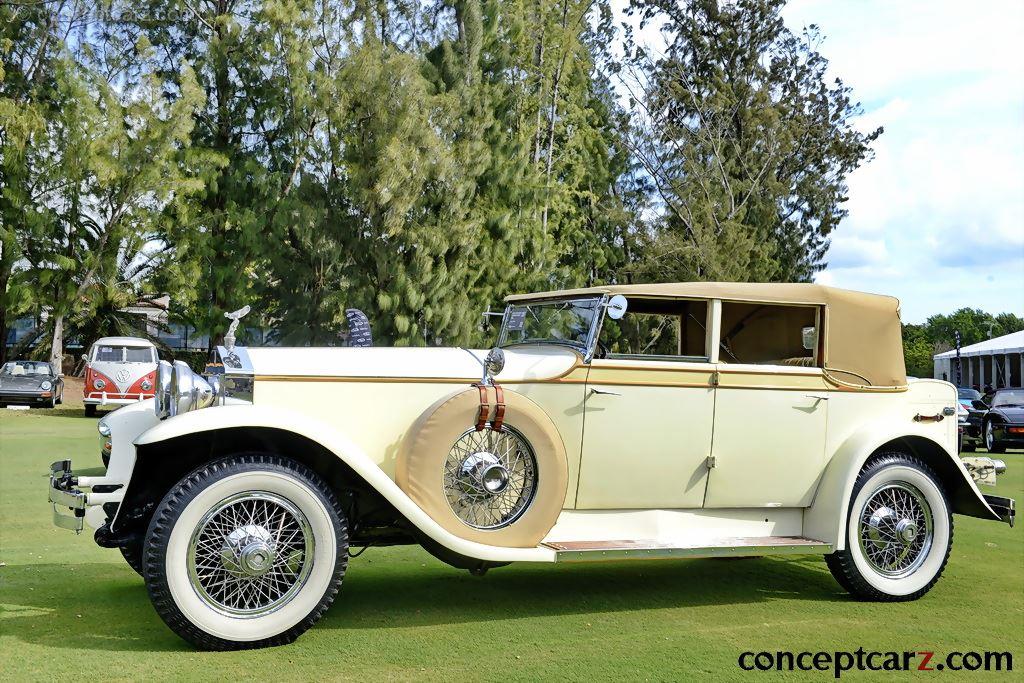
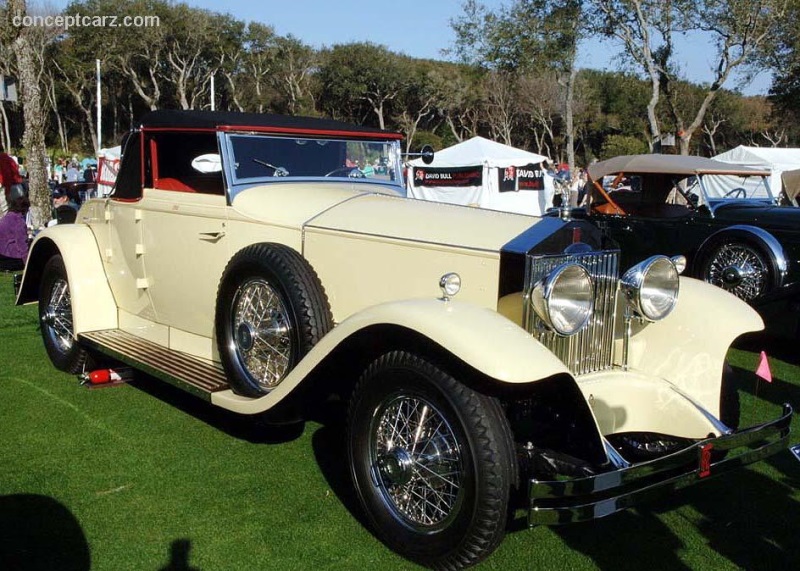
![]() | ![]() | Convertible Sedan Coachwork: Brewster Chassis Num: S 359M |
Rolls-Royce debuted new body styles in their dealer showrooms in London. The first roadster was first shown at Piccadilly Square and called the Piccadilly roadster. This convertible sedan debuted in the New Market section of London which predicated the name and this body style.
The engine is the 40/50 horsepower series as continued from the Silver Ghost, with a displacement of 7,668cc. The dual ignition includes two spark plugs per cylinder and each set of six has a separate coil and distributor. This example rides on a 146.5-inch wheelbase frame with semi-elliptical springs suspending the front axle and cantilever springs suspending the rear axle. The four wheel brakes are servo-assisted as Rolls-Royce advertised endurance, speed, and the stopping power of the Phantom I series.
Driven less than one thousand miles per year in 86 years, this pale yellow convertible sedan represents the epitome of style, power elegance, and class in the year 1927.
By Daniel Vaughan | Mar 2013
Although the Silver Ghost had been constantly improved over its life span, by the 1920's other manufacturers had begun to close the performance gap, and the decision was made to produce a new car.
By 1925, the New Phantom (retrospectively called the Phantom I when the Phantom II was introduced in 1929) was ready.
A new chassis had not been built so the car used the Ghost chassis. This meant that initially the only difference between the Ghost and the New Phantom was the method of mounting the §teering column on the chassis and the new power unit. The six-cylinder overhead valve engine was similar in many ways to the Twenty, but was of 7,668cc. This was over twice the capacity of the little Twenty at 3,127cc.
The Phantom had been prepared in great secrecy, as would its namesake be, 70 years later. During its development the car was codenamed EAC, which stood for Easter Armored Car. Pieces of armor plating were even left around the factory to lend credence to this cover-up story.
Two chassis lengths were offered, the standard being 190.25 inches (4.83m) wîth a 196.75 inches (4.99m) version for more formal coachwork.
A special open sporting body was fitted to the fourth experimental chassis and even though the New Phantom's engine performed better than that of the Silver Ghost, the New Phantom was found to have a slightly lower top speed. This led to Rolls-Royce testing at Brooklands to investigate the effect of weight and, more importantly, of aerodynamics in relation to performance. With completely redesigned bodywork, this car subsequently ran at around 100 mph.Source - Rolls-Royce Motor Cars Ltd.
By 1925, the New Phantom (retrospectively called the Phantom I when the Phantom II was introduced in 1929) was ready.
A new chassis had not been built so the car used the Ghost chassis. This meant that initially the only difference between the Ghost and the New Phantom was the method of mounting the §teering column on the chassis and the new power unit. The six-cylinder overhead valve engine was similar in many ways to the Twenty, but was of 7,668cc. This was over twice the capacity of the little Twenty at 3,127cc.
The Phantom had been prepared in great secrecy, as would its namesake be, 70 years later. During its development the car was codenamed EAC, which stood for Easter Armored Car. Pieces of armor plating were even left around the factory to lend credence to this cover-up story.
Two chassis lengths were offered, the standard being 190.25 inches (4.83m) wîth a 196.75 inches (4.99m) version for more formal coachwork. A special open sporting body was fitted to the fourth experimental chassis and even though the New Phantom's engine performed better than that of the Silver Ghost, the New Phantom was found to have a slightly lower top speed. This led to Rolls-Royce testing at Brooklands to investigate the effect of weight and, more importantly, of aerodynamics in relation to performance. With completely redesigned bodywork, this car subsequently ran at around 100 mph.Source - Rolls-Royce Motor Cars Ltd.
Rolls Royce launched the new Phantom in May of 1925. Rolls-Royce's replacement for the original Silver Ghost, the Phantom was built in both the U.K. and the U.S. following a year later in introduction and two years in replacement. Usually listed as Phantom I, it featured a new pushrod-OHV straight- 6 engine, which was a vast improvement over the Silver Ghost. The engine was constructed with three groups of two cylinders with detachable heads, and produced impressive power that could pull the large, very heavy vehicle. This engine utilized a '4¼ in (107.9 mm) bore and long 5½ in (139.7 mm) stroke for a total of 7.7 L (7668 cc/467 in³) of displacement'. In 1928, aluminum was substituted for cast iron in the cylinder heads.
The front was suspended by semi-elliptical springs while cantilever springs were utilized in the rear. Though some original U.S. models lacked front brakes, 4-wheel servo-assisted brakes were also specified.
UK models featured a long-wheelbase model that was longer at 3822.7 mm than the American version at 3721.1 mm. Other differences between the two models included the transmission, while the UK models used a 4-speed while US models used a 3-speed transmission, both with a single dry-plate clutch. The US Phantoms were constructed in Springfield, Massachusetts while UK models were built at Rolls' Derby factory.
A total of 226 Rolls-Royce Phantom I's were produced during its production span.By Jessica Donaldson
The front was suspended by semi-elliptical springs while cantilever springs were utilized in the rear. Though some original U.S. models lacked front brakes, 4-wheel servo-assisted brakes were also specified.
UK models featured a long-wheelbase model that was longer at 3822.7 mm than the American version at 3721.1 mm. Other differences between the two models included the transmission, while the UK models used a 4-speed while US models used a 3-speed transmission, both with a single dry-plate clutch. The US Phantoms were constructed in Springfield, Massachusetts while UK models were built at Rolls' Derby factory.
A total of 226 Rolls-Royce Phantom I's were produced during its production span.By Jessica Donaldson
Background
Frederick Henry Royce was an engineer and the Honorable Charles Stewart Rolls was a man with many talents. He was an aviator, driver, and automobile enthusiasts. In the world of business, he excelled at marketing.The Rolls-Royce Company began its distinguished career in the early 1900's, focusing on quality and performance. During 1905 and 1906, forty vehicles were produced, all with four-cylinder engines producing 20 horsepower.
1906 was a big year for the young company, with Charles Stewart Rolls and Frederick Henry Royce officially registering the Rolls-Royce Limited Company. The legendary 40/50 six-cylinder Silver Ghost was introduced with much acclaim. During the same year, Rolls and Royce entered the Tourist Trophy Race, one of the most prestigious events of the time. Their powerful and durable car outran the rest of pack, beating the nearest competitor by 27 minutes. In 1907 the company further showcased their vehicles durability by participating in a 15,000 mile reliability event.
In a time when maintenance and durability were on the minds of every consumer, Rolls-Royce left their buyers with peace of mind. To add even more prestige to their vehicles, the vehicles were marketed to the most elite and well-to-do in society. By supplying their vehicles to British royalty, the Rolls-Royce Company concreted their reputation in history. The cars durability was matched by its comfort; they were outfitted with luxurious bodies by some of the top coachbuilders in the industry. The engines were powerful and provided a rather smooth and comfortable ride. The engines were engineering marvels, constructed of an aluminum alloy crankcase. Instead of chains, the timing and ignition drive were both run by gears. The parts were hand polished and constructed to a high degree of accuracy. The sturdy construction meant that conversation were possible, even while the vehicle was at top speed.
The 40/50 HP Silver Ghost models were sold for a period of fifteen years as the companies only offering. By 1922, the Rolls-Royce Company began offering the Twenty which was offered to a larger market, though still very exclusive. Competition such as Hispano Suiza had caught up with Rolls-Royce by 1925; Rolls-Royce responded. Development began on a more modern version of its Silver Ghost engine that would be more powerful and durable. The stroke was enlarged providing a greater increase in horsepower. The resulting vehicle was named the '40/50 New Phantom'. When the Phantom II was introduced in 1929, the '40/50 New Phantom' was retrospectively named the Phantom I.
Phantom I
The Phantom was built in secrecy, using the code name EAC which stood for Easter Armored Car. To reinforce the code name, pieces of armor plating was intentially left around the factory. The Phantom I was the successor to the Silver Ghost and produced for only four years. Though the engine had been modified to produce more horsepower and torque, the chassis was only slightly updated. This would prove to be a major drawback for the Phantom I.
In 1921 a Rolls-Royce factory had been opened in Springfield Massachusetts with the purpose of producing Silver Ghosts that were built with traditional Rolls-Royce quality but catered to the American customer. These vehicles were known as the 'Springfield' Silver Ghosts.
A year after the Phantom was introduced, the 'Springfield' Phantom became available. The late arrival was attributed to necessary modifications, such as converting to left hand drive. The Springfield plant continued Rolls-Royce production until 1931, when the American factory was closed.
| Usain Bolt Golden Again With Unique Nissan GT-R | |
![]() | • Nissan gives an exclusive gold-painted GT-R to the 'world's fastest man,' Usain Bolt • Presentation ceremony held in Bolt's home country of Jamaica JAMAICA – Nissan has delivered a special GT-R, bathed in exclusive gold paint, to Olympic gold medalist Usain Bolt in appreciation for his contributions as a Nissan brand ambassador for GT-R. Bolt, known as 'the world's fastest man,' has been promoting the company's brand awareness in association with the Nissan Global Bran...[Read more...] |
| RM Auctions' Don Davis Collection Attracts Texas-Size Bids | |
![]() | • RM Auctions posts over $21.2 million at the record-breaking sale of the distinguished Don Davis Collection, April 27 in Fort Worth, Texas • Top seller: a rare 1967 Ferrari 330 GTS sold for $1,936,000, to establish a new auction record • Five lots achieve million-dollar-plus results, with numerous auction records shattered • Toyota 2000GT enters history books with seven-figure sales price • Exceptional collection attracts bidders from 14 countries around the world FORT WORTH, Texas (A...[Read more...] |
| Edsel Ford's Speedster Stars at 'The Amelia' | |
![]() | Edsel Ford's 'continental car', a custom boattail speedster, will take its rightful place in the Sports Car Class of the 18th annual Amelia Island Concours d'Elegance. In the shape of Edsel's seminal speedster is the genesis of Ford's legendary design department. Edsel Ford was hardly 'a chip off the old block'. The acorn fell well away from the mighty oak that was Henry Ford, founder of the Ford Motor Company. Edsel was not just the President of Ford, he was a car guy to his core. His ta...[Read more...] |
| Cherished Classics From The Pettit Collection Will Be Offered Without Reserve | |
![]() | • The 1929 Duesenberg 'Blue J' and 11 collector cars from the William A. C. Pettit, III Collection will be sold at Gooding & Company's Pebble Beach Auctions • Estate Proceeds will benefit the Shriners Hospital for Children®-Tampa Gooding & Company, the acclaimed auction house celebrated for selling the world's most significant and valuable collector cars, is honored to present the finest automobiles of the William A.C. Pettit, III Collection at its Pebble Beach Auctions on Aug...[Read more...] |
| September 15 d'Plaisir Road Rallye will precede | |
![]() | The September 15 road rally that precedes the Palos Verdes Concours d'Elegance the following day has been named the d'Plaisir Road Rallye in honor of the 2012 Concours' theme 'French Curves.' It begins with lunch at the Rolling Hills Country Club in Rolling Hills, traverses the stunning views and winding roads of the Peninsula and ends at the Palos Verdes Golf Club in Palos Verdes Estates with a helicopter golf ball drop and a reception honoring Concours Grand Marshals Peter and Merle Mullin...[Read more...] |
1927
Rolls-Royce
models |
| Rolls-Royce 20 |
| Similar Automakers | |
| Aston Martin | Bentley |
| Bugatti | Devon |
| Ferrari | GTA |
| Koenigsegg | Lamborghini |
| Lotus | Maserati |
| Maybach | McLaren |
| Porsche | Spyker |
| Tesla | |
| Rolls-Royce: 1921-1930 |
| Similar Automakers |
| Other models by Rolls-Royce |
| ||||||||||||||||||||||||||||||||
1926 Phantom I | 1928 Phantom I ![]() |


1926 Phantom I


1927