Concept Cars Home
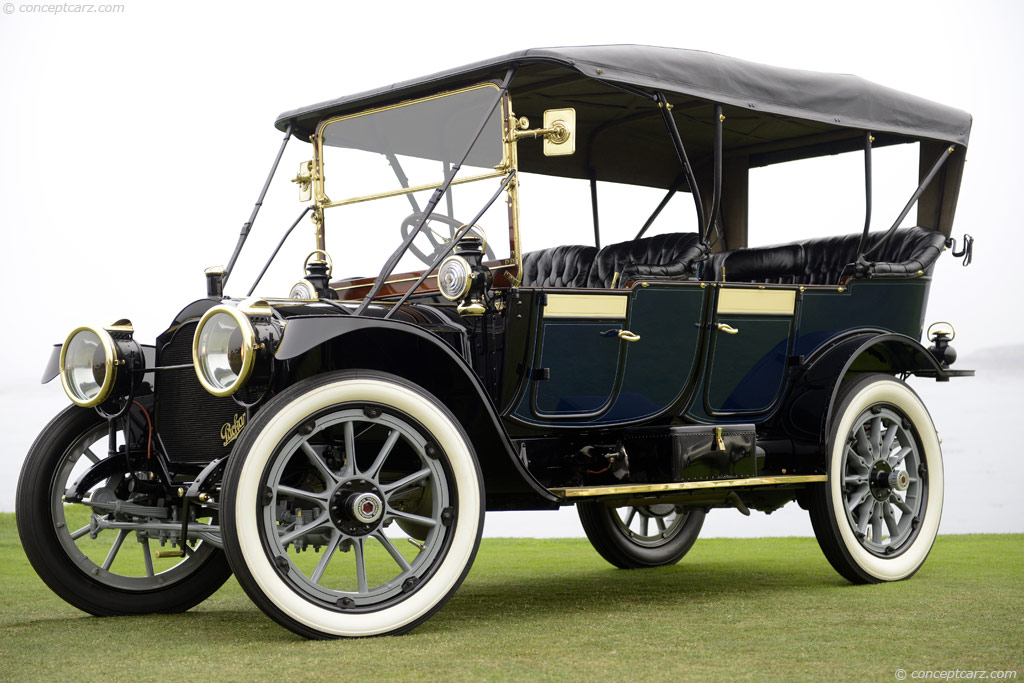
Image Left 1911 Model 30 Squad CarImage Left 1911 Model 30
 

1912 Packard Model 30 news, pictures, and information

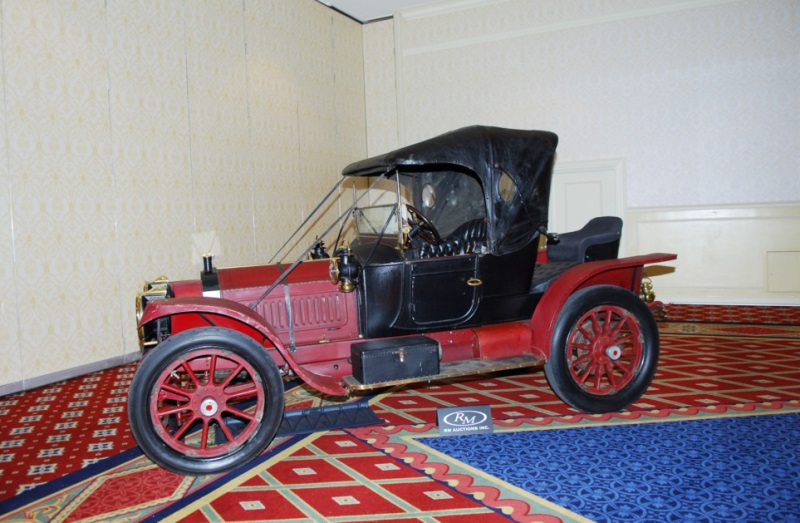
Runabout
Chassis Num: 20594
 
High bid of $500,000 at 2007 RM Auctions. (did not sell)
This 1912 Packard Model 30 Runabout was in the care of noted Packard collector Roderic Blood of West Newton, Massachusetts. Blood serves as president of the Veteran Motor Car Club of America from 1942 through 1944. After Blood's death the car was put up for auction. The winning bid went to William Harrah. It was also the highest sale at the auction. Subsequent owners include Bill Winslow and Fred Weber. It has been in its current owners possession since 1991.

This car is the only 1912 Model 30 Runabout known to be in authentic condition. 1912 was the final year for the T-head four.

This car was offered for sale at the Vintage Motor Cars sale at Hershey, PA presented by RM Auctions. It was estimated to sell for $550,000 - $650,000. This was one of the few cars of the auction not to find new ownership. Bidding reached $500,000 but was not enough to clear the vehicles reserve.

By Daniel Vaughan | Dec 2007
The slogan 'Ask The Man Who Owns One' is one of the most famous in American History. It was the response given to most individuals when asked about a Packard. They were reliable, elegant, powerful, and quality automobiles. Their attention to detail and ingenuity were some of the key factors in making the company successful.

The Packard legend begins in 1898 when James Ward Packard, a mechanical engineer, purchased a Winton. The Winton automobiles were good automobiles but the one that Packard had purchased had many flaws and broke down on its first road trip. Packard returned the vehicle to Winton and voiced his displeasure. Winton challenged Packard to build a better product. James and his brother William Dowd Packard began immediately on building a vehicle. A year later their first car, a one-cylinder, was introduced. They built four more cars that year, and the following year, in 1900, they produced 47 of a Model B under the name New York and Ohio Company, a subsidiary of the brothers' Packard Electric Company, manufacturers of transformers and electric lighting equipment. The cars were simple yet durable. They featured a single-cylinder engine mounted under the seat and attached to a two-speed planetary transmission and chain drive.

On September 10th of 1900 the Ohio Automobile Company, based in Warren, Ohio, was formed. In 1903 the name was changed to the Packard Motor Car Company when it moved from Warren, Ohio to Detroit, Michigan. The move was the result of a majority stock purchase made by investors in the Detroit area.

In 1907 Packard introduced their Model 30 which would remain in production until the early 1910s. It was called the Model 30 because of its 30 horsepower engine. By T-head four-cylinder unit displaced 431.9 cubic-inches and powered the rear wheels via a three-speed manual transmission mounted in the rear.

The Model 30 was a very important car for Packard and was a top seller for many years, even after it was joined by a smaller Model 18 in 1909.

In 1908 Packard extended and enlarged the wheelbase and fitted them with 36-inch wheels. The results of this revised Model 30 was designated UA. There were additional body styles such as a close-coupled tourer and a victoria, and windshields were optional equipment. Packard made another bold claim in 1909 by touting this Model 30 UB as 'The Masterpiece of the Largest Exclusive Motor Car Factory in the World.' The claims were justified as Packard was the largest exclusive motor car factory in the world with its floor-space that extended 14 acres and their payroll had 3,200 employees.

In 1909 founder James Ward Packard's presidency was passed on the Henry Joy.

In 1910 the Model 30 UC was introduced. The list of new bodystyles included a phaeton, and a four-passenger tourer. Mechanical improvements included a dry ply clutch which replaced the expansion ring unit.

In 1911 the succession continued with the Model 30-UD. A coupe and a brougham were new body styles, replacing the landaulet and demi-limousine. The six-cylinder cars was the big news for the year with production models designated as 1912.

The final year of the Model 30 saw significant changes. The wheelbase was lengthened providing even more luxurious accommodations for its passengers. Side curtains were now standard. The ride and handling was enhanced with improved shock absorbers. In the front were 37 x 5 tires and 36x4.5 in the rear. A spare tire of each size could be found on the right running board.

By Daniel Vaughan | Dec 2007
The Packard Motor Company displayed their first motor carriage in 1900, at first New York City auto show. Three years later, the Packard's had improved significantly and their reliability was greatly increased. A 1902 Model F fitted with a Packard single-cylinder 12 horsepower engine and automatic ignition advance made the transcontinental trip from San Francisco to New York in 53 days.

In 1907, Packard introduced their first model to have its name indicate its engine power. It was the Model 30. The Packard Model 30 was powered by a newly-designed T-head four-cylinder engine that was capable of producing 40 horsepower under the ALAM system. The engine had a 5-inch bore and a long 5.5-inch stroke. It displaced 432 cubic-inches and was advertised as making 30 brake horsepower.

The new engine was designed to carry the long, large, and heavy coach-bodys which were become more popular with the wealthy. The engine, itself, required a longer wheelbase chassis to accommodate its size. The drive was through an unusual expanding band clutch with a three-speed transmission to a live rear axle. This setup was in favor of the prior configuration of transverse leaf springs which had been abandoned the previous year with the Model S. Now, the front and rear was given semi-elliptical leaf springs. Redundant braking on the rear wheels was provided by both expanding shoe and contracting band brakes.

During its introductory year, over 1,300 examples were sold. It was an immediate success for the Packard Company. It was a very versatile vehicle, offered in two-wheelbase sizes and several body styles to accommodate a diverse clientele. The Touring, Limousine, and Landaulette coachwork rode on a 122-inch wheelbase while the Sporting Runabout and Gentleman's Roadster rode atop a shorter 108-inch wheelbase.

By Daniel Vaughan | Dec 2008
For more information and related vehicles, click here

1963 Andre Simon/Lloyd Casner Maserati Tipo 151/2
At a time when Maserati's financial picture couldn't have looked more bleak, it would be enticed to build what many would end up considering to be one of their finest sportscars ever. It would even be suggested it could have been one of the greatest of all time if Maserati had had the money to develop it. Unfortunately, the Maserati Tipo 151 forever lives in relative obscurity when it truly deserves to be remembered as much more. It is often remarked that for a race team to win a championship...[Read more...]
EXCEPTIONAL ROSTER OF PORSCHE RACE CARS JOIN THE STARTING GRID FOR RM'S EAGERLY AWAITED MONTEREY SALE
RM Auctions, the world's largest collector car auction house for investment-quality automobiles, has announced more star consignments for its highly anticipated Monterey sale, August 17–18, in California, this time a remarkable group of Porsches. Comprising twelve examples in total and spanning 48 years of production, the offering is headlined by an exceptional group of racing greats from the sixties, seventies, and eighties. Continuing RM's commitment to present the world's finest automobiles, ...[Read more...]
180
200
250
3-35 Fourth Series
300
38
645
745
845
Caribbean
Cavalier
Clipper
Custom Eight
Eight
Four Hundred
Model 18
Model 30
Model F
One-Twenty
Patrician
Six
Super Deluxe
Twelve

Image Left 1911 Model 30 Squad CarImage Left 1911 Model 30
© 1998-2012. All rights reserved. The material may not be published, broadcast, rewritten, or redistributed.