1967 Ferrari 330 GTS
1967 Ferrari 330 GTS Navigation
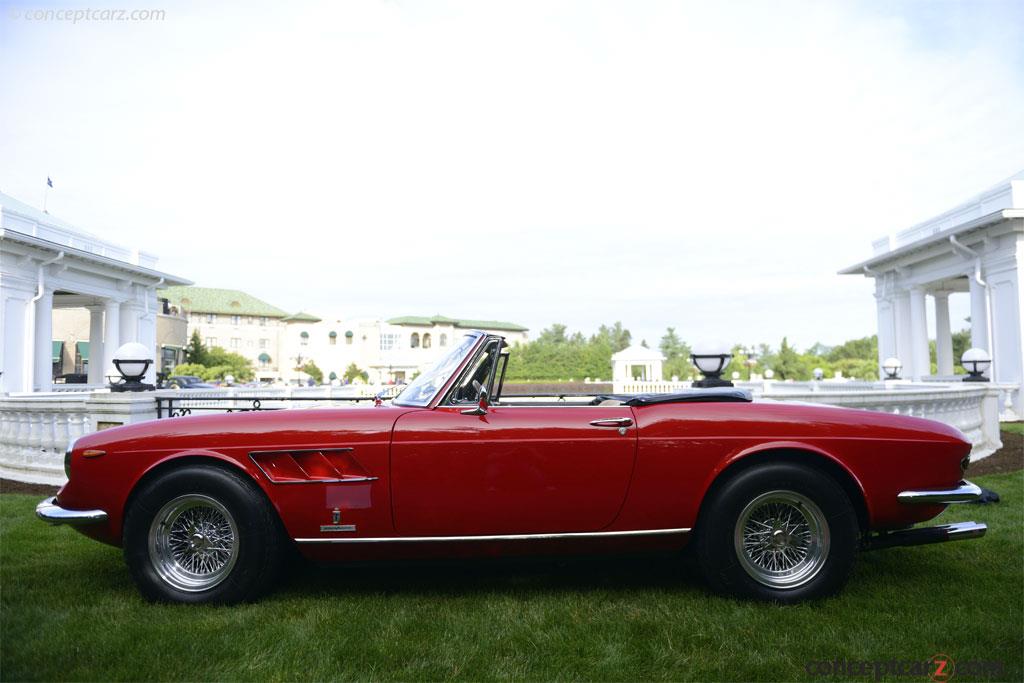
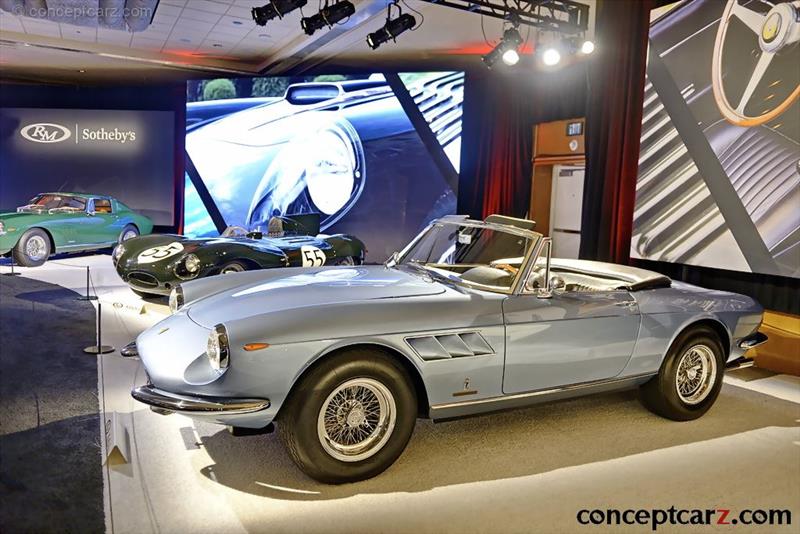
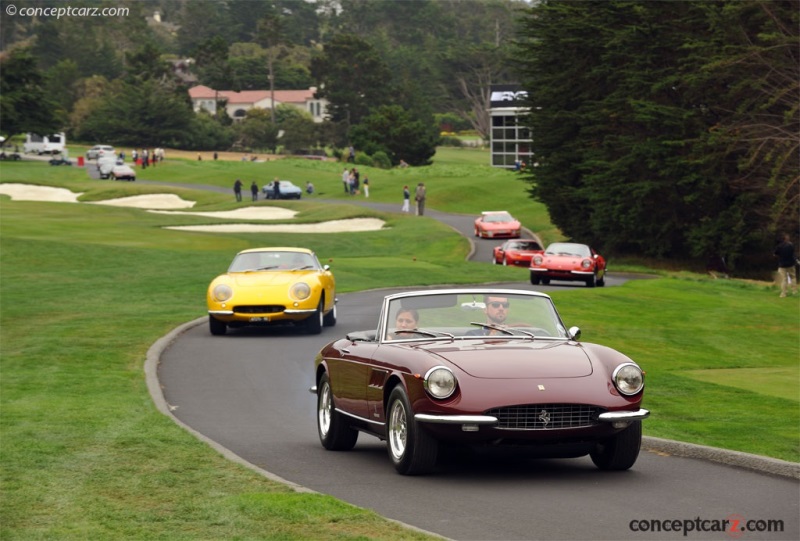
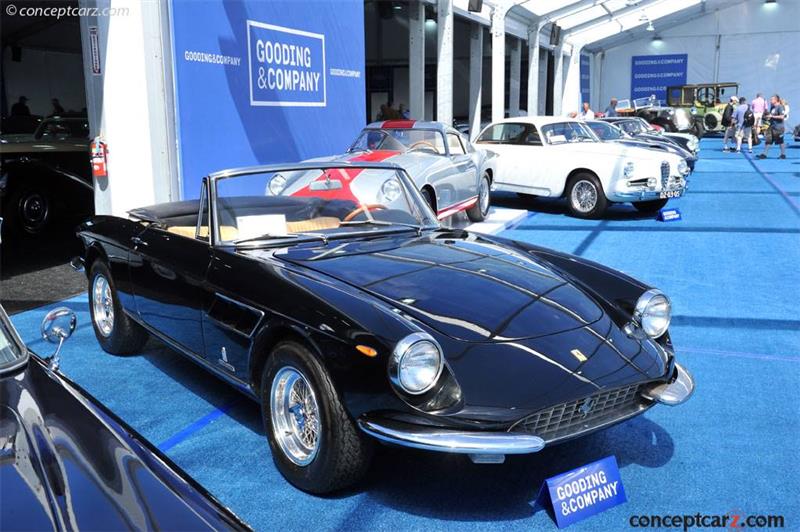
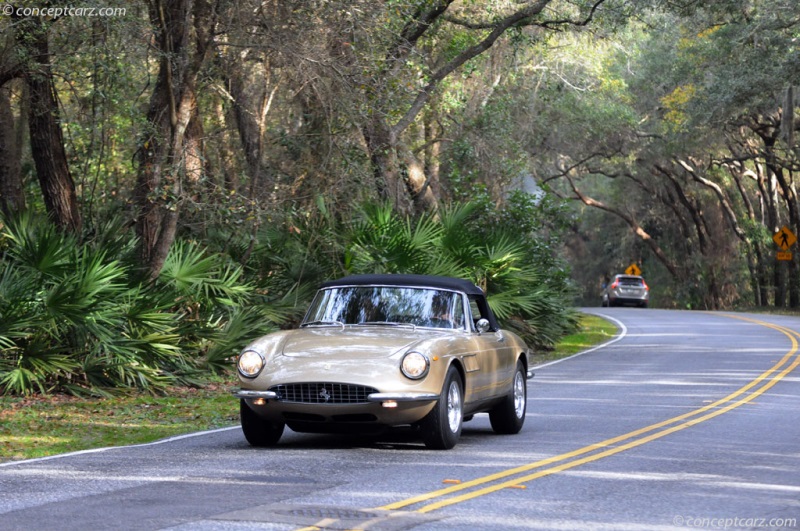
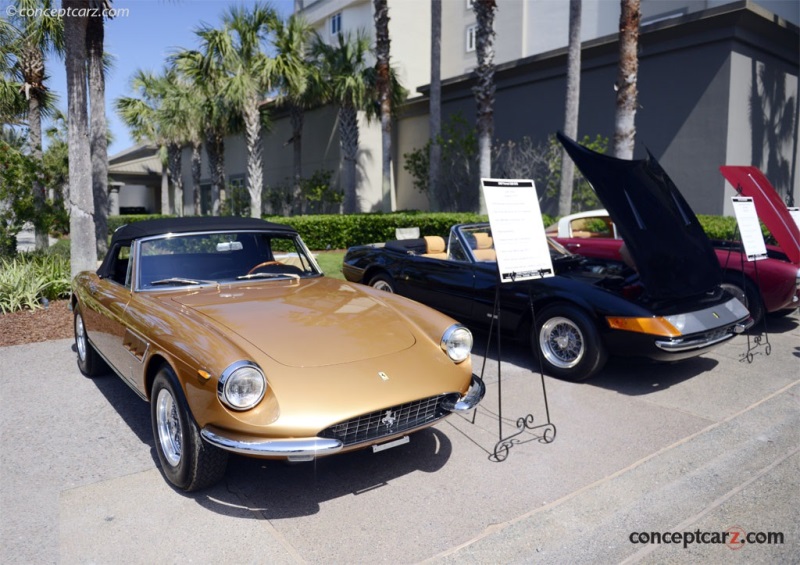
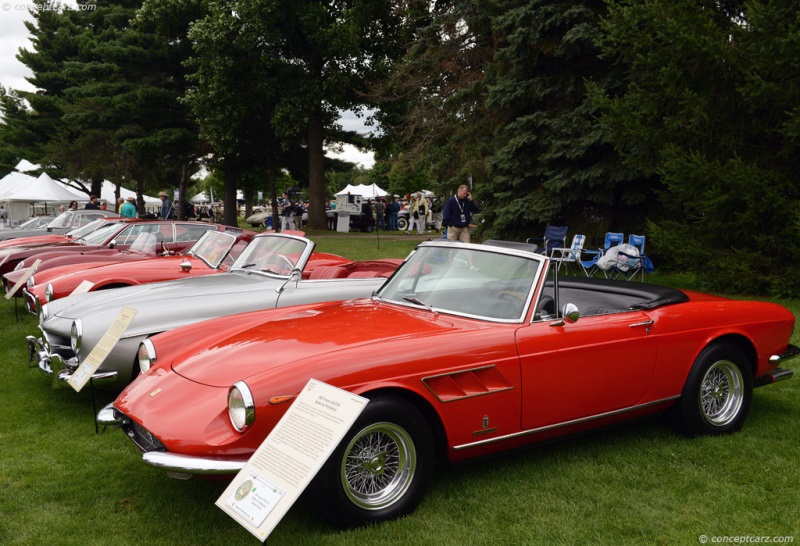
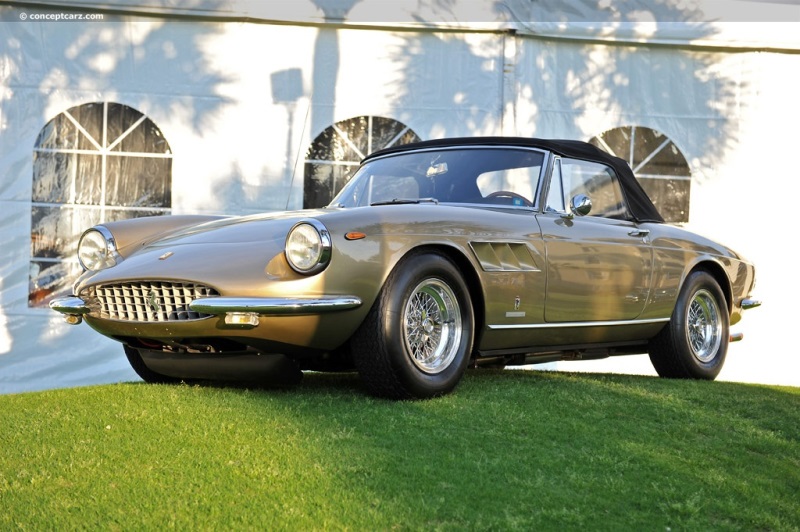
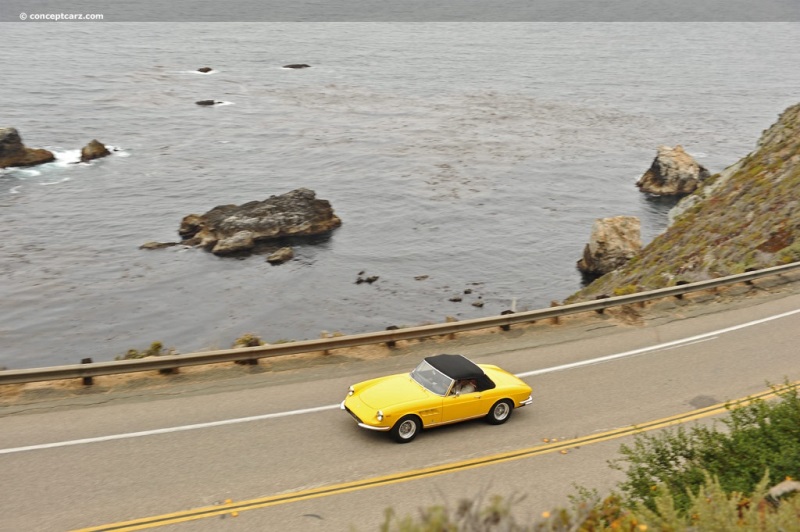
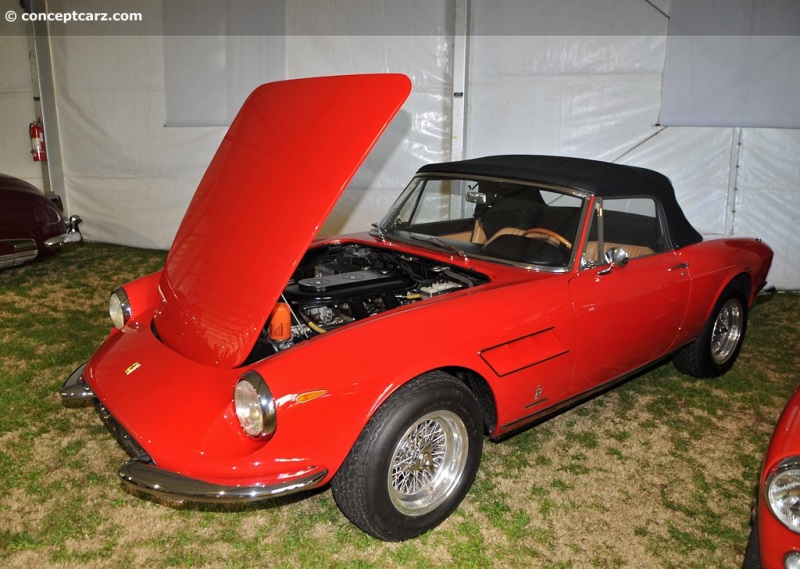
The Ferrari 330 GTC Berlinetta was introduced at the 1966 Geneva Auto Show, followed a short time later by the convertible GTS, introduced in October at the Paris Motor Show. Both were built on the same tubular chassis, which was similar to that of the 275 GTB/4. They all had a similar mechanical layout, with a fully-independent suspension, a rigid torque-tube driveshaft, four-wheel Girling disc brakes, a five-speed rear-mounted transaxle, and Campagnolo alloy wheels. Borrani wires were available as optional equipment. While the 330 GT 2+2 used an engine-mounted five-speed gearbox, the new 330 GTS and GTC featured a five-speed manual gearbox within a rear transaxle, resulting in excellent weight distribution and balance. The 330 GTC and GTS were powered by a four-liter, two-cam V12 engine offering 300 horsepower at 6,600 RPM. With its top speed of nearly 150 mph, it was one of the fastest open two-seaters of its era.Styling and coachwork were courtesy of Pininfarina and used the classic Ferrari nose treatment and Pininfarina's signature oval shallow egg-crate grille design. There were triple-louvered vents on the flanks of the front fenders, a tapered tail, and a spacious and luxuriously appointed interior. The bucket seats were trimmed in Connolly leather and standard features included the wood-veneer fascia carrying the full range of white on black Veglia instruments, air conditioning, electric windows, radio, and a three-spoke wood-rimmed steering wheel. The 330GTS was luxuriously equipped in the best Gran Turismo manner and just 99 (as many as 100) examples were built by the factory between 1966 and 1968, alongside 600 of the 330 GTC Berlinetta. It was capable of reaching speeds of nearly 150 mph with zero-to-sixty mph accomplished in about seven seconds and the quarter-mile dash requiring only about 15 seconds at just under 100 mph.
by Daniel Vaughan | May 2019
by Daniel Vaughan | May 2019
Related Reading : Ferrari 330 History
The Ferrari 330 series was produced from 1963 through 1968. They were replacements for the Ferrari 250 GT 22 with many of the series retaining the style and mechanical components of their predecessors. The front-engined, rear-wheel drive vehicle were powered by a derivative of the 400 Superamericas four-liter Colombo 12-cylinder engine. The first in the series was the 330 America, which....
Continue Reading >>
Continue Reading >>
Related Reading : Ferrari 330 History
The Ferrari 330 series belonged to a long line of Ferrari road cars with front-mounted V12 engines, cars that were members of a bloodline whose history is still being written by the 612 Scaglietti and 599 GTB Fiorano. The 330s name derived from the then-familiar Ferrari practice of naming cars for their per-cylinder displacement in cubic centimeters, indicating that the engines used to power this....
Continue Reading >>
Continue Reading >>
- 1967 Ferrari 330 GTS Menu
- Article
- Image gallery
- Valuation
- Specifications
- Profiles
- Production figures
Ferrari
Similar Vehicles
Similar Automakers
Similarly Sized Vehicles
from 1967
- Aston Martin DB6
BMW 2000
Chevrolet Corvette C2
Ferrari 330 GTC
Ferrari 330 GTC Speciale
Ferrari 365 GTC Prototipo
Ferrari Dino 206 Competizione
Gilbert Genie
Griffith 600
ISO Grifo GL
Similarly Priced Vehicles


1967 Ferrari 330 GTS Vehicle Profiles







Recent Vehicle Additions


Performance and Specification Comparison
Price Comparison
$14,195
$14,195
330 GTS Specification Comparison by Year
Year
Production
Wheelbase
Engine
Prices
Related Automotive News

Pebble Beach Auctions Online Catalogue Now Live; Historic, Unrestored 1962 Ferrari 250 GT SWB Berlinetta Unveiled as Headlining Car
Gooding %26 Company launches its entire online catalogue for the Pebble Beach Auctions, announces a remarkably original 1962 Ferrari 250 GT SWB Berlinetta along major Italian star cars.
Gooding %26 Company, the official auction house of the Pebble...

Platinum Award-Winning Ferrari 275 GTB and Aston Martin DB5 Convertible Lead Gooding & Company's Blue-Chip Icons for Upcoming Pebble Beach Auctions
The official auction house of the Pebble Beach Concours dElegance® will present a 1966 Ferrari 275 GTB, a 1965 Aston Martin DB5 Convertible, and a 1968 Lamborghini Miura P400 among other ultra-collectible 1960s sports cars.
Gooding...

1962 Ferrari 250 GT SWB California Spider to Lead Gooding & Company's Amelia Island Auctions Alongside Stable of the Finest Ferraris
The star car of the auctions will be a one-off 1962 Ferrari 250 GT SWB California Spider, joined by a 250 GT Tour de France Berlinetta, a 250 MM Vignale Spider, and other examples of Maranellos finest models.
Leading international auction...

Phenomenal Ferraris and Italian Thoroughbreds Offered at Gooding & Company's Pebble Beach Auctions
The auction house announced a stable of Italian star cars, including a 1950 Ferrari 166 MM Berlinetta Le Mans, a 1961 Ferrari 400 Superamerica Series I Coupe Aerodinamico, and a 1954 Ferrari 500 Mondial Series I Spider.
A stunning group of star...

Blue-Chip Classics and Legendary 50s and 60s Sports Cars Added to Gooding & Company's Amelia Island Auction
Gooding %26 Company is revving up for its upcoming Amelia Island Auction with a stellar lineup of offerings. The auction house today announced yet another spectacular group of consignments, consisting of iconic sports and racing cars from the 1950s and...