1961 250 GT ![]() |
1960 Ferrari 250 GT news, pictures, and information | ||
| Tweet | ||
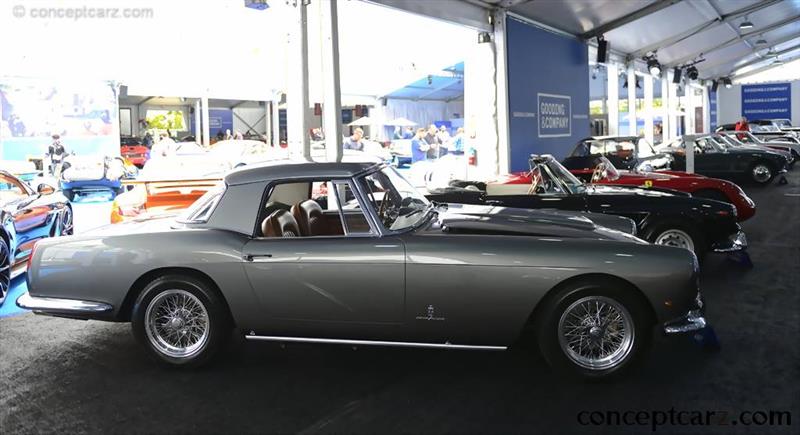
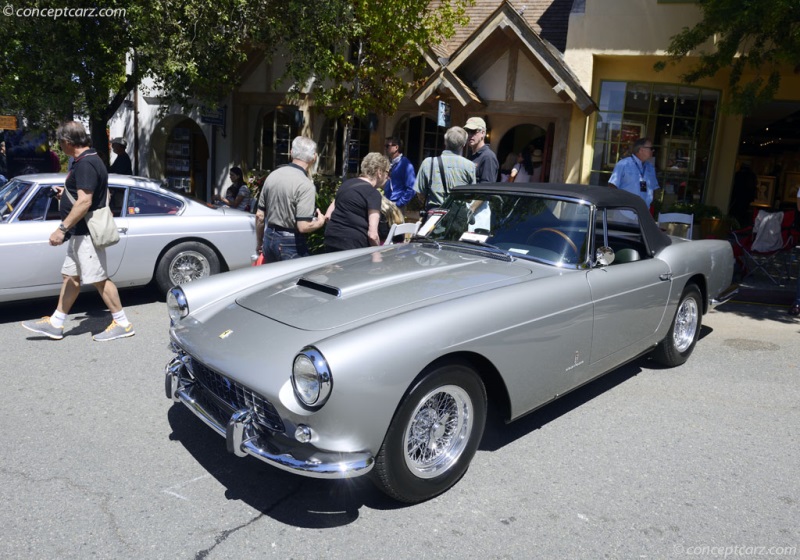
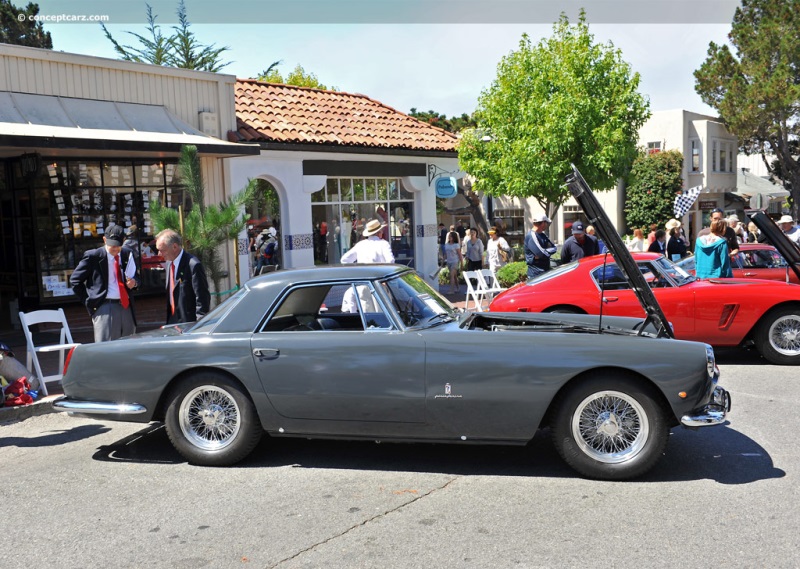
![]() | ![]() | ![]() | Cabriolet Designer: Pininfarina Chassis Num: 2039 GT |
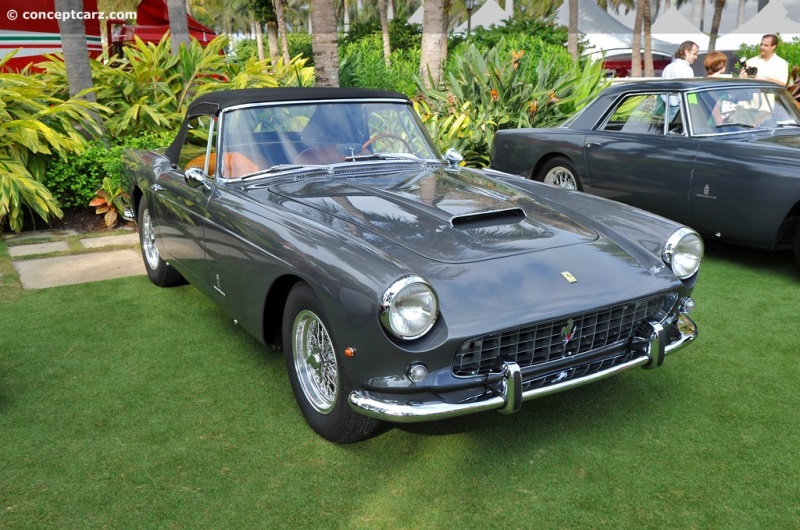
This example is number 58, and came off the assembly line in December of 1960. Originally delivered to Ferrari of California, the car had four owners prior to the acquisition by the current owner. Initial restoration work was accomplished in Costa Rica, and the current owner completed the restoration in Pennsylvania. Everything, including the 'Grigio Fumo' paint, is as the car was originally built.
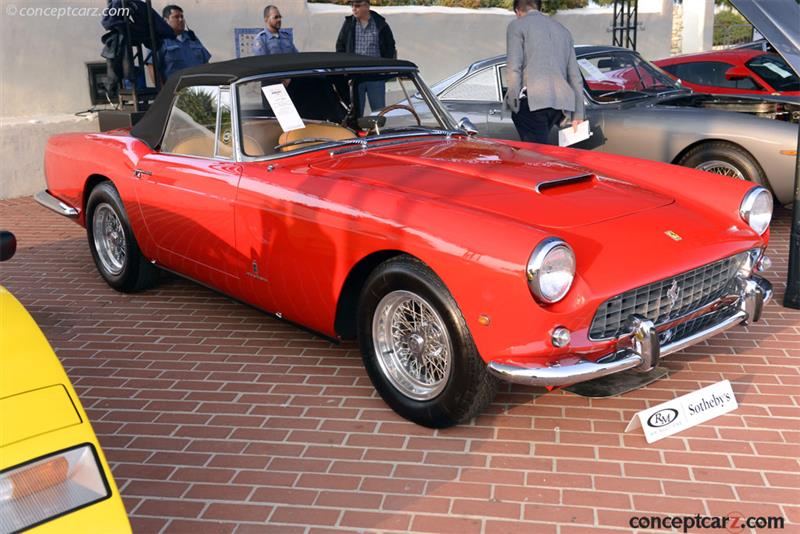
![]() | ![]() | ![]() | Cabriolet Designer: Pininfarina Chassis Num: 1803GT Engine Num: 1803GT |
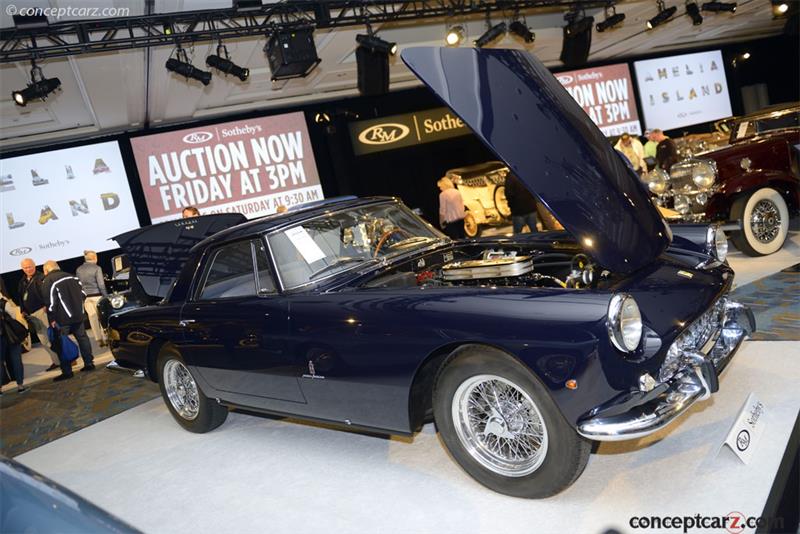
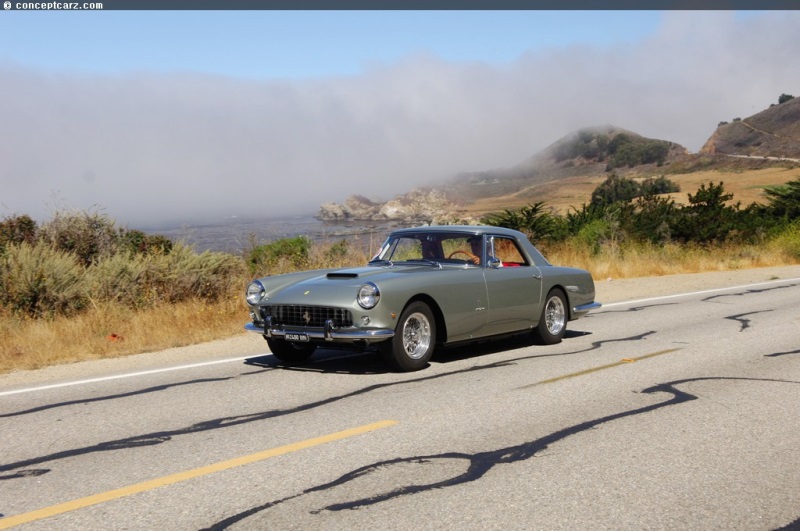
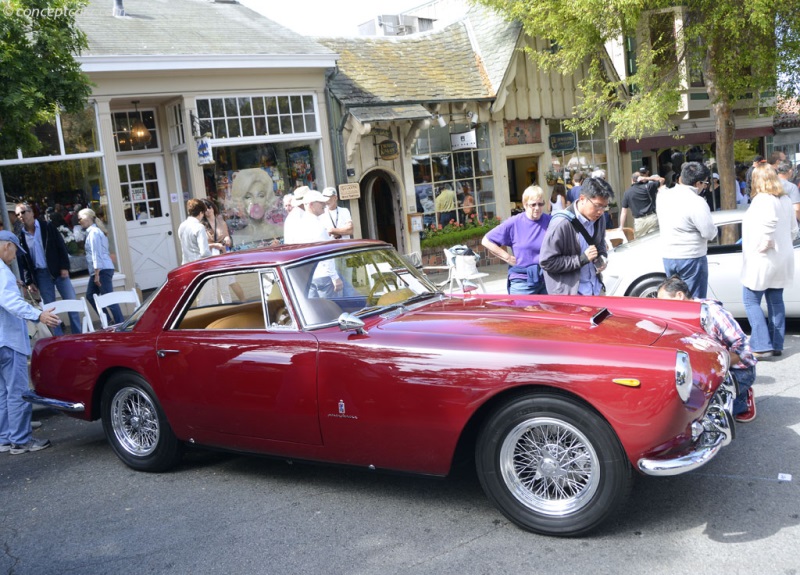
![]() | ![]() | ![]() | Coupe Chassis Num: 2017GT |
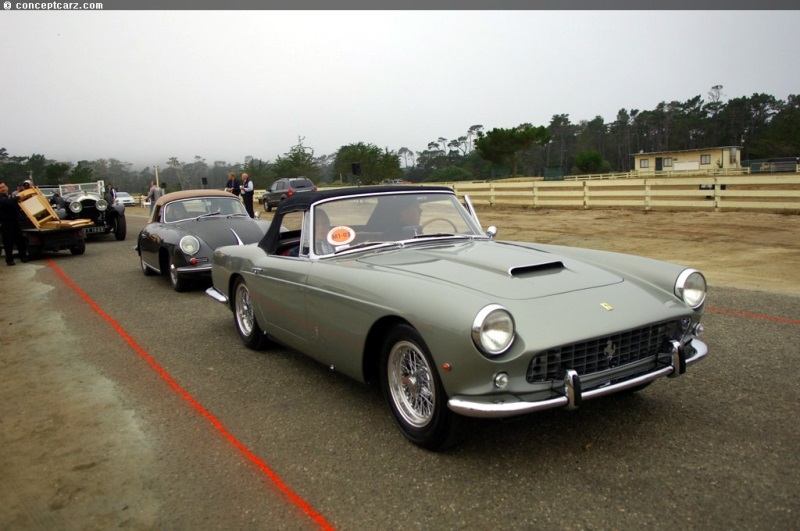
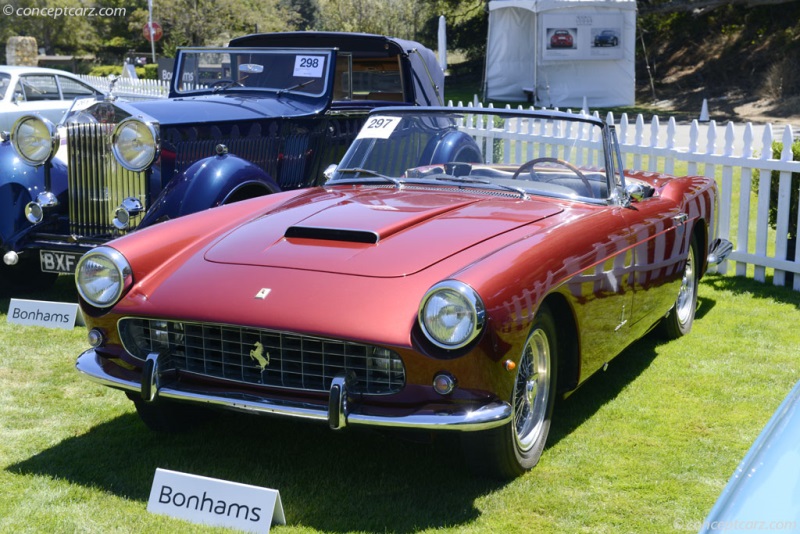
![]() | ![]() | ![]() | Cabriolet Designer: Pininfarina Chassis Num: 2143GT |
In the fall of 1959 Ferrari replaced its Series I 250 GT Cabriolets with this Series II model. The steel-bodied cars gained wide acceptance among those who wanted open air touring with a level of comfort above that offered by the Spyder California. As with all cars in this class, its engine is Ferrari's single overhead cam V12 displacing just under 3-liters.
![]() | ![]() | ![]() | Coupe |
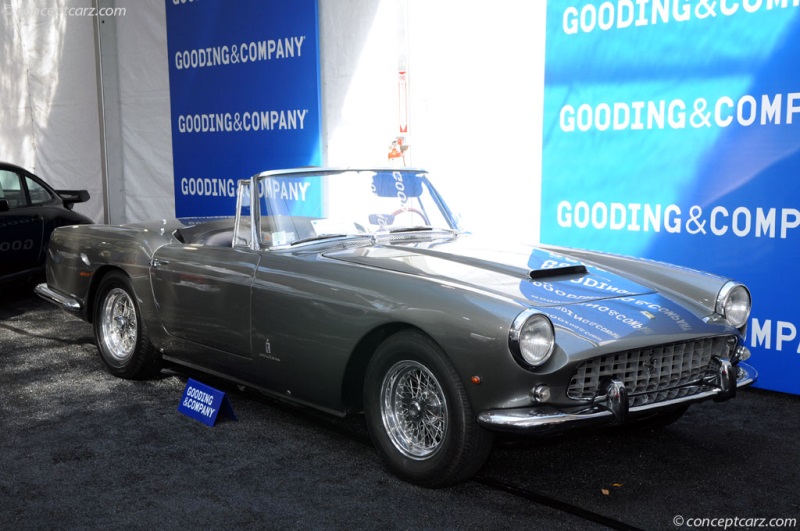
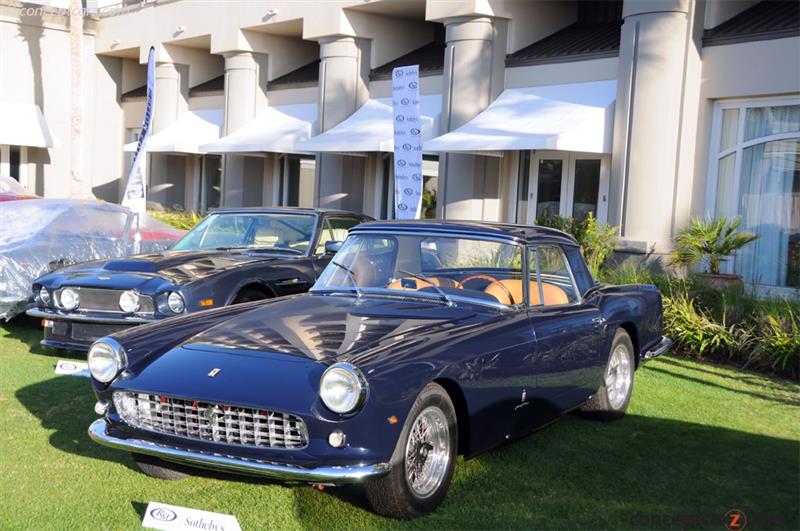
![]() | ![]() | ![]() | Cabriolet Designer: Pininfarina Chassis Num: 2079 GT Engine Num: 2079 GT |
The current owner bought this second-series model in 2003 and started a long and detailed restoration that required the complete dismantling of nearly every part. The previous owner had not used the car for over 30 years and rust had taken hold.
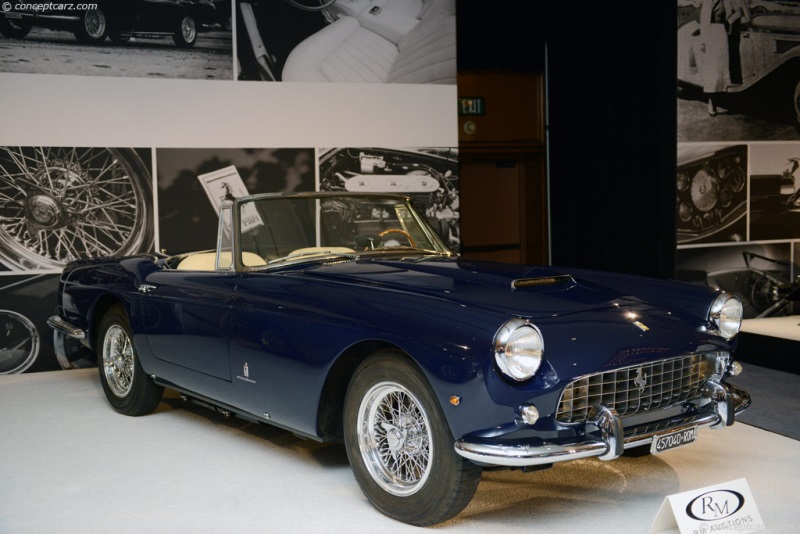
![]() | ![]() | ![]() | Cabriolet Designer: Pininfarina Chassis Num: 1805 GT Engine Num: 1805 GT |
| Sold for $715,000 at 2012 RM Auctions. | |||
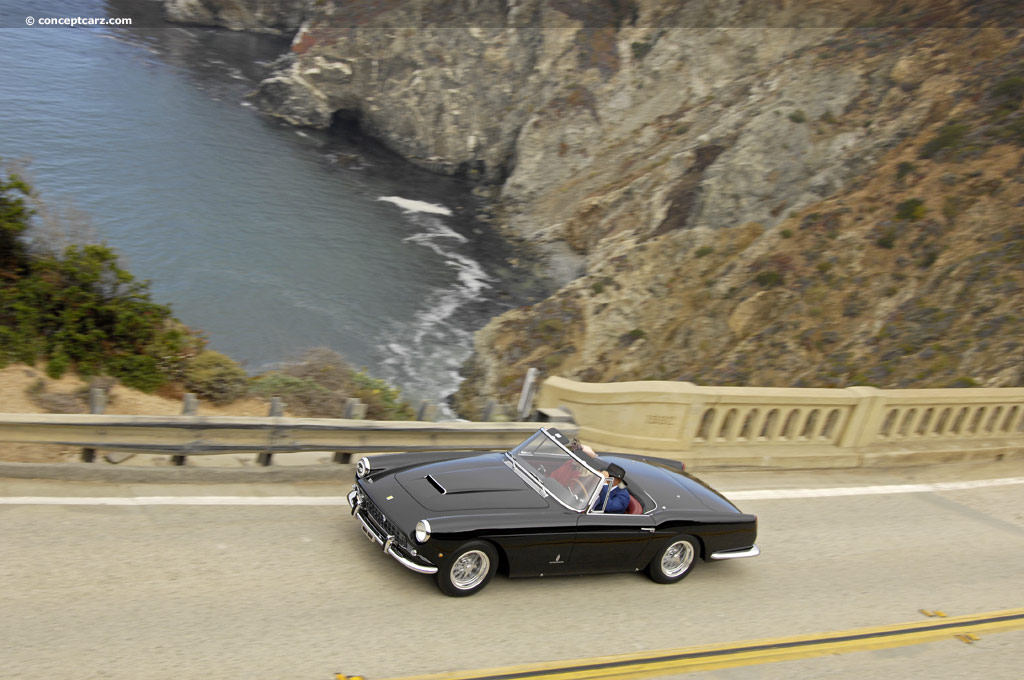
At the 1957 Geneva International Auto Salon, Ferrari introduced the 250 GT Cabriolet. It was conceived as Ferrari's semi-luxury touring car and was given better interior appointments and more soundproofing than the California Spyder. The chassis and drivetrain remained similar to Ferrari's racing cars, but the high standard of fit and finish, luxurious leather interior, many passenger amenities, and complete instrumentation, set it apart.
The new 250 GT Series II Cabriolet appeared one year after the 250 GT Coupe and replaced the low-production Series I Cabriolet. The Series II Cabriolet was the company's first commercially-successful, production-based convertible model ever offered by Ferrari.
Mechanically, both the 250 GT Cabriolet and the Coupe were considerably improved over the California Spyder. They had an updated 3.0-liter, Colombo-derived V-12 engine designated Tipo 128 F. The engine offered 240 bhp and was fitted with outside-plug cylinder heads and twin distributors, while an overdrive transmission was made available. The cars had a set of four-wheel disc brakes, while telescopic shock absorbers and 16-inch Borrani wire wheels were also included as standard equipment. The Ferrari could race to 60 mph in less than seven seconds, with a top speed of 140 mph.
This 250 GT PF Cabriolet Series II is chassis number 1805 GT and is the 19th example built out of 200. it was completed by Pinin Farina on April 23 of 1960 and delivered new shortly thereafter to Baron Emmanuel 'Toulo' De Graffenried's official Ferrari dealership, Italauto SA, located in Lausanne, Switzerland. It was then sold by Italauto SA to its first owner, a Mr. Rubois in Switzerland, and was later exported to the United States. From the U.S., it was sold in 1990 to Wolfgang von Schmieder, a German collector residing in Cologny, Switzerland. In the late-1990s, it was on display at the International Auto Museum in Geneva, Switzerland.
A restoration soon followed and was finished in 1999. At the time, it was repainted white, and fitted with a white leather interior. Ownership changed once more in 2002.
The car was shown at the Cincinnati Concours in Ohio in June of 2009. The car is currently finished in Grigio Scuro with a Magnolia leather interior. It has 62,243 miles from new. Recently, the car has been equipped with a rebuilt Borrani wire wheels with Pirelli tires, a new Ansa exhaust system, and a new brake servo and calipers.
The car has a four-speed manual gearbox with overdrive only on third and top gear. It is believed that at some point the motor may have been replaced, as the engine shows the internal number 446 F, which is from the 250 GT Coupe Pinin Farina Chassis 1935 GT.
In 2012, this car was offered for sale at RM Auction's Monterey, CA sale. It was estimated to sell for $600,000 - $700,000. As bidding came to a close, the car had been sold for the sum of $715,000, inclusive of buyer's premium.
By Daniel Vaughan | Nov 2012
Production of the 250 Series began in 1954 and continued on through the early part of the 1960's. There were numerous variations of the 250 and would ultimately become Ferrari's most successful line of vehicles to date. The 250 is also recognized as the first Ferrari to ever receive disc brakes. This did not take place until the end of the 1950's. Also, the 250 was the first four-seater.
Ferrari's were custom built cars. They were not mass-produced. Ferrari provided the engine and chassis while Italian coach builders provided the body. This meant the specifications varied. Engines also varied in horsepower rating, torque, and displacement. This was no different for the 250 GT which saw many different variations in body style and body types.
Ferrari built the road-going Ferrari's to fuel his passion for racing. Many of the vehicles he built for the road had a competition model. That is, a modified version of the road-going model. An example of this was the 1959 short-wheel base (SWB) Berlinetta (Berlinetta which means coupe) and given an aluminum body. It was debuted in October 1959 at the Paris Salon. GT cars were road-legal vehicles that could also be taken to the track and compete without the need for modifications. Although this was their purpose, Ferrari realized that many customers would not race their vehicle, but rather wanted the power and performance that sports cars offered. To comply, Ferrari built these cars to be powerful and luxurious. The vehicles could still be run on the track, mostly on requiring the adoption of stickers and complying with any safety requirements.
The 250 road-going vehicles mostly shared two wheelbase sizes, a 2400 mm and 2600 mm. The 2400 wheelbase were referred to as the SWB (Short wheel base) while the other was the LWB (long wheel base).
The base engine was a Colombo 60-degree, single-over-head cam, 'vee' type 12-cylinder, with aluminum alloy block and heads, and cast-iron cylinder liners. The displacement was 180 cubic inch (2953 cc). Horsepower production was around 220-260. The front suspension was independent with double wishbones and coil springs. The rear suspension was a live axle.
The first 250 introduced was the 250S and available in either berlinetta or spider configuration. Introduced in 1952, they were powered by a 3-liter Colombo engine producing about 230 horsepower.
At the 1953 Paris Motor Show, Ferrari introduced the 250 Europa and Export. These were the only models in the series that were powered by a Lampredi v-12 engine also seen in Formula 1. The 250 Export had a 2400 MM wheelbase, similar tot he 250 MM. The 250 Europa had a larger, 2800 mm wheelbase which allowed more interior room. During their short production lifespan, only 18 examples were produced. Pininfarina and Vignale were tasked with creating the coachwork.
In 1954 four specialty built 250 Monza were built for racing. They shared many similarities with the 750 Monza's, but were equipped with the 3-liter Colombo engine.
At the 1957 Geneva auto show, Ferrari displayed their 250 GT Cabriolet. Coachwork was courtesy of Pininfarina; the wheelbase was 2600 mm in size. In 1959 the second in the 250 GT Cabriolet series production began after only 36 examples being produced.
From 1957 through 1959 Ferrari produced the 250 GT Berlinetta 'Tour de France' (TdF). The name had been given for the 10-day automobile race. Originally the engine produced 240 horsepower but was later modified to 260 horsepower. Carrozzeria Scaglietti was responsible for creating the bodies based on Pinin Farina's design.
Scaglietti was responsible for constructing the 1957 250 GT California Spyder. These sat atop a long, 2600 mm chassis and aluminum was used throughout the body in efforts to reduce the overall weight. In total, around 45 examples were created before they were replaced by the SWB version in 1960.
There were 250 examples of the 250 GT Berlinetta SWB produced. Production began in 1959 and used the shortened, sportier wheelbase. Giotto Bizzarrini, Carlo Chiti, and Mauro Forghieri were responsible for the development. Some were built for racing while others were meant for daily transportation. Horsepower ranged from 240 to 280. Steel or aluminum bodies were used. The steel bodies were suited for the road-going vehicles, also known as Lusso. The racing trim vehicles were powerful and had low weight. They were vary competitive and are regarded as the most important GT racers of its time. In 1961 the SWB Berlinetta captured the GT class of the Constructor's Championship.
In 1960 a Scaglietti 250 GT Spyder California SWB was shown at the Geneva Motor Show. Built as a replacement for the LWB and based on the 250 GT SWB, around 55 examples were produced.
The Ferrari 250TR was produced from 1957 through 1958 during which only 19 examples were created. The 'pontoon' fender body was designed by Scaglietti and the power was supplied through a Colombo 12-cylinder engine mounted at a sixty-degree angle and outfitted with six Weber 38 DCN carburetors. Power was sent to the rear wheels via a four-speed manual gearbox. With 300 horsepower, the 800 kg vehicle was able to achieve a 168 mph top speed. From 1958 through 1961, the 250 TR was entered in 19 championship races where they emerged victorious ten times.
The 250 in 250 TR represented the unitary displacement while the TR was an acronym meaning Testa Rossa. Testa Rossa translates to 'red head' which referred to the color of the engine's cylinder head.
The 250 TR series was built to capture the world championship which was experience questionable times. During the 1955 24 Hours of Lemans a fatal accident occurred and the Commissione Sportiva Internazionale (CSI) began investigating ways to make the sport safer for the drivers and the spectators. Their efforts were escalated in 1967 when another fatal accident occurred at the 1957 Mille Miglia. The committee decided upon a displacement limit but they were in disagreement on the size; the proposed figures ranged from 3 to around 3.5 liters.
1958 was the introductory year for the new regulations, which had been announced during the later part of 1957. Ferrari had been building, testing, and racing the 250 GT which had performed well during the 1957 Mille Miglia. The Colombo V12 260 horsepower engine received a larger bore, camshaft, and other improvements resulting in a 3.1 liter displacement and 320 horsepower. Testing continued throughout the 1957 season in both body configuration and mechanical components.
Ferrari had anticipated the new engine size regulations and thus had been sufficiently prepared to capture the world championship. Due to the potential of negative publicity caused by the fatal accidents, other manufacturers, such as Aston Martin, Lotus, Cooper and Jaguar, were hesitant to continue racing. Ferrari believed their closest competitor would be the powerful and technologically advanced Maserati 450 S which featured a quad-cam eight-cylinder engine.
Ferrari quickly began capturing victories during the 1958 season. The 250 TR was a solid vehicle thanks to the preparation and testing. The steel tubular ladder frame was of traditional Ferrari construction; a DeDion rear axle was used on the works racers. Customer cars were outfitted with a live axle. Drum brakes were placed on all four corners of the car. The engine had been modified to comply with regulations and to fit in the engine bay. In reality, the vehicle was an outdated car having only the benefit of proper planning and proven technology. Most cars featured disc brakes which provided superior stopping power. The Colombo engine dated back to the beginning of Ferrari and was antiquated in comparison to the modern power-plants.
Nearing the close of the 1958 season, the competition began to rise. Aston Martin had a lethal combination, a 3 liter DBR1 racer and Stirling Moss as the driver. Even though the Aston Martins did score a victory at Nurburgring 1000 KM, Ferrari was able to capture the World Championship. The legendary Phil Hill and Olivier Gendebien easily capture a third victory for Ferrari at the grueling 24 Hours of Lemans. The 250 TR works cars were referred to as TR58, to distinguish them from the customer TRs.
For the 1959 season, the vehicles received slight modifications which made the vehicle lighter and more powerful. The big news was the use of Dunlop disc brakes. The engine received coil valve springs and the horsepower increased slightly to 306. A Colotti designed five speed gearbox replaced the four-speed unit. Pininfarina was tasked with designing a new body and the construction was handled by Fantuzzi. As a result of the improvements, the name was changed to TR59. At their inaugural race, the TR59 finished first and second. This streak did not last and at the end of the season, it was Aston Martin who emerged as the world champion. The TR59 was plagued with reliability issues mostly due to the gearbox. The vehicles were forced to retire early from races, including Le Mans.
For the 1960 season, the TR was modified slightly to comply with new regulations and to rectify the transmission issues. These vehicles are commonly referred to as the TR59/60. Aston Martin had withdrawn from the championship which left no factory opposition for Ferrari. Porsche and Maserati provided competition, especially at Targa Florio and the Nurburgring 1000 km where they scored victories. At Le Mans, Ferrari finished first and second and captured the word championship, beating Porsche by only four points.
For the 1961 season, Ferrari introduced the mid-engined 246 SP. The TRI61 was given a new spaceframe chassis and was able to capture victories at Sebring 12 Hours and Le Mans. With victories between the 246 SP and the TRI61, Ferrari once again captured the world championship.
The CSI implemented stricter rules for the 1962 season which meant the TR was unable to score points for the factory. It was still allowed to race for the overall victory.
By Daniel Vaughan | Feb 2007
For more information and related vehicles, click hereFerrari's were custom built cars. They were not mass-produced. Ferrari provided the engine and chassis while Italian coach builders provided the body. This meant the specifications varied. Engines also varied in horsepower rating, torque, and displacement. This was no different for the 250 GT which saw many different variations in body style and body types.
Ferrari built the road-going Ferrari's to fuel his passion for racing. Many of the vehicles he built for the road had a competition model. That is, a modified version of the road-going model. An example of this was the 1959 short-wheel base (SWB) Berlinetta (Berlinetta which means coupe) and given an aluminum body. It was debuted in October 1959 at the Paris Salon. GT cars were road-legal vehicles that could also be taken to the track and compete without the need for modifications. Although this was their purpose, Ferrari realized that many customers would not race their vehicle, but rather wanted the power and performance that sports cars offered. To comply, Ferrari built these cars to be powerful and luxurious. The vehicles could still be run on the track, mostly on requiring the adoption of stickers and complying with any safety requirements.
The 250 road-going vehicles mostly shared two wheelbase sizes, a 2400 mm and 2600 mm. The 2400 wheelbase were referred to as the SWB (Short wheel base) while the other was the LWB (long wheel base).
The base engine was a Colombo 60-degree, single-over-head cam, 'vee' type 12-cylinder, with aluminum alloy block and heads, and cast-iron cylinder liners. The displacement was 180 cubic inch (2953 cc). Horsepower production was around 220-260. The front suspension was independent with double wishbones and coil springs. The rear suspension was a live axle.
The first 250 introduced was the 250S and available in either berlinetta or spider configuration. Introduced in 1952, they were powered by a 3-liter Colombo engine producing about 230 horsepower.
At the 1953 Paris Motor Show, Ferrari introduced the 250 Europa and Export. These were the only models in the series that were powered by a Lampredi v-12 engine also seen in Formula 1. The 250 Export had a 2400 MM wheelbase, similar tot he 250 MM. The 250 Europa had a larger, 2800 mm wheelbase which allowed more interior room. During their short production lifespan, only 18 examples were produced. Pininfarina and Vignale were tasked with creating the coachwork.
In 1954 four specialty built 250 Monza were built for racing. They shared many similarities with the 750 Monza's, but were equipped with the 3-liter Colombo engine.
At the 1957 Geneva auto show, Ferrari displayed their 250 GT Cabriolet. Coachwork was courtesy of Pininfarina; the wheelbase was 2600 mm in size. In 1959 the second in the 250 GT Cabriolet series production began after only 36 examples being produced.
From 1957 through 1959 Ferrari produced the 250 GT Berlinetta 'Tour de France' (TdF). The name had been given for the 10-day automobile race. Originally the engine produced 240 horsepower but was later modified to 260 horsepower. Carrozzeria Scaglietti was responsible for creating the bodies based on Pinin Farina's design.
Scaglietti was responsible for constructing the 1957 250 GT California Spyder. These sat atop a long, 2600 mm chassis and aluminum was used throughout the body in efforts to reduce the overall weight. In total, around 45 examples were created before they were replaced by the SWB version in 1960.
There were 250 examples of the 250 GT Berlinetta SWB produced. Production began in 1959 and used the shortened, sportier wheelbase. Giotto Bizzarrini, Carlo Chiti, and Mauro Forghieri were responsible for the development. Some were built for racing while others were meant for daily transportation. Horsepower ranged from 240 to 280. Steel or aluminum bodies were used. The steel bodies were suited for the road-going vehicles, also known as Lusso. The racing trim vehicles were powerful and had low weight. They were vary competitive and are regarded as the most important GT racers of its time. In 1961 the SWB Berlinetta captured the GT class of the Constructor's Championship.
In 1960 a Scaglietti 250 GT Spyder California SWB was shown at the Geneva Motor Show. Built as a replacement for the LWB and based on the 250 GT SWB, around 55 examples were produced.
The Ferrari 250TR was produced from 1957 through 1958 during which only 19 examples were created. The 'pontoon' fender body was designed by Scaglietti and the power was supplied through a Colombo 12-cylinder engine mounted at a sixty-degree angle and outfitted with six Weber 38 DCN carburetors. Power was sent to the rear wheels via a four-speed manual gearbox. With 300 horsepower, the 800 kg vehicle was able to achieve a 168 mph top speed. From 1958 through 1961, the 250 TR was entered in 19 championship races where they emerged victorious ten times.
The 250 in 250 TR represented the unitary displacement while the TR was an acronym meaning Testa Rossa. Testa Rossa translates to 'red head' which referred to the color of the engine's cylinder head.
The 250 TR series was built to capture the world championship which was experience questionable times. During the 1955 24 Hours of Lemans a fatal accident occurred and the Commissione Sportiva Internazionale (CSI) began investigating ways to make the sport safer for the drivers and the spectators. Their efforts were escalated in 1967 when another fatal accident occurred at the 1957 Mille Miglia. The committee decided upon a displacement limit but they were in disagreement on the size; the proposed figures ranged from 3 to around 3.5 liters.
1958 was the introductory year for the new regulations, which had been announced during the later part of 1957. Ferrari had been building, testing, and racing the 250 GT which had performed well during the 1957 Mille Miglia. The Colombo V12 260 horsepower engine received a larger bore, camshaft, and other improvements resulting in a 3.1 liter displacement and 320 horsepower. Testing continued throughout the 1957 season in both body configuration and mechanical components.
Ferrari had anticipated the new engine size regulations and thus had been sufficiently prepared to capture the world championship. Due to the potential of negative publicity caused by the fatal accidents, other manufacturers, such as Aston Martin, Lotus, Cooper and Jaguar, were hesitant to continue racing. Ferrari believed their closest competitor would be the powerful and technologically advanced Maserati 450 S which featured a quad-cam eight-cylinder engine.
Ferrari quickly began capturing victories during the 1958 season. The 250 TR was a solid vehicle thanks to the preparation and testing. The steel tubular ladder frame was of traditional Ferrari construction; a DeDion rear axle was used on the works racers. Customer cars were outfitted with a live axle. Drum brakes were placed on all four corners of the car. The engine had been modified to comply with regulations and to fit in the engine bay. In reality, the vehicle was an outdated car having only the benefit of proper planning and proven technology. Most cars featured disc brakes which provided superior stopping power. The Colombo engine dated back to the beginning of Ferrari and was antiquated in comparison to the modern power-plants.
Nearing the close of the 1958 season, the competition began to rise. Aston Martin had a lethal combination, a 3 liter DBR1 racer and Stirling Moss as the driver. Even though the Aston Martins did score a victory at Nurburgring 1000 KM, Ferrari was able to capture the World Championship. The legendary Phil Hill and Olivier Gendebien easily capture a third victory for Ferrari at the grueling 24 Hours of Lemans. The 250 TR works cars were referred to as TR58, to distinguish them from the customer TRs.
For the 1959 season, the vehicles received slight modifications which made the vehicle lighter and more powerful. The big news was the use of Dunlop disc brakes. The engine received coil valve springs and the horsepower increased slightly to 306. A Colotti designed five speed gearbox replaced the four-speed unit. Pininfarina was tasked with designing a new body and the construction was handled by Fantuzzi. As a result of the improvements, the name was changed to TR59. At their inaugural race, the TR59 finished first and second. This streak did not last and at the end of the season, it was Aston Martin who emerged as the world champion. The TR59 was plagued with reliability issues mostly due to the gearbox. The vehicles were forced to retire early from races, including Le Mans.
For the 1960 season, the TR was modified slightly to comply with new regulations and to rectify the transmission issues. These vehicles are commonly referred to as the TR59/60. Aston Martin had withdrawn from the championship which left no factory opposition for Ferrari. Porsche and Maserati provided competition, especially at Targa Florio and the Nurburgring 1000 km where they scored victories. At Le Mans, Ferrari finished first and second and captured the word championship, beating Porsche by only four points.
For the 1961 season, Ferrari introduced the mid-engined 246 SP. The TRI61 was given a new spaceframe chassis and was able to capture victories at Sebring 12 Hours and Le Mans. With victories between the 246 SP and the TRI61, Ferrari once again captured the world championship.
The CSI implemented stricter rules for the 1962 season which meant the TR was unable to score points for the factory. It was still allowed to race for the overall victory.
By Daniel Vaughan | Feb 2007
| Italian Racing Classics Lead Gooding & Company's 10th Anniversary | |
![]() | SANTA MONICA, Calif. (June 4, 2013) – Gooding & Company, the official auction house of the Pebble Beach Concours d'Elegance acclaimed for selling the world's most significant and valuable collector cars, will be hosting the 10th Anniversary sale of the Pebble Beach Auctions on August 17 and 18. This year Gooding & Company offers an early preview of some of the most highly sought after and rapidly amassing value collectible – the distinguished Italian race car. Auction highlights include a...[Read more...] |
| Bonhams to sell the Ferrari that was John Lennon's first car | |
![]() | The Ferrari personally selected by Beatles singer/songwriter John Lennon as his first car is the latest important motor car to join the line-up for the Bonhams auction at the Goodwood Festival of Speed in Chichester, UK, on Friday 12th July. In February 1965 The Beatles recorded Ticket to Ride – a song that would become one of their biggest hits, topping both the UK and US singles charts. By happy coincidence, that same month, the news that Lennon had passed his driving test made headlines ac...[Read more...] |
| Kia Racing Eyes Pirelli World Challenge Gts Points Lead Heading Into Rounds Six And Seven At Detroit Belle Isle | |
| Driver of the No. 38 Optima turbo, Mark Wilkins, Currently Third in Championship Standings after Podium Finish at Circuit of the Americas ◾Nic Jönsson, No. 36, currently ninth in Championship standings, looks to bounce back after promising run in Austin was cut short by late-race incident ◾Kia Racing returns to Detroit's Belle Isle after making history in 2012, becoming the first Korean manufacturer to race on the historic island road course Irvine, Calif., May 30, 2013 – Kia Raci...[Read more...] | |
| Final Countdown Underway To South Florida's Premier Collector Car Auction | |
![]() | • Auctions America kicks off its 2013 auction season, March 22-24 with its highly anticipated Fort Lauderdale Collector Car Auction • Celebrating its 11th year, the multi-day auction features more than 550 quality collector cars • Latest feature attractions include an outstanding 1963 Shelby Cobra and a 1974 Ferrari Dino 246 GTS • Digital catalog now available for download at auctionsamerica.com AUBURN, Indiana (February 27, 2013) – With the final countdown underway to its highly an...[Read more...] |
| RICHARD PETTY DEDICATES MUSCLE CARS FOREVER STAMPS | |
![]() | Raw power gets a stamp of its own today as seven-time NASCAR National Champion Richard Petty helps dedicate the America on the Move: Muscle Cars Forever stamps. Petty, his son Kyle and Postmaster General Patrick Donahoe will dedicate the limited-edition stamps at the Daytona International Speedway where 'The King' won a record seven Daytona 500 Championships. Typically equipped with big, powerful engines, these high-performance vehicles began roaring across America in the 1960s. The limite...[Read more...] |
1960
Ferrari
models |
| Ferrari 246 P F1 |
| Ferrari 250 GT California |
| Ferrari 250 GT Speciale |
| Ferrari 250 GT SWB |
| Ferrari 250 GTE |
| Ferrari 400 Superamerica |
| Similar Automakers | |
| Aston Martin | Bentley |
| Bugatti | Devon |
| GTA | Koenigsegg |
| Lamborghini | Lotus |
| Maserati | Maybach |
| McLaren | Porsche |
| Rolls-Royce | Spyker |
| Tesla | |
| Similarly Sized Vehicles from 1960 |
| Chevrolet Corvair Series |
| Ferrari 250 GT California |
| Ferrari 250 GTE |
| Jaguar MK II |
| Jaguar XK-150 |
| Lancia Flaminia |
| Studebaker Lark Regal VIII |
| Ferrari: 1950-1960 |
| Similar Automakers |
| Other models by Ferrari |
1961 250 GT ![]() |


1960