1912 Cadillac Model 30
1912 Cadillac Model 30 Navigation
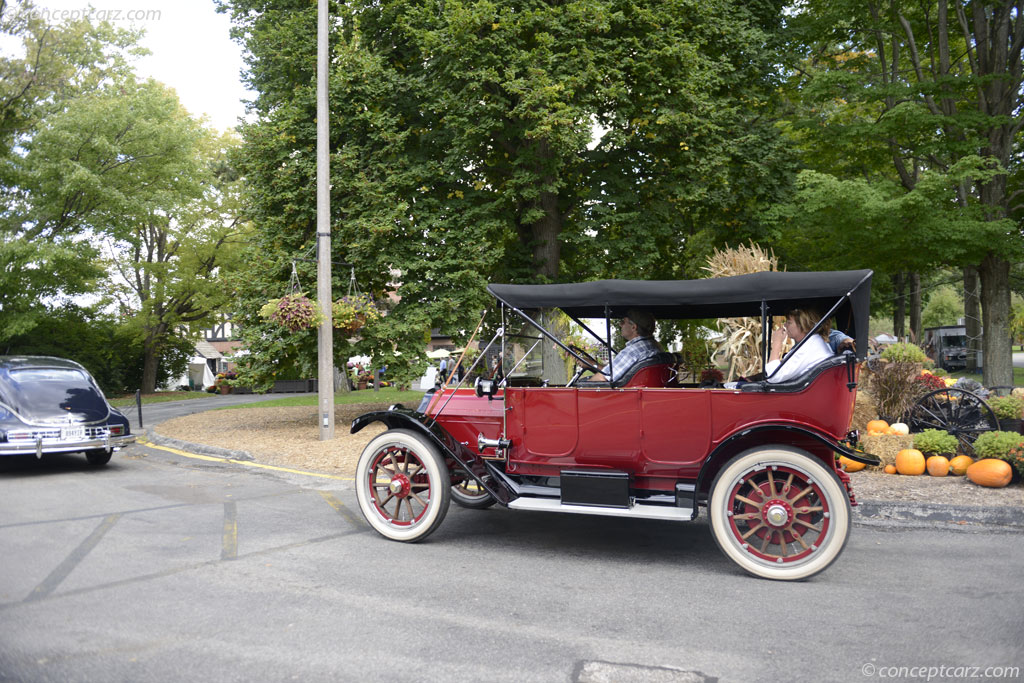
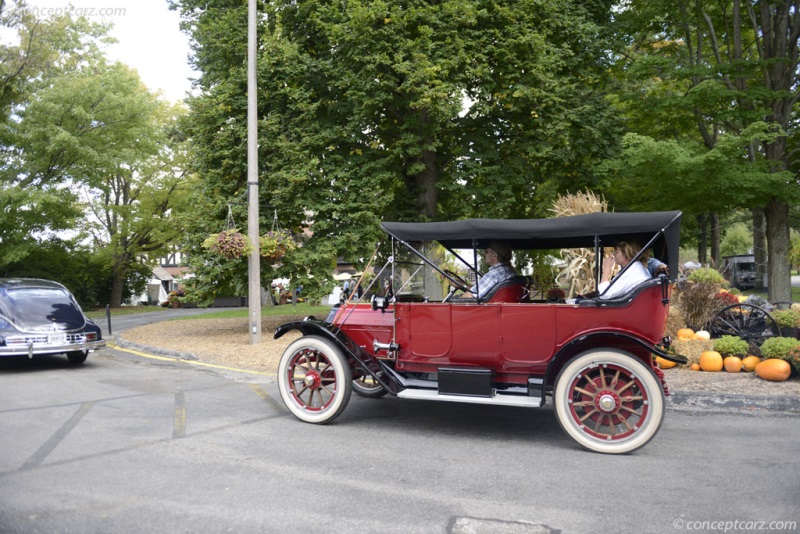
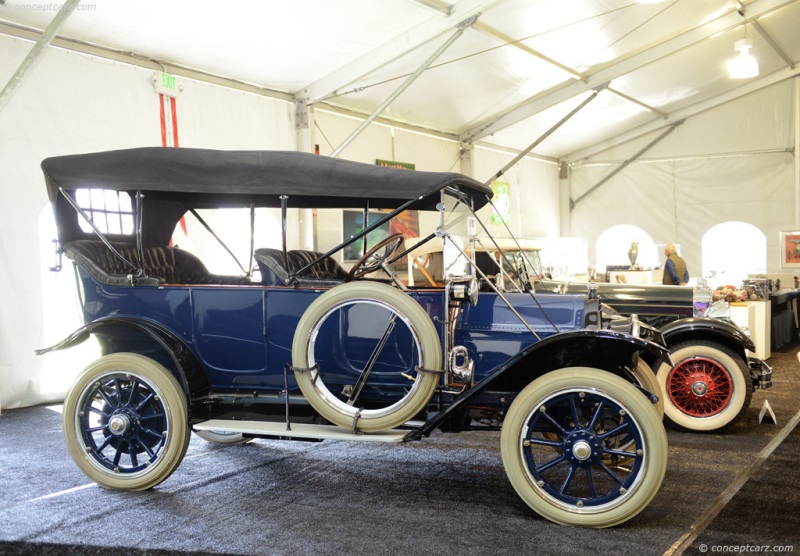
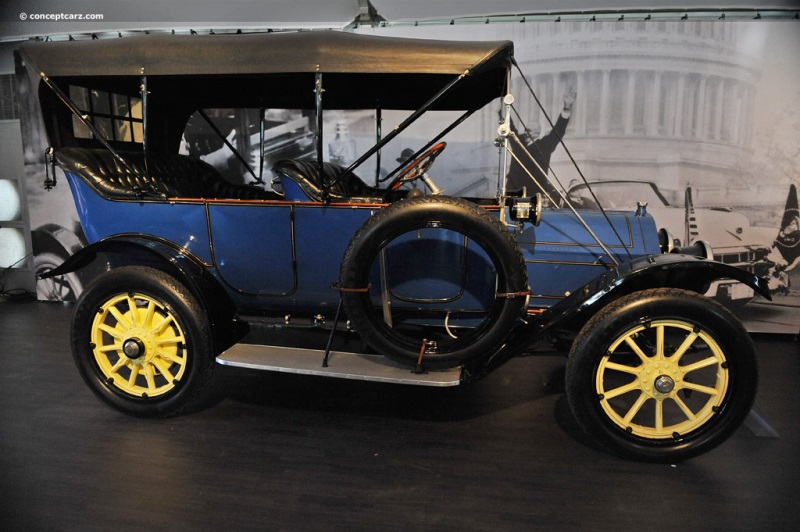
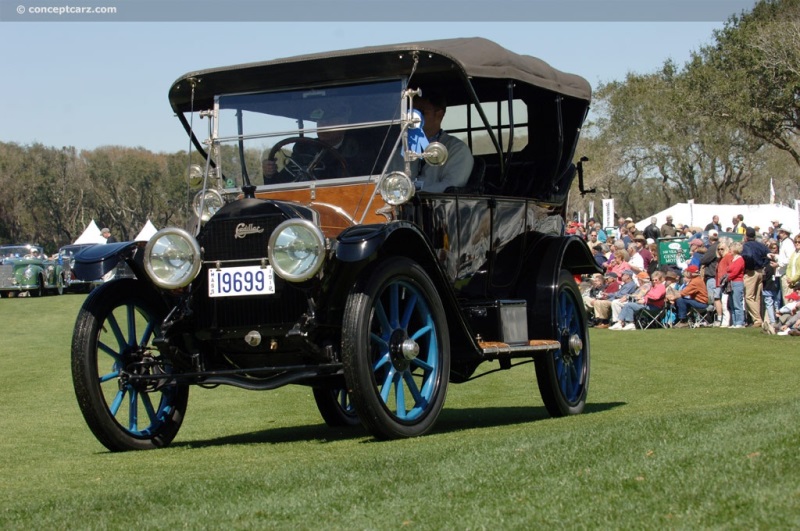
1908 was a rather monumental year for Cadillac, as it had won the Dewar Trophy (the first-ever for an American car), adopted the famous 'Standard of the World' slogan, and was acquired by General Motors.
The Model 30 became the sole model within the Cadillac line for 1909 and was named for its horsepower rating. It was a refined version of the 1907 and 1908 Model G with a longer wheelbase and offered only in open-body styles. Priced at approximately two-thirds the price of the G, the new Model 30 sold nearly six times as many cars as all 1908 Cadillacs combined.
Available body styles included a tourer, demi-tonneau, and a roadster. The demi-tonneau had a detachable tonneau that could be converted to a runabout, and along with the roadster, had a sweeping cowl that presaged 'torpedo' styling. When the optional windshield was ordered, it was affixed to a wood dashboard fitted over the cowl. Closed bodies returned to the lineup in 1910, including a coupe and a limousine, and the 1911 model year brought a longer wheelbase and the last use of the 'Model 30' name, although the cars remained much the same through 1914.
The four-cylinder engine had an L-head design, cast-iron cylinders, five main bearings, a float feed carburetor built by Cadillac, and was backed by a three-speed selective sliding gear transmission with a leather-faced cone clutch. Stopping power was by mechanical brakes on two wheels with 10 and 12-spoke wood artillery wheels with quick detachable rims at all four corners.
Cadillac produced 5,903 vehicles in 1909, 8,008 the following year, and 10,019 in 1911. By 1912, body styles included a five-passenger touring, roadster, and phaeton priced at $1,800, a $1,900 torpedo, a coupe at $2,250, and a limousine at $3,250. The wheelbase measured 116-inches, the tires measured 36 x 4.5 (the following year, the tires measured 28-inches), and the 286.3 CID four-cylinder engine had 40 plus horsepower. Optional equipment included a clock, seat covers, trunk rack, electric horn, power tire pump, handy lamp, mohair tops, and a windshield.
The big news for 1912 was electric starting and lighting using a Delco system, developed by engineer Charles Kettering. This was not the first electric starter but was much simpler, smaller, and more practical than previous efforts. Mr. Kettering had worked at the National Cash Register Company, and he understood that an electric motor could be severely overloaded, provided that it was used only intermittently. Cadillac's system for 1912 used four six-volt batteries connected in series for 24-volt starting, while lighting and accessories ran at six volts. With the electrical system in place, Cadillac did away with gas- and oil-fueled lighting completely.
by Daniel Vaughan | Dec 2020
The Model 30 became the sole model within the Cadillac line for 1909 and was named for its horsepower rating. It was a refined version of the 1907 and 1908 Model G with a longer wheelbase and offered only in open-body styles. Priced at approximately two-thirds the price of the G, the new Model 30 sold nearly six times as many cars as all 1908 Cadillacs combined.
Available body styles included a tourer, demi-tonneau, and a roadster. The demi-tonneau had a detachable tonneau that could be converted to a runabout, and along with the roadster, had a sweeping cowl that presaged 'torpedo' styling. When the optional windshield was ordered, it was affixed to a wood dashboard fitted over the cowl. Closed bodies returned to the lineup in 1910, including a coupe and a limousine, and the 1911 model year brought a longer wheelbase and the last use of the 'Model 30' name, although the cars remained much the same through 1914.
The four-cylinder engine had an L-head design, cast-iron cylinders, five main bearings, a float feed carburetor built by Cadillac, and was backed by a three-speed selective sliding gear transmission with a leather-faced cone clutch. Stopping power was by mechanical brakes on two wheels with 10 and 12-spoke wood artillery wheels with quick detachable rims at all four corners.
Cadillac produced 5,903 vehicles in 1909, 8,008 the following year, and 10,019 in 1911. By 1912, body styles included a five-passenger touring, roadster, and phaeton priced at $1,800, a $1,900 torpedo, a coupe at $2,250, and a limousine at $3,250. The wheelbase measured 116-inches, the tires measured 36 x 4.5 (the following year, the tires measured 28-inches), and the 286.3 CID four-cylinder engine had 40 plus horsepower. Optional equipment included a clock, seat covers, trunk rack, electric horn, power tire pump, handy lamp, mohair tops, and a windshield.
The big news for 1912 was electric starting and lighting using a Delco system, developed by engineer Charles Kettering. This was not the first electric starter but was much simpler, smaller, and more practical than previous efforts. Mr. Kettering had worked at the National Cash Register Company, and he understood that an electric motor could be severely overloaded, provided that it was used only intermittently. Cadillac's system for 1912 used four six-volt batteries connected in series for 24-volt starting, while lighting and accessories ran at six volts. With the electrical system in place, Cadillac did away with gas- and oil-fueled lighting completely.
by Daniel Vaughan | Dec 2020
Related Reading : Cadillac Model 30 History
The Cadillac Model 30 was introduced in 1908 and remained in production until September of 1914. When first introduced, the Model Thirty sold for %241400 and available as a three-passenger Roadster, 2-door Demi-Tonneau with seating for four, or a two-door, five passenger Tourer. The wheelbase was 106-inches and powered by a 226.2 cubic-inch engine with five main bearings. There were three forward....
Continue Reading >>
Continue Reading >>
Related Reading : Cadillac Model 30 History
Cadillacs first vehicles were single-cylinder vehicles that offered reasonable power and durability. The single-cylinder engine would stay in production for six years. The third year of Cadillac production, a four-cylinder engine was introduced offering slightly more horsepower allowing for larger and heavier bodies to be fitted on the chassis. In 1905 the Model D featured seating for five and....
Continue Reading >>
Continue Reading >>
- 1912 Cadillac Model 30 Menu
- Article
- Image gallery
- Valuation
- Specifications
- Profiles
- Accessories
Cadillac
Similar Automakers
Similarly Priced Vehicles
- Packard Model Eighteen ($3,200-$4,600)
- Rauch and Lang Electric ($2,550-$3,800)
- Standard Electric Model Electrique ($1,850-$1,885)
- Abbot-Detroit Model 44 ($2,000-$2,000)
- Baker Electric ($2,700-$2,700)
- Premier Model 4-40 ($3,000-$4,700)
- Franklin Model G ($2,000-$2,000)
- Chalmers Model 9 ($1,500-$2,000)
- National Speed Car ($2,750-$2,750)
- Hudson Model 33 ($1,620-$2,755)
Average Auction Sale: $56,400


1912 Cadillac Model 30 Vehicle Profiles

Recent Vehicle Additions


Performance and Specification Comparison
Price Comparison
Model 30 Specification Comparison by Year
Year
Production
Wheelbase
Engine
Prices
Related Automotive News

STYLISH KIA NIRO HYBRID CROSSOVER ON SALE FROM JUST £21,295
Kias first dedicated hybrid and first ever hybrid in the UK
Low-cost, high-efficiency motoring in a crossover-style package
Built on an all-new platform and featuring an all-new powertrain
Fuel economy of up to 74.3mpg with CO2 emissions from 88...

BMW MODEL DEBUTS AND UPGRADES FOR SUMMER 2016
New 340hp BMW M140i and BMW 240i M Performance models top BMW 1 and 2 Series ranges.
BMW 1 Series and BMW 2 Series now benefit from more powerful, efficient engines.
New BMW iPerformance range launched, including new 7 Series PHEV models with up t...

FRANKFURT MOTOR SHOW 2015: DS AUTOMOBILES ON THE OFFENSIVE WITH THREE WORLD FIRSTS
With its DS 4 Crossback Concept, New DS 4 %26 DS 4 Crossback and the DSV-01 Formula E car, DS Automobiles is on the offensive at the 2015 Frankfurt Motor Show. The DS stand represents a product and technology offensive, with new models and an expanded...

ONE-OF-A-KIND BMW I8 CONCOURS D'ELEGANCE EDITION TO BE AUCTIONED DURING PEBBLE BEACH CONCOURS D'ELEGANCE WEEKEND
BMW i8 Concours dElegance Edition to be sold at Pebble Beach Auctions presented by Gooding %26 Company with proceeds benefitting the Pebble Beach Company Foundation and the Pebble Beach Concours dElegance
Woodcliff Lake, N.J. – July 25, 2014…...

BMW X4 SPORTS ACTIVITY COUPE AND M4 CONVERTIBLE MAKE WORLD DEBUT AT 2014 NEW YORK INTERNATIONAL AUTO SHOW
New BMW 4 Series Gran Coupe and BMW ALPINA B6 xDrive Gran Coupe to make North American debuts
Updated BMW X3 Sports Activity Vehicle also makes North American debut including first BMW Advanced Diesel X3 model for the US
BMW Concept X5 eDrive show...