1965 Ferrari 275 GTB
1965 Ferrari 275 GTB Navigation
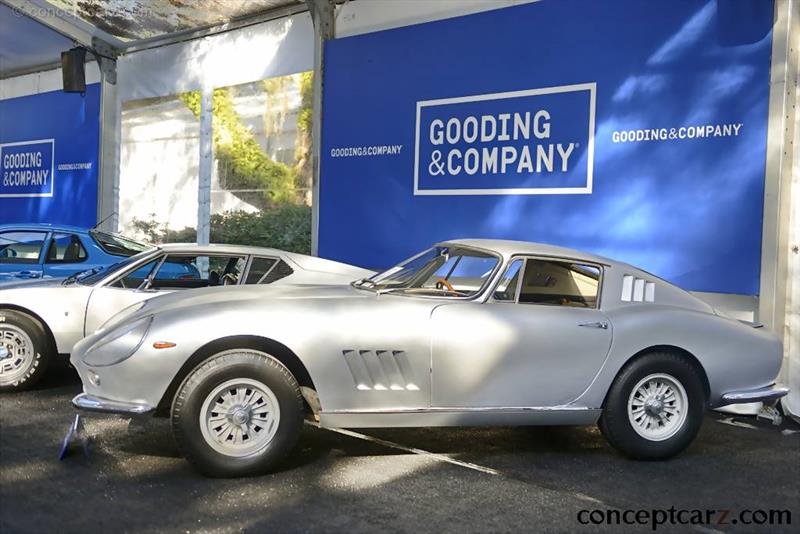
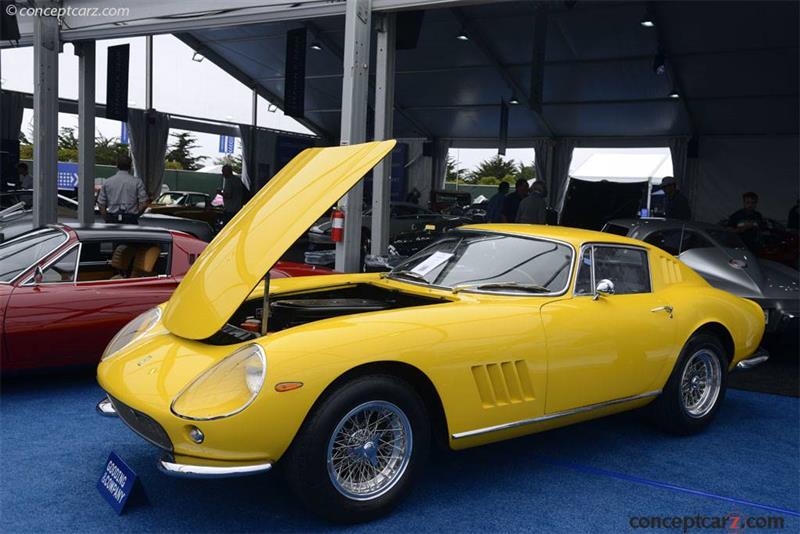
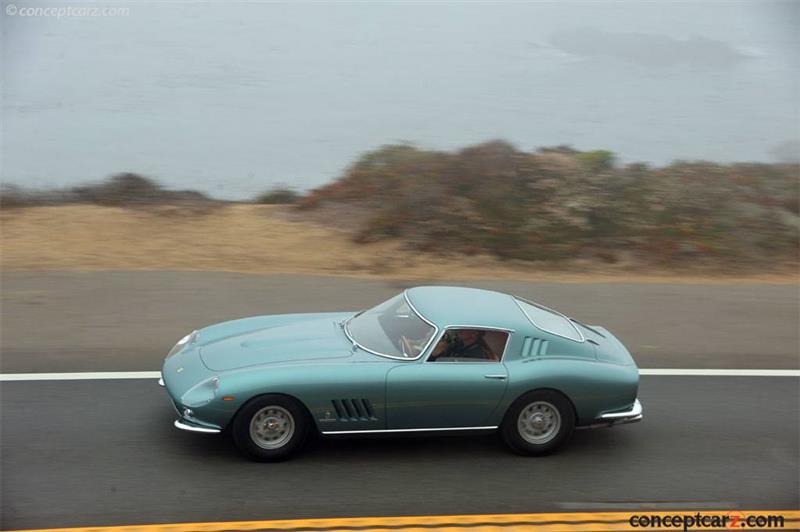
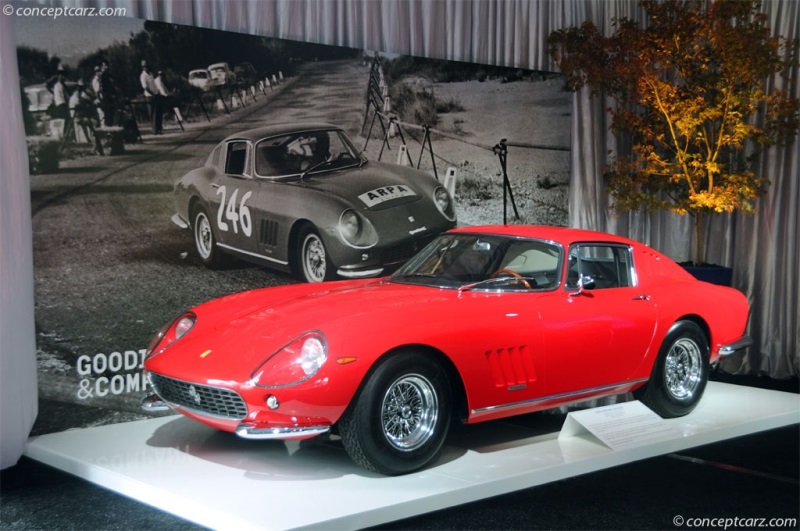
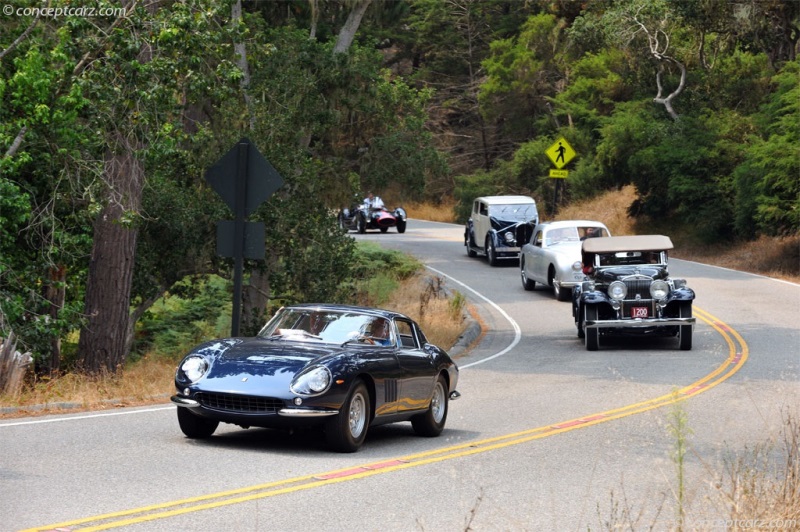
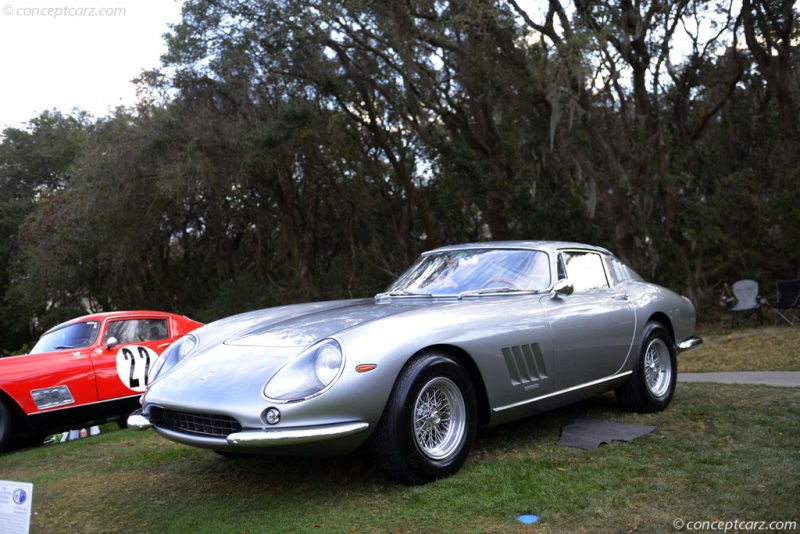
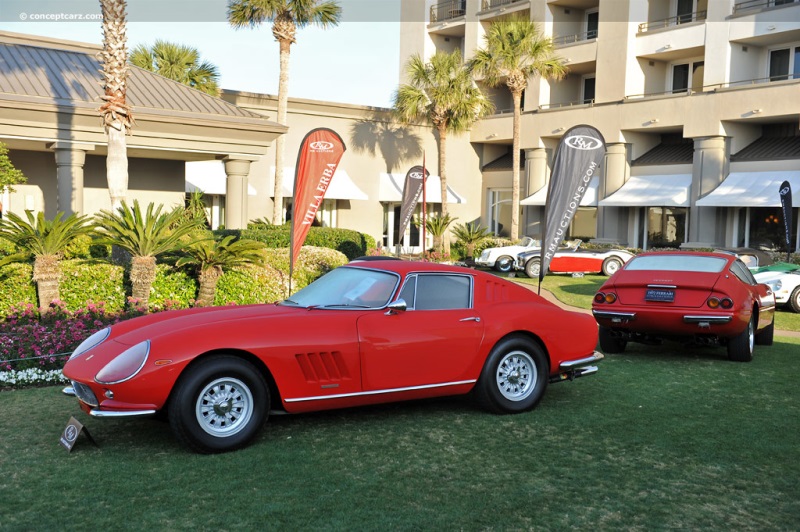
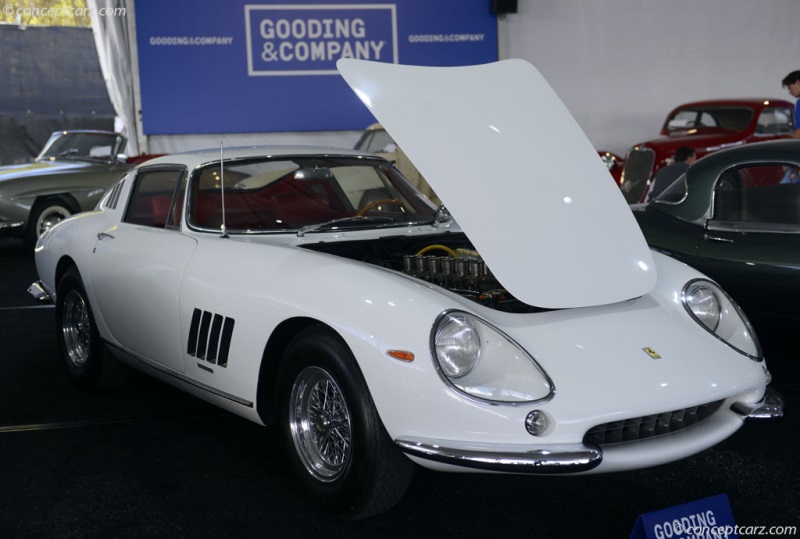
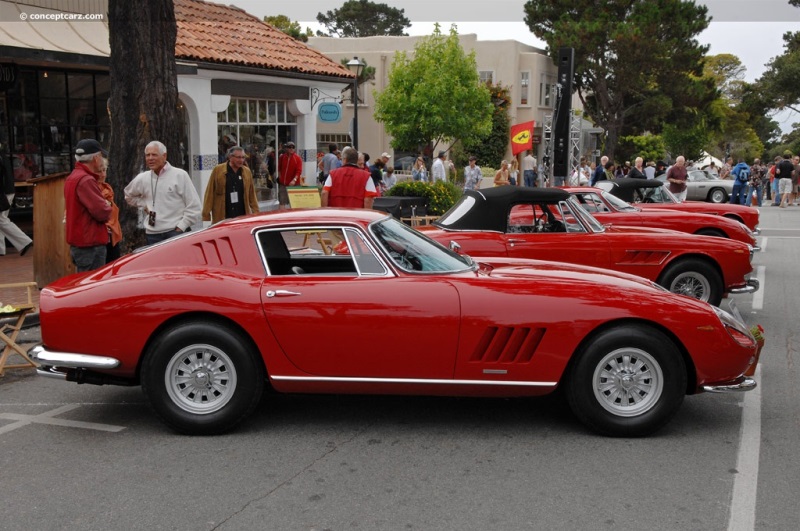
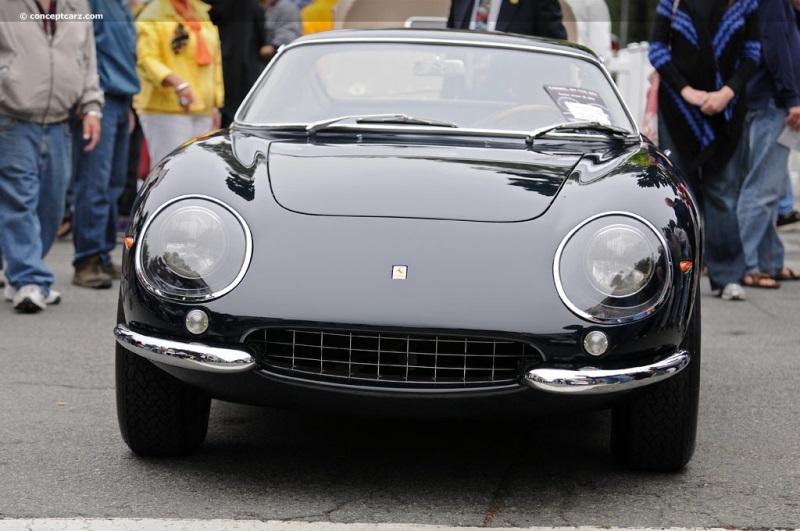
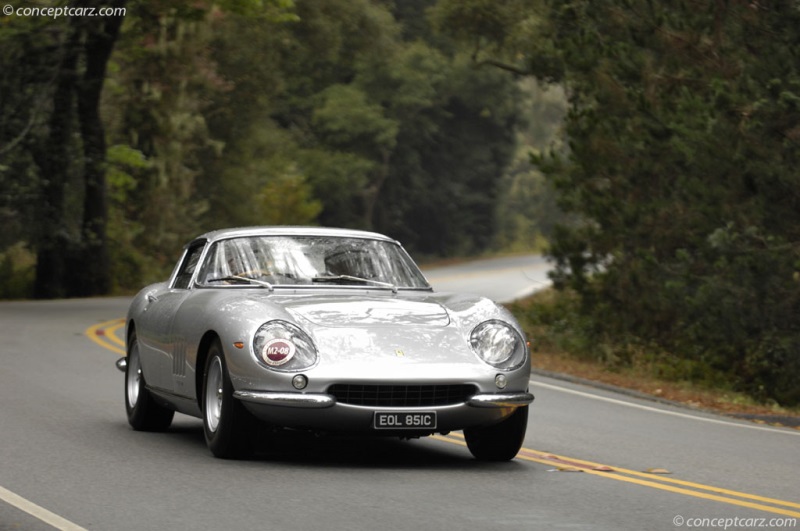
A new and more sophisticated generation of grand touring Ferraris was introduced in 1964 at the Paris Show, dubbed the 275 GTB and its 275 GT Spyder counterpart, the first road-going Ferrari equipped with an independent rear suspension. The design and lessons learned from the 250 LM had contributed significantly to the development of the 275 GTB, including its design and the rear suspension which employed upper and lower A-arms, Koni shocks inside coil springs and a sway bar. The cornering response and weight distribution were improved over the early GT designs by moving the engine rearward and incorporating the 5-speed Colloti gearbox into the differential. The Colombo-designed short-block V-12 engine powering the 275 GTB and 275 GT Spyder displaced 3.3 liters and produced 280 horsepower at 7,600 RPM in the Berlinetta, and 260 horsepower in the Spyder. Several design cues of the 1962 through 1964 GTO and the mid-engined 250 LM were incorporated or inspired the 275 GTB's Pininfarina-designed coachwork. It featured an aerodynamic wraparound windshield, a fastback roofline ending in a subtle rear spoiler, flowing fender lines, and Plexiglas-covered headlights. The long hood eloquently defined the 275 GTB's performance intention and a result of the engine setback. The bulging fenders were designed to house the large tires, and every vent and curve served a purpose. The position of the windscreen and fastback roof was only as tall as visibility and driver's headroom required. About a year after its introduction, Ferrari introduced a longer, redesigned nose for the 275, intended to assist aerodynamic downforce at high speed. The slightly lengthed and slimmer nose gave the 275 a look even more evocative of the 250 GTO. Approximately 236 examples of the 'short-nose' cars were built and 206 series two 'long-nose' cars. The standard 275 GTB body was formed from steel with aluminum alloy doors, trunk lid, and hood. At least 72 examples were created with a lightweight all-aluminum body, which was an extra-cost option from the factory.The 275 GTB used a conventional ladder frame chassis fabricated from oval-section steel tubes. The Dunlop disc brakes were a welcome improvement over Ferrari's use of drum brakes on previous models, however, they were inadequate and considerably small, plus used an underpowered servo and caliper. The Tipo 213 V-12 engine was the final development of the Colomb V12, with a stroke of 58.8 mm and a bore of 77 mm. Standard equipment included the three twin-coke Weber 40 DCZ 6 or 40 DFI 1 carburetors. Six twin-choke Weber 40 DCN carburetors were optional, and when so equipped, Ferrari claimed the engine would produce 320 horsepower at 7,500 RPM. Power was handled by a five-speed manual transaxle with synchromesh and a limited-slip differential. The 'long-nose' series two cars received several mechanical and cosmetic changes with the most visible being updated to the front bodywork. To relieve stress on the driveshaft and central support bearing, a torque tube was placed between the engine and transaxle. Revisions were made to the engine and transaxle mounts to use two (rather than four) chassis attachment points each. The fuel filler, fuel tanks and spare tire were relocated and the trunk hinges were changed from internal to externally mounted. Rearward visibility improved thanks to the enlarged rear window. 
Coupe by Scaglietti
Chassis #: 06741
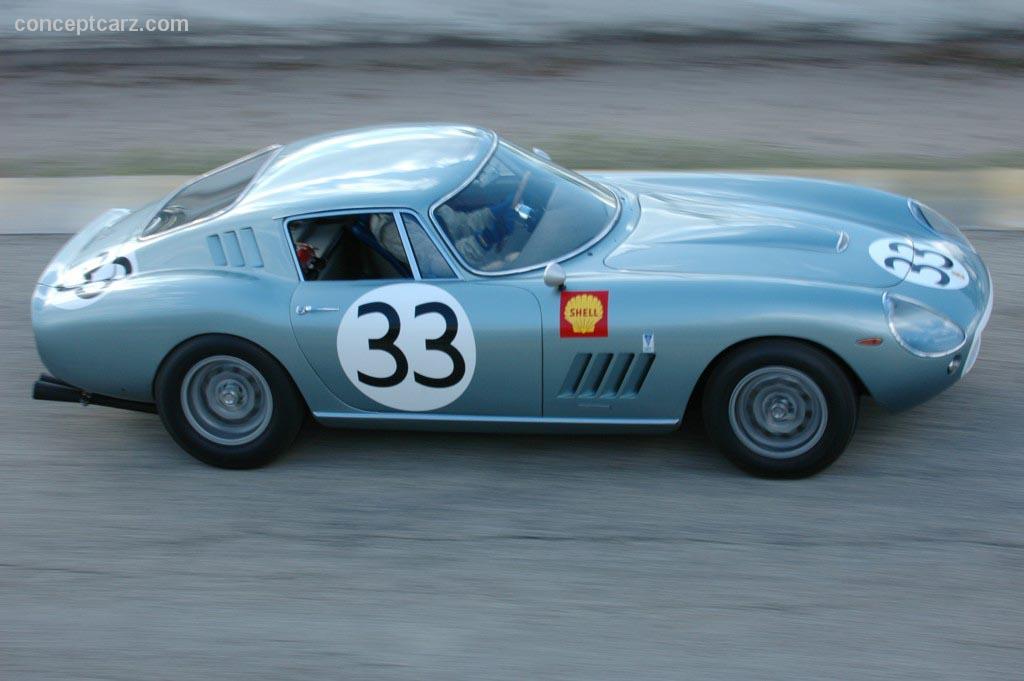
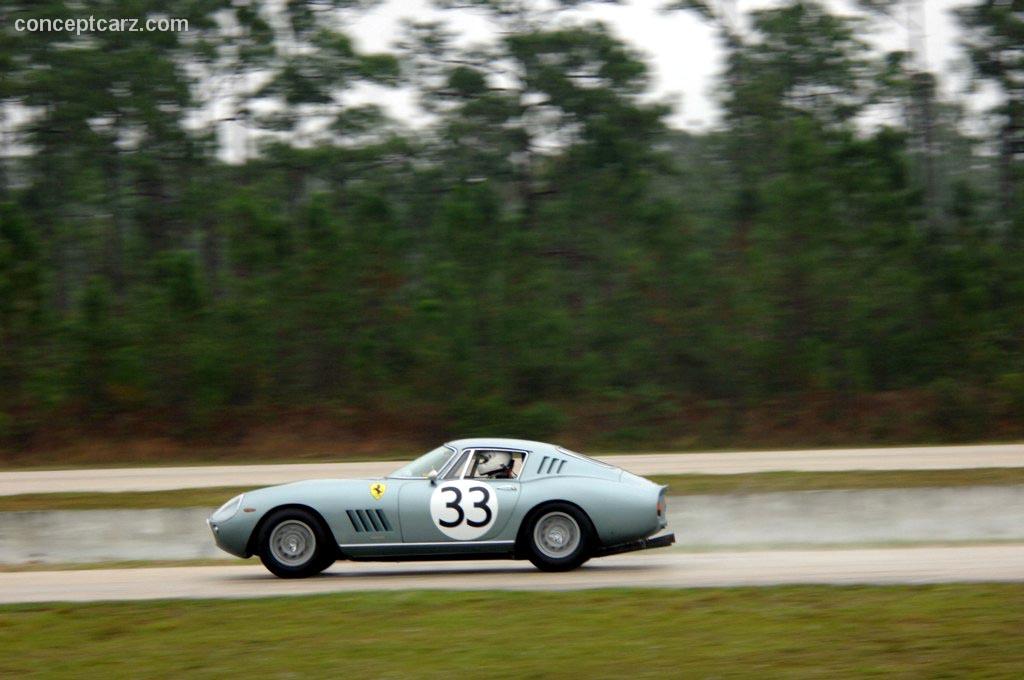
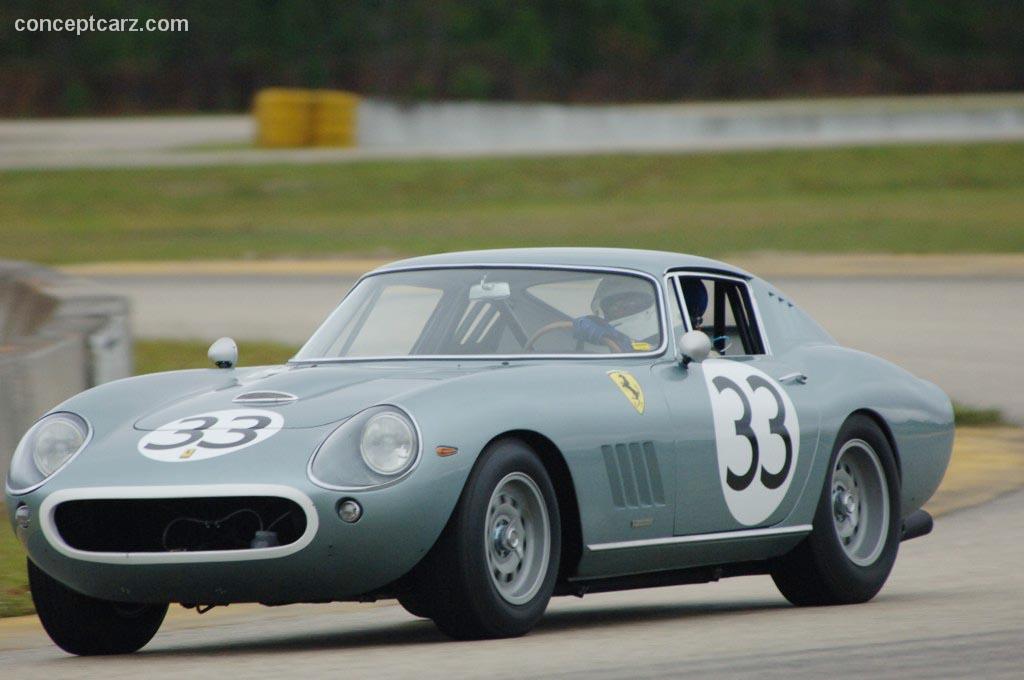
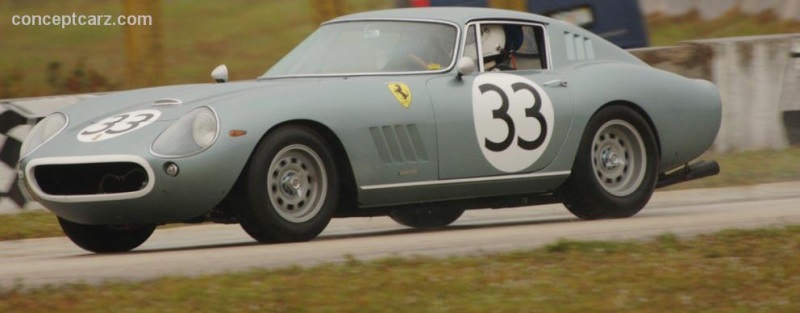
View info and historyCoachbuilder Scaglietti employed artisans who constructed each body by hand, imparting the individuality of bespoke construction to every car. After the Fédération Internationale de l'Automobile (FIA) refused to homologate the 250 LM for GT-class racing, Ferrari was left without a successor to the 250 GTO. Acting quickly, Ferrari developed an updated 250 GTO (called the Series II or GTO64) along with competition versions of the 275 GTB that included both 'modified' and 'purpose-built.' The 275 GTB Competizione Speciale (also known as the 275 GTB/C Speciale), were the first racing version of the 275 and received design input from Mauro Forghieri. Three examples were built between late 1964 and early 1965, and a final example was completed in 1966. The engine installed was the Tipo 213 tuned to 250 LM specification, offering approximately 305 horsepower. The design was courtesy of Pininfarina and the construction of the thin-gauge alloy bodywork was handled by Scaglietti. The appearance and shape were much different than the road-going production 275 GTB, and each of the four hand-built examples incorporated unique differences. Aerodynamics and minimal weight were paramount, with smaller diameter tubing used to form the chassis, holes were drilled into interior panels, magnesium castings were used for various mechanical components, and Plexiglass replaced glass windows. Homologation of the 275 GTB Competizione Speciale was delayed, resulting in just one example (chassis 6885) racing during the 1965 season. It competed at the 1965 Targa Florio where it failed to finish, followed by a 13th overall at the 1965 100km Nurburgring, and a 3rd overall at the 1965 24 Hours of LeMans. After placing 11th overall at the 1965 500 km of Bridgehampton, it won the 1965 Nassau Tourist Trophy.
Coupe by Scaglietti
Chassis #: 06741
View info and historyEnzo Ferrari had struggled at securing FIA homologation status for the 275 GTB/C Speciale, not unlike several previous attempts to homologate cars that were significantly different from the models whose name they bore. To alleviate future struggles, Ferrari created a less modified version of the 275 GTB with competition intentions and to be sold to private racing teams. These customer competition (or in Italian 'competizione clienti') versions were fitted with a Tipo 213 engine with 6 carburetors and wore alloy bodywork. Larger capacity fuel tanks and added exterior fuel fillers completed the modifications. In total, Ferrari modified ten 275 GTBs in this configuration.In 1966, twelve lightweight 275 GTB/C competition cars were built with exterior designs that matched the road-going versions. Although visually similar, every body panel had been altered and numerous mechanical changes were adopted including a lightweight steel and aluminum chassis. The disc brakes were given quick-change racing brake pads, and the four-wheel independent suspension used different shock absorber valving and stiffer springs. Three examples of the 275 GTB/C were entered in the 1966 24 Hours of LeMans, two of which finished. The Maranello Concessionaires-entered 275 GTB/C placed 8th overall and 1st in class, while the Ecurie Francorchamps 275 GTB/C placed 10th overall and 2nd in class. Another 1st in class was achieved at the 1967 Targa Florio, and a 275 GTB/C won the 1966 and 1967 Italian GT Championships. 4-Cam 275 GTB
In October of 1966, Ferrari introduced an updated version of the 275 GTB at the Paris Motor Show, powered by a four overhead camshaft version of the Colombo V12. With six Weber 40 DCN carburetors, the engine produced 300 horsepower. The use of dual camshafts allowed the valves to be aligned perpendicular to the camshaft instead of the offset setup used on the SOHC engines. A hood bulge with creased edges was the most visible update, and Campagnolo magnesium alloy wheels sized 14x7 were standard equipment. Customers were able to order the traditional Borrani wire wheels as optional equipment. Minor improvements were made to the cooling system, suspension, and exhaust.
Coupe by Scaglietti
Chassis #: 08053
Engine #: 08053
Auction entries : 1Production of the four-cam 275 GTB/4 lasted from 1966 to 1968 with a total of 330 examples built.275 GTS
Both the 275 GTB and GTS were produced from 1964 to 1966, introduced at the same time, and were mechanically similar. The 275 GTS wore an all-steel body manufactured by Pininfarina and its appearance was entirely different than its 275 GTB sibling, with smaller uncovered headlights, a shorter hood, and a folding cloth convertible top. A removable hardtop was offered as optional equipment from the factory.Between 1964 and early 1966, Ferrari produced a total of 200 examples of the 275 GTS, most with left-hand drive (19 were equipped with right-hand drive).
by Daniel Vaughan | Sep 2021
Coupe by Scaglietti
Chassis #: 06741
View info and history
Coupe by Scaglietti
Chassis #: 06741
View info and history
In October of 1966, Ferrari introduced an updated version of the 275 GTB at the Paris Motor Show, powered by a four overhead camshaft version of the Colombo V12. With six Weber 40 DCN carburetors, the engine produced 300 horsepower. The use of dual camshafts allowed the valves to be aligned perpendicular to the camshaft instead of the offset setup used on the SOHC engines. A hood bulge with creased edges was the most visible update, and Campagnolo magnesium alloy wheels sized 14x7 were standard equipment. Customers were able to order the traditional Borrani wire wheels as optional equipment. Minor improvements were made to the cooling system, suspension, and exhaust.

Coupe by Scaglietti
Chassis #: 08053
Engine #: 08053
Auction entries : 1
Both the 275 GTB and GTS were produced from 1964 to 1966, introduced at the same time, and were mechanically similar. The 275 GTS wore an all-steel body manufactured by Pininfarina and its appearance was entirely different than its 275 GTB sibling, with smaller uncovered headlights, a shorter hood, and a folding cloth convertible top. A removable hardtop was offered as optional equipment from the factory.Between 1964 and early 1966, Ferrari produced a total of 200 examples of the 275 GTS, most with left-hand drive (19 were equipped with right-hand drive).
by Daniel Vaughan | Sep 2021
Related Reading : Ferrari 275 History
During the late 1950s, Ferraris road-oriented Berlinettas split in terms of design from their race cars. After the 250 short wheelbase Berlinetta, the dual-purpose road race Ferrari seemed gone. This new distinction motivated Ferrari to manufacture more civil road cars having impressive specifications. The first example of this new trend was the 275 GTB. The 275 GTBGTS was debuted in October....
Continue Reading >>
Continue Reading >>
- 1965 Ferrari 275 GTB Menu
- Article
- Image gallery
- Valuation
- Specifications
- Profiles
- Production figures
Ferrari
Similar Automakers
Similarly Sized Vehicles
from 1965
Similarly Priced Vehicles
- Ferrari 275 GTB/C Speciale ($13,900-$13,900)
Average Auction Sale: $2,047,633


1965 Ferrari 275 GTB Vehicle Profiles







Recent Vehicle Additions


Performance and Specification Comparison
Price Comparison
$14,200
$14,495
$24,400
275 GTB Specification Comparison by Year
Year
Production
Wheelbase
Engine
Prices
Related Automotive News

Show-Quality, Coachbuilt Italian Exotics, Including Zagato-Bodied Maserati A6G/54 Berlinetta and ex-Emperor Bao Dai Ferrari 410 Superamerica, Announced for Pebble Beach
Gooding %26 Companys Pebble Beach Auctions to feature lineup of concours-level Italian classics from Ferrari, Maserati, Lamborghini, Lancia, and a one-off Serenissima by Ghia.
International auction house Gooding %26 Company has announced...

Pebble Beach Auctions Online Catalogue Now Live; Historic, Unrestored 1962 Ferrari 250 GT SWB Berlinetta Unveiled as Headlining Car
Gooding %26 Company launches its entire online catalogue for the Pebble Beach Auctions, announces a remarkably original 1962 Ferrari 250 GT SWB Berlinetta along major Italian star cars.
Gooding %26 Company, the official auction house of the Pebble...

1962 Ferrari 250 GT SWB California Spider to Lead Gooding & Company's Amelia Island Auctions Alongside Stable of the Finest Ferraris
The star car of the auctions will be a one-off 1962 Ferrari 250 GT SWB California Spider, joined by a 250 GT Tour de France Berlinetta, a 250 MM Vignale Spider, and other examples of Maranellos finest models.
Leading international auction...

Blue-Chip Classics and Legendary 50s and 60s Sports Cars Added to Gooding & Company's Amelia Island Auction
Gooding %26 Company is revving up for its upcoming Amelia Island Auction with a stellar lineup of offerings. The auction house today announced yet another spectacular group of consignments, consisting of iconic sports and racing cars from the 1950s and...

REVERED FERRARI 250 LM LEADS SUPERLATIVE ROSTER OF ITALIAN SPORTS CARS AT RM'S FLAGSHIP MONTEREY SALE
· RM Auctions announces a legendary 1964 Ferrari 250 LM by Scaglietti as the latest multi-million-dollar highlight for its flagship Monterey sale, August 15–16 in California
· 250 LM leads a superb roster of no less than 26 Ferraris at...